
Known for
No synopsis available yet.
Ďaleko je do neba
1973
No synopsis available yet.
Riaditeľ
1986
No synopsis available yet.
Rodinná slávnosť
1972
 6.0
An aging street stuntman plans new equipment to make his motorcycle stunts even more impressive, but his daughter wants to end his nomadic life in a camper van.
Já jsem Stěna smrti
1979
Many films have received almost no audience response at the time of their release in cinemas - this one is one of them. The story of a sick writer who returns to his native region to gain new physical and mental strength, however, did not impress, it is too artificial, with dialogues and plots rustling paper. It lacks both a believable depiction of the main character's mood and adequate realization certainty, the hero's silent discussions with the personified Inspiration sound cumbersome.
Vták nociar
1981
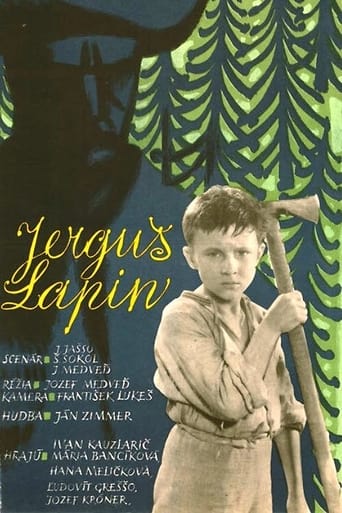 8.0
Little Jerguš's father was killed by gendarmes. To help his mother, the boy is hired as a laborer, then goes to the factory, to the city, but, unable to withstand the cruel exploitation, hoping to become free and independent, returns to the mountains, where his father once fought for the good of the people.
Jerguš Lapin
1960
Behind the camera
No synopsis available yet.
Ďaleko je do neba
1973
No synopsis available yet.
Riaditeľ
1986
No synopsis available yet.
Rodinná slávnosť
1972
6.0An aging street stuntman plans new equipment to make his motorcycle stunts even more impressive, but his daughter wants to end his nomadic life in a camper van.
Já jsem Stěna smrti
1979
Many films have received almost no audience response at the time of their release in cinemas - this one is one of them. The story of a sick writer who returns to his native region to gain new physical and mental strength, however, did not impress, it is too artificial, with dialogues and plots rustling paper. It lacks both a believable depiction of the main character's mood and adequate realization certainty, the hero's silent discussions with the personified Inspiration sound cumbersome.
Vták nociar
1981
8.0Little Jerguš's father was killed by gendarmes. To help his mother, the boy is hired as a laborer, then goes to the factory, to the city, but, unable to withstand the cruel exploitation, hoping to become free and independent, returns to the mountains, where his father once fought for the good of the people.
Jerguš Lapin
1960
No synopsis available yet.
Tri razy svitá ráno
1962
No synopsis available yet.
10 % nádeje
1976
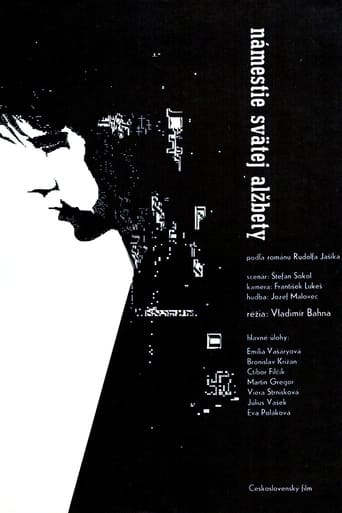 9.0
Film adaptation of Rudolf Jašík's novel of the same name. The plot of the film is situated in the forties of our century, in the first years of the Second World War. It captures the political and social atmosphere of one of the Slovak towns that lives seemingly in the lee, far from the world and war. Well, appearances are deceiving. Beneath the surface of peaceful, everyday life, a tragic process is taking place, accelerating people's destinies, the disintegration of their characters, but also the maturing of their relationships. The film is the story of Eva and Igor, their love, violently interrupted by political events. In this era of personal and social tragedies, children become adults almost overnight, honest people become victims, and mentally ill people become murderers. The film about the fates of Eva and Igor, the Jewish cartmen Samko and Maxi, and the careerist Flórik presents a believable, convincing picture of the era marked by the expansion of fascism.
Saint Elizabeth Square
1966
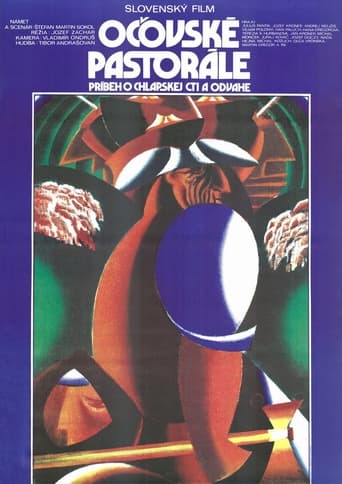 10.0
The story of a peasant whose harshness and bluntness only provoke disputes and anger, and his honesty and sense of truth and honor in conjunction with the previous qualities only exacerbate these disputes. The Slovak village with its collective farming, confronted with the habits of a square nature, raised by private farming, creates the main plot and conflict. In parallel, there is a lyrical motif of the young generation, whose love relationships do not care about the old ridiculous anger of the old generation.
Očovské pastorále
1973