
Directing
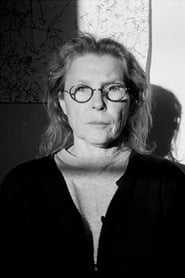
Barbara Sternberg
Born 1945-03-24 · Toronto, Canada
Toronto filmmaker Barbara Sternberg has been making films since the mid-seventies. Her films have been screened widely across Canada as well as internationally at the Pompidou Centre in Paris, Kino Arsenal in Berlin, The Museum of Modern Art and Millennium Workshop in New York, and the Ontario Cinematheque, Toronto. Her work is in the collection of the Art Gallery of Ontario and the National Gallery of Canada. She has been a visiting artist at a number of Canadian universities and galleries including the University of Guelph, Nova Scotia College of Art and Design, Dunlop Art Gallery, as well as the Universite d'Avignon, and the School of the Art Institute of Chicago. In 2011, Sternberg was made a Laureate of the Governor General’s Award in Visual and Media Arts. Sternberg’s film work combines reflections on the medium itself with social issues and universal questions of how we experience reality, how we as humans are situated in the world. Films are themselves experiences, realities. Her films work at the intersection of film and life- questions of vision, perception, motion and temporality. Although her main practice is film, Sternberg has worked in other media including performance, installation and video. Sternberg has been active in a number of fronts in Toronto, teaching at York University, working for Canadian Filmmakers' Distribution Centre, serving on Toronto and Ontario Arts Council juries and committees, helping to organize the International Experimental Film Congress (May 1989), and was a founding member of Pleasure Dome, artists' film and video exhibition group. She wrote a handbook and conducted workshops on Media Literacy for high school teachers. She recently organized the "Association for Film Art" (AFFA) to actively support and promote awareness and appreciation of film art. While living in the Maritimes, Sternberg co-founded Struts, an artist-run centre in Sackville, New Brunswick. Sternberg wrote a column, "On (experimental) Film" for several years for Cinema Canada, and has written essays on artists and on filmmakers. As well, she has written on the status of film art in galleries and museums—an issue on which she has conducted symposia and lobbied vigorously.
Acting credits
 NR
NR"Your life is like a candle burning. Whether you are aware of it or not, it is burning." (Sri Sri Ravi Shankar)
Burning
2002
 NR
NR“Shot in an abandoned warehouse, documenting a contemporary adaptation of the Oedipus story by a group of Toronto experimental filmmakers, Antigone is both a documentary about searching for meaning and validity in the old story, and a fiction about the failure to find any value but parody.” - Gary Popovich
Antigone
1990
Behind the camera
 9.0
9.0To get beaten or give a beating, to beat oneself up. To beat the odds. Metal is forged by beating. Birds beat their wings, the sun beats down, and our hearts - Under this central trope of 'beating', with its combined negative and positive implications, the film brings together the individual personally lived and the communal, historic perspective; hatred and forgiveness; laughing and crying.
beating
1994
9.0To get beaten or give a beating, to beat oneself up. To beat the odds. Metal is forged by beating. Birds beat their wings, the sun beats down, and our hearts - Under this central trope of 'beating', with its combined negative and positive implications, the film brings together the individual personally lived and the communal, historic perspective; hatred and forgiveness; laughing and crying.
beating
1994
 NR
NRConstructed with repetitions and variations, in reference to the musical form of a Nocturne, “Far From” is an accumulation of layers, a density of living, the noise of existence. Ghosts of lives lived and traces of lives being lived, rising.
Far From
2014
 9.0
9.0This film is about love - relations between men and women, conversations in the air. Men are heard in voice-over speaking a love-talk which is personal, though anonymous, or singular. Another voice-over reads parables, which present a context for the possibility of love or spirit in the world at large. The film ends optimistically: a smile slowly spreads on a man's face. Women addressing men in their own voices.
At Present
1990
 NR
NRUsing only text-on-screen, Love Me distills the emotions of an earlier film, Beating – emotions which conflict, confuse, are difficult to reconcile. The texts ‘speak’ unsaid and unsayable thoughts, impolitic or just impolite. Suppressed exclamations from past injustices, hurts, angers surface, interrupting, erupting, demanding attention.
Love Me
2014
 NR
NRAfter Nature, after the Fall, after all - where do we go from here? Digital imagery and optically printed superimpositions combine in a cascading plunge to no(w)here – new beginnings or more of the same?
After Nature
2008
 NR
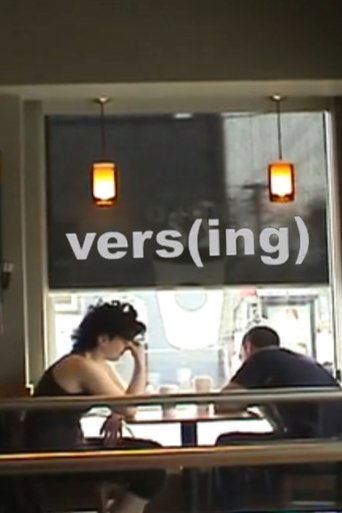
NRvers(ing) opens in a coffee shop. People, sit, enter and exit. A conversation is heard. The video continues, traveling through the streets of a city, to a park, to other coffee shops, other places. No particular destination is reached, but as we travel, fragments of text are read, conversations are heard, settings, people and objects are noticed. vers(ing) presents a moving toward that is transitory and offers a poetic contemplation of how life, meaning, and film are intertwined and constructed.
vers(ing)
2010
 NR
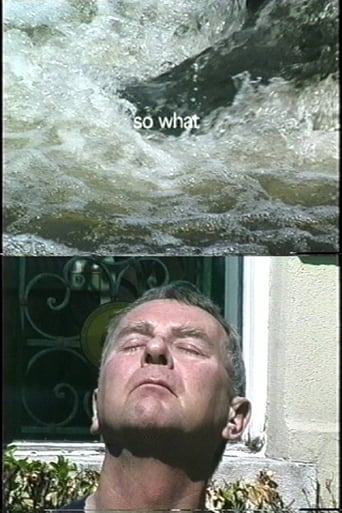
NREmotions come & go; so do people. The world is an awful & awesome place; so is the mind. We hear dark inner thoughts of a person & see people taking in the first spring sun in a public park in Toronto. As the World Churns...
So What?
2004
 NR
NRA short video documentary by Barbara Sternberg, approximating the dual-screen approach of the titular filmmaker. Brown speaks candidly, is shown in a studio; An excerpt from his film Memory Fade (2009) follows the footage. One of many of Sternberg's interviews with fellow artists.
Carl Brown
2010
 NR
NRNo synopsis available yet.
A Trilogy
1985
 NR
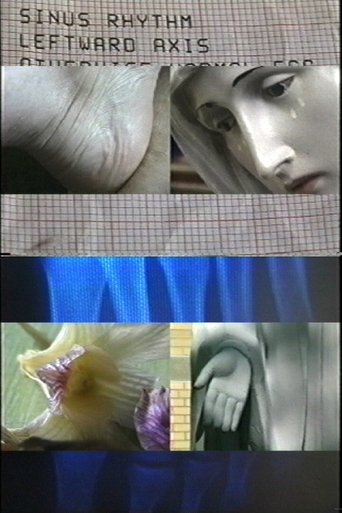
NRThe sensual, with its beauty and possibility of decay, is set beside immutable statues of the Virgin Mary. Images from technological viewing of the body's inner invisibilities — x-ray, MRI, electronic, and tarot—-are juxtaposed with external surfaces — artist's renderings of inscrutable Mary. Skin and blood, paint and plaster hint at inner life.
Tabula Rasa
2003
 NR
NRA bedroom (and life) viewed from the horizontal, while wondering whether to join in the race or wake up to the illusion. The soundtrack quotes from Gertrude Stein’s Making of Americans on disillusionment.
Awake
1997
NR"Your life is like a candle burning. Whether you are aware of it or not, it is burning." (Sri Sri Ravi Shankar)
Burning
2002
 NR
NRNo synopsis available yet.
Praise
2005
 NR
NROur busy comings and goings, on the move, working at life are pictured, but layers of images and scratched emulsion make viewing through the depths an effort. If we scratch the surface, however... Glimpses of other states suggest we can surface.
Surfacing
2004
 NR
NRIn midst, Barbara Sternberg has made a lyrical film about attachment, integration, belonging. Many of the familiar elements of Sternberg's work are here: speed, pulsing rhythms, explosions of colour, light and shape, images of nature and the built environment. But the conflicted situations and turmoil of earlier major films like Through and Through and Beating are gone. Instead, midst focuses dramatically on an understanding of the world through art, specifically painting, especially abstraction, here translated into filmic terms. Abstraction becomes the vehicle for taking on complexity, putting it all together in heightened moments of intense vision characteristic of ‘seeing into’ or ‘being at one’ with nature.
midst
1997
 NR
NR"Poetry, film, light, life. An excerpt from Rilke's Ninth Elegy [...] evokes the beauty and brevity of life. Images shimmer in an uncanny light. We catch glimpses only."
Once
2007
 9.0
9.0Transitions is a film of inner life and speaks of time, reality, power. It depicts the disquieting sensations of being in-between-between falling asleep and being awake, between here and there, between being and non-being. These metaphysical themes are evoked by the central image of a woman in white over which layers of images and sound (voices) are superimposed.
Transitions
1982
 NR
NRtouch (ing), -(ed): Feel, move, affect, be in contact, tangent to, in relation; injure slightly; slightly crazy "My window tonight casts light out onto the snow, I cast from my eye a glance, a touchless touch.. Jorie Graham, "To 2040" We look. we touch, we make connections sometimes, and sometimes we proceed by groping blindly forward.
touch
2023
 NR
NROpus 40” is about repetition: repetition in working and living, repetition through multiplicity and series, repetition to form pattern and rhythm, repetition in order and in revealing.
Opus 40
1979
 NR
NRGoethe’s colour theory dealt with the optics of colour relations; Rudolf Steiner’s and Kandinsky’s theories attribute emotional, musical, and spiritual affects to colour; North American Natives see personality traits and states of mind, seasons, races, and the four directions in the four colours: red, yellow, white, black. What’s in a name, what’s in a word? A world of colour.
COLOUR THEORY
2014
 8.0
8.0The film is silent except for four short segments of sync sound, interviews with a man and a woman, which touch on two areas: control and anger; and the pressure of history on one’s identity-how do I identify myself as “I”, how as part of a “we”? The film is visual, perceptual; it was made in awe of the world that goes on with and without us and of our personal, human struggles. It is a film about life and death; a film of discrete units of the eternal and a film of living here and now. It was built up frame by frame-a film about power, played in insignificant terms, in the daily, barely noticed gestures, scenes, frames.
Through and Through
1991
 NR
NRImages flutter and flicker in orgasmic rhythms. Visual references to Bataille’s “solar anus”, to romantic coupling, to monkeys and man are held together within the sustaining dichotomy of beginnings and endings.
Beginning and Ending
2008
 5.3
5.3"Like a Dream That Vanishes" continues Sternberg’s work in film both thematically and formally: the ephemerality of life echoed in the temporal nature of film, as the stuff of life echoed on the energy, life-force in rhythmic light pulses (Your life is like a candle burning). Imageless emulsion is inter-cut with brief shots of natural elements and mise-en-scene of the stages of human life: a little boy runs and falls; teens hang out together at night smoking; sun shines through tree branches; men pace, waiting; flashes of lightning; an elderly man speaks philosophically about miracles.
Like a Dream that Vanishes
1999