
Directing
Alex Bingham
Known for
Directing
Credits
5 titles
Known for
What was it like working with Robert Frank? Laura Israel and Alex Bingham, in partnership with the June Leaf and Robert Frank Foundation, asked a number of his collaborators in photography and filmmaking to reflect on this deceptively simple question. Sid Kaplan, June Leaf, Ed Grazda, Gary Leon Hill, Susan Steinberg, Brian Graham, Ayumi Furuta (A-chan), Ed Lachman, and Tom Jarmusch all make appearances. — Museum of Modern Art
Fearless Frank
2024
 NR
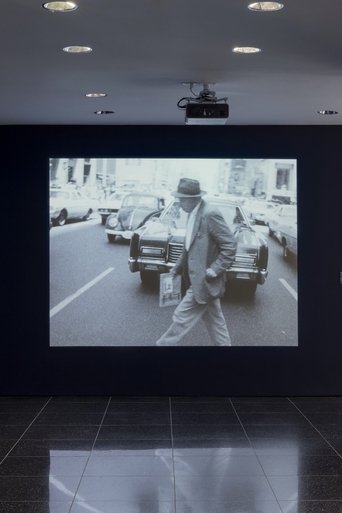
After Robert Frank’s death in 2019, film canisters and video tapes were discovered in storage places, containing footage of Frank’s reflections on the world and his place in it, scraps of ideas, and stirrings of art. These moving images, only now being brought to light, offer insight into the home and work life of an artist who is foremost known for the photographs he took of the postwar United States. Partnering with the June Leaf and Robert Frank Foundation, Laura Israel, Frank’s longtime film editor, and art director Alex Bingham have used these fragments to create a kind of moving-image scrapbook. Featuring projections across multiple screens, the installation conveys the intimacy and immediacy of Frank’s observations of family, friends, and collaborators, as well as of domestic interiors and vistas of city and coastline. To capture this footage, which spans 1970 to 2006, Frank spent countless hours behind the viewfinders of various film and video cameras. — Museum of Modern Art
Robert Frank's Scrapbook Footage: New York 1971
2024
 NR
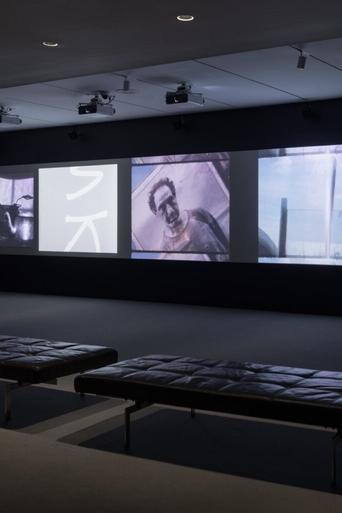
Super 8, 16mm film, and video transferred to HD video (six-channel projection, color and black and white, sound). Like many artists, Frank kept diaries and scrapbooks, which provide a window into his interior life. Similarly, the raw footage used in this installation sheds new light on Frank’s artistic process, stitched together by Israel and Bingham in a way that evokes his restless gaze and declamatory voice, at once comical and melancholy. He journeys between his homes in New York and Nova Scotia; the open roads of the United States and Canada; and urban landscapes, including those of Beirut, Cairo, Moscow, and his native Switzerland. Frank makes timeless the most fleeting of pleasures: a warm bath and a steaming tea kettle, a glimpse of his wife June Leaf in her studio, or the play of sunlight on his hand. — Museum of Modern Art
Robert Frank's Scrapbook Footage, 1970–2006
2024
 6.0
A typo in a letter causes Satan to have a change of heart.
Dear Satan
2017
Behind the camera
What was it like working with Robert Frank? Laura Israel and Alex Bingham, in partnership with the June Leaf and Robert Frank Foundation, asked a number of his collaborators in photography and filmmaking to reflect on this deceptively simple question. Sid Kaplan, June Leaf, Ed Grazda, Gary Leon Hill, Susan Steinberg, Brian Graham, Ayumi Furuta (A-chan), Ed Lachman, and Tom Jarmusch all make appearances. — Museum of Modern Art
Fearless Frank
2024
NRAfter Robert Frank’s death in 2019, film canisters and video tapes were discovered in storage places, containing footage of Frank’s reflections on the world and his place in it, scraps of ideas, and stirrings of art. These moving images, only now being brought to light, offer insight into the home and work life of an artist who is foremost known for the photographs he took of the postwar United States. Partnering with the June Leaf and Robert Frank Foundation, Laura Israel, Frank’s longtime film editor, and art director Alex Bingham have used these fragments to create a kind of moving-image scrapbook. Featuring projections across multiple screens, the installation conveys the intimacy and immediacy of Frank’s observations of family, friends, and collaborators, as well as of domestic interiors and vistas of city and coastline. To capture this footage, which spans 1970 to 2006, Frank spent countless hours behind the viewfinders of various film and video cameras. — Museum of Modern Art
Robert Frank's Scrapbook Footage: New York 1971
2024
NRSuper 8, 16mm film, and video transferred to HD video (six-channel projection, color and black and white, sound). Like many artists, Frank kept diaries and scrapbooks, which provide a window into his interior life. Similarly, the raw footage used in this installation sheds new light on Frank’s artistic process, stitched together by Israel and Bingham in a way that evokes his restless gaze and declamatory voice, at once comical and melancholy. He journeys between his homes in New York and Nova Scotia; the open roads of the United States and Canada; and urban landscapes, including those of Beirut, Cairo, Moscow, and his native Switzerland. Frank makes timeless the most fleeting of pleasures: a warm bath and a steaming tea kettle, a glimpse of his wife June Leaf in her studio, or the play of sunlight on his hand. — Museum of Modern Art
Robert Frank's Scrapbook Footage, 1970–2006
2024
6.0A typo in a letter causes Satan to have a change of heart.
Dear Satan
2017
6.0A typo in a letter causes Satan to have a change of heart.
Dear Satan
2017