

Acting
Etel Adnan
Born — Died
1925-02-24 — 2021-11-14
Place of birth
Beirut, Lebanon
Known for
Acting
Credits
14 titles
Etel Adnan was a Lebanese-American poet, essayist, and visual artist. In 2003, Adnan was named "arguably the most celebrated and accomplished Arab American author writing today" by the academic journal MELUS: Multi-Ethnic Literature of the United States.
Known for
 NR
Michael Shamberg's P.S. Beirut, Chapter One is a personal journey to Beirut and the first chapter of a series bent on «discovering» the lost briefcase of Walter Benjamin which went missing when Benjamin's body was found
P.S. Beirut, Chapter One
2008
 6.8
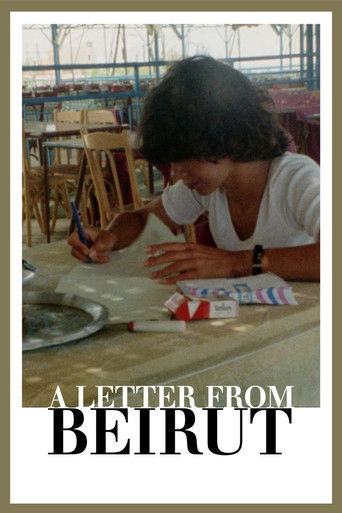
Letter from Beirut documents the filmmaker's return to Beirut during one of the lulls, three years after the outbreak of the civil war, animated by the urge to return. She is confronted by the physical, emotional and psychological ravages of the war, terrified and sorrowful, she cannot find her place in the city. In that quest, she communicates with everyday people, friends, neighbors, people riding the bus across the city's eastern and western flanks. To pace her journeying and dramatic unraveling of the film, Saab borrows the guise of a letter read in a voice-over, written by world-renowned poet Etel Adnan. A rare document from the civil war, Letter from Beirut lays bare and spontaneously how people make sense of their everyday in the midst of chaos, violence, terror and sorrow.
A Letter from Beirut
1978
 6.0
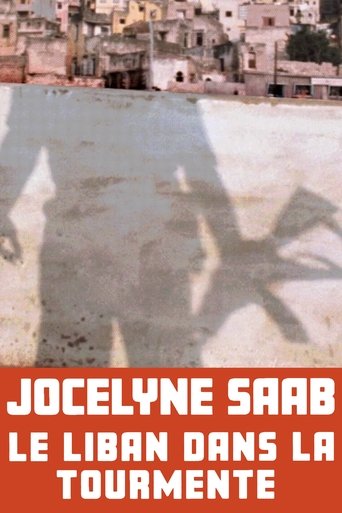
A few months after the incident of April 13, 1975, during which Palestinian civilians were machine-gunned by Phalangist militiamen, the toll is most tragic: six thousand dead, twenty thousand wounded, incessant kidnappings, a semi-destroyed capital. This film traces the origins of the Lebanese conflict, the perception of a society that goes to war while singing. A unique document on the Lebanese civil war. Beyond the religious war, the painting of a social and political reality that has not changed much, more than four decades later.
Lebanon in a Whirlwind
1975
 NR
Poetry is everywhere, even in the refugee camps where absolute misery reigns. In front of old plastic advertising posters on which are drawn in giant format the big icons of luxury and consumerism that make up their shelters, refugee children stand like kings. Symbols of life at the heart of war, fragility, and death, these children are shown by Jocelyne Saab as precious notes of hope in the heart of a dehumanized world. One Dollar a Day was filmed in the Syrian refugee camps of the Bekaa plain, Lebanon in 2015, with text by Etel Adnan.
One Dollar a Day
2016
 6.8
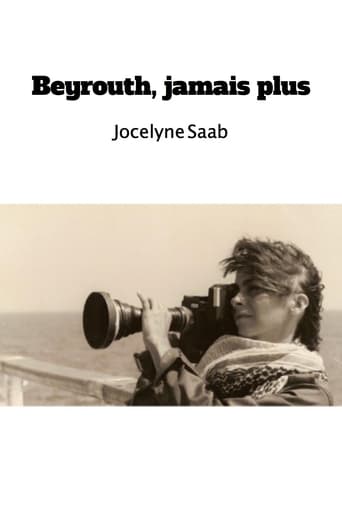
1976 marks the beginning of Beirut’s calvary. With a child’s eyes the filmmaker follows for six months the daily destruction of the city’s walls. Every morning, between 6 and 10am she roams around Beirut while the militia from both sides rest from their night of fighting.
Beirut, Never Again
1976
Etel Adnan’s last words recorded by her close friend, the Lebanese historian and writer Fawwaz Traboulsi, on colours, Nietzsche and poetry. Twenty years after her film Etel Adnan: Words in Exile (2007), the filmaker returns to find Etel Adnan’s lost voice in a Lebanon marked by ongoing historical fractures.
Etel Adnan: Undying Colours
2026
Film credits
2020s · 2 titles
Etel Adnan’s last words recorded by her close friend, the Lebanese historian and writer Fawwaz Traboulsi, on colours, Nietzsche and poetry. Twenty years after her film Etel Adnan: Words in Exile (2007), the filmaker returns to find Etel Adnan’s lost voice in a Lebanon marked by ongoing historical fractures.
Etel Adnan: Undying Colours
2026
 NR
An expressionistic portrait of Etel Adnan, immersed in her art and the world. Working without ego, Adnan asks, what does it mean to be alive, to live through catastrophe, to experience time.
Adnan Being and Time
2025
2010s · 3 titles
 NR
Seen through the work of eight leading artists from the Middle East, Axis of Light is a poignant and absorbing observation of the influences of conflict.
Axis of Light
2011
 NR
Joana Hadjithomas and the artist and poet Etel Adnan met fifteen years ago. They quickly became close, sharing a city that they had never been to: Smyrna, in Turkey. Joana’s paternal Greek family were forced into exile from Smyrna by the Turkish armies after the end of the Ottoman Empire. Etel’s Greek mother was also born in Smyrna and was married to a Syrian officer of the Ottoman Army and exiled in Lebanon after the fall of the empire. Etel and Joana have both lived in an imaginary Smyrna, today called Izmir, without ever setting foot there. Nowadays they are confronted with the transmission of history and trauma, questioning their attachment to objects, places, imaginary constructions and mythologies without images. What is to be done with the sorrow of our parents? Their personal experiences, their stories serve as a background to the region’s changes after the fall of the Ottoman Empire, the evolution of the borders questioning the notion of identity and belonging.
Ismyrna
2016
 NR
Etel Adnan's highly influential writings, in French, English and Arabic have been read around the world. Her recent epic poem, Sea and Fog, published by Nightboat Books, in 2012, evokes the sea and the fog as metaphors for power and time, exploring the nature of the individual spirit and the sentience of the natural world. The Otolith Group's film, shot largely in Adnan's Paris apartment, centers on a reading of the first chapter of her poem, Sea. The sound of Adnan's gentle voice, and the quiet but ever present ambient noise in her apartment, create a powerful, meditative atmosphere that draw upon the powers of philosophy to pursue the continuous mutation of matter into velocity. If poetry can be understood as a study in constraint, the film, I See Infinite Distance Between Any Point and Another, can be understood as an experiment in concentration and a study of gestures, that speaks of the mobility of language and the movement of the ocean.
I See Infinite Distance Between Any Point and Another
2012
2000s · 2 titles
NRMichael Shamberg's P.S. Beirut, Chapter One is a personal journey to Beirut and the first chapter of a series bent on «discovering» the lost briefcase of Walter Benjamin which went missing when Benjamin's body was found
P.S. Beirut, Chapter One
2008
 NR
The film reconstructs through an array of visual fragments, a multiplicity of languages, of peoples and their identities, the unique portrait of the poet and painter Etel Adnan.
Etel Adnan: Words in Exile
2008
Behind the camera
NRMichael Shamberg's P.S. Beirut, Chapter One is a personal journey to Beirut and the first chapter of a series bent on «discovering» the lost briefcase of Walter Benjamin which went missing when Benjamin's body was found
P.S. Beirut, Chapter One
2008
6.8Letter from Beirut documents the filmmaker's return to Beirut during one of the lulls, three years after the outbreak of the civil war, animated by the urge to return. She is confronted by the physical, emotional and psychological ravages of the war, terrified and sorrowful, she cannot find her place in the city. In that quest, she communicates with everyday people, friends, neighbors, people riding the bus across the city's eastern and western flanks. To pace her journeying and dramatic unraveling of the film, Saab borrows the guise of a letter read in a voice-over, written by world-renowned poet Etel Adnan. A rare document from the civil war, Letter from Beirut lays bare and spontaneously how people make sense of their everyday in the midst of chaos, violence, terror and sorrow.
A Letter from Beirut
1978
NRPoetry is everywhere, even in the refugee camps where absolute misery reigns. In front of old plastic advertising posters on which are drawn in giant format the big icons of luxury and consumerism that make up their shelters, refugee children stand like kings. Symbols of life at the heart of war, fragility, and death, these children are shown by Jocelyne Saab as precious notes of hope in the heart of a dehumanized world. One Dollar a Day was filmed in the Syrian refugee camps of the Bekaa plain, Lebanon in 2015, with text by Etel Adnan.
One Dollar a Day
2016
6.81976 marks the beginning of Beirut’s calvary. With a child’s eyes the filmmaker follows for six months the daily destruction of the city’s walls. Every morning, between 6 and 10am she roams around Beirut while the militia from both sides rest from their night of fighting.
Beirut, Never Again
1976
NRThe film reconstructs through an array of visual fragments, a multiplicity of languages, of peoples and their identities, the unique portrait of the poet and painter Etel Adnan.
Etel Adnan: Words in Exile
2008
 NR
In the 1980s, Adnan regularly traveled with a Super-8mm camera in hand. She visited New York frequently, staying at a friend’s apartment in a high-rise overlooking the East River. While there, she would repeatedly attempt to capture the sun touching skyscrapers’ windows, the geometry of bridges, the marriage of light and water, the movement of barges on the river, the shapes of factory smoke – the oddly meditative poetry of inexorable motion at the immediate edge of city life. The footage was retrieved and digitized three decades later, and edited into a feature-length film, MOTION, which premiered at Documenta 13 in 2012. — BIDOUN
Motion
2012