
Directing
Carlos Castillo
Place of birth
Caracas, Venezuela
Known for
Directing
Credits
29 titles
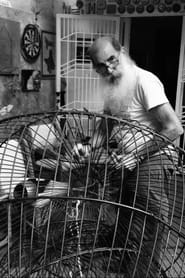
Carlos Castillo is, along with Diego Rísquez, one of the most important figures in Venezuelan avant-garde Super-8 cinema.
Known for
 9.0
9.01984, in Venezuela, in a supermarket, young children are used as caddies: they load customers' errands and roll them up to their car. Their leader is Rafa (Amilcar Rivero). Cheo (Alexandra Rodriguez) would like to be caddy and despite the agreement of the chief of staff, Rafa asked him to pass the test of the "little day": spend a night inside the store without getting caught by the guards.
Operación chocolate
1984
 NR
NRThe salsa singer Rubén Blades attends the Super-8 Film Festival in Caracas and Margarita Island, Venezuela.
Rubén Blades: un Rey de la salsa
1982
 8.5
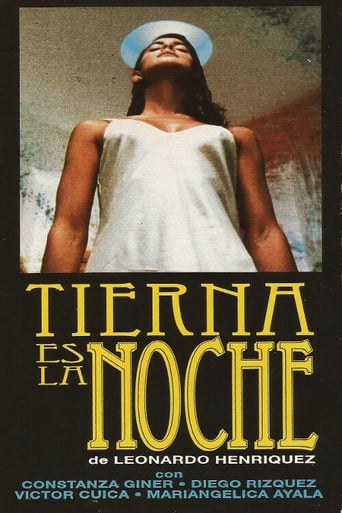
8.5Tierna es la Noche is a film without bullets nor sea, without mosquitoes, without peasants nor flowers. It only contains a barman, a man and a beautiful woman who lives in a bathroom. For commercial reasons, we have included two policemen, a drop of blood and a multilingual nymphomaniac. For aesthetic reasons, a tear and a black man. For both reasons, the film takes place anachronically, during the fifties and nineties in a make-believe city called Caracas. It's a story of histerics, like all stories, unfinished.
Tierna es la Noche
1990
 NR
NRDocumentary in four parts on Latin American cinema. Third episode: from the 1960s, France and Europe showed a real enthusiasm for Latin American cinema, but the latter remained hampered by numerous economic and political obstacles.
Claves, 3: Small mother country, great mother country
1984
 NR
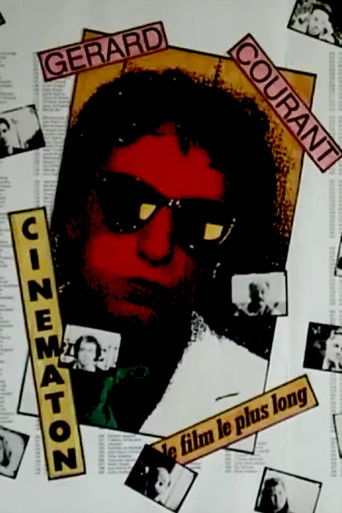
NRReel 21 of Gérard Courant’s on-going Cinematon series.
Cinématon XXI
1982
 5.4
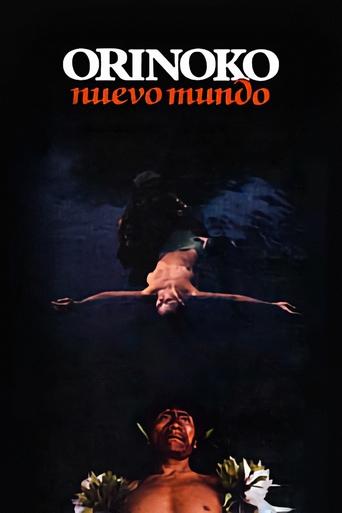
5.4The Orinoko: main character in the film. The first part is set during the pre-conquest and is represented as an earthly paradise. A shaman has precognitive visions: go to Columbus and the Catholic missionary in 1498.
Orinoko, New World
1984
Film credits
1980s · 5 titles
9.01984, in Venezuela, in a supermarket, young children are used as caddies: they load customers' errands and roll them up to their car. Their leader is Rafa (Amilcar Rivero). Cheo (Alexandra Rodriguez) would like to be caddy and despite the agreement of the chief of staff, Rafa asked him to pass the test of the "little day": spend a night inside the store without getting caught by the guards.
Operación chocolate
1984
NRThe salsa singer Rubén Blades attends the Super-8 Film Festival in Caracas and Margarita Island, Venezuela.
Rubén Blades: un Rey de la salsa
1982
NRDocumentary in four parts on Latin American cinema. Third episode: from the 1960s, France and Europe showed a real enthusiasm for Latin American cinema, but the latter remained hampered by numerous economic and political obstacles.
Claves, 3: Small mother country, great mother country
1984
NRReel 21 of Gérard Courant’s on-going Cinematon series.
Cinématon XXI
1982
5.4The Orinoko: main character in the film. The first part is set during the pre-conquest and is represented as an earthly paradise. A shaman has precognitive visions: go to Columbus and the Catholic missionary in 1498.
Orinoko, New World
1984
1970s · 2 titles
 7.5
7.5This is the first of Diego Risquez’ trilogy of avant-garde cinematic treatments of historical subjects. Using a painterly style, it features portraits, still lifes, and scenes shot as tableaux vivants, the film provides an experimental interpretation of the arrival of the Spanish and their domination of the New World, as well as the Venezuelan Independence movement, focusing on the role of Simón Bolívar. There is no dialogue or narration, simply a musical score and the depiction of events from Bolívar’s career.
Bolívar, a Tropical Symphony
1979
 NR
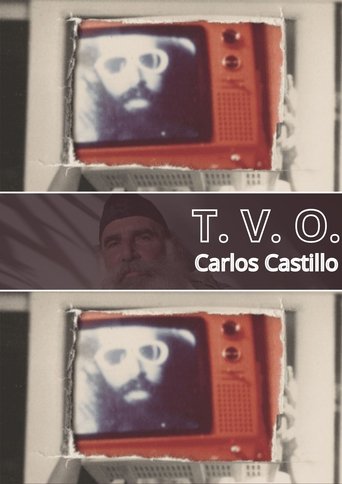
NRTelevision is one of the themes in T.V.O., which tells the story of a lonely woman’s interaction with the contraption. “The dog is no longer man’s best friend; now it’s television,” Castillo said in a conversation with the author of this article. The character is played by Mimí Lazo, one of the country’s most prominent actresses and a Venezuelan sex symbol. The film toys with this stereotype as regards the vicarious satisfaction given by romance and sex on screen. The other theme, linked to loneliness, is developmentalism: the main character lives in Parque Central, a middle-class housing complex whose residential buildings were finished in 1972 and became a symbol of well-being on the brink of the oil boom. (Pablo Gamba)
T.V.O.
1979
Behind the camera
NRThe salsa singer Rubén Blades attends the Super-8 Film Festival in Caracas and Margarita Island, Venezuela.
Rubén Blades: un Rey de la salsa
1982
NRThe salsa singer Rubén Blades attends the Super-8 Film Festival in Caracas and Margarita Island, Venezuela.
Rubén Blades: un Rey de la salsa
1982
 NR
NRAccording to its author, Mom's chicken soup is based on a recipe for six people: one small chicken, two onions, two cloves of garlic, one carrot, three cups of milk, two potatoes, one tablespoon of cornstarch, and salt and pepper to taste. Mrs. Maite is making chicken soup in her kitchen, and next to her, on a television set, a strange character (Francisco) is seen struggling with windows and doors, determined to enter a house. In ten minutes, Castillo recounts, two actions are described that ultimately complement each other, as the outcome is disconcerting.
Sopa de pollo de mamá
1981
NRAccording to its author, Mom's chicken soup is based on a recipe for six people: one small chicken, two onions, two cloves of garlic, one carrot, three cups of milk, two potatoes, one tablespoon of cornstarch, and salt and pepper to taste. Mrs. Maite is making chicken soup in her kitchen, and next to her, on a television set, a strange character (Francisco) is seen struggling with windows and doors, determined to enter a house. In ten minutes, Castillo recounts, two actions are described that ultimately complement each other, as the outcome is disconcerting.
Sopa de pollo de mamá
1981
A film about the limits about art and reality, and our perception about those concepts developed into a big joke
Apropiación indebida
1978
 NR
NRThe film is about the connection the viewer establishes with the work from the very first image. The camera pans smoothly over the body of a beautiful naked woman and, just before reaching below her navel, stops.
Esta película está que quema!
1980
The story of a newlywed couple who move into a house inherited by the female protagonist. Castillo describes the plot as follows: "A newlywed couple settles into a house inherited from her grandmother. Everything is about discovering, enjoying, and living happily and harmoniously. However, he discovers that a locked room is her secret hiding place. In that room, she remembers her family's past. He confronts her, reproaching her for not being part of that world or her ancestors. Annoyed, he interferes with photographs, damaging them and ridiculing her ancestors by wearing their clothes. The couple goes from living happily to knocking on the gates of hell."
50•90… era jugando
1990
The story of a newlywed couple who move into a house inherited by the female protagonist. Castillo describes the plot as follows: "A newlywed couple settles into a house inherited from her grandmother. Everything is about discovering, enjoying, and living happily and harmoniously. However, he discovers that a locked room is her secret hiding place. In that room, she remembers her family's past. He confronts her, reproaching her for not being part of that world or her ancestors. Annoyed, he interferes with photographs, damaging them and ridiculing her ancestors by wearing their clothes. The couple goes from living happily to knocking on the gates of hell."
50•90… era jugando
1990
 NR
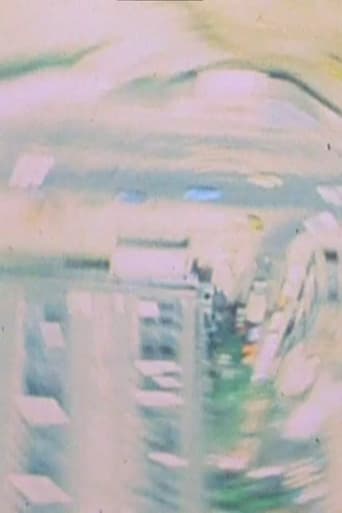
NRIts production seems like a game: throwing a Super 8 camera, turned on and recording, from what was, at that time, the tallest building in Caracas. The film films the shots of its own accelerated fall, a succession of chromatic shots that cannot be identified either in terms of what is “recorded” in each one (windows, columns, walls, sky or floor) or in its own formal configuration as an image (color, composition, shapes or figures). What is perceived and apprehended is the impotence of vision – of perception – to distinguish this extreme and exhausting mobility, this vertigo of “free fall.”
Intento de vuelo fallido
1982
 NR
NRExperimental Super-8 film by Carlos Castillo.
Hecho en Venezuela
1977
 NR
NRTransformations is a work in which the author addresses the issue of gender freedom. According to Castillo, the moving images and the unfolding action open a window to free thought and free interpretation of what is seen. "To be or not to be, that is my film," says the author.
Transformaciones
1981
NRTelevision is one of the themes in T.V.O., which tells the story of a lonely woman’s interaction with the contraption. “The dog is no longer man’s best friend; now it’s television,” Castillo said in a conversation with the author of this article. The character is played by Mimí Lazo, one of the country’s most prominent actresses and a Venezuelan sex symbol. The film toys with this stereotype as regards the vicarious satisfaction given by romance and sex on screen. The other theme, linked to loneliness, is developmentalism: the main character lives in Parque Central, a middle-class housing complex whose residential buildings were finished in 1972 and became a symbol of well-being on the brink of the oil boom. (Pablo Gamba)
T.V.O.
1979
NRTelevision is one of the themes in T.V.O., which tells the story of a lonely woman’s interaction with the contraption. “The dog is no longer man’s best friend; now it’s television,” Castillo said in a conversation with the author of this article. The character is played by Mimí Lazo, one of the country’s most prominent actresses and a Venezuelan sex symbol. The film toys with this stereotype as regards the vicarious satisfaction given by romance and sex on screen. The other theme, linked to loneliness, is developmentalism: the main character lives in Parque Central, a middle-class housing complex whose residential buildings were finished in 1972 and became a symbol of well-being on the brink of the oil boom. (Pablo Gamba)
T.V.O.
1979
The camera follows a mysterious man through the streets of London until he reaches an alternative reality in the style of Chris Marker's La Jetée. Science fiction tropes clash with real-life struggles.
El hambre puede más o el perro biónico
1978
 NR
NRCinema entertainment creates a series of conditions for the viewer (a dark theater, credits, actors, types of films), elements that prepare us for what we are about to see. In my film, I take a story and offer four endings (happy, dramatic, commercial). So, if films have a beginning, middle, and end, mine has a beginning, middle, end, end, end, end...
Uno para todos y todo para todos…?!
1980
NRCinema entertainment creates a series of conditions for the viewer (a dark theater, credits, actors, types of films), elements that prepare us for what we are about to see. In my film, I take a story and offer four endings (happy, dramatic, commercial). So, if films have a beginning, middle, and end, mine has a beginning, middle, end, end, end, end...
Uno para todos y todo para todos…?!
1980
 NR
NRExperimental Super-8 film by Carlos Castillo.
Manos arriba!! Esto es un atraco
1980
 NR
NRA parody of a movie, including commercials and a surreal trailer. They are the striking prologue to a disappointing film, which consists of the presentation of the characters of a story that is not told. The type of estrangement that the director seeks, to which is added the direct appeal to the public, is a questioning of the role that this type of spectacle assigns to the spectator, and of the conditions that make him distinguish cinema itself from advertising and allow him to enjoy detective narrative. The mockery, moreover, is directed equally at the consumer society and at the radicals who believe they can combat it with graffiti.
Matinée 3:15
1976
A series of fake trailers of different genre films
El film más espectacular del siglo
1978
 NR
NRExperimental video by Carlos Castillo.
Se alquila ciudad
1981
 NR
NRExperimental video by Carlos Castillo.
Ciudad vs. Arte
1981