
Directing
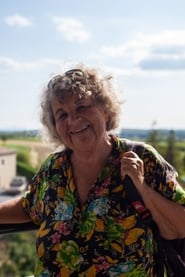
Martine Rousset
Born
1951-05-29 (75)
Place of birth
Montpellier, France
Known for
Directing
Credits
38 titles
Born on May 29, 1951 in Montpellier, Martine Rousset resided in Sète, France until 1975. She studied Philosophy of Cinema at the Université Paul Valery of Montpellier. As a director, she focuses on light and script. She has worked in cinema since 1977, and has been working as an expert beside Suzanne Pagé since 1978 in the audiovisual department of the Musée d’Art Moderne de la ville de Paris. She has attended various festivals such as Festival of Berlin (1980), MNAM, Paris (1989), Berkeley (1990), MoMA, New York (1995), Feminale, Cologne (1992/1994/1996), Osnabrück (1996), IMPACT (1996), Oberhausen (1998), Scratch (1998/2001/2003), Riga (2002), Pesaro (2003), Los Angeles Film Forum (2004),…
Known for
 6.5
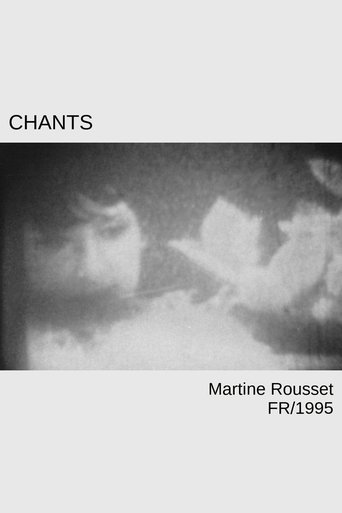
6.5To examine the image of this face, this look, there are fragments of raw stories, mineral lights, snatches of an endless dream ... The insistence clashes, until abstraction , To the decomposed time, to its chaos with the gleams of stone. From that face coming back, nothing was said. The look can not be deciphered. The illusion, even to the darkness, remains mute. Signs of an absent song.
Chants
1995
 NR
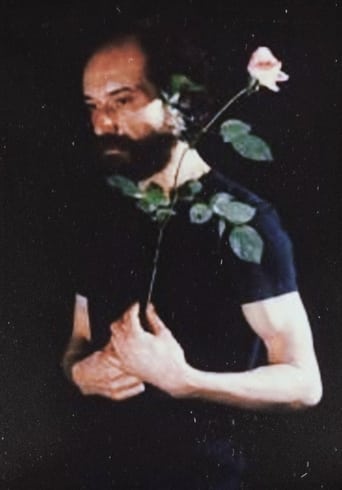
NRA single-screen version of the Portraits / Mirrors multi-projection. Featuring portraits of: Aloual, Gaël Badaud, Raphaël Bassan, Yann Beauvais, Jean-Michel Bouhours, Gérard Courant, Berndt Deprez, Bertrand Gadenne, Mythia Kolésar, Christian Lebrat, Stéphane Marti, Pascal Martin, Michel Nedjar, Dominique Noguez, Vivian Ostrovsky, Bernard Roué, Martine Rousset, Alain Sayag, Unglee, and Catherine Zbinden.
Portraits / Mirrors
1984
 10.0
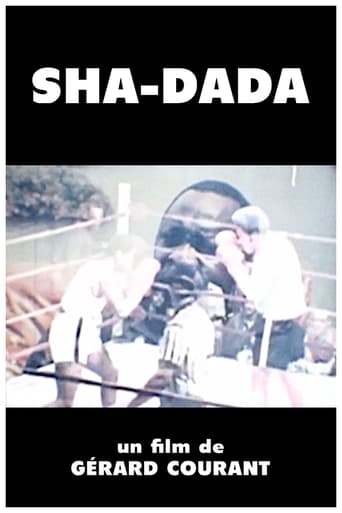
10.0Sha-Dada is an "expanded" film on two screens which presents itself as a confrontation between two imperialisms.
Sha-Dada
1978
Initial situation: models were invited to participate in their portrait by the contribution of personal objects and a great freedom of expression before the camera. This initial situation was conceived by Catherine Rebois. Graffon: I propose to film in a fragmented way these sessions of pose. Participants agree to be filmed at the same time they are photographed. Deliberately sharpened shift between an initial situation in its own duration and its filmic recording. The sequence of photographic shooting sessions is shattered.
Portraiture
1993
 NR
NRWandering through Central Asia, the Caucasus, Kurdistan… to Istanbul. Cities and trains, steppes and snow, down there where the pulse of time evaporates; a very simple film, a navigation, attention letting yourself be taken to the threshold of time going, by hazardous paths... and very slow skies, up to the black sea, where Istanbul is absent, hides under the steps, leaves the place empty, abandons in its wake times undecided.
Ombres
2019
 NR
NRThe first part of the Carolyn Carlson cycle. Between her and herself. Three images of the dance are repeated, come up against opacities that do not let themselves be crossed, are lost in transparencies from which there is no reflection. The sound describes their inevitable journey: this motionless movement.
Carolyn I
1977
Film credits
2000s · 1 titles
1980s · 2 titles
NRA single-screen version of the Portraits / Mirrors multi-projection. Featuring portraits of: Aloual, Gaël Badaud, Raphaël Bassan, Yann Beauvais, Jean-Michel Bouhours, Gérard Courant, Berndt Deprez, Bertrand Gadenne, Mythia Kolésar, Christian Lebrat, Stéphane Marti, Pascal Martin, Michel Nedjar, Dominique Noguez, Vivian Ostrovsky, Bernard Roué, Martine Rousset, Alain Sayag, Unglee, and Catherine Zbinden.
Portraits / Mirrors
1984
 6.0
6.0Free adaptation of Faulkner's novel aroused by the Patrick Henry and Ranucci cases.
Tandis que j’agonise
1980
1970s · 5 titles
10.0Sha-Dada is an "expanded" film on two screens which presents itself as a confrontation between two imperialisms.
Sha-Dada
1978
Reel 3 of Gérard Courant's on-going Cinematon series.
Cinématon III
1978
 4.9
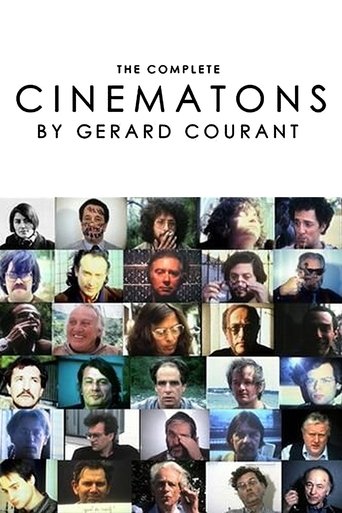
4.9Cinématon is a 156-hour long experimental film by French director Gérard Courant. It was the longest film ever released until 2011. Composed over 36 years from 1978 until 2006, it consists of a series of over 2,821 silent vignettes (cinématons), each 3 minutes and 25 seconds long, of various celebrities, artists, journalists and friends of the director, each doing whatever they want for the allotted time. Subjects of the film include directors Barbet Schroeder, Nagisa Oshima, Volker Schlöndorff, Ken Loach, Benjamin Cuq, Youssef Chahine, Wim Wenders, Joseph Losey, Jean-Luc Godard, Samuel Fuller and Terry Gilliam, chess grandmaster Joël Lautier, and actors Roberto Benigni, Stéphane Audran, Julie Delpy and Lesley Chatterley. Gilliam is featured eating a 100-franc note, while Fuller smokes a cigar. Courant's favourite subject was a 7-month-old baby. The film was screened in its then-entirety in Avignon in November 2009 and was screened in Redondo Beach, CA on April 9, 2010.
Cinématon
1978
 10.0
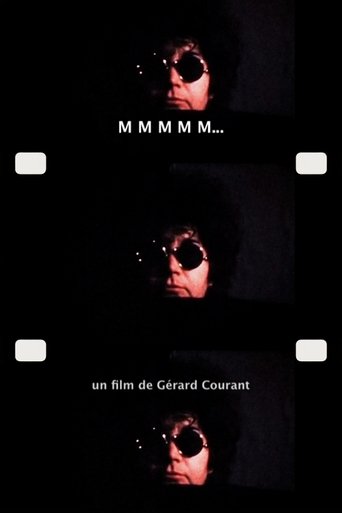
10.0One year before starting his famous series "Cinematons", Gerard Courant had made an ancestor to this series: the portrait of Martine Rousset, filmed with a Bolex 16 mm mechanical.
M M M M M...
1977
 NR
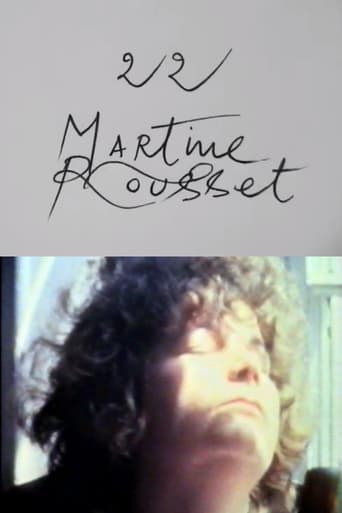
NRNo synopsis available yet.
Cinématon n°22 : Martine Rousset
1978
Behind the camera
6.5To examine the image of this face, this look, there are fragments of raw stories, mineral lights, snatches of an endless dream ... The insistence clashes, until abstraction , To the decomposed time, to its chaos with the gleams of stone. From that face coming back, nothing was said. The look can not be deciphered. The illusion, even to the darkness, remains mute. Signs of an absent song.
Chants
1995
NRWandering through Central Asia, the Caucasus, Kurdistan… to Istanbul. Cities and trains, steppes and snow, down there where the pulse of time evaporates; a very simple film, a navigation, attention letting yourself be taken to the threshold of time going, by hazardous paths... and very slow skies, up to the black sea, where Istanbul is absent, hides under the steps, leaves the place empty, abandons in its wake times undecided.
Ombres
2019
NRThe first part of the Carolyn Carlson cycle. Between her and herself. Three images of the dance are repeated, come up against opacities that do not let themselves be crossed, are lost in transparencies from which there is no reflection. The sound describes their inevitable journey: this motionless movement.
Carolyn I
1977
 NR
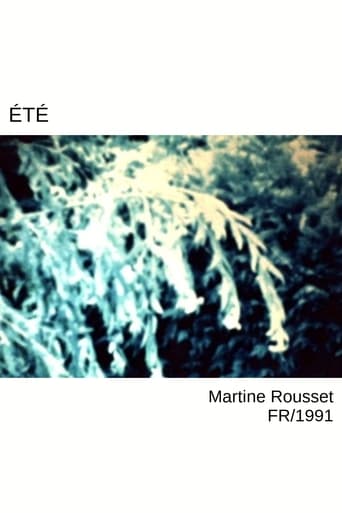
NRThe voices say a story. forget it. Of what time. And who speaks. Both of them. One or the other. later. Others may be. Of chance. Which would cross in this narrative. When. The times have intermingled. The winds meet. History. Pictures. The summer. Humble vacancy with furtive foliage. Fragile memory. Light is a trace of forgetfulness.
Été
1991
 NR
NRWith Istanbul, Martine Rousset puts on the brakes to the world's movement through a cinema of deceleration. At the boundaries between image by image movement and optical fusion, the rhythm of the film gives way to a suspended or floating time. Is it not certain that the idea of duration is more able to render a perception of the city that rather burns for intense emotion. It seems as if the camera cultivates a dreamy half-sleep. To this soft throbbing, blends however, variation of exposure as well. Therefore, at certain times, seeing becomes fragile and dangerous.
Istanbul
2007
 NR
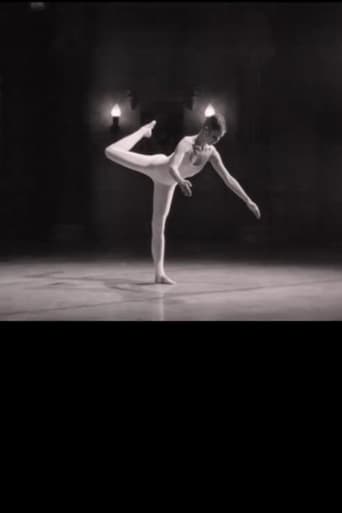
NRPortrait. She dances in the center of her area. Obscure to the look. She abandons us to her limit. Turn. Count the chips. Conjugate. Turn on yourself, in a blind echo. Cross the already deserted space.
Carolyn II
1980
 NR
NROn the one hand: A frame - and then windows in the frame - Spiked - from one to the other - Images designated - fenced, inside / out. Every moment broken - repeated. Always past. One after the other. Cruelty of the open boundary itself - and immediately some untimely object comes up against it - clog the sight - obliterate the frame. On the other hand: The note pursues an eternal moment. It's his game, run the frame, draw the embrasure, and so on. (...) she passes. Immediately in it she plays with nothing. Immediately outside she finds.
Les heures
1990
 NR
NRThe last part of the Carolyn Carlson cycle. Last look. Oversight. Irreversible erasure. The song is immersed. Blinded.
Carolyn III
1981
 NR
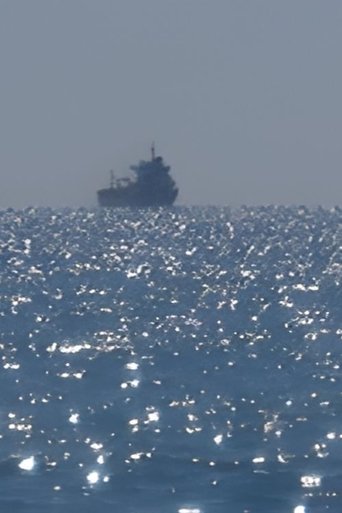
NRThe city is leaving, slowly casting off, on the edge of time... It is leaving lightly... Not so far away, elsewhere, where time passes, has passed, will pass, on the horizon of time... The image glides on its path, a paper cargo ship, daughter of oblivion, free of history. It passes like a cloud, a dead leaf... A few stones remain, marked by vague eternity. A voice passes, from time to time, from distant memory... An ancient traveller? A distracted vagabond? It stands far away, in the rolling of time, silent.
Poussières
2025
 9.0
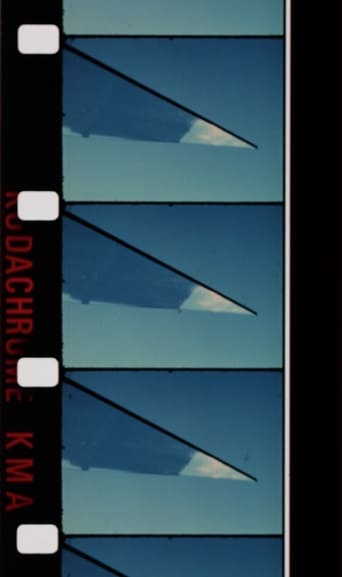
9.0"Readings. A place. Purity of lines. Fine angles. Dominance of whites and blues. Fragility of tapered glasses." A visual evocation of the writing of Katherine Mansfield.
Mansfield K.
1988
 6.4
6.4Listen to the trace, over the absent times, from the shore, at the very edge of the page, in the blind corner where the reader is held, give a voice, as one throws a net.
Train
2022
 NR
NR"Yerevan, Armenia, in the illegible secret of the country, imprisoned in its shadows, in its nights of the underground, nights of the basements, trains for nowhere... ephemeral traveler, light sleeper..."
Rue Pouchkine
2017
 6.0
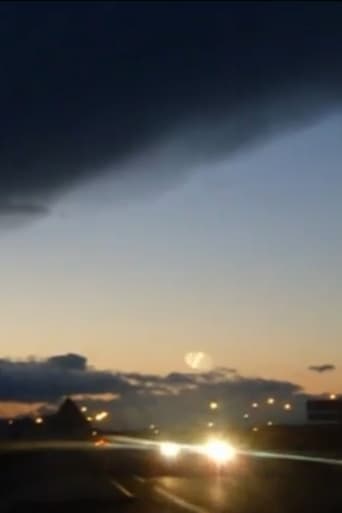
6.0in the meantime , lighthouse , old lighthouse , far away , beyond the ponds , coolpix , little coolpix , long before the perfect clone .
Le Phare
2024
 NR
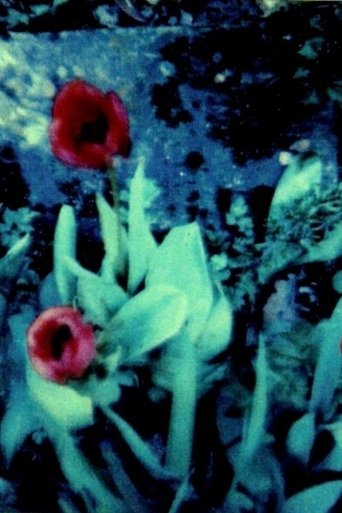
NRReadings. Heinrich von Kleist / Robert Walser. Contiguous. They talk about imagination. Walser imagines Kleist, Kleist nobody, but Penthesilea. In the new desert islands that are the enclaves of flowers of the city. Roses of sidewalks. Wild spaces with anonymity, truncated and without paths, in the banal stones of any career, inscribe and break the voices of an abrupt literary, hermetic and arid fragments in the image of places, almost no of place. Images figures of writing. In the blind corner. Without access. Very few signs.
Kleist
1993
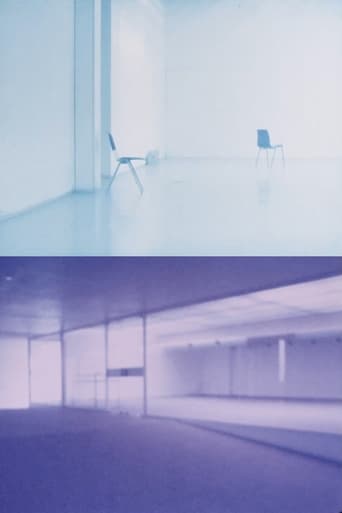 NR
NRAn unknown writer written under the pseudonym of Laure at the beginning of the century. Readings. Geography. The places of a writing. The forces that create, traverse and lose it. The two image strips will be contiguous on the same screen. Their continuous and simultaneous operation. Two mirrors. The voices and their silences are reflected in it. Fade away.
Laure
1984
No synopsis available yet.
Encéphale
1977
 NR
NRThis is what the city offers the passing foreigner: gold and night to the visitor who has barely arrived. Fragments, the stone found by the wayside, raw. We pick it up and keep it. Can we read into the gleaming lights passing by? What is written? Whole images, raw images, far from art and style.
Hôtel Turkoman
2000
 NR
NROriginally a text in fragments, more or less biographical, of different characters. Crossed stories, mixed times, memories and inventions. Coming from the voices encountered. They look like text like sisters. They are the voices of memory, the shadows cast by the characters, the voices of girls, the voices of indecision and evocation. We begin with this work: to read, to record (in analog, it takes breath). Here comes a place, a place found: the foliage of a vine in the South, crossed by the wind Mistral: a landscape. Where are we? Where the boy dies, would we see what he sees? Where was the child playing in the neighborhood? At the heart of the narrative, at the heart of the written word? That would happen. Harvesting images, shifting gears, Multiplying the generations with the listening of the voices, even in memory sometimes.
Passages
1998
 NR
NRFilmmaker's visual diary aboard the Vangolu Express.
Vangölü ekspresi
2015
 8.2
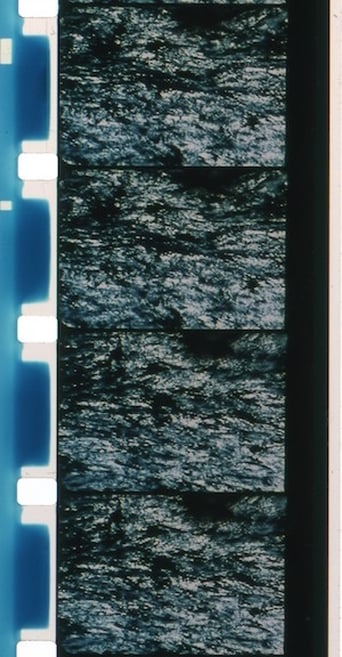
8.2"The sea is a language whose meaning we have lost" Jorge Luis Borges
Mer
2003
 NR
NRThe unfinished Julien Gracq text, the road 1970, a forest near the sea, the enigma of a trajectory, by this text in this lanscape and this landscape in this text, it's diging, since a double echo to a same root, deep, invisible, an absolute presence, a stones fire, then, text and landscape are foliage of the same language.
Chemins
2014
 NR
NRLandscapes. A utilitarian nature. Contemporary. Cruel images. Changing. Seasons. The watch could be eternal. Each image transparent and non-avenue. Only the sound volumes will unfold an obscure duration.
Dehors
1985
 NR
NRRousset photographs a train station in the evening, then boards a late-night train bound for mountainous Anatolia.
Anatolia
2015
 NR
NRNight is falling the landscape is disappearing leave the world and its memory the night, rags in its wake last page.
Crépuscule aux Aresquiers
2014
No synopsis available yet.
In/ex Dérive
1979
 NR
NRFilmmaker's visual diary during her visit to Samarcande.
Samarcande
—
 NR
NR"With Un vent leger dans le feuillage, a fixed close-up which for three minutes decays a few leaves of their green color, Martine Rousset films the fluorescent vibration of the chlorophyll: the color shapes at the same time as it drips, it institutes the It is the admirable film that Maxim Gorky would have liked to see on July 3, 1896." Nicole Brenez
Un vent leger dans le feuillage
1994
 NR
NRWinter, fog, outside. The outline of eyes, sometimes we could ride those trails.
Right Now
2008
 NR
NRTraces of stories. The images themselves. Tear off. Stain. To paint. Makes light out of them.
Le petite réverbère
1978