

Known for
 6.3
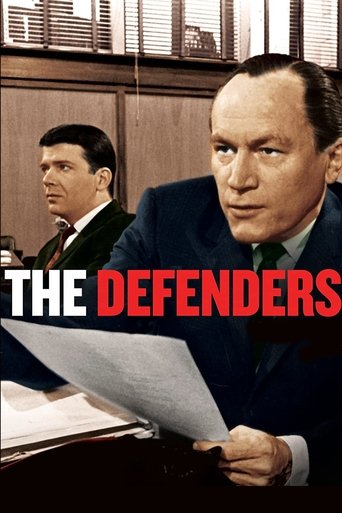
The Defenders is an American courtroom drama series . It starred E. G. Marshall and Robert Reed as father-and-son defense attorneys who specialized in legally complex cases, with defendants such as neo-Nazis, conscientious objectors, civil rights demonstrators, a schoolteacher fired for being an atheist, an author accused of pornography, and a physician charged in a mercy killing.
The Defenders
1961
 7.8
A television anthology series hosted by Alfred Hitchcock featuring dramas, thrillers, and mysteries.
Alfred Hitchcock Presents
1955
 8.0
“The Bell Telephone Hour” was a musical variety show that aired on “NBC” TV from 12 January 1959 to 14 June 1968 that showcased the best in Broadway, Classical, Concert, Jazz and Popular music each week. The series had its’ own house band appropriately named the “Bell Telephone Orchestra”. The show also had its’ own theme song being the “Bell Waltz” composed by “Donald Voorhees” who was also the show's Orchestra conductor. Some of the greatest violinists of the 1960’s performed on this show that aired in the old “Black & White” format. Some of these great violinists included “Erica Mornin”, “Isaac Stern", "Michael Rabin", "Ruggiero Ricci", "Yehudi Menuhin" and "Zino Francesacatti". From time to time some of the great singers and bandleaders of the 1960’s would perform on the show as well. Some of these were “Bing Crosby”, “Gordon MacRae”, “John Gary”, “Leslie Uggams”, “Mary Martin”, “Nelson Eddy”, “Patti Page” and “Roy Rogers”. The TV show followed on the heels of its’ predecessor with the same name on “NBC” radio that aired from 29 April 1940 to 1958 on Monday nights at 8 PM. The name of the show was derived from its’ Major sponsor “Bell Telephone Laboratories”. The TV version began airing on Friday nights at 8:30 PM once a month. It later was given it’s same time slot now airing every other week alternating with another show on the other weeks such as News shows and specials. The show time slot changed quite often over the years. In September 1960 it aired at 9 PM and in September 1961 it moved to 9:30 PM. In October 1963 it moved to Tuesday nights at 10 PM, September 1965 it moved to Sunday night at 6:30 PM and in September 1967 it made its' final move back to Friday night at 10 PM.
The Bell Telephone Hour
1959
After the death of his parents, seven-year-old Jamie is moved from relative to relative until he finally arrives at the home of his aunt Laurie and grandfather.
Jamie
1953
 5.8
Pete St. John is a powerful and successful political consultant, with clients spread around the country. When his long-time friend and client Ohio senator Sam Hastings decides to quit politics, he is rapidly drafted to help with the campaign of the man destined to succeed him, unknown and mysterious businessman Jerome Cade...
Power
1986
 5.5
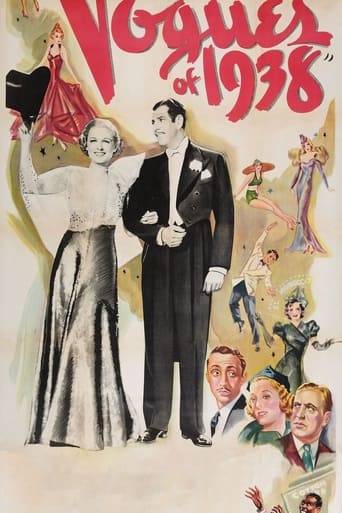
An early Technicolor musical that concentrates on the fashions of the late 1930s, this film was reissued under the title All This and Glamour Too. The top models of the era, including several who are advertising household products, are in the cast. The plot centers around a chic boutique, whose owner, George Curson (Warner Baxter), tries hard to please his customers while keeping peace with his unhappy wife. A wealthy young woman, Wendy Van Klettering (Joan Bennett), decides to take a job as a model at the fashion house, just to amuse herself, but her presence annoys Curson, who must put together the best possible show to compete with rival fashion houses at the Seven Arts Ball. The film includes several hit songs, including the Oscar-nominated "That Old Feeling" by Sammy Fain and Lew Brown.
Walter Wanger's Vogues of 1938
1937
Film credits
1980s · 2 titles
5.8Pete St. John is a powerful and successful political consultant, with clients spread around the country. When his long-time friend and client Ohio senator Sam Hastings decides to quit politics, he is rapidly drafted to help with the campaign of the man destined to succeed him, unknown and mysterious businessman Jerome Cade...
Power
1986
 5.4
Michael Burgess is an academic who has written a scholarly book on the American Revolution which Hollywood has bought the film rights to. The arrival of the film crew seriously disrupts him as actors want to change their characters, directors want to re-stage battles, and he becomes infatuated with Faith who will play the female lead in the movie. At the same time, he is fighting with his crazy mother who thinks the Devil lives in her kitchen, and his girlfriend who is talking about commitment.
Sweet Liberty
1986
1930s · 6 titles
5.5An early Technicolor musical that concentrates on the fashions of the late 1930s, this film was reissued under the title All This and Glamour Too. The top models of the era, including several who are advertising household products, are in the cast. The plot centers around a chic boutique, whose owner, George Curson (Warner Baxter), tries hard to please his customers while keeping peace with his unhappy wife. A wealthy young woman, Wendy Van Klettering (Joan Bennett), decides to take a job as a model at the fashion house, just to amuse herself, but her presence annoys Curson, who must put together the best possible show to compete with rival fashion houses at the Seven Arts Ball. The film includes several hit songs, including the Oscar-nominated "That Old Feeling" by Sammy Fain and Lew Brown.
Walter Wanger's Vogues of 1938
1937
 4.0
"Iron Man" Mason is a talented but rather dimwitted prizefighter. Against the advice of his crusty old manager George Regan, Mason dumps his ever-loving girlfriend Judy Williams in favor of sexy blonde Rose Whitney.
Some Blondes Are Dangerous
1937
 5.5
Ranch owner Sandra, fresh from animal husbandry school, brings a flock of sheep into cattle country. The local ranchers don't like it, and ranch foreman Gene must deal with it.
Springtime in the Rockies
1937
 9.0
A woman commits suicide after being blackmailed, and her husband resolves to kill the man responsible. Blackmail, suicide, murder, a cover-up not to mention yachts and sea planes all wrapped up in an efficient 66 minutes of screen time with Henry Hunter, Polly Rowles and C. Henry Gordon in the leads, and Lewis R. Foster sitting in the director’s chair.
Love Letters of a Star
1936
 7.0
Talbot works as a dispatcher at a small rural railway station. One rainy night, shortly after a company payroll has arrived at the station, a masked criminal arrives to steal it. Talbot intercepts the villain's plan and a struggle ensues. He manages to fight off the masked man and save the payroll. But during the fight he is away from his station and misses a call to change the tracks for an oncoming train. This causes a terrible train crash resulting in many lost lives.
West Bound Limited
1937
 6.4
A Navy pilot gets involved in a romantic triangle while stationed in Hawaii.
Wings Over Honolulu
1937
Series credits
6.3The Defenders is an American courtroom drama series . It starred E. G. Marshall and Robert Reed as father-and-son defense attorneys who specialized in legally complex cases, with defendants such as neo-Nazis, conscientious objectors, civil rights demonstrators, a schoolteacher fired for being an atheist, an author accused of pornography, and a physician charged in a mercy killing.
The Defenders
1961
7.8A television anthology series hosted by Alfred Hitchcock featuring dramas, thrillers, and mysteries.
Alfred Hitchcock Presents
1955
8.0“The Bell Telephone Hour” was a musical variety show that aired on “NBC” TV from 12 January 1959 to 14 June 1968 that showcased the best in Broadway, Classical, Concert, Jazz and Popular music each week. The series had its’ own house band appropriately named the “Bell Telephone Orchestra”. The show also had its’ own theme song being the “Bell Waltz” composed by “Donald Voorhees” who was also the show's Orchestra conductor. Some of the greatest violinists of the 1960’s performed on this show that aired in the old “Black & White” format. Some of these great violinists included “Erica Mornin”, “Isaac Stern", "Michael Rabin", "Ruggiero Ricci", "Yehudi Menuhin" and "Zino Francesacatti". From time to time some of the great singers and bandleaders of the 1960’s would perform on the show as well. Some of these were “Bing Crosby”, “Gordon MacRae”, “John Gary”, “Leslie Uggams”, “Mary Martin”, “Nelson Eddy”, “Patti Page” and “Roy Rogers”. The TV show followed on the heels of its’ predecessor with the same name on “NBC” radio that aired from 29 April 1940 to 1958 on Monday nights at 8 PM. The name of the show was derived from its’ Major sponsor “Bell Telephone Laboratories”. The TV version began airing on Friday nights at 8:30 PM once a month. It later was given it’s same time slot now airing every other week alternating with another show on the other weeks such as News shows and specials. The show time slot changed quite often over the years. In September 1960 it aired at 9 PM and in September 1961 it moved to 9:30 PM. In October 1963 it moved to Tuesday nights at 10 PM, September 1965 it moved to Sunday night at 6:30 PM and in September 1967 it made its' final move back to Friday night at 10 PM.
The Bell Telephone Hour
1959
After the death of his parents, seven-year-old Jamie is moved from relative to relative until he finally arrives at the home of his aunt Laurie and grandfather.
Jamie
1953