

Acting
Augusto Aníbal
Born — Died
1890-08-06 — 1965-06-12
Place of birth
Rio de Janeiro, Brazil
Known for
Acting
Credits
9 titles
Augusto Aníbal de Almeida, better known simply as Augusto Aníbal (Rio de Janeiro, August 6, 1890 - Rio de Janeiro, June 12, 1965), was a Brazilian actor, playwright and singer. He was one of the best-known actors in Brazil in the 1920s and 1930s, considered one of the first successful Brazilian comedians. His name attracted so much attention that it was used in the title of the film "Augusto Aníbal Quer Casar", for advertising purposes. He made his film debut during the silent era, in the film "The Black Knight," by filmmaker Luiz de Barros, released in 1923, in which he played a farmer. The following year, he starred in and gave his name to the film "Augusto Aníbal Quer Casar," considered…
Known for
 9.0
9.0A 1923 Brazilian silent comedy film directed by Luiz de Barros, now considered a Lost Film. Augusto Aníbal Quer Casar is recognized as the first portrayal of an LGBT character in Brazilian cinema history.
Augusto Aníbal Quer Casar
1923
 10.0
10.0Only a fragment of the film survives. Taking advantage of Carnival season, Álvaro devises a Machiavellian plan to seduce a young woman. When she shows up at his house to deliver a bundle of clothes, he shows her a beautiful gigolo dress and invites her to the town's dances. They would only be for two or three hours. Liz accepts, and together they go out dressed as a gigolo, he as an Apache. Liz has fun with Álvaro, and at one point, they decide to go to the beach. Dizzy from champagne and dancing, she loses consciousness, waking up alone. Desperate, Liz runs to Álvaro's house and discovers that he has left for the north. Disoriented, she wanders the streets until she meets Maneco, an employee of Dr. Elzman. Maneco takes her to the doctor's house, and Liz tells him everything that happened. The doctor, fond of the young woman, decides to protect her.
A Gigolette
1924
 6.0
6.0No synopsis available yet.
Caídos do Céu
1946
 NR
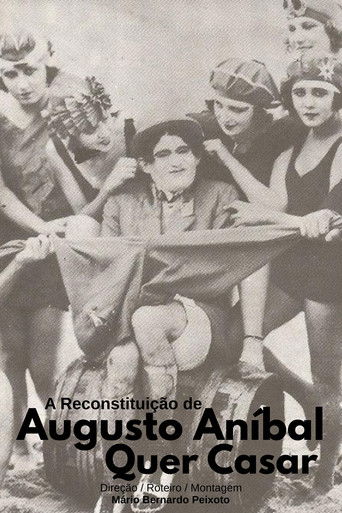
NRReconstruction of the lost film "Augusto Aníbal Quer Casar," which turned 100 years old in 2023.
A Reconstituição de "Augusto Aníbal Quer Casar"
2023
 6.0
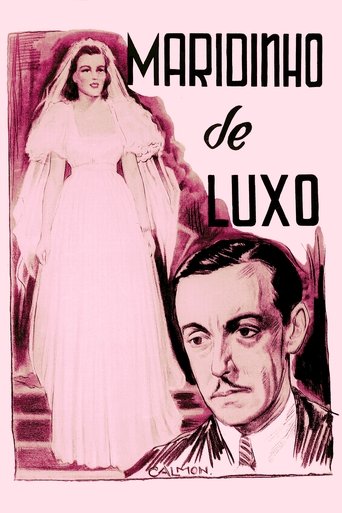
6.0A pampered girl decides to marry in a different way: buying a husband.
Maridinho de Luxo
1938
 10.0
10.0No synopsis available yet.
Mud Angel
1951
Film credits
1950s · 1 titles
1940s · 2 titles

1930s · 1 titles
1920s · 4 titles
9.0A 1923 Brazilian silent comedy film directed by Luiz de Barros, now considered a Lost Film. Augusto Aníbal Quer Casar is recognized as the first portrayal of an LGBT character in Brazilian cinema history.
Augusto Aníbal Quer Casar
1923
10.0Only a fragment of the film survives. Taking advantage of Carnival season, Álvaro devises a Machiavellian plan to seduce a young woman. When she shows up at his house to deliver a bundle of clothes, he shows her a beautiful gigolo dress and invites her to the town's dances. They would only be for two or three hours. Liz accepts, and together they go out dressed as a gigolo, he as an Apache. Liz has fun with Álvaro, and at one point, they decide to go to the beach. Dizzy from champagne and dancing, she loses consciousness, waking up alone. Desperate, Liz runs to Álvaro's house and discovers that he has left for the north. Disoriented, she wanders the streets until she meets Maneco, an employee of Dr. Elzman. Maneco takes her to the doctor's house, and Liz tells him everything that happened. The doctor, fond of the young woman, decides to protect her.
A Gigolette
1924
 10.0
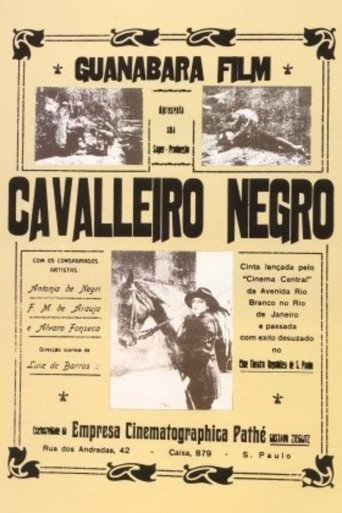
10.0Seeing a black knight, the young man Álvaro runs after him. During the race, the knight falls and he discovers that it is a girl. The two end up falling in love.
O Cavaleiro Negro
1923
 NR
NRMaria, a very sweet young woman, was loved by everyone, including Norberto, "a soul deadened by imbecility." However, she falls in love with Álvaro, an honest and well-intentioned young man, and they soon marry. Maria's parents, Dona Chincha (a wicked mother) and "Seu" Augusto (an alcoholic and lazy father), vehemently support the marriage, since Álvaro is rich. The only person unhappy with the marriage is Norberto.
Sinfonia da Floresta
1929