

Acting
Peter Fitz
Born — Died
1931-08-08 — 2013-01-10
Place of birth
Kaiserslautern, Germany
Known for
Acting
Credits
100 titles
Peter Fitz (8 August 1931 - 10 January 2013) was a German stage and film actor. Fitz completed an apprenticeship at the drama school of the Deutsches Schauspielhaus in Hamburg in the 1950s. In the 1960s, engagements at the Schauspiel Frankfurt theatre followed. Director Peter Stein brought him into the ensemble of the Berlin Schaubühne theatre, where he worked under the direction of Stein as well as Klaus Michael Grüber. In the course of his career, Fitz performed at all major German-language venues, such as the Vienna Burgtheater, the Munich Kammerspiele, Berlin's Schiller Theater, as well as the Salzburg Festival. In 1980 and 1983, he was voted Actor of the Year by the editors of Theater…
Known for
 6.2
6.2Tatort is a long-running German/Austrian/Swiss crime television series set in various parts of these countries. The show is broadcast on the channels of ARD in Germany, ORF in Austria and SF1 in Switzerland.
Scene of the Crime
1970
 6.2
6.2Polizeiruf 110 is a long-running German language detective television series. The first episode was broadcast 27 June 1971 in the German Democratic Republic, and after the dissolution of Fernsehen der DDR the series was picked up by ARD. It was originally created as a counterpart to the West German series Tatort, and quickly became a public favorite.
Polizeiruf 110
1971
 5.9
5.9SOKO 5113 is a long-running German police procedural television series. It was first aired in 1978 on 2 January. SOKO is an abbreviation of the term "Sonderkommission" in German.
SOKO München
1978
 5.7
5.7Ein Fall für zwei is a German television series, which premiered on September 11, 1981 on ZDF. The series, located in Frankfurt am Main, features two main characters who solve crimes: a defense attorney and a private investigator. Josef Matula, a former German police officer, has gone into private business. His method of investigation is very effective and direct, and he sometimes even resorts to dirty tricks. Claus Theo Gärtner has portrayed the role since the start of the series.
A Case For Two
1981
 7.2
7.2After his handler is killed, police dog Rex teams up with recently-divorced inspector Richard Moser to investigate crimes and solve mysteries on the streets of Vienna. And they sometimes get help from their two-legged friend, Inspector Stockinger.
Inspector Rex
1994
 3.7
3.7Wolffs Revier is a German television series.
Wolffs Revier
1992
Film credits
2000s · 20 titles
 7.8
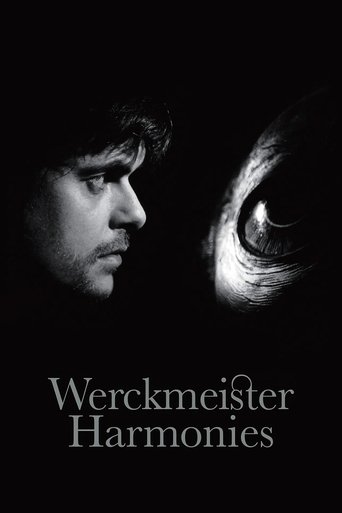
7.8A naive young man witnesses an escalation of violence in his small hometown following the arrival of a mysterious circus attraction.
Werckmeister Harmonies
2001
 6.3
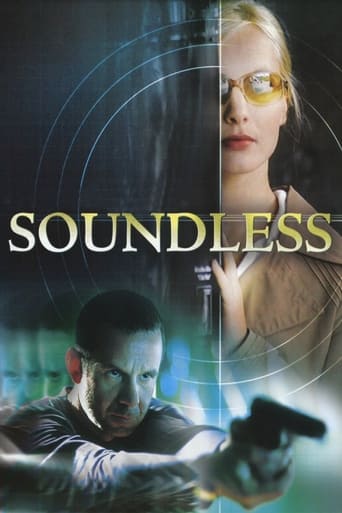
6.3Viktor, a methodical hit man, probably on his last job, has no plan for his retirement. He does not kill Nina, a woman sleeping beside his latest mark; then he follows her and rescues her from an attempted suicide. Nina is attracted to him, but also wants to know who he is. Her pursuit of his identity crosses the investigation of Lang, a brilliant police investigator who tries to inhabit the minds of the victims and the killer. Viktor's employer also wants to kill Viktor and his contact, an aging arms dealer and family friend. Does Viktor have a future?
Soundless
2004
 6.4
6.4Laura sees a shooting star falling to earth and finds it in a park, down on the floor and with a broken point. The star is a living being, and Laura takes her home to reattach its point with a band-aid. The little star has special powers and can make people fly, or bring inanimate objects to life. But the more she stays on Earth, the weaker she becomes and her colors fade away and her powers start to fail. Laura must find a way to send the little star back into outer space.
Laura's Star
2004
 4.8
4.8A great mosaic, a labyrinth of scenes, dialogue splinters, interviews, portraits of people surrounding Hamlet and wanting to be part of his story.
Hamlet_X
2003
 5.8
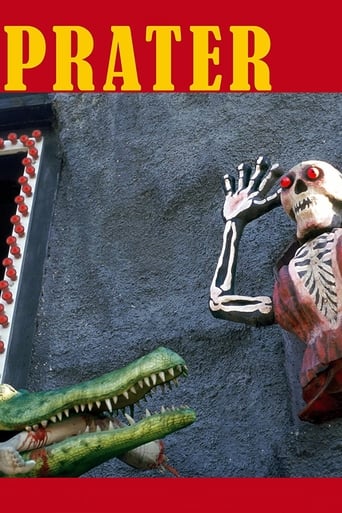
5.8Vienna’s Prater is an amusement park and a desire machine. No mechanical invention, no novel idea or sensational innovation could escape incorporation into the Prater. The diverse story-telling in Ulrike Ottinger’s film “Prater” transforms this place of sensations into a modern cinema of attractions. The Prater’s history from the beginning to the present is told by its protagonists and those who have documented it, including contemporary cinematic images of the Prater, interviews with carnies, commentary by Austrians and visitors from abroad, film quotes, and photographic and written documentary materials. The meaning of the Prater, its status as a place of technological innovation, and its role as a cultural medium are reflected in texts by Elfriede Jelinek, Josef von Sternberg, Erich Kästner and Elias Canetti, as well as in music devoted to this amusement venue throughout the course of its history.
Prater
2007
After Victor, 19 years old, is accused of raping a 17-year-old girl, his teachers -under the direction of principal Cornelia Cordes- have to decide whether he should be suspended or not. The discussion of these nine persons shows the contrasts in human character and reveals some bitter feelings...
Die Konferenz
2005
 NR
NRHe wanted to revolutionize theater practice and at the same time social awareness: Today Brecht, who was born in Augsburg in 1898 and died in East Berlin in 1956, is one of the most important playwrights of the 20th century.
Brecht - Die Kunst zu leben
2006
 NR
NRFranz, editor-in-chief of a large publishing house and no stranger to sadness himself, learns shortly before his wife Simone's death that she has been cheating on him. Stunned by this infidelity, he doggedly sets out in search of his rival. At Simone's funeral, a pimp turns up with two bodyguards and lays a wreath with the dedication 'With love - your tiger'. Franz wants to get to know this rival better and even follows him to his stately home in Andalusia.
Der Tiger oder Was Frauen lieben!
2009
 6.0
6.0No synopsis available yet.
Utta Danella - Eine Liebe im September
2006
 4.1
4.1Prussian general's son Friedrich, Freiherr (German baron) von der Trenck, is an unruly student whose countless affairs make him enemies, but he wins every duel. Frederic II the Great recruits him for his personal bodyguard. During his cadet training under the cruel stickler Graf (count) von Jaschinsky Friedrich falls in love with the king's headstrong oldest sister Amalia. She, however, refuses to be married off the the Swedish king's heir. When Prussia makes war on Austria over Silesia, Trenck's loyalty is dubious on account of an Austrian family branch. Janischky eagerly convinces the king there is more.
Trenck - Zwei Herzen gegen die Krone
2003
 4.4
4.4At some point in the not-so-distant future, an unnamed European city has evolved into a bizarre dystopian metropolis, whose residents inhabit towering utopian high-rises and work, collectively, in a single compound.
Silent Resident
2008
 NR
NRThis TV movie focuses on an average East German citizen, who accidentally becomes a Cold War victim. Shortly before his wedding day, East German Stephan Busemann goes to West Germany to attend his brother Hubert's fiftieth birthday. At the same time, his son Martin and his daughter-in-law Bettina flee their communist home country in a balloon, what Stephan didn't know. As the East Germans believe he helped them to escape, he isn't allowed to return, so Martin writes a letter to the country's leader Erich Honecker. However, now the West Germans think that Stephan is a spy.
Heimweh nach drüben
2007
 8.7
8.7A television reporter searches for alien life forms and gets entangeled in a web of intrigue.
Planet der Kannibalen
2001
 4.7
4.7A young woman is torn between the love of her life and her second passion, fashion. In the first part, we get to know Isabelle, who grows up in the Trakenbergs' house, a highly respected fashion entrepreneur. She has known Jon, the love of her life, since childhood...
Der Seerosenteich
2003
 6.5
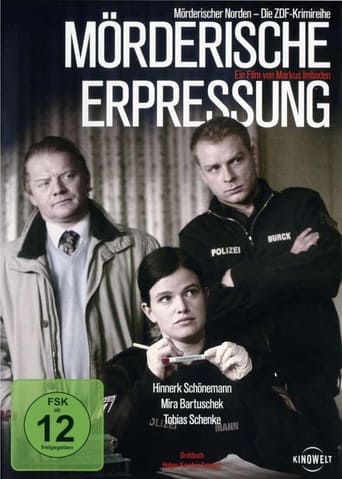
6.5Möhnstedt is a paradise for parking offenders and speeders - village policeman Klaus Burck turns a blind eye to such offenses. Much to the astonishment of his new colleague Eva Mann, who has just graduated from police school and doesn't understand such leniency... When Jutta Krohn reports her daughter Nina missing one day, the village lethargy is suddenly over. A short time later, her body is fished out of the village lake. Nina, a nightclub dancer, attractive but unapproachable, died after having sex with three men. When the trail leads to the powerful bakery owner Jansen and his sons, the police suddenly have half the village against them...
Mörderische Erpressung
2006
 5.0
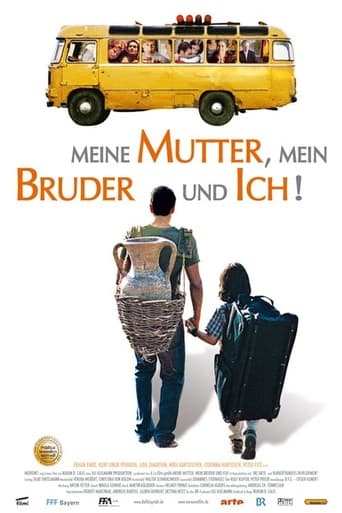
5.0In Munich, the Armenian Areg dreams of studying cinema with his German girlfriend Lilly. Until her widowed mother fell seriously ill with diabetes. Areg and her little brother Garnik have to take care of her.
Meine Mutter, mein Bruder und ich!
2008
Couples and families in the days after September 11, 2001. All relationships become complictaed, but only one of the four nested stories surrounding a German who condemns the attack, and her husband, a Muslim who advocates it, offers approximate a discussion approach to the attack. The remaining episodes are poorly staged, construction-looking relationship tragedies.
September
2003
 5.0
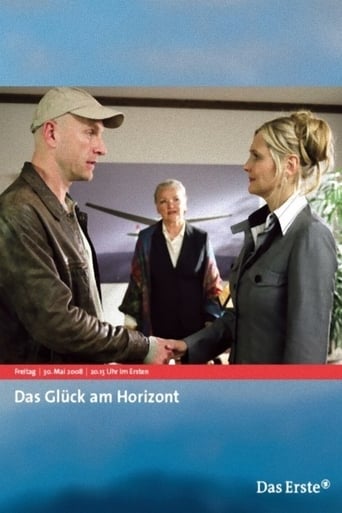
5.0Maja Vogt, a young management consultant, has just separated from her husband and is fully committed to her career. The assignment to save an ailing company from bankruptcy comes at just the right time. But the son of the company boss, of all people, is more than presumptuous and leaves no doubt about his disapproval of her. The two clash unchecked and you can literally see the sparks flying...
Das Glück am Horizont
2008
 7.3
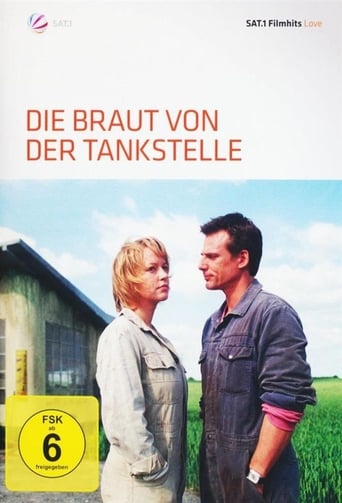
7.3Felix from Hamburg comes into possession of a run-down gas station in the middle of the north German provinces through a dubious barter. But that's not all: right across the street, the young Weda also runs a petrol pump business and is of course not very enthusiastic about the annoying competition. Only when an oil company stretches out its greedy fingers for the two gas stations do the quarreling operators also get closer personally...
Die Braut von der Tankstelle
2005
Berlin couple Eva and Peter are planning a trip to Bavaria with their children to visit Eva's parents. But there is trouble brewing behind the idyllic family façade. Father-in-law Anton and Peter can't smell each other, and the relationship between Eva and Anton is also fraught with accusations. With this baggage, the family goes on a day trip hiking in the Bavarian Forest. But before all the conflicts can be resolved, they fall into the hands of a brutal gang of smugglers - only Eva is able to escape. When the first shot is fired, the horror trip and a merciless hunt through the national park begins...
Bis an die Grenze
2009
1990s · 18 titles
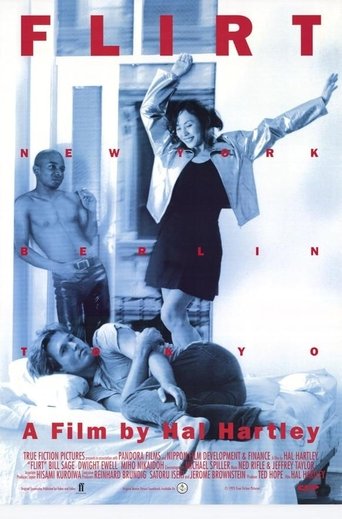 6.2
6.2The same situation is played out in different cities (New York, Berlin and Tokyo). A lover has to choose whether to commit to a partner who is returning home. In each case there are other people involved, an ex-partner and someone else in a "permanent" relationship, what do they choose to do?
Flirt
1996
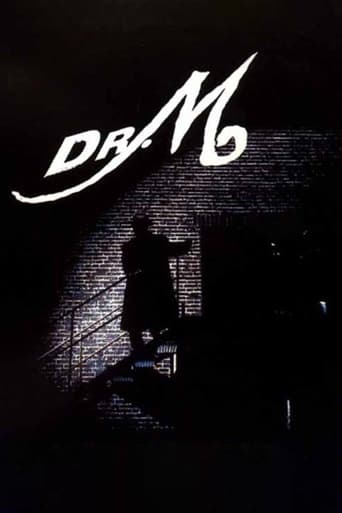 4.7
4.7In the not-too-distant future Berlin is shocked by a series of spectacular suicides; a policeman's investigations lead him to a beautiful, enigmatic woman and the revelation of a sinister plot to manipulate the population through mass hypnosis.
Dr. M
1990
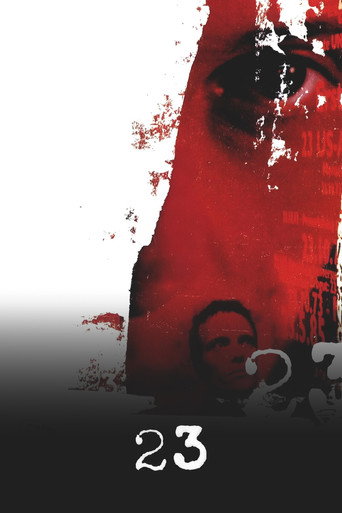 6.8
6.8The movie's plot is based on the true story of a group of young computer hackers from Hannover, Germany. In the late 1980s the orphaned Karl Koch invests his heritage in a flat and a home computer. At first he dials up to bulletin boards to discuss conspiracy theories inspired by his favorite novel, R.A. Wilson's "Illuminatus", but soon he and his friend David start breaking into government and military computers. Pepe, one of Karl's rather criminal acquaintances senses that there is money in computer cracking - he travels to east Berlin and tries to contact the KGB.
23
1998
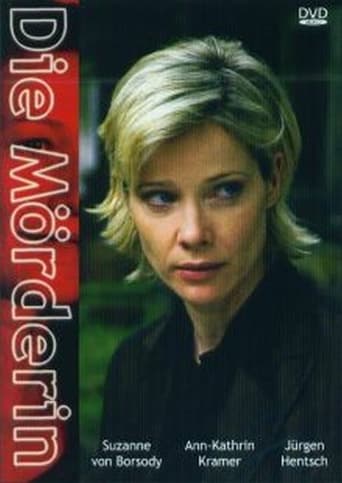 4.3
4.3No synopsis available yet.
Die Mörderin
1999
 7.3
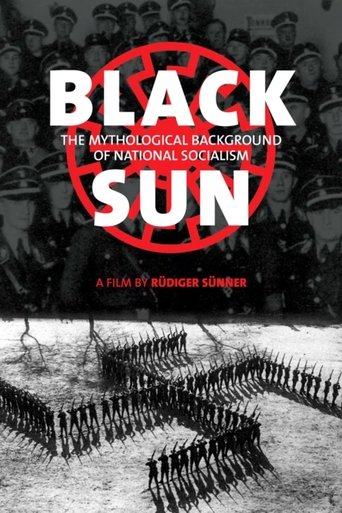
7.3A historical analysis of how groups such as the Nazi’s may use language, symbols, and religious connotation in order to come to power. It raises questions that deserve in depth analysis and consideration. Questions include: Where do legends expand our thinking and where do they bury it? When does spiritual pursuit suddenly turn into fanaticism and violence? Last, have we as a society learned from our past, and if so have forgotten the lessons of the 20th Century? Are we now embarking on a new level only to learn the same old lessons about humanity again? In addressing these questions we are taken into the back drop of the history of Germany beginning in the late 1800’s through the late 20th Century at the eve of the 21st. “A society that does not take archetypes, myths, and symbols seriously will possibly be jumped by them from behind.”
Black Sun
1998
 10.0
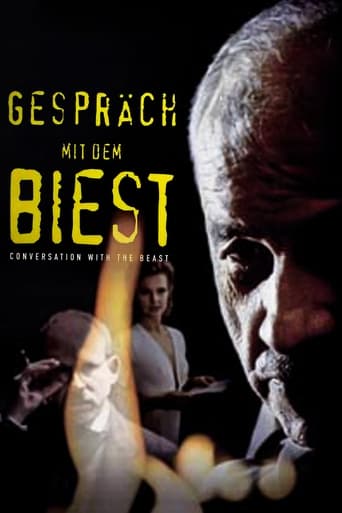
10.0An American historian (Mr Webster) comes to Berlin to visit an old man who claims to be the real Adolf Hitler and to be 103 years old. The Hitler who died in 1945, the old man says, was just one of his six doubles - one for each weekday - while Hitler himself retired into a bunker below the S-Bahn tracks and married a second time.
Conversation with the Beast
1997
No synopsis available yet.
Babuschka
1996
No synopsis available yet.
Gehetzt – Der Tod im Sucher
1998
No synopsis available yet.
Blutige Scheidung
1997
 10.0
10.0In a traffic accident, the funky young radio presenter Christine meets Bruno, a concrete mixer driver thirty years her senior. They are taken with his simple, direct manner and a relationship develops between them that throws Christine's previous life plans out of kilter. But when Bruno buys a little house by the lake where he wants to spend his life with Christine, she gets scared and moves away with her previous boyfriend, a lawyer. Disappointed, Bruno destroys the house by the lake. But when he has finished, Christine is standing there.
Ich und Christine
1993
 8.0
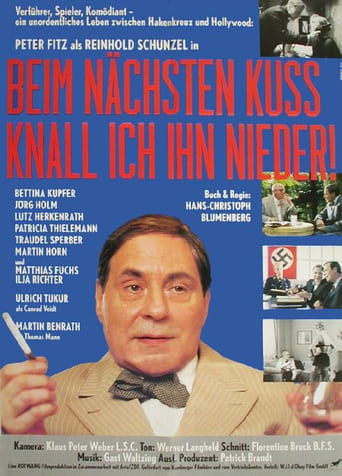
8.0Reinhold Schünzel is one of the most sought-after actors and directors of cinema of the Weimar Republic. When the National Socialists come to power in 1933, he just releases his legendary gender comedy “Viktor and Victoria“. Despite his Jewish faith, Schünzel is under the special protection of Hitler and can work unhindered due to a special permit. But Schünzel's days in Germany are also numbered. In his sparkling and pointed artist portrait, director Hans-Christoph Blumenberg tells about the rise and fall of Reinhold Schünzel. The grandiose Peter Fitz mimes a charming, witty and ambitious director. By letting some performers play several roles, Blumenberg cleverly illustrates the recurring conditions with which Reinhold Schünzel faces everywhere. Schünzel's irony, language joke and sophistication in particular congenially transfers Blumenberg to his film.
Beim nächsten Kuß knall ich ihn nieder
1996
 4.3
4.3Erich Kasulke and Rudolf Portmann are comedian stars of the former GDR. When the Wall falls, so does their success. Portmann becomes a successful businessman, while Kasulke tries to continue working on the comedy circuit - without success. When his wife also cheats on him, he decides to start a new life in Berlin. There he quickly meets his old friend Portmann, who has built up a huge company. He offers him a job. But Erich puts the entire company in danger...
Everything's a Lie
1992
 7.0
7.0No synopsis available yet.
Tote sterben niemals aus
1996
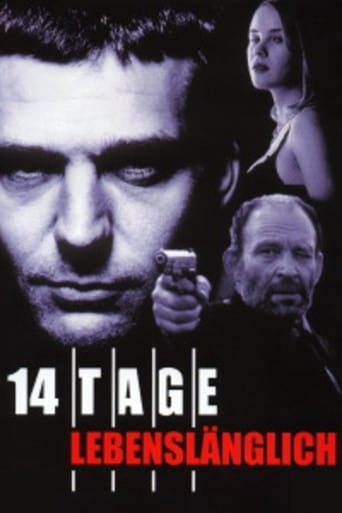 5.4
5.4Konrad von Seidlitz is a young yuppie lawyer currently celebrating his engagement with Cornelia, daughter of minister of justice Volkerts. As a public relations gag, he hasn't paid his parking fines for two years and now insists on being sentenced to jail for two weeks as punishment. Using his knowledge as a lawyer he makes the best out of his visit in jail still working, still in a splendid mood and not adapting to any rule. Probably a good way to get the desired public attention, but also a good way to make enemies inside the jail-house. One day before Konrad is to be released his booth is searched and two hundred grams of cocaine are found. That's a serious problem even for a brilliant lawyer like Konrad and even if you're innocent
14 Days to Life
1997
 5.0
5.0Angelo and two of his buddies set out to rob a Swiss bank, and from the start things don't go well. The man driving the getaway car packed up and left before anyone could connect him with the crime, and Angelo's other partner got shot and killed. The best he can do is grab someone's cash-filled briefcase and take a car and its driver hostage. It turns out that the driver is the daughter of the bank director, so he figures that she's good for ransom money and begins negotiations for that. Meanwhile, the briefcase he took at the bank turns out to have belonged to a man who is willing to hire killers to get it back for him. The situation grows increasingly perilous for him, and he decides to flee the scene but not before he has won the heart of his lovely hostage.
All Out
1991
Berlin painter Banuscher has been rather moderately successful so far. He has only been able to keep his head above water thanks to the financial support of his girlfriend Francis. She then organizes his first exhibition, which is finally a success. Instead of gratitude, however, Francis is given the boot by Banuscher. She doesn't want to put up with this and swears revenge. And what could be better suited for this than the artworks of the vain Banuscher?
Wer hat Angst vor Rot, Gelb, Blau?
1991
 5.0
5.0What are the Knickerbocker Band doing at midnight in the cemetery? Is a spirit really speaking form the sinister grave? Why does Melissa, daughter of the dead sorcerer, receive threats? Has it all to do with the mysterious legacy of the magician?
The Knickerbocker Gang: The Talking Grave
1994
 8.0
8.0After 15 years of family hustle and bustle with her husband Max and their two children, Ally has had enough. She decides to finally realize herself and takes a job at a TV station where Max also works as a presenter of a show. Ally quickly becomes a talented and successful TV star, which doesn't exactly please Max. When the charming and attractive Rudi Kayser starts courting Ally, stress is the order of the day.
Liebling, vergiß die Socken nicht!
1998
1980s · 14 titles
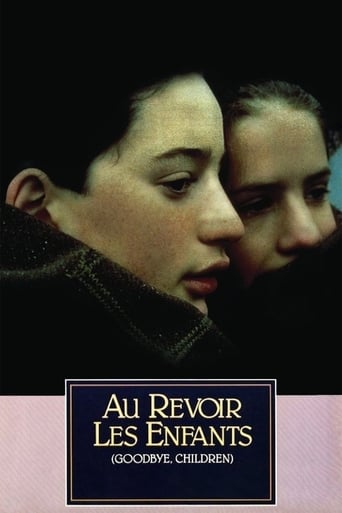 7.5
7.5Au revoir les enfants tells a heartbreaking story of friendship and devastating loss concerning two boys living in Nazi-occupied France. At a provincial Catholic boarding school, the precocious youths enjoy true camaraderie—until a secret is revealed. Based on events from writer-director Malle’s own childhood, the film is a subtle, precisely observed tale of courage, cowardice, and tragic awakening.
Au Revoir les Enfants
1987
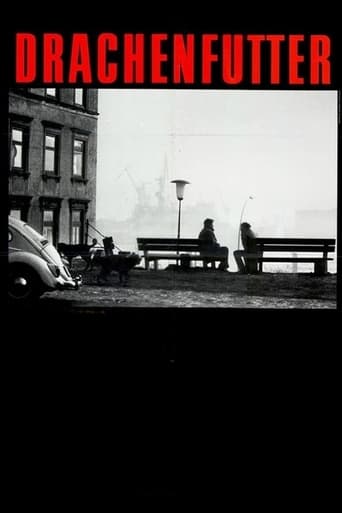 7.0
7.0Shezad is a Pakistani refugee seeking his fortune in Hamburg. At night, he sells roses in pubs. During the day, he is looking for a job. He starts working as a dishwasher and soup cook in a Chinese restaurant. Xiao, the waiter, and Shezad dream of opening their own restaurant. Herder, the janitor of the asylum seekers' home and part-time escape helper, has to go abroad. Shezad takes over his job and finds the money for the restaurant in East Berlin by not entirely legal means. So Shezad and Xiao's dream comes true. However, the day of the opening ends differently than the two of them had imagined.
Dragon Chow
1987
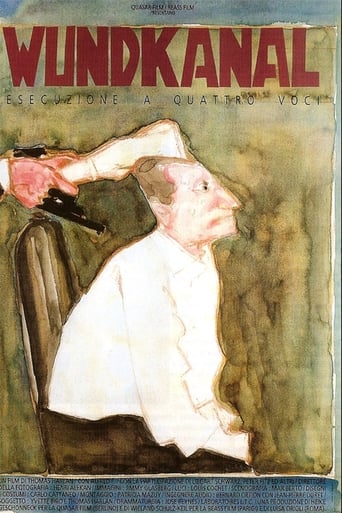 6.7
6.7An old man is kidnapped. His interrogation uncovers the biography of a mass murderer: The 80 years old man was a SS leader and responsible for the killing of thousands of people in the Soviet Union. He also "invented" an evil technique of eliminating political prisoners: the manipulated suicide. Thomas Harlan reconstructs the history of a bureaucratic murderer, he also develops a direct connection between the Nationalsocialism and the treatment of prisoners of the RAF terrorists in the Stuttgart isolation prison. Robert Kramer filmed the shooting of Harlan's Wundkanal: Notre Nazi documents a social experiment in which the children of Nazis and of victims meet a real culprit. The reality seems to be stronger that the fiction in Harlan's film. (Edition Filmmuseum)
Wundkanal
1984
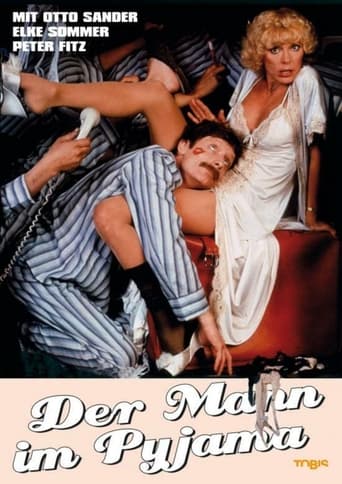 6.7
6.7A man just wants to buy some cigarettes - but when he hurries out onto the street in his pyjamas to buy a pack from the vending machine, a chain of coincidences leads to the most adventurous night of his life. On his odyssey through Berlin at night, he witnesses marital tragedies and love affairs, bank robberies and wild demonstrations.
Der Mann im Pyjama
1981
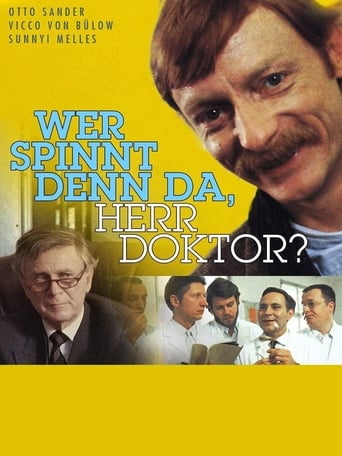 8.7
8.7Patient No. 7, a man who has been wrongly committed to a psychiatric hospital for years, escapes and embarks on a chaotic journey through the outside world. Disguised as a painter, he causes uproar with his innocent yet eccentric behavior, disrupting the lives of strangers. Along the way, he befriends Marlene, a young woman fascinated by his unconventional charm, much to her jealous husband's frustration. As the line between sanity and madness blurs, the film humorously explores the absurdity of societal norms. Featuring a memorable cameo by Loriot, this quirky satire questions who’s truly "crazy."
Who's Going Crazy Here, Doctor?
1981
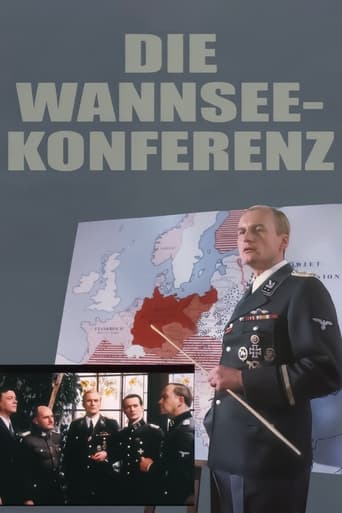 6.9
6.9A real time recreation of the 1942 Wannsee Conference, in which leading SS and Nazi Party officals gathered to discuss the "Final Solution to the Jewish Question". Led by SS-General Reinhard Heydrich, the Wannsee Conference was the starting point for the Jewish Holcaust which led to the mass murder of six million people.
The Wannsee Conference
1984
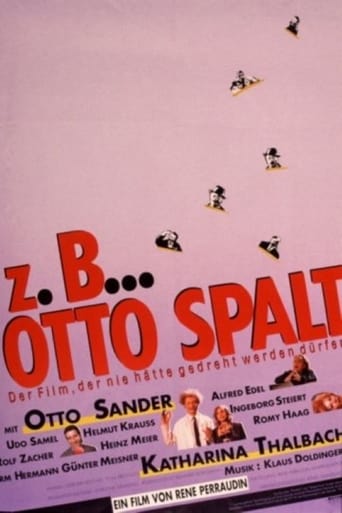 9.0
9.0The filmmaker René Perraudin made five comedic short films with Otto Sander in the leading role and knits them into a feature film.
The Case of Mr. Spalt
1988
 7.0
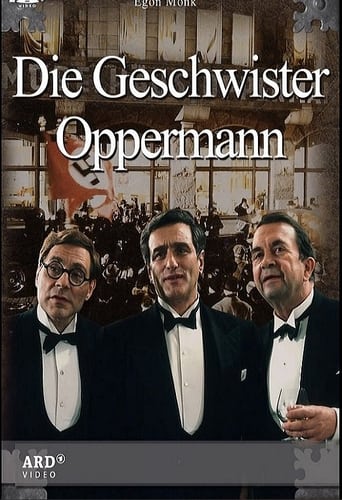
7.0History of a Jewish family, the Oppermanns, in Berlin at the end of 1932, after Hitler has become the leader of Germany's strongest political party.
The Oppermanns
1983
No synopsis available yet.
Der Auslöser
1982
No synopsis available yet.
Betrogene Liebe
1986
No synopsis available yet.
Faust
1982
No synopsis available yet.
Der Mond scheint auf Kylenamoe
1980
No synopsis available yet.
Chimären - Fiktion und Wirklichkeit
1988
No synopsis available yet.
Geblendeter Augenblick - Anton Weberns Tod
1986
1970s · 6 titles
No synopsis available yet.
Der Held
1972
 3.0
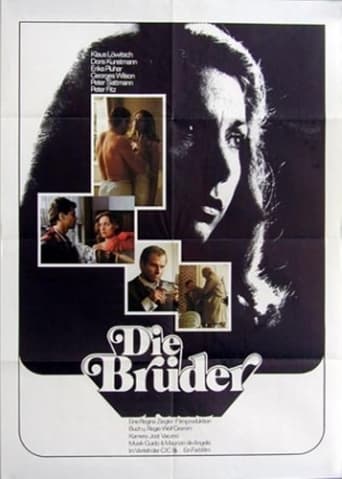
3.0Sex, violence, and family secrets in the German countryside.
The Brothers
1977
No synopsis available yet.
Prinz Friedrich von Homburg
1973
No synopsis available yet.
Flick-Flack
1971
Austrian flmed staged production of Euripedes' The Bacchae, portraying a conflict between the deity Dionysus, son of Zeus, and his cousin Pentheus, ruler of Thebes
Die Bakchen
1974
 5.3
5.3The life and struggles of the German writer Heinrich von Kleist.
Heinrich
1977
Series credits
6.2Tatort is a long-running German/Austrian/Swiss crime television series set in various parts of these countries. The show is broadcast on the channels of ARD in Germany, ORF in Austria and SF1 in Switzerland.
Scene of the Crime
1970
6.2Tatort is a long-running German/Austrian/Swiss crime television series set in various parts of these countries. The show is broadcast on the channels of ARD in Germany, ORF in Austria and SF1 in Switzerland.
Scene of the Crime
1970
6.2Tatort is a long-running German/Austrian/Swiss crime television series set in various parts of these countries. The show is broadcast on the channels of ARD in Germany, ORF in Austria and SF1 in Switzerland.
Scene of the Crime
1970
6.2Tatort is a long-running German/Austrian/Swiss crime television series set in various parts of these countries. The show is broadcast on the channels of ARD in Germany, ORF in Austria and SF1 in Switzerland.
Scene of the Crime
1970
6.2Polizeiruf 110 is a long-running German language detective television series. The first episode was broadcast 27 June 1971 in the German Democratic Republic, and after the dissolution of Fernsehen der DDR the series was picked up by ARD. It was originally created as a counterpart to the West German series Tatort, and quickly became a public favorite.
Polizeiruf 110
1971
5.9SOKO 5113 is a long-running German police procedural television series. It was first aired in 1978 on 2 January. SOKO is an abbreviation of the term "Sonderkommission" in German.
SOKO München
1978
5.7Ein Fall für zwei is a German television series, which premiered on September 11, 1981 on ZDF. The series, located in Frankfurt am Main, features two main characters who solve crimes: a defense attorney and a private investigator. Josef Matula, a former German police officer, has gone into private business. His method of investigation is very effective and direct, and he sometimes even resorts to dirty tricks. Claus Theo Gärtner has portrayed the role since the start of the series.
A Case For Two
1981
5.7Ein Fall für zwei is a German television series, which premiered on September 11, 1981 on ZDF. The series, located in Frankfurt am Main, features two main characters who solve crimes: a defense attorney and a private investigator. Josef Matula, a former German police officer, has gone into private business. His method of investigation is very effective and direct, and he sometimes even resorts to dirty tricks. Claus Theo Gärtner has portrayed the role since the start of the series.
A Case For Two
1981
7.2After his handler is killed, police dog Rex teams up with recently-divorced inspector Richard Moser to investigate crimes and solve mysteries on the streets of Vienna. And they sometimes get help from their two-legged friend, Inspector Stockinger.
Inspector Rex
1994
3.7Wolffs Revier is a German television series.
Wolffs Revier
1992
 7.8
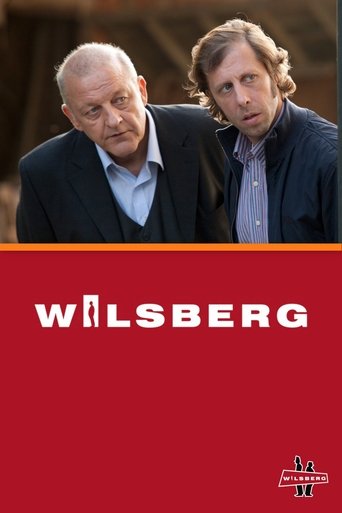
7.8Georg Wilsberg is an antiquarian in Münster. He used to be a lawyer but lost his license. Since then he has been working as a private detective. The always clammy Wilsberg urgently needs this income. In addition, he depends on the support of his friends, especially because of the car.
Wilsberg
1995
No synopsis available yet.
German Film Award
1951
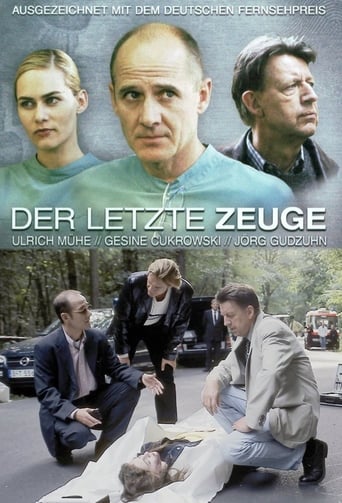 5.0
5.0No synopsis available yet.
Der letzte Zeuge
1998
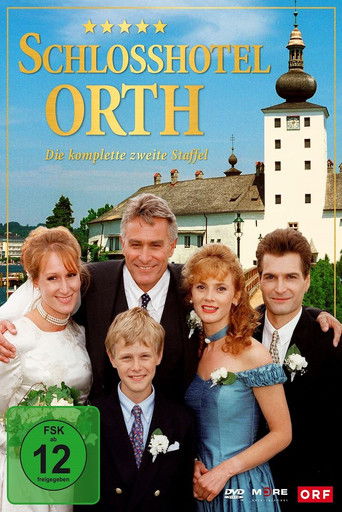 3.7
3.7Schlosshotel Orth is an Austrian television series.
Schlosshotel Orth
1996
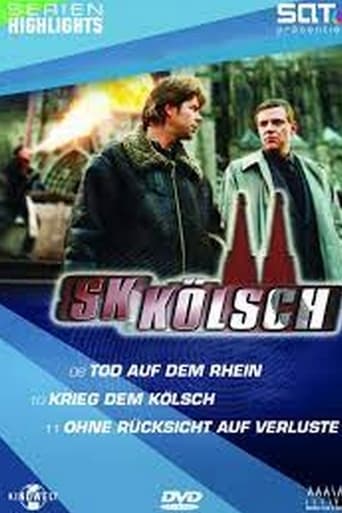 5.5
5.5SK Kölsch is a German television series.
SK Kölsch
1999
 4.6
4.6Bella Block is a long-running German detective television series starring Hannelore Hoger, first broadcast in 1994 on ZDF. In 2010 the 30th series was produced.
Bella Block
1993
 5.6
5.6No synopsis available yet.
Edel & Starck
2002
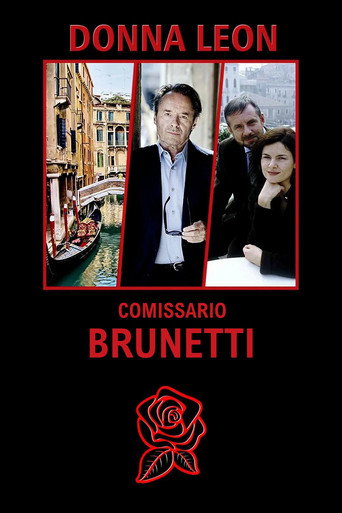 7.3
7.3Murder, Venice, relationships...it's a delicious concoction in the hands of crime novelist Donna Leon. Venice provides the backdrop for the lush film versions of the bestselling novels, which features the indelible Commissario Guido Brunetti, canal boat rides instead of car chases, fine cuisine and crime investigations in one of Europe’s most beautiful locations.
Donna Leon
2000
 6.8
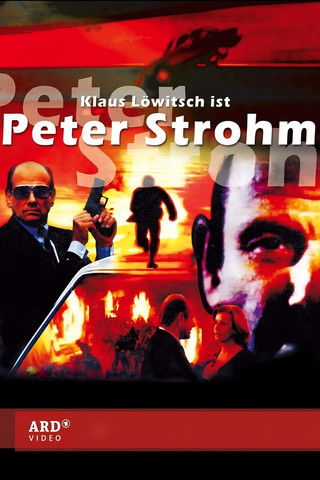
6.8Peter Strohm is a private detective with radical methods. His work begins where police work ends; he takes on sensitive cases that require a certain scale, or explosive situations that can lead to international crises.
Peter Strohm
1989
Der Ermittler is a German television series.
Der Ermittler
2001
 5.8
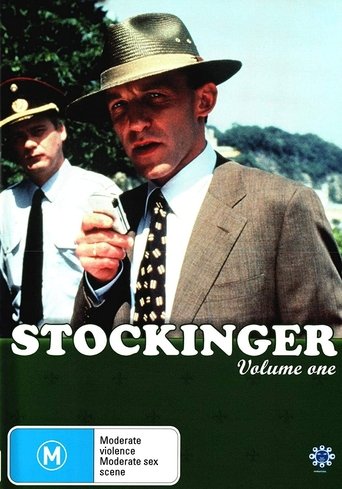
5.8Stockinger is an Austrian-made police television drama, with fourteen 45-minute episodes first aired from 1996 to 1997. The series is a spin-off from the popular Austrian television drama Inspector Rex, and focuses on Ernst Stockinger, one of the original members of the Homicide division or Mordkommission in German. Stockinger leaves the series to return to Salzburg where his wife has inherited a dental practice from her late father . He is appointed a Bezirksinspektor at the Landes Gendarmerie, sharing an office with District Inspector Antonella Simoni. Unlike the members of the team in 'Rex', who appear to be self-directed and are seldom seen to answer to senior management, Stockinger reports to Dr Brunner, a philosophising burecratic senior police inspector. Stockinger is portrayed as a clumsy, almost Inspector Clouseau-like character, driving a clapped-out 1973 VW Variant, but single-minded when following up clues.
Stockinger
1996
 8.0
8.0No synopsis available yet.
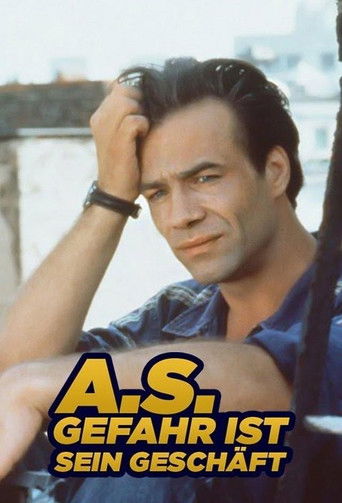
A.S. Gefahr ist sein Geschäft
1995
 6.5
6.5No synopsis available yet.
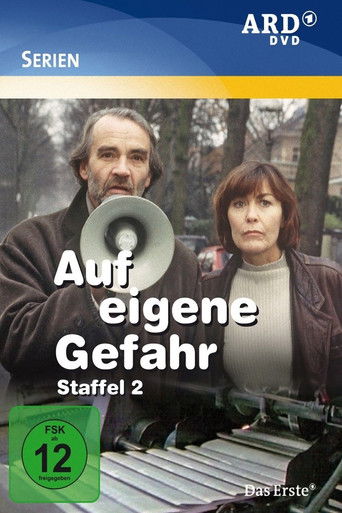
Auf eigene Gefahr
1993
 9.4
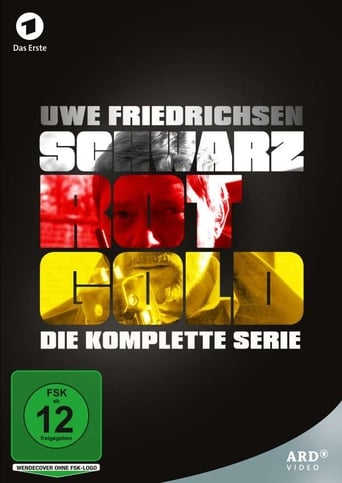
9.4Crime series about Hamburg customs investigator Hans Zaluskowski, who joins forces with his colleagues to take on smugglers and fraudsters. In doing so, he not only has to contend with opaque EU customs regulations, but also solve tricky cases with international implications.
Schwarz Rot Gold
1982
9.4Crime series about Hamburg customs investigator Hans Zaluskowski, who joins forces with his colleagues to take on smugglers and fraudsters. In doing so, he not only has to contend with opaque EU customs regulations, but also solve tricky cases with international implications.
Schwarz Rot Gold
1982
No synopsis available yet.
Faust
1994
No synopsis available yet.
Ein Mord für Quandt
1997
No synopsis available yet.
Die Gang
1997
Bronski und Bernstein is a German television series.
Bronski und Bernstein
2001
No synopsis available yet.
Kommissar Zufall
1987
 8.0
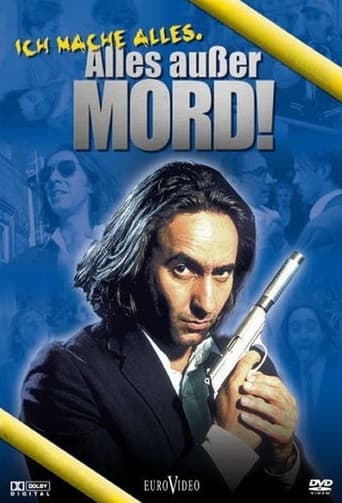
8.0Alles außer Mord was a German crime television series which aired on the TV station ProSieben between 1993 and 1995. 14 episodes were produced. The series features various criminal cases of determined private investigator Uli Spruce, who tells his clients: "I do everything - except murder".
Alles außer Mord
1994
No synopsis available yet.
Sophie – Schlauer als die Polizei erlaubt
1997
 NR
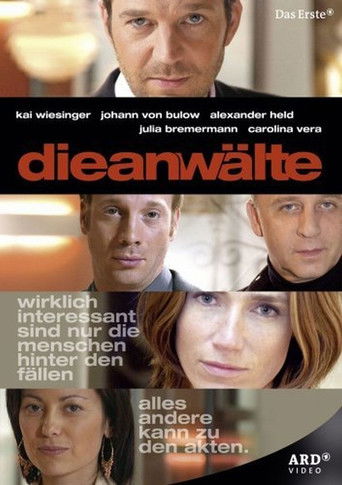
NRNo synopsis available yet.
Die Anwälte
2008
No synopsis available yet.
Immer im Einsatz - Die Notärztin
1994
 7.0
7.0Kanzleramt is a German television series based on the template of the American tv series The West Wing. It is primarily set in the office of fictional Chancellor of Germany Andreas Weyher, telling stories about the German head of government's political career and private life as a widower and father of a teenage daughter. It was neither a critical nor ratings success, and was cancelled after twelve episodes.
Kanzleramt
2005
 4.8
4.8The life of a family in Germany between 1920s and 1940s.
The Shop
1998
 NR
NRA young woman is torn between the love of her life and her second passion, fashion. In the first part, we get to know Isabelle, who grows up in the Trakenbergs' house, a highly respected fashion entrepreneur. She has known Jon, the love of her life, since childhood...
Der Seerosenteich
2003
 4.5
4.5The story of the life and survival of a half-Jewish family in Germany from 1882 to 1945. The focus is on the family of the failed pianist and conductor Alf Bertini and his Jewish wife Lea Lehmberg. They live in poor conditions in Hamburg and fight to give their children a better life until Hitler seizes power.
Die Bertinis
1988
No synopsis available yet.
Die Kumpel
2001
 7.4
7.4No synopsis available yet.
Contergan - Eine einzige Tablette
2007