
Directing
Toshio Matsumoto
Born — Died
1932-03-25 — 2017-04-12
Place of birth
Nagoya, Aichi, Japan
Known for
Directing
Credits
45 titles
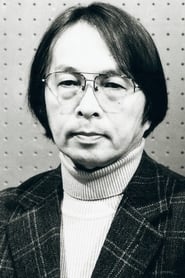
Toshio Matsumoto (松本 俊夫, Matsumoto Toshio; March 25, 1932 – April 12, 2017) was a Japanese film director, a pioneer of avant-garde experimental films, multimedia, and video in his homeland and abroad. Born in Nagoya, Aichi, Japan and a graduate from Tokyo University in 1955, his first short was Ginrin, which he made in 1955, however his most famous work is 1969's wildly experimental Funeral Parade of Roses (also known as Bara no soretsu). A retelling of Oedipus Rex, a trans person (portrayed by Pîta) tries to move up in the world of the Japanese hostess clubs. Funeral Parade of Roses heavily influenced Stanley Kubrick's A Clockwork Orange (1971). Matsumoto published many books of photogr…
Known for
 7.6
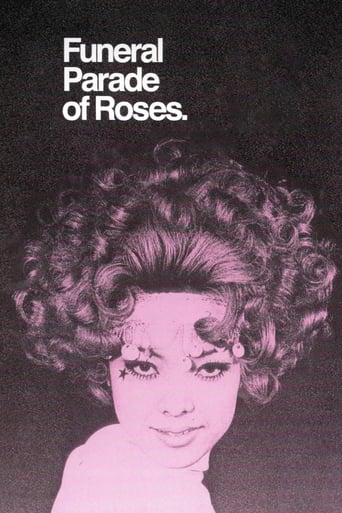
7.6In 1960s Tokyo, Gonda owns a bar in which the gay, cross-dresser, and trans scenes meet. Gonda is in a relationship with the madam of the bar, Leda. As the younger Eddie starts a passionate affair with Gonda, she ignites the jealousy of Leda, unaware of another kind of history between them.
Funeral Parade of Roses
1969
 7.7
7.7Gengobe Satsuma, an exiled samurai cast out as an Asano clan retainer, is given a second chance to join his brothers in arms to become the 48th Ronin against the Shogunate. His faithful servant gathers the 100 ryo required for his acceptance. Gengobe is also in love with a greedy geisha named Koman. About to be sold to another man, Gengobe learns that in order to keep her, her debt is exactly 100 ryo.
Demons
1971
 6.7
6.7A young man murders his new bride and goes insane. He wakes in an asylum with no memory, left in the hands of two mysterious doctors who relate his condition with his biological identity.
Dogra Magra
1988
 6.5
6.5Towards the end of WWII, a black American pilot is captured and imprisoned by rural Japanese villagers, who await official instructions as to how to proceed with their 'catch'.
The Catch
1961
 6.8
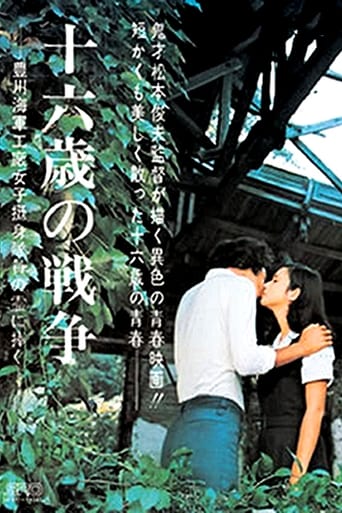
6.8A 20-year-old drifter and a precocious 16-year-old girl slowly form a bond in a small town haunted by its wartime past.
The War of the 16 Year Olds
1976
 6.4
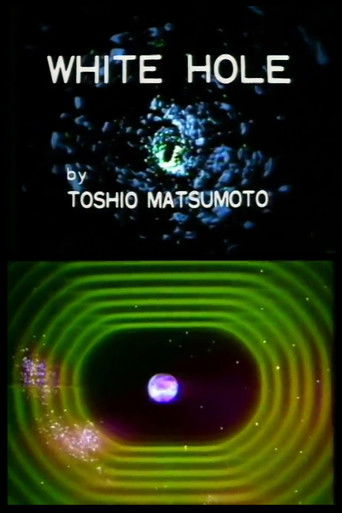
6.4A mesmerizing trip through the psychedelic vastness of space.
White Hole
1979
Film credits
2010s · 2 titles
 NR
NRVideo began as a medium that inspired discovery. This art documentary traces the expressive roots of “media art” in Japan — works of video, performances, and installations created using video technology that allowed for free and creative visual expression.
KIKAIDE MIRUKOTO = Eye Machine / To See by Chance –The Pioneers of Japanese Video Arts–
2013
 NR
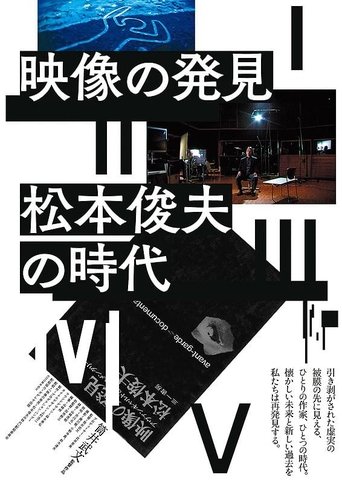
NRA five-part documentary chronicling Toshio Matsumoto, the legendary filmmaker known as a pioneer of experimental cinema in Japan and also active as a film theorist, who exerted a profound influence on innovative film expression from the 1950s onward. Directed by filmmaker and critic Takefumi Tsutsui—himself both a filmmaker and critic like Matsumoto—the project was filmed over the course of ten years. Interweaving excerpts from Matsumoto’s works with an extensive series of interviews with collaborators and critics, the documentary retraces, through the figure of Matsumoto, the tumultuous decades from the 1950s to the 2000s across five parts, totaling 700 minutes.
Discovery of Image – The Era of Toshio Matsumoto
2017
2000s · 2 titles
 1.0
1.0A documentary on sixties counterculture in Japan featuring Donald Richie, Tadanori Yokoo, Masao Adachi, Koji Wakamatsu, Toshio Matsumoto and Akaji Maro among others.
Under the Skin
2002
Toshio Matsumoto articulates his perspective on the creation of Dogra Magra, presented in the supplementary section of the Radiance DVD release.
Filming the Unfilmable: An Interview with Toshio Matsumoto
2003
Behind the camera
7.6In 1960s Tokyo, Gonda owns a bar in which the gay, cross-dresser, and trans scenes meet. Gonda is in a relationship with the madam of the bar, Leda. As the younger Eddie starts a passionate affair with Gonda, she ignites the jealousy of Leda, unaware of another kind of history between them.
Funeral Parade of Roses
1969
7.6In 1960s Tokyo, Gonda owns a bar in which the gay, cross-dresser, and trans scenes meet. Gonda is in a relationship with the madam of the bar, Leda. As the younger Eddie starts a passionate affair with Gonda, she ignites the jealousy of Leda, unaware of another kind of history between them.
Funeral Parade of Roses
1969
7.7Gengobe Satsuma, an exiled samurai cast out as an Asano clan retainer, is given a second chance to join his brothers in arms to become the 48th Ronin against the Shogunate. His faithful servant gathers the 100 ryo required for his acceptance. Gengobe is also in love with a greedy geisha named Koman. About to be sold to another man, Gengobe learns that in order to keep her, her debt is exactly 100 ryo.
Demons
1971
7.7Gengobe Satsuma, an exiled samurai cast out as an Asano clan retainer, is given a second chance to join his brothers in arms to become the 48th Ronin against the Shogunate. His faithful servant gathers the 100 ryo required for his acceptance. Gengobe is also in love with a greedy geisha named Koman. About to be sold to another man, Gengobe learns that in order to keep her, her debt is exactly 100 ryo.
Demons
1971
6.7A young man murders his new bride and goes insane. He wakes in an asylum with no memory, left in the hands of two mysterious doctors who relate his condition with his biological identity.
Dogra Magra
1988
6.7A young man murders his new bride and goes insane. He wakes in an asylum with no memory, left in the hands of two mysterious doctors who relate his condition with his biological identity.
Dogra Magra
1988
6.5Towards the end of WWII, a black American pilot is captured and imprisoned by rural Japanese villagers, who await official instructions as to how to proceed with their 'catch'.
The Catch
1961
6.8A 20-year-old drifter and a precocious 16-year-old girl slowly form a bond in a small town haunted by its wartime past.
The War of the 16 Year Olds
1976
6.8A 20-year-old drifter and a precocious 16-year-old girl slowly form a bond in a small town haunted by its wartime past.
The War of the 16 Year Olds
1976
6.4A mesmerizing trip through the psychedelic vastness of space.
White Hole
1979
 6.4
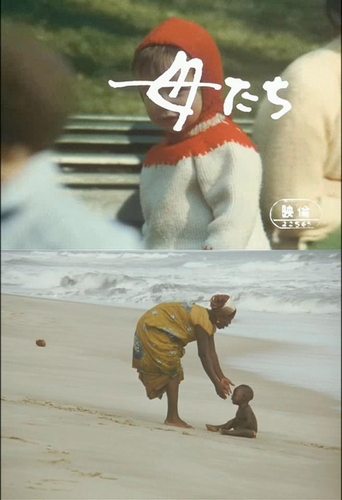
6.4Documentary about the relationships between mothers and their children.
Mothers
1967
 7.3
7.3'Ki or Breathing' is a spare concoction assembled from slow motion shots of nature and set to a score by the much-acclaimed Tohru Takemitsu.
Ki or Breathing
1980
 6.6
6.6ĀTMAN is a visual tour-de-force based on the idea of the subject at the centre of the circle created by camera positions (480 such positions). Shooting frame-by-frame the filmmaker set up an increasingly rapid circular motion. ĀTMAN is an early Buddhist deity often connected with destruction; the Japanese aspect is stressed by the devil mask of Hangan, from the Noh, and by using both Noh music and the general principle of acceleration often associated with Noh drama.
Atman
1975
 7.6
7.6There's more to picture than meets the eye in this journey into oriental metaphysical imagery. Starting (in a very Christian manner) with the Word, the film draws an explosion of visible forms, as if a sign of the shattering of shapes in the mundane world. But time is cyclical, of course, and what was once a multitude of sensible realities must eventually return to the Word and, finally, to sheer Color. (Sound of Eye)
Everything Visible Is Empty
1975
 7.5
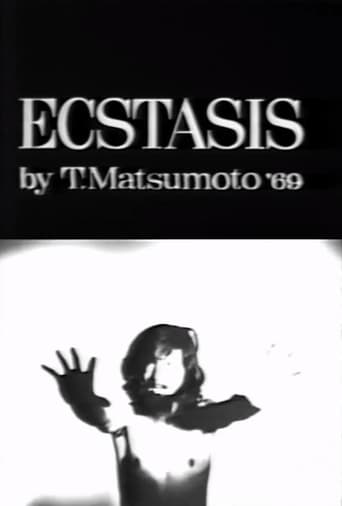
7.5Repetitive abstract experimental film. A bearded man flickers past a hundred times.
Ecstasis
1969
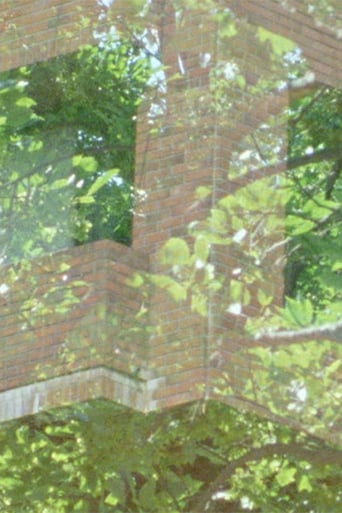 NR
NRA previously unseen short by the Japanese avant-garde titan, Toshio Matsumoto's 1986 Summer locates faces and bodies within superimpositions, zooms, a lightning-fast montage of brick structures and verdant trees.
1986 Summer
1986
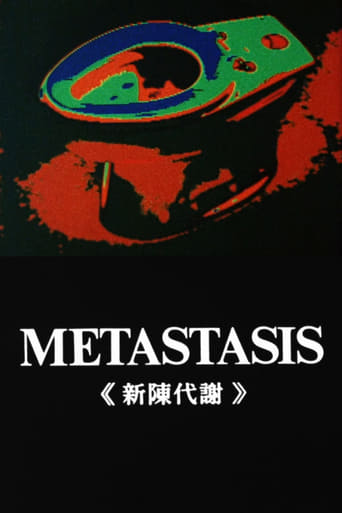 5.6
5.6Writes Matsumoto, "I used the Erekutoro Karapurosesu (Electro Color Processor), which is mainly used in the field of medicine and engineering, to create moving image textures Metastasis, I was interested in layering images of a simple object and its electronically processed abstraction. The electronic abstract image is manipulated in a certain rhythm, depicting an organic process."
Metastasis
1971
 NR
NR"Set to a soundtrack of pulsing synth bleats, Delay Exposure rhythmically deploys a low-tech, in-camera tricks—including lens-flares, whip-pans, and rapid, strobing exposure shifts—to builds an affective sense of place and architecture." - filmlinc.org
Delay Exposure
1984
A kaleidoskopic image of Andy Warhol, presumably found footage from some interview, is slowed down and played over sudden pangs of screeching white noise. Warhol's own distorted, delayed, voice guides us through the gaseous hallucination.
Andy Warhol: Re-Reproduction
1974
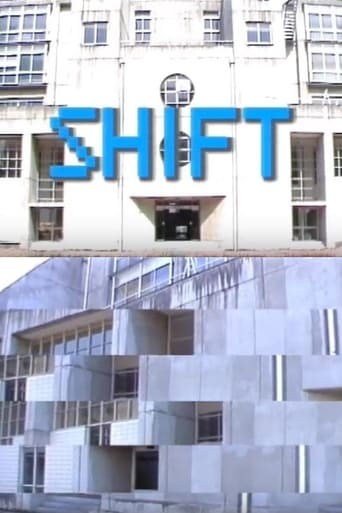 7.3
7.3By cutting up and zoom in on images of facades creates Matsumoto visual effects.
Shift
1982
 6.4
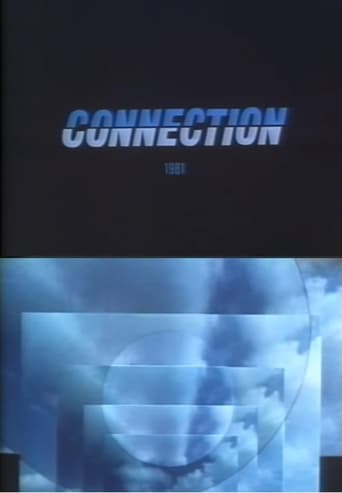
6.4In Connection, a static shot of the sky with moving clouds is subdivided into regular geometrical regions, which are then individually (and rhythmically) manipulated.
Connection
1981
 7.6
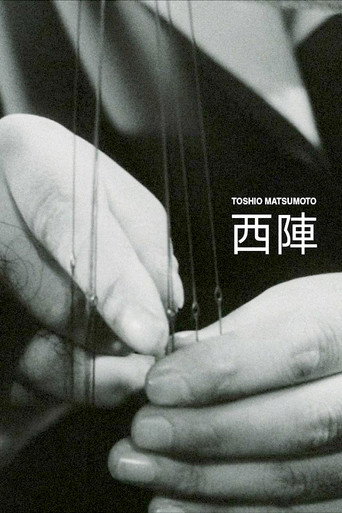
7.6The Weavers of Nishijin captures the process of traditional textile manufacture in Nishijin.
The Weavers of Nishijin
1961
7.6The Weavers of Nishijin captures the process of traditional textile manufacture in Nishijin.
The Weavers of Nishijin
1961
 7.6
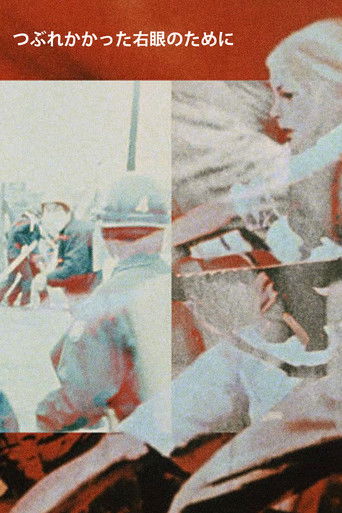
7.6Two chaotic series of images, one for each eye. Hipster living, malformed fetuses, war, arts events and pop culture stands for the material.
For My Crushed Right Eye
1968
NR"A flicker film made using only intense shock-zooms, Vibration is one of a series of films Matsumoto made in the 1980s that explored proprioception through a mixture of minimalist effects and modernist architecture." - filmlinc.org
Vibration
1984
 NR
NRMatsumoto's last video was produced by Sano Gallery. Matsumoto set the common theme as “Seeing” in 2009, six co-writers participated to directing the omnibus film, "Seeing". Initially, there were no plans to expand it into trilogy, and Matsumoto was also limitedly involved in the work. Later, Matsumoto envisioneds works that pursued the omnibus format, and sets up a common theme of "memory.” Afterwards, Matsumoto begun the production of Pilgrimage into the Memory, a reconstruction of works produced by five participating artists. However, the Great East Japan Earthquake occurred while producing the work. Matsumoto shocked by the earthquake and Fukushima Daiichi nuclear accident, he decided to produce a new work, All Things Change, and titled it's trilogy, Toro no Ono Daisambu. The third part, All Things Change, consists of videos produced by Tanotaiga, Kanako Inaki, Hiroyuki Oki, Okuno Kunito, and Tanako Tanaka.
Toro Axe Part 3: All Things Change
2012
 6.5
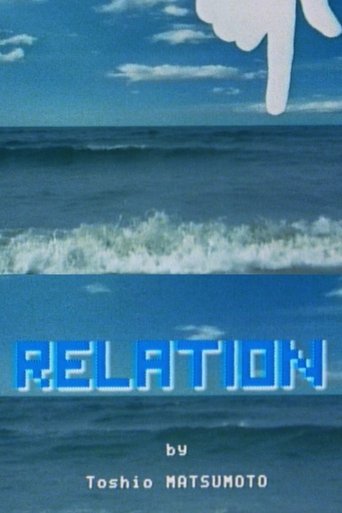
6.5In Relation, the focus of the viewer’s attention is guided by pointers moving through the screen.
Relation
1982
 4.8
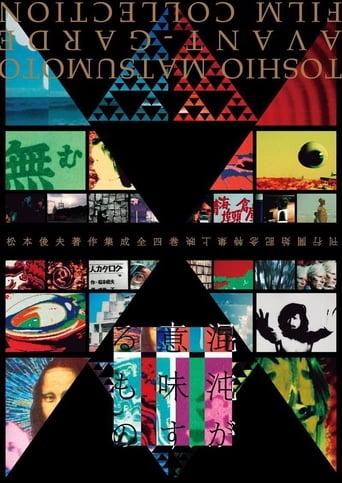
4.8It was produced to be exhibited at the “Personal Focus” (April 23-8, 1985), a three-minute, 8mm film screening held in Fukuoka. Digitized the original 8mm film that Matsumoto had been stored. The concept of this works is same as Delay Exposure, but in this film, it begins with a sequence that sets the aperture to excessive exposure. During a one to two-second-long shoot, the camera zooms in, the automatic exposure device also follows the movement of the image, and immediately lights the screen with proper exposure. This short sequence combined with a series of shots in the background, is processed.
EE Control
1985
 7.4
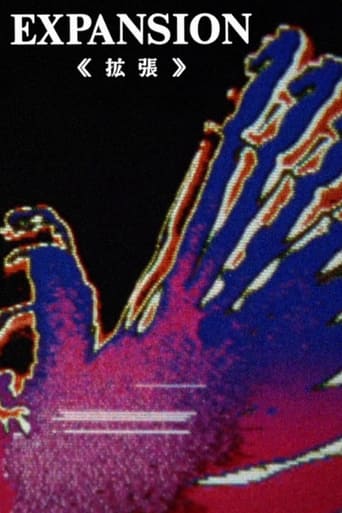
7.4Expansion remixes the images of Matsumoto’s Esctasis into an more colourful psychedelic short.
Expansion
1973
 7.2
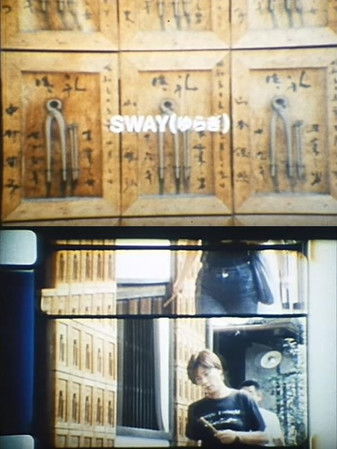
7.2Pictures from a Buddhist temple cut up and manipulated.
Sway
1985
 6.2
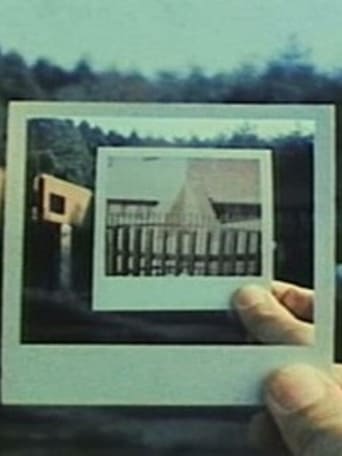
6.2Engram is a three-part piece revolving around a few good old ideas such as photos inside of photos, movies inside of movies, photos inside of movies, movies inside of photos, and (even) a film director inside a TV set.
Engram
1987
 NR
NRNo synopsis available yet.
Wave
1984
 6.0
6.0Matsumoto's early video work Murder Catalogue, but there were few opportunities to be screened at that time since it dealt with a grotesque image. Digitized a half-inch videotape he had kept in his studio. It is a work that shows the original form of a mysterious narrative that later appears well in Matsumoto's work, as it is constructed to repeat an event through long-term filming of a video and monologues by a cassette tape recorder. A photograph is placed in front of the video camera by one by one and the camera zooms in mechanically towards the images. Also, in Matsumoto's voice, a short monologue about the photos recorded on the tape is played. However, the voice is suddenly cut off by the sounds of hitting and the screams of the terminal, followed by the camera starting to expand the different images in the same way, and the voice of the recorder is played over and over again. - Ex-Is
Murder Catalogue
1975
 9.0
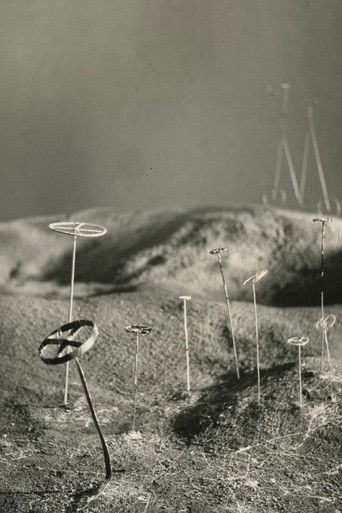
9.0Silver Wheel (Bicycle in Dream) is a PR film that was produced to promote the export of bicycles. However, Matsumoto Toshio, who was an employee of the Shin-riken Pictures, which had been contracted to produce the film, asked for the cooperation of Yamaguchi Katsuhiro, Kitadai Shozo and Takemitsu Toru, at the time members of Jikken Kobo, and also invited the participation of Tsuburaya Eiji, the leading expert in the field of special effects. Therefore, this work depicts a young boy’s dreams concerning a bicycle, while making the most of the realistic and materialistic character of bicycle parts and of surreal and fantasy-like scenes. Due to the course of its production and the fresh images and music used, this was seen as being the first example of experimental cinema in postwar Japan.
Silver Wheel
1955
9.0Silver Wheel (Bicycle in Dream) is a PR film that was produced to promote the export of bicycles. However, Matsumoto Toshio, who was an employee of the Shin-riken Pictures, which had been contracted to produce the film, asked for the cooperation of Yamaguchi Katsuhiro, Kitadai Shozo and Takemitsu Toru, at the time members of Jikken Kobo, and also invited the participation of Tsuburaya Eiji, the leading expert in the field of special effects. Therefore, this work depicts a young boy’s dreams concerning a bicycle, while making the most of the realistic and materialistic character of bicycle parts and of surreal and fantasy-like scenes. Due to the course of its production and the fresh images and music used, this was seen as being the first example of experimental cinema in postwar Japan.
Silver Wheel
1955
 NR
NRA short documentary about a trailer weighing over 300 tons that carries material for the construction of a dam toward Tokyo.
300 Ton Trailer
1959
 6.3
6.3A psychedelic yoga lesson with some beautiful and bizarre visuals.
Phantom
1975
Magnetic Scramble is the first video work by Toshio Matsumoto. Here, the artist manipulates television images (of student demonstrations against the U.S.-Japan Security Pact) by holding a magnetic coil next to the monitor. Matsumoto later incorporated this piece into a scene of his film Funeral Parade of Roses (1969).
Magnetic Scramble
1968
 6.5
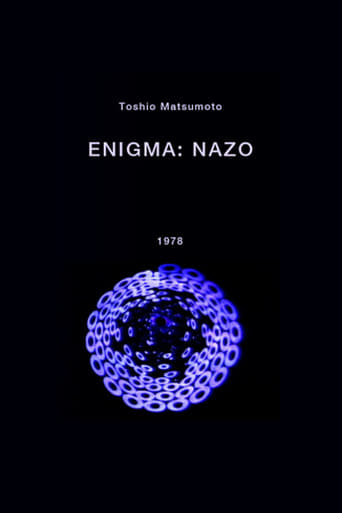
6.5Enigma is something of a more glamorous version of White Hole, with a wide variety of elaborate textures (often composed of iconographic and religious symbols) converging towards the centre of the screen.
Enigma: Nazo
1978
 NR
NRExperimental film by Toshio Matsumoto created for the 1970 world's fair, Expo '70 in Osaka. The film was made up of multiple projections onto the inside of the Textile Pavilion, a dome with an interior designed by Yokoo Tadanori, and featured a 57-channel music score by Joji Yuasa.
Space Projection Ako
1970