
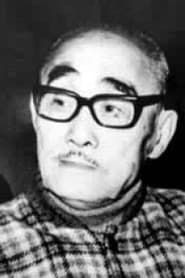
Directing
Li Ping-Qian
Born — Died
1902-01-01 — 1984-11-18
Place of birth
Hangzhou, Zhejiang, China
Known for
Directing
Credits
30 titles
Li Pingqian (1902 – 18 November 1984), also known as Jack Pingqian Li, was a Chinese filmmaker who directed over 100 films in his career in mainland China and Hong Kong. He is probably best known for his works with actresses Gong Qiuxia and Xia Meng, who each starred in more than a dozen of his films. Moreover, his 1964 Huangmei opera film Three Charming Smiles starring Chen Sisi was a huge hit in China. Li was born in Hangzhou and was originally given the name Chunchou. He moved to Shangai in the 1920s to begin a career in filmmaking after leaving Hujiang University in 1919, where he studied sociology but did not graduate. In 1924, he co-founded Shenzhou Film Company with Wu Xuchang. The c…
Known for
 9.0
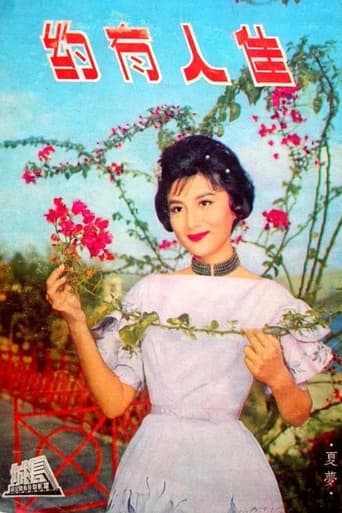
9.0No synopsis available yet.
Rendezvous
1960
 7.0
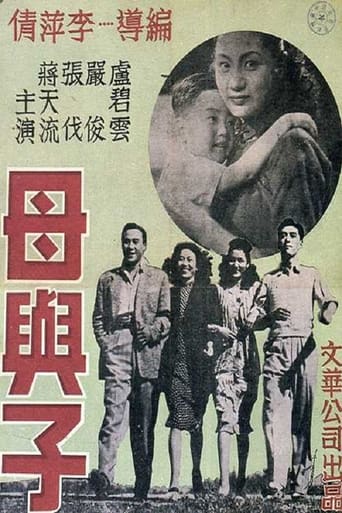
7.0After falling in love with Han Liren and giving birth to an "illegitimate child", Han Liren abandoned her and married a rich girl and cheated her out of the child. Huang Su then left the country, changed her name to Lin Luping, and became an actress. Sixteen years later, Huang Su was so popular that she was invited to perform in Shanghai. The young actor she worked with, Han Chen, was withdrawn and hated everyone, and everyone discriminated against him because he was an abandoned "illegitimate child". On stage, Han Chen played Lin Luping's son and was very successful. Later Lin Luping finds out that he turns out to be her biological son who was cheated away by Han Liren years ago. At this point, the theater owner Han Liren appears and wishes to get back together with Lin Luping, but is rejected by Lin Luping's mother and son.
Mother and Son
1947
 7.0
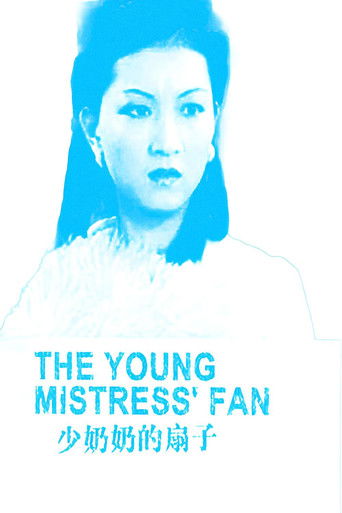
7.0Lady Windermere's Fan, Oscar Wilde's play on moral values, is adapted for a setting in Shanghai. Young wife Meilin mistakenly believes her husband is having an affair with a social butterfly and decides to leave for a suitor. Her reputation, about to be ruined because of a misplaced fan, is saved by the social butterfly who turns out to be …Unlike typical Chinese scripts on parental love, the understated familial love in the original play is aligned with Li's preference for the undramatic. Motherly love is portrayed indirectly while emotions run strong yet subdued in the film. Poking fun at social culture of the times, this is Li's earliest extant feature film in a modern setting and a showcase of his modernistic and crisp directorial approach.
The Young Mistress' Fan
1939
No synopsis available yet.
Pleasures of the Dance Hall
1931
 7.0
7.0HK horror film.
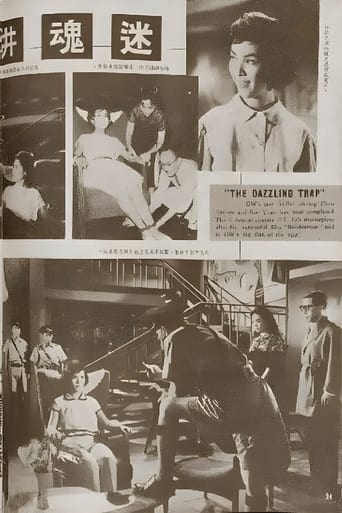
A Dazzling Trap
1961
 NR
NRNo synopsis available yet.
Rendezvous
1936
Film credits
1920s · 2 titles
 NR
NRNo synopsis available yet.
Unbearable Memories
1925
An orphaned brother and sister depend on each other for survival. But the young man's hot temper gets him sent to prison. When he is released, with the help and support of his little sister, he tries desperately to go straight, but every attempt is thwarted by an unfeeling and uncaring society.
Embarrassing Sister
1926
Behind the camera
9.0No synopsis available yet.
Rendezvous
1960
7.0After falling in love with Han Liren and giving birth to an "illegitimate child", Han Liren abandoned her and married a rich girl and cheated her out of the child. Huang Su then left the country, changed her name to Lin Luping, and became an actress. Sixteen years later, Huang Su was so popular that she was invited to perform in Shanghai. The young actor she worked with, Han Chen, was withdrawn and hated everyone, and everyone discriminated against him because he was an abandoned "illegitimate child". On stage, Han Chen played Lin Luping's son and was very successful. Later Lin Luping finds out that he turns out to be her biological son who was cheated away by Han Liren years ago. At this point, the theater owner Han Liren appears and wishes to get back together with Lin Luping, but is rejected by Lin Luping's mother and son.
Mother and Son
1947
7.0Lady Windermere's Fan, Oscar Wilde's play on moral values, is adapted for a setting in Shanghai. Young wife Meilin mistakenly believes her husband is having an affair with a social butterfly and decides to leave for a suitor. Her reputation, about to be ruined because of a misplaced fan, is saved by the social butterfly who turns out to be …Unlike typical Chinese scripts on parental love, the understated familial love in the original play is aligned with Li's preference for the undramatic. Motherly love is portrayed indirectly while emotions run strong yet subdued in the film. Poking fun at social culture of the times, this is Li's earliest extant feature film in a modern setting and a showcase of his modernistic and crisp directorial approach.
The Young Mistress' Fan
1939
No synopsis available yet.
Pleasures of the Dance Hall
1931
7.0HK horror film.
A Dazzling Trap
1961
NRNo synopsis available yet.
Rendezvous
1936
 NR
NRNot seen in Hong Kong for many years, A Strange Woman was Li Pingqian's first film at Great Wall Film Studio. Adapted from the play La Tosca by French playwright Victorien Sardou, opera star Xiao Xiangshui (Bai Guang) helps her lover, a revolutionary, to escape from warlords. She finesses with both the head of the secret service (Yan Jun) and her lover's wife, but things do not turn out as planned. Li changed his usual pace to encompass a more conventional and dramatic film plot. Bold and flirtatious in her role, Bai Guang is equally over the top in appearance as Yan Jun. The tension in winning the heroine over drives the plot more than the themes of patriotism and loyalty in love.
A Strange Woman
1950
No synopsis available yet.
笑聲淚痕
1943
No synopsis available yet.
笑聲淚痕
1943
 7.5
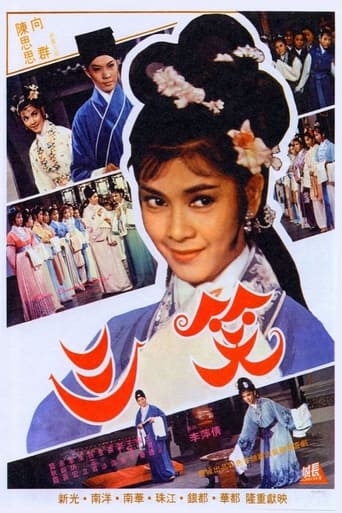
7.5Tang Bohu is smitten by the stunning beauty of Qiuxiang, the maid of Grand Tutor Hua, during his visit to a monastery in Suzhou. Stalking the maid, Tang's affections are finally reciprocated with three charming smiles. To approach the fair maid, Tang seeks work in the Grand Tutor residence as a study companion, and his talents win Hua's attention. As a frustrated suitor, he turns to his resourceful friend Zhu Zhishan for help.
Three Charming Smiles
1964
 8.0
8.0No synopsis available yet.
Youngsters of the Time
1933
An orphaned brother and sister depend on each other for survival. But the young man's hot temper gets him sent to prison. When he is released, with the help and support of his little sister, he tries desperately to go straight, but every attempt is thwarted by an unfeeling and uncaring society.
Embarrassing Sister
1926
China's first song and dance film was "Poetry Written on the Banana Leaf" directed by Sun Yu and starring Wang Renmei in 1932. A battalion commander's lover, named Zhao Zhao, wrote a poem on a banana leaf in memory of the battalion commander. Just as she was about to mail it, she met people in the village holding the Autumn Tage Festival. Zhao Zhao decides to participate the festivities with her friends. Unexpectedly, the banana leaf was lost on the ground. Zhao Zhao rejects a man who tries to pursue her. Mad being rejected, the man picks up the lost banana leaf. He decides to write his own name to it, trying to deceive the battalion comrade that Zhao Zhao has cheated on him. The film is thought to be lost.
Poetry Written on the Banana Leaf
1932
 NR
NRNo synopsis available yet.
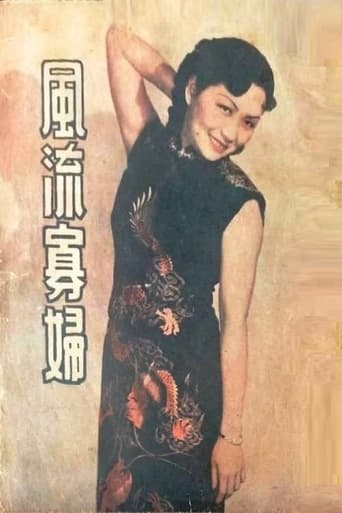
The Merry Widow
1941
 10.0
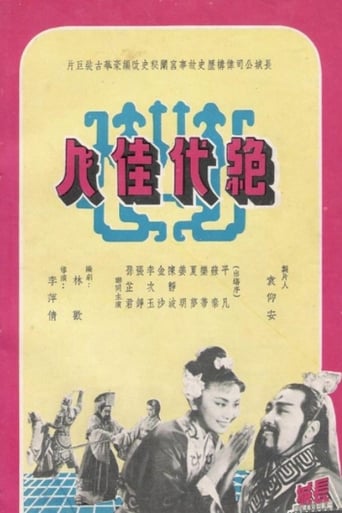
10.0This is a story of how Ru Ji, a farm girl of Chao Kuo, who sacrificed her own life to save her country and people in the year 257 B.C.
The Peerless Beauty
1953
 8.0
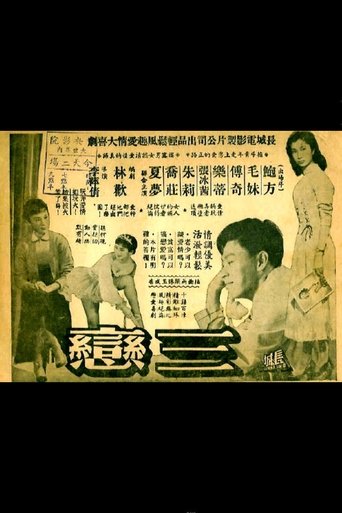
8.0Li's direction and Jin Yong's script always go hand-in-hand with each other. This time, their collaboration sparks again as the film seamlessly brings three short stories together through three different segments of flashbacks. Yin Zhaozong (Bao Fong) is an amour fou falling in love with a girl much younger than him. Instead, Yu Baicheng (Fu Che) is a playboy trapped by his three girlfriends. The bartender (Chiao Chuang), however, tells them how he and his wife are blessed by true love. The film not only displays Li's sensitivity to narrative structure but also his ability to cast the most suited actors for their respective roles, as such Mao Mei had a chance to demonstrate her dance talent for her debut in this movie.
The Three Loves
1956
 6.5
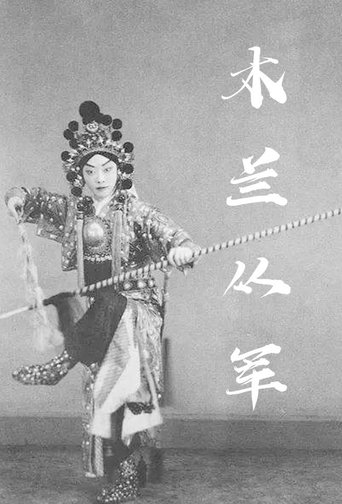
6.5A silent film based on the legend of Hua Mulan, released by Tianyi Film Company and directed by Li Pingqian. This silent film holds the distinction of being the first ever full-length feature film about Hua Mulan. Mulan is betrothed to a young man when war arrives and their wedding ceremony has to be put on hold. As her fiancé enlists in the army, so too does the filial Mulan, disguised as a man in place of her ailing father. These new plot twists lead to comedic moments when Mulan encounters her fiancé during training and he does not recognize her.
Hua Mulan Joins the Army
1927
 7.0
7.0No synopsis available yet.
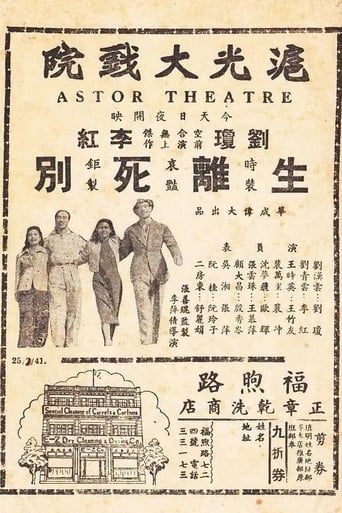
Sheng li si bie
1941
7.0No synopsis available yet.
Sheng li si bie
1941
 8.0
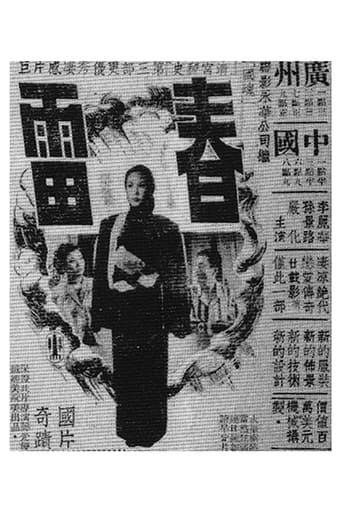
8.0Li's first directorial work in Hong Kong is adapted, by himself, from the Hollywood movie The Great Lie (1941) starring Bette Davis. When a husband disappears in an accident, the wife is dismayed by a social butterfly pregnant with her husband's child. To preserve the husband's blood line, the wife takes care of the expectant mother and raises the child. Featuring the two ravishing beauties Li Lihua and Sun Jinglu, Our Husband foregoes juicy feuds between the leads and delivers an allegorical message: parents should provide an ideal environment for the next generation. Addressing the rocky times in China, it is equally overt in its remonstration as Yung Hwa's earlier works, The Soul of China and Sorrows of the Forbidden City.
Our Husband
1949
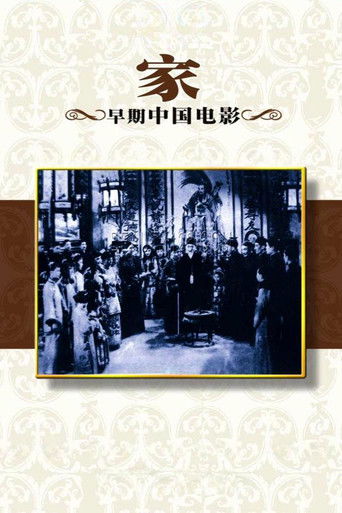 8.0
8.0No synopsis available yet.
Home
1941
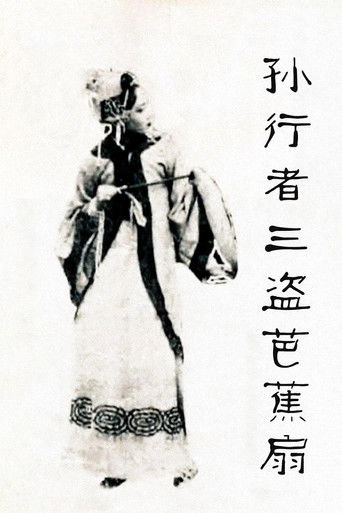 10.0
10.0No synopsis available yet.
Princess Iron Fan
1927
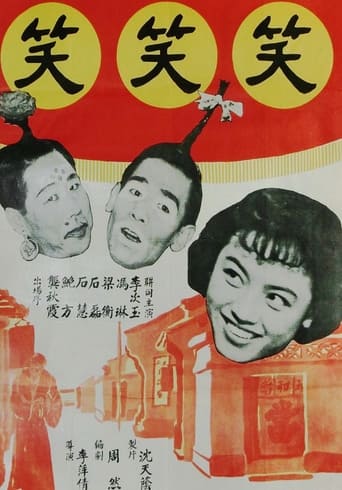 10.0
10.0A sadder than sad story about a fun-loving optimist whose interest in comedy performance is despised by both his family and his wealthy future in-laws, Li’s tragic-comedy follows the 50-year-old father (Bao) as he maintains a dignified façade after losing his long-held accounting job in an occupied Tianjin in the 1940s.
Laugh, Clown, Laugh
1960
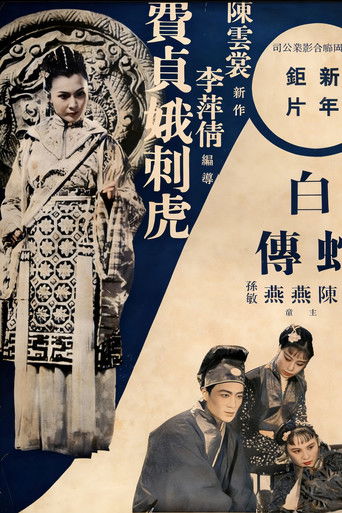 10.0
10.0No synopsis available yet.
The Imperial Maid Fei Zhen'e
1939
Hung Sin Nui plays a mother of three who is burning with desires to serve society. Working as a journalist, she stays out for long hours, resulting in negligence of her children and her husband’s suspicions of infidelity. The twist, at once ironic and realistic, is that her unsupportive husband had actually written in his youth a book on gender equality. On the verge of divorce, the couple reconciles after the husband’s mother, sympathetic to the difficulties faced by women, rises to the occasion with timely and prudent advice. Hung’s character, a woman stuck between cultures of old and new, was tailor-made for the star by screenwriter Chu Hak. Director Li Pingqian portrays her struggles with realist and humanistic touches, extending gentle critiques of social prejudices without fanning the ire of resentment.
It So Happens to a Woman
1955
Ling (Li Tziang), a young woman forced to work as a nightclub hostess to support her ailing parents and young siblings, hides the truth about her job from her family. She meets a sailor (Ping Fan) at the club, and the two quickly fall in love. However, just as he is about to propose, a drunken night causes him to miss their appointment, shattering their plans. Heartbroken, Ling faces another tragedy when her mother falls critically ill. Despite her efforts to raise money for treatment, her mother passes away. Her father, now aware of her real occupation, is ashamed yet sorrowful, unable to change Ling’s situation as the family remains burdened by debt and dependent on her income.
The Seaman and the Dancing Girl
—
 8.0
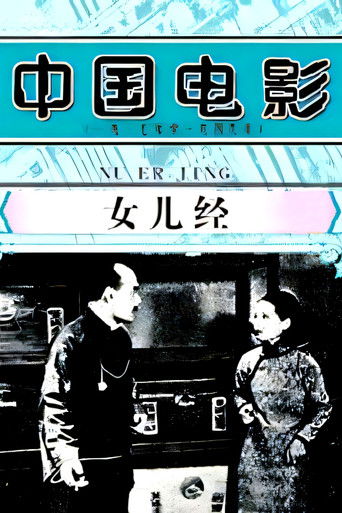
8.0A hostess in Shanghai invites her secondary schoolmates to a reunion. They each reminisce about their lives, with some having difficulties in marriage or career. Some led destructive lives, while others contributed to the country.
The Classic for Girls
1934
 8.0
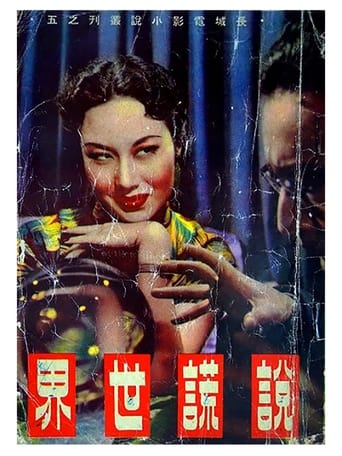
8.0As China falls into hyperinflation following the end of the war, people fought tooth and nail to get their hands on the only reliable currencies in the world: gold and American dollars. This is a story that shows how seven bars and two thousand US dollars bring together an interesting mix of characters: an opportunistic manager, a materialistic courtesan, a con artist posing as a commissioner of the Treasury, a white-collar worker who will do anything for a promotion, a man who specialises in conning women, a father who marries off his daughter for money and a sorcerer who fakes his magic. In this dog-eat-dog world, the only truth is that everyone is lying for his own gain. Playing the courtesan who longs to be part of high society, Li Lihua steals the film with a feisty performance opposite the amusing Yan Jun, whose con artist character has a tendency to flirt with lyrics from Peking operas.
Awful Truth
1950