
Acting
Gabriela Bártlová-Buddeusová
Born — Died
1909-03-23 — 1977-12-28
Known for
Acting
Credits
57 titles
Known for
 6.8
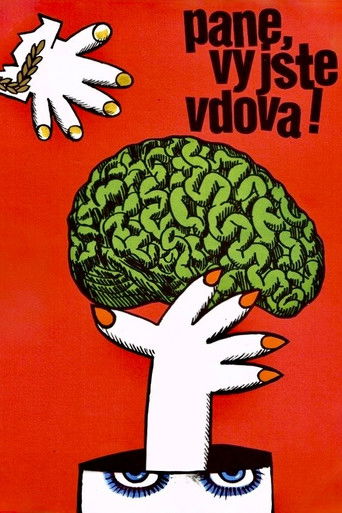
After a soldier cuts off the arm of king's cousin, king decides to deactivate the army. Of course, generals don't like it at all and they try to kill the king. The assassin should be artificial body in the shape of actress Evelina Keleti and with brain of psychotic serial killer Fany Stubová. They also manage to kill king's astrologer Stuart Hampl, who warns the king. Accidentally, Hampl's brain is implanted into assassin's body, actress Keleti is killed and chaos begins.
You Are a Widow, Sir
1971
Based on a novel by Maria Majerova, this well-photographed but routine romantic drama is directed and co-scripted by Vaclav Krska. Set in a more old-fashioned time, the story centers around Lenka (Suzana Fisarskova), a young woman with a domineering, psychologically abusive father. When Lenka falls in love she suffers the ultimate injustice when her father and her family forbid her to marry the man. They see no advantage in such a union and want her to marry a wealthy local landowner instead, for obvious reasons. But Lenka is not as submissive as they think and she runs away to the city to look for the man she loves -- only to find a serious problem, though a surmountable one, is waiting for her.
The Day the Tree Blooms
1961
 5.6
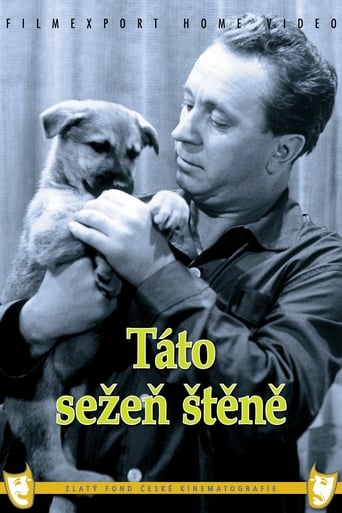
The holiday story revolves around the children of editor Hlavsa and their desire to get a dog. Dad bravely faces his children's wish and all he cares about is the dreamed summer peace. However, the editor's unexpectedly requested regular feature stories from the children's lives change everything. The uproar in the pages of the newspaper and the children's determination not to give up on their dream leads to the hope that something four-legged might eventually turn up at the Hlavs' after all.
Táto sežeň štěně
1964
 5.0
The year is 1918. Toník returns home from the front. In Kladno, where he arrives, things are seething with discontent. The Social Democrats are in government, but nothing has changed. Socialization has not been implemented, there is hunger and food is still being skimped on. The first news about a socialist state arrives from Russia. On May 1st, the workers' Kladno manifests its loyalty to the ideals of the Great October Socialist Revolution. In December 1920, a general strike is declared in Kladno as well. The workers arm themselves, workers' councils take over the administration of the city and are also established in the surrounding villages. An armed uprising is being prepared. However, the right-wing leadership of the Social Democratic Party attacks the workers in the back. The army is sent to Kladno...
A red glow over Kladno
1956
 7.7
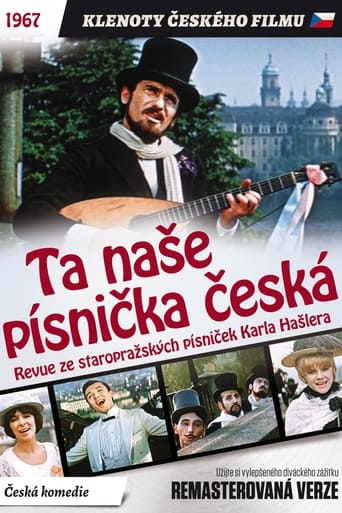
The Haszler songs of Prague, so popular in the late nineteenth and early twentieth centuries, have not aged. They are still sung in pubs and on construction sites, in short, everywhere. They also have their place in the love stories from old Prague, so beautifully told by Miss Veronika. Their heroine is Miss Stázi, who at first had no luck in love with the student Tadeáš. But then she fell in love with three gentlemen at once. The shy Mr. Alois, the cheerful Mr. France and Mr. Johannes, who seduced her behind the Horse Gate. But in the end she preferred the old but rich landlord. Three abandoned gentlemen nearly took their own lives under the Stone Bridge. But grief overcame them and the gentlemen settled down to marriages richly blessed with adorable children. And Miss Stasi? She ran away from the old man and returned to Mr. Franco when he came home from the army.
Ta naše písnička česká
1967
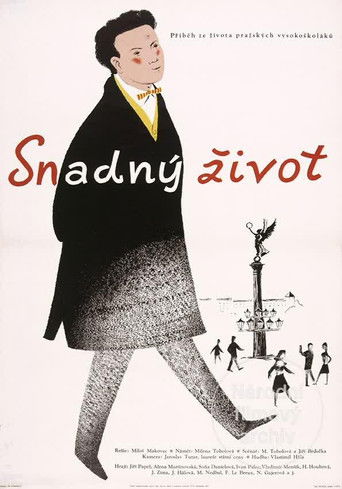 5.0
Depiction of Czech students in the 1950s. The kids are less interested in communism than in rock n’ roll. Czech authorities deemed the work decadent and subversive, which led to the director being kicked out of film school.
An Easy Life
1957
Film credits
1970s · 2 titles
6.8After a soldier cuts off the arm of king's cousin, king decides to deactivate the army. Of course, generals don't like it at all and they try to kill the king. The assassin should be artificial body in the shape of actress Evelina Keleti and with brain of psychotic serial killer Fany Stubová. They also manage to kill king's astrologer Stuart Hampl, who warns the king. Accidentally, Hampl's brain is implanted into assassin's body, actress Keleti is killed and chaos begins.
You Are a Widow, Sir
1971
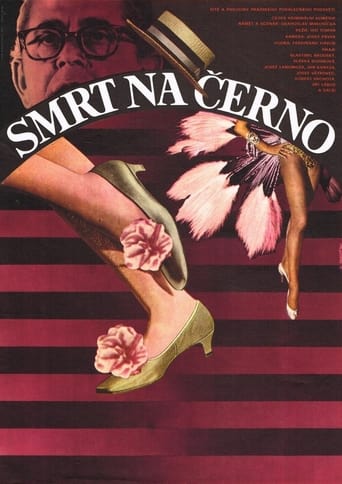 10.0
Webs of Prague's post-war underworld.
Smrt na černo
1977
1960s · 22 titles
Based on a novel by Maria Majerova, this well-photographed but routine romantic drama is directed and co-scripted by Vaclav Krska. Set in a more old-fashioned time, the story centers around Lenka (Suzana Fisarskova), a young woman with a domineering, psychologically abusive father. When Lenka falls in love she suffers the ultimate injustice when her father and her family forbid her to marry the man. They see no advantage in such a union and want her to marry a wealthy local landowner instead, for obvious reasons. But Lenka is not as submissive as they think and she runs away to the city to look for the man she loves -- only to find a serious problem, though a surmountable one, is waiting for her.
The Day the Tree Blooms
1961
5.6The holiday story revolves around the children of editor Hlavsa and their desire to get a dog. Dad bravely faces his children's wish and all he cares about is the dreamed summer peace. However, the editor's unexpectedly requested regular feature stories from the children's lives change everything. The uproar in the pages of the newspaper and the children's determination not to give up on their dream leads to the hope that something four-legged might eventually turn up at the Hlavs' after all.
Táto sežeň štěně
1964
7.7The Haszler songs of Prague, so popular in the late nineteenth and early twentieth centuries, have not aged. They are still sung in pubs and on construction sites, in short, everywhere. They also have their place in the love stories from old Prague, so beautifully told by Miss Veronika. Their heroine is Miss Stázi, who at first had no luck in love with the student Tadeáš. But then she fell in love with three gentlemen at once. The shy Mr. Alois, the cheerful Mr. France and Mr. Johannes, who seduced her behind the Horse Gate. But in the end she preferred the old but rich landlord. Three abandoned gentlemen nearly took their own lives under the Stone Bridge. But grief overcame them and the gentlemen settled down to marriages richly blessed with adorable children. And Miss Stasi? She ran away from the old man and returned to Mr. Franco when he came home from the army.
Ta naše písnička česká
1967
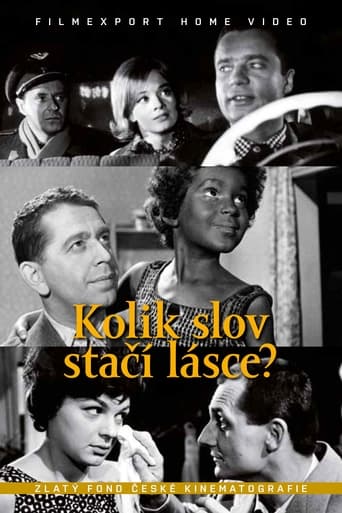 4.5
1. A taxi driver barely finishes his coffee before a young woman asks for a ride to impress her boyfriend, only to reveal her beau’s ramshackle “plan” beside his sleek car. He then smooths over a quarreling couple, helps a frustrated engineer solve his machine’s fault in a dream, and delivers a masked father’s gifts for his estranged daughter. 2. Mr. Kalina, an airport employee, fulfills a flight attendant’s plea by taking in an orphaned African girl for the night. He ensures her safe transfer to a children’s home the next day. 3. Zaza, a coquettish milliner’s assistant, juggles the attentions of a shy tailor and her stern salon manager. After a humiliating fall on the runway, the tailor comforts her and stages a private reprise, revealing where her heart truly belongs.
Love Without Words
1962
 8.5
“And what did you do at school today?” In Pavel Hobl’s Czech fairytale, when Pepik and Honzik learn that school has been canceled they embark on an amazing odyssey around Prague that has them directing traffic, following the lead of a talking dog, breaking the spell an evil sorcerer has placed on a group of local musicians, rollerskating through a museum, and winning a magical car race. (University of Chicago Doc Films)
Do You Keep a Lion at Home?
1964
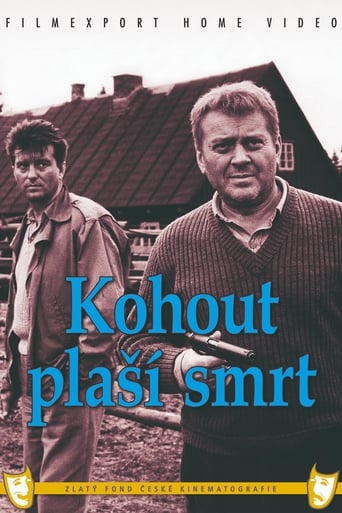 9.0
A group of saboteurs search for a weapons cache hidden by the Nazi army. Beskydy in the summer of 1950: the StB agent Borek infiltrates a group of saboteurs hidden in the Beskydy mountains. They are preparing terrorist actions against the ongoing collectivisation in the village. The group is led by Ervín Kopal and Metud Hanák. Borek is to make contact with them, secure the saboteurs and discover a weapons depot. After many dramatic events, the task is accomplished, but at the highest cost...
Kohout plaší smrt
1962
 6.8
The sad hero of the story, Petr, an ordinary lawyer in a construction company, is crowded into a small apartment in Žižkov with his wife and grandparents, desperately struggling with the lack of money. One day he offers an old man a seat on a crowded trolley bus and is generously rewarded for his good deed, for the unknown old man is a fabulous grandfather. He gives Peter a magic bell and the opportunity to make three wishes, but the first two slip through his fingers. For the third, the astonished man must take time to think...
Three Wishes
1963
 7.0
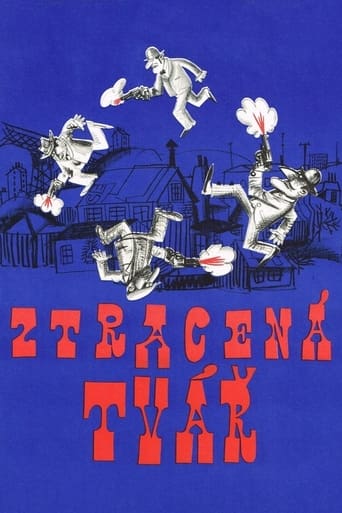
It is the 1930s. Physician Bartos devotedly attends poor patients in the city suburbs, at the same time researching the possibilities of regeneration of human tissues after transplantation. His former colleague Rosen, now working as an assistant at the private clinic of surgeon Kirchenbruch, considers the research a mere utopia. The disappointed Bartos, trying to verify his theories, therefore accepts the outrageous proposal of Marion, owner of a brothel - to surgically replace the face of her lover, the wanted thief Cutter, with the face of murdered Father Hopsasa. Bartos is well paid but his successful operation remains a secret.
The Borrowed Face
1965
This satirical micro-comedy condemns the petty bourgeois mentality, especially bragging. The ridiculous protagonists are two elderly neighbours who are constantly exaggerating the wealth and status of their now grown-up children, who have to submit to their whims - for example, they have to borrow a car to look quite affluent...
Tchyně
1963
 4.2
The protagonist (Rudolf Hrusinsky) is a dull, fat, shy government clerk indulging in voyuerism and ego fantasies. In love with another clerk (Kveta Fiolova), he is urged on in his pursuit by a commiserate executive. The story is told in a flashback sequence as the cuckolded Hrusinsky attempts suicide by gassing himself in his bathtub. The "Murder" of the title is not a murder as such, rather the murder that Hrusinsky remembers planning upon discovering his wife's unfaithfulness with his supposed friend and advisor. Both plots failing in his mind, he loses himself in fantastic reveries of his funeral and of hypocritical mourners. ' Deciding (perhaps) that this is not the way out either, he gives up the attempt and imagines a life of reconciliation and eventual affluence.
Murder Czech Style
1967
 9.0
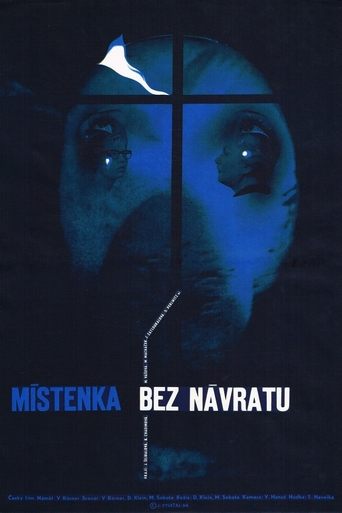
It is almost twenty years after the war. Wounds of the past that have never fully healed, but are still carried by many in their hearts. Marie Vláčilová, a survivor of one of the prison camps in Germany, also carries the traumas of the time with her. Now, so many years later, a mass grave of prisoners from that camp has been found and investigators visit Marie to get any information they can from her about the camp. With her important information, she is then to become a crown witness for the prosecution in Germany and now prepares to travel. But this brings back more and more unpleasant memories - especially of her daughter Paula, who has been through German re-education and hardly knew her mother after the reunion...
Místenka bez návratu
1965
 6.0
The unfortunate 1930s also befell the student Standa Půlpán. For existential reasons, he had to abandon his studies and entered the mines. However, he only slowly and with difficulty became close to the older miners, rough men who were closed in on themselves. Only his brave stand in rescuing people who were trapped in a mining accident will win him the solidarity of the entire mining collective. Even Karel Čapek's draft once lent itself to promoting an exacerbated class interpretation of social relations.
První parta
1960
 5.0
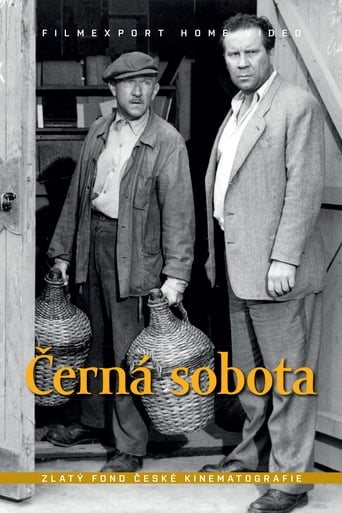
In this crime story, surprisingly, neither the all-powerful criminals nor the spies or saboteurs are pursued, as was once common. The plot is almost mundane: someone unwittingly siphoned off alcohol from a tanker, unaware that it was deadly methyl alcohol, intended for industrial use. Finding out where the poison has been transported and which people it endangers requires painstaking work.
Black Saturday
1961
 7.5
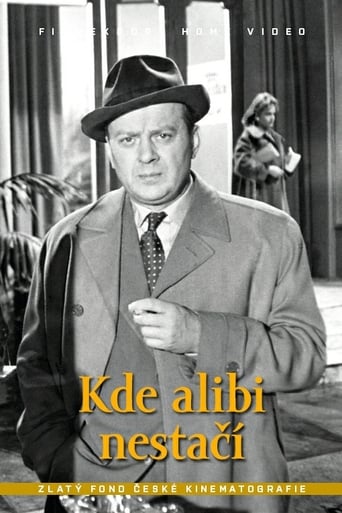
“A bored housewife, a husband who married her for show, and a stupid boy who is full of himself because he is dating a Swiss woman.” The words of Inspector Tůma sound like they’re from a European melodrama, but in fact they come from a Czechoslovak crime story. A pair of detectives, counterfeit medicine, the high-society setting of a Karlovy Vary hotel, and Oldřich Nový as the aging hotel manager Kraus.
Where an Alibi Is Not Everything
1961
 10.0
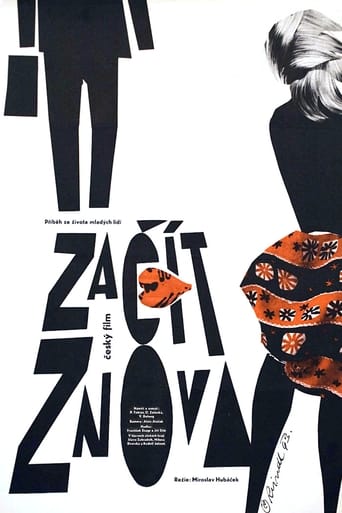
Young Jan Stehlík signs up for a job to build a new mine. On the train he meets the pretty Alena, who falls in love with him. However, she means nothing to the superficial Jan, and when the girl becomes his lover, he treats her rudely and insultingly. But Alena's relationship troubles the honest Joseph, who really likes her.
Začít znova
1964
Twelve graduates of one year of DAMU decide to go to the regional theatre together. During the first season, the enthusiastic collective breaks up and only five remain, determined to continue.
Dvanáct
1964
 4.7
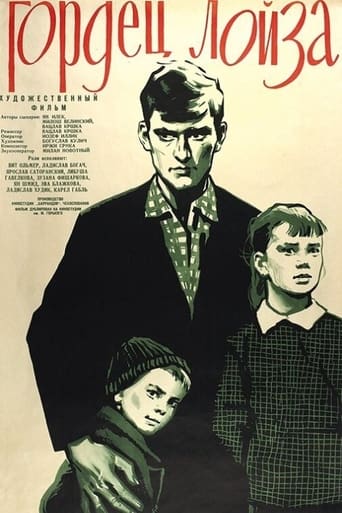
Set in a village, the story of a simple-minded, not-so-responsible young man who still manages to take care of his younger siblings after their father has left the family. Good thing he could lean on the principles of exemplary socialist morality. Not surprisingly, the attempt to capture something of the mentality and conditions of the contemporary village breaks down into simple, poster-like lessons.
Osení
1961
 6.7
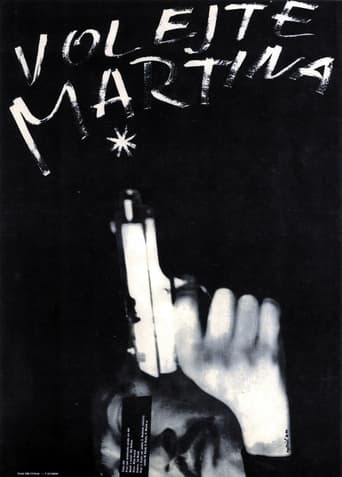
The series of children's films about Detective Martin, who intervenes in cases involving children, begins with this film. It consists of two short stories: in the first ("Three Bottles"), the young hero, escaping from an orphanage, gets involved in a robbery of postage stamps..., in the second ("Flying Carousel"), the children fight a dishonest owner of fairground rides...
Volejte Martina
1966
 7.0
A mobile chapel of St. Florian is moved every week between the villages of Zbořov and Spáňovice. The farmer Florian Jírovec, who has to provide his horses for this event, is tired of it and therefore supports the proposal to build a proper brick chapel in Zbořov. The saint himself visits him at night and is rewarded for his efforts with a miracle. He sends him a golden cord from the sky, which can regulate the weather...
Florián
1961
 6.2
A children's adventure spy film from a time when the radio telephone was science fiction.
Zpívající pudřenka
1960
 7.3
Now we see a naive reminder that television used to broadcast live productions, but in this case the live broadcast has taken on a surprisingly criminal dimension. One of the actors was killed during the broadcast - and it was seen by all the five million people who watched. Investigators are then reconstructing the suspicious event to find out whether it was an accident or a premeditated crime...
5 Million Witnesses
1965
 7.0
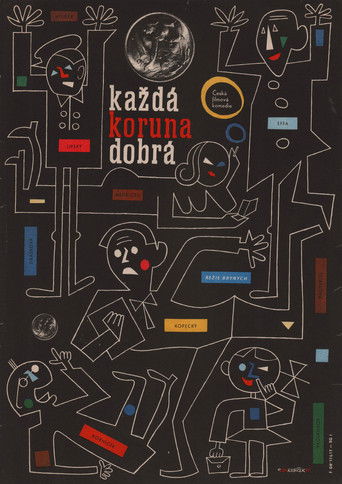
After inheriting a villa from his uncle, Emil Tuma meets its strange inhabitants, getting him in trouble.
Every Penny Counts
1961
1950s · 28 titles
5.0The year is 1918. Toník returns home from the front. In Kladno, where he arrives, things are seething with discontent. The Social Democrats are in government, but nothing has changed. Socialization has not been implemented, there is hunger and food is still being skimped on. The first news about a socialist state arrives from Russia. On May 1st, the workers' Kladno manifests its loyalty to the ideals of the Great October Socialist Revolution. In December 1920, a general strike is declared in Kladno as well. The workers arm themselves, workers' councils take over the administration of the city and are also established in the surrounding villages. An armed uprising is being prepared. However, the right-wing leadership of the Social Democratic Party attacks the workers in the back. The army is sent to Kladno...
A red glow over Kladno
1956
5.0Depiction of Czech students in the 1950s. The kids are less interested in communism than in rock n’ roll. Czech authorities deemed the work decadent and subversive, which led to the director being kicked out of film school.
An Easy Life
1957
No synopsis available yet.
O lidech a tramvajích
1959
 7.0
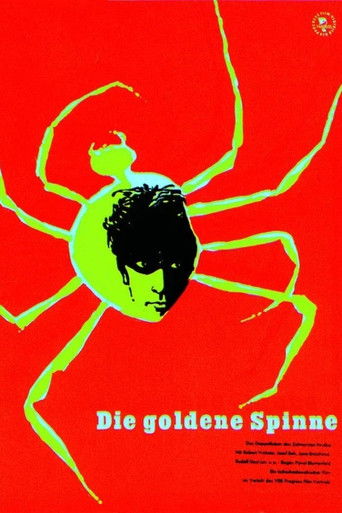
A man was killed while trying to leave Czechoslovakia. One and a half kilograms of gold was found on him - not in coins, not in jewelry, not in bars - but in the form of plates used to make teeth...
Zlatý pavouk
1957
 6.1
Second half of the 19th century. In a small town in South Bohemia, fifth-former Jan Ratkin is living through the confusions of first love together with his classmates.
Silvery Wind
1956
On his first day in a new place, waiter Josef Kučera stands up for his old servant Bartoš and bellhop Svát. His actions earn him the distrust of the café owner Stýbl, the admiration of the maid Jindřiška, and the hatred of her suitor, the waiter Vacek. One evening, Kučera overhears a strange conversation between two guests and confides in the editor of Rudý právo Rokos. When a scandal breaks out about the bank robbery of the minister's son-in-law Zakhar, Rokos deduces from the conversation that it was a fake robbery...
Kavárna na hlavní třídě
1954
 5.0
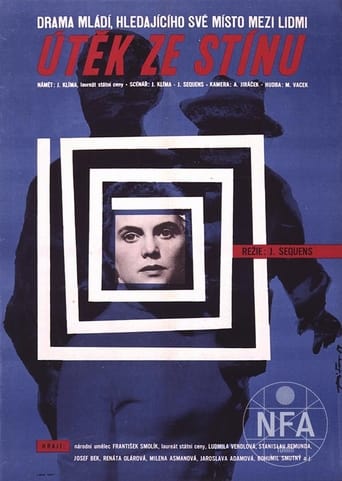
This exemplary "psychological drama" depicts the difficulties with which a new socialist mindset is born. Director Jiří Sequens warns against ill-advised marriages into the families of the defeated bourgeoisie, because the former royalty refuses to accept a man from a different social class. The heroes of this film will find out. The former owner of a pharmacy refuses to accept that his daughter has married a mere technical draughtsman. However, her father's hateful schemes cause the sensitive woman to attempt suicide.
Escape from the Shadows
1959
No synopsis available yet.
Nezlob, Kristino
1956
 7.5
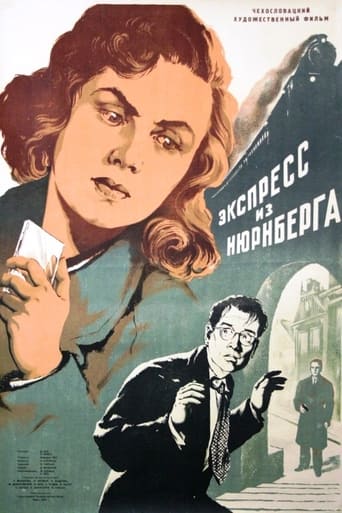
An adventure film about the struggle of the Czechoslovak security authorities against Western agents. In an express train departing from Nuremberg station, a cigarette box with plans and instructions for the destruction of one of the Czechoslovak dams is stuck under the seat. The State Security is informed about the whole operation and tries to catch the foreign agents.
Expres z Norimberka
1954
 7.5
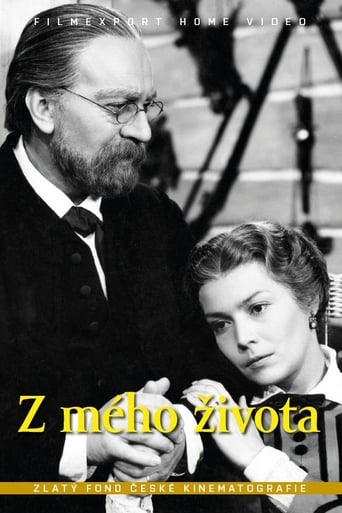
The film, in individual episodes, captures the fate of Bedřich Smetana from 1856 until the end of his life, from his young years until the moment when, exhausted by human and artistic hardship, he sees the fulfillment of his great dream, the opening of the National Theatre.
From My Life
1955
 7.5
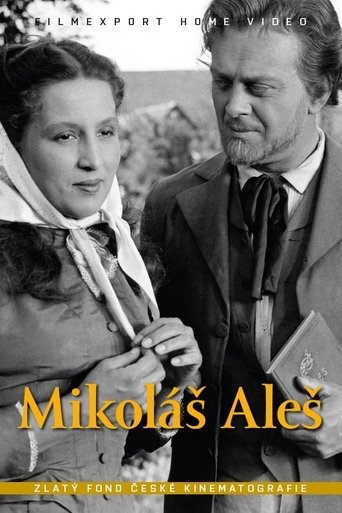
A biographical film about the famous Czech painter Mikoláš Aleš, portrayed as part of the vanguard of the working class and a spokesman for the oppressed, who asserts himself despite the opposing bourgeoisie and reactionaries of all kinds. The film focuses on the period when Mikoláš Aleš participated in the competition to decorate the National Theatre.
Mikoláš Aleš
1952
 7.0
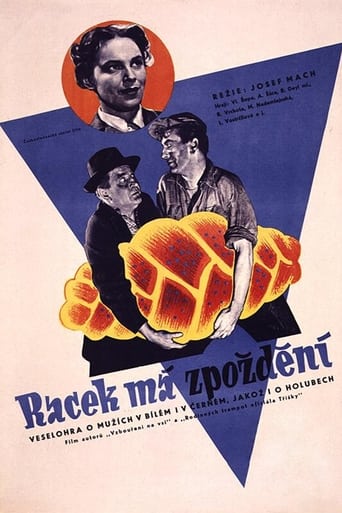
Baker Jan Racek (Vladimír Repa) is a very hard-working and sensible man. His great passion is pigeon-keeping and also, for many years, Ruzenka (Ludmila Vostrcilová). They are going to get married but Racek is busy waiting for the pigeons' return and misses the wedding. The engaged couple is already getting a little older so the otherwise kind Ruzenka gets very angry at this and gives Racek an ultimatum - it's going to be her or the pigeons.
Racek Is Late
1950
 5.7
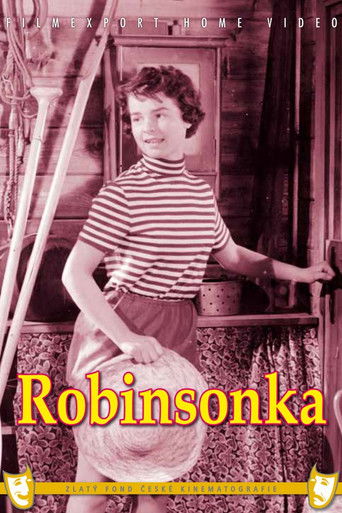
A thirteen-year-old girl whose mother suddenly dies during the birth of her second child is forced to start taking care not only of herself, but also of her father and newborn brother.
The Girl Robinson Crusoe
1957
 5.0
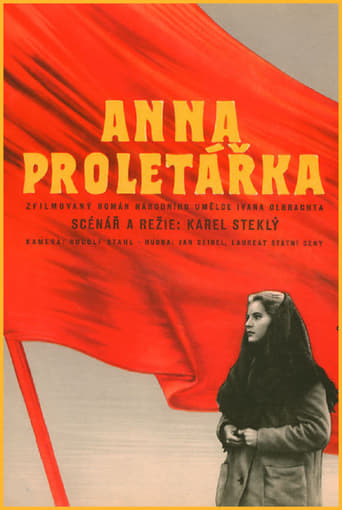
The movie describes proletarian life in the Czech Lands after World War I.
Anna the Proletarian
1953
The Counter-Reformation period: Myslivec Machovec is forced by representatives of the Jesuit order to flee his home for his religious beliefs. His teenage children Helenka and Tomáš do not give up the faith and traditions of the Czech Brethren despite the increasing pressure.
Temno
1951
The story of a traveling comedy family that ends up in court, where young Fricek is charged with attempted murder because he protected his sister Olga from a rapist.
Comedians
1954
 6.5
Early Days follows the early life of famous Czech writer Alois Jirásek. Jirásek had already developed his own view of the history of the Czech nation while he was at grammar school in Broumov. When he becomes the supply teach in Litomyšl, he has already written his first book and a number of poems. The local dignitaries await the arrival of the young writer in excited anticipation. Jirásek, however, is sickened by the empty patriotism from the depths of his soul and soon becomes disagreeable to the notables. The district sheriff tries to remove Jirásek from the school and drive him out of town. Unable to do this, the sheriff appoints a pro-Austrian headmaster who attempts to sabotage Jirásek. The students stand behind Jirásek , however, and discontent is not only felt in Litomyšl but throughout Bohemia.
Early Days
1953
 8.0
Based on Jan Neruda's column of the same name, which depicts the troubles of an old straw man. The film is introduced by poet Jaroslav Seifert with a speech about Jan Neruda and his work.
Kam s ním?
1956
 6.5
A student commits suicide out of unhappy love to a married man; story is recounted in retrospective by a "judge" who asks the audience to decide who is the guilty party.
That Kind of Love
1959
 7.5
A Czech satirical comedy set around 1900. The inhabitants of the small town of Pětice are excited by a mysterious package that is to be delivered to the best person in the village. Of course, all members of the town council claim the title of best person. In the end, it turns out that it was a cleverly thought-out prank intended to reveal the true character of the "better people" of the town.
The Best Man of All
1954
 6.5
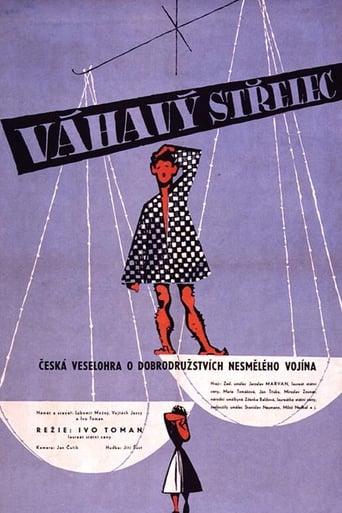
The hesitant shooter becomes a timid young man who only the war will make a real man.
Váhavý střelec
1957
A story about the conditions in Bohemia in the second half of the nineteenth century, when small-town officials, such as Hrdlička, succumbed to the predators of the emerging large financial and industrial bourgeoisie, represented by Jestřáb.
Jestřáb kontra Hrdlička
1953
 5.0
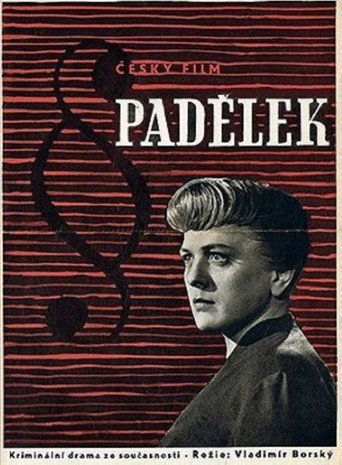
Olga finds her husband Karel Brand, whom she has just divorced, shot dead after returning from the cinema. It appears to be a clear case of suicide, but Lieutenant Dusek of the Public Security Service suspects that it is a murder, which, it is not impossible, as a number of evidences point against it, could have been committed by Mrs Olga. A letter from the dead man to his wife seems to dispel any doubt that it could have been murder. Lieutenant Dusek, however, investigates further. Much more than he, however, learns about the true circumstances from Mrs. Olga's legal advisor, Dr. Klimesh. He learns that the letter is indeed a forgery and that Brand's death is linked to the raids of an anti-state gang. He hesitates for a long time whether to confide in security, believing that doing so would testify in favor of Dusek's theory that the murder was committed by Olga...
Padělek
1957
On his first business trip in a new place, driver Rudo has an accident. A drunken truck driver dented the fender of the tatraplane and drove off while Ruda went to a pub for a beer. His situation looks desperate. He arrives in Prague distraught. But his wife Marie finds a way out. She remembers an old friend and hopes he can help them fix the car before morning. The friend, Plachetka, gets other helpers and the car is finally fixed during the night. Plachetka, his wife, Rabas the painter and Kroupa the plumber all lend a helping hand to the couple. Rudo's place is saved. The friendship, willingness and understanding of a few individuals has done a good job.
To byla noc
1957
 6.7
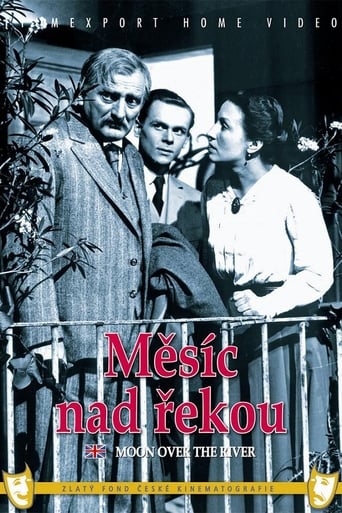
A look back at old classmates at a high school reunion, discovering how life has fruitlessly slipped through their fingers. And they don't even have a chance to break free from the small-town grip.
Moon Over the River
1953
At the annual festival in Strážnice, long-time rivals - cooperative members from the neighboring municipalities of Dubnice and Bojanova - met. This time, the people of Dubnice are leading both in selling sausages and in the artistic forum. Despite the protests of the accounting cooperative Ambrože, the youth from Bojanova establish a singing and dancing group, led by teacher Bartoš, whom Ambrože's daughter Eva loves. However, they go all the way to Dubnice to practice so that the irritable Ambrož does not know about it. This is the reason for the rift between Eva and Bartoš. They only reconciled after the defeat of the Bojanova group in the regional round of the competition. It turns out that neither Bojanova nor Dubnice alone can build an artistically strong group, but if they unite, they have hope for success in the next year of Strážnice.
Ještě svatba nebyla...
1954
No synopsis available yet.
Bludný kruh
1954
No synopsis available yet.
Písnička za groš
1953
1920s · 4 titles
Dissolute Abel Beer, with the help of his debt collector friends - usurers, swindles a Prague Doctor Jakub Hlohovský out of a quiet house in Malá Strana. Jakub, familiar with the secrets and effects of various medicines, uses them to make himself look dead.
Mrtví žijí
1922
No synopsis available yet.
Odplata
1921
No synopsis available yet.
Venoušek a Stázička
1922
No synopsis available yet.
Dejte se omladit
1923