
Writing
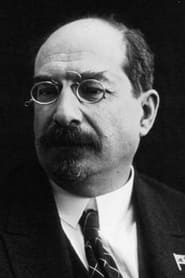
Anatoli Lunacharsky
Born — Died
1875-11-24 — 1933-12-26
Place of birth
Poltava, Russian Empire
Known for
Writing
Credits
9 titles
Russian revolutionary, Soviet statesman, writer, translator, publicist, critic, art critic. From October 1917 to September 1929 - the first People's Commissar of Education of the RSFSR, an active participant in the revolution of 1905 and the October Revolution. Academician of the USSR Academy of Sciences (February 1, 1930). In 1896-1898, the young Lunacharsky traveled to France and Italy, and in 1898 he came to Moscow, where he began to engage in revolutionary work. In 1904, after the end of his exile, Lunacharsky moved to Kiev, and then to Geneva, where he became a member of the editorial boards of the Bolshevik newspapers Proletary and Vperyod. Soon Lunacharsky became one of the leaders of…
Known for
 NR
NRNo synopsis available yet.
Загадки века с Сергеем Медведевым
2016
 6.8
6.8A chronicle of the Russian Revolution of 1917, from the bourgeois democratic February Revolution to the great socialist October Revolution and the final triumph.
Anniversary of the Revolution
1918
 5.9
5.9This film shows the leaders of organizations that emerged after the Russian Revolution. It is the fragment of ‘Anniversary of the Revolution’ made by Vertov in 1918.
The Brain of Soviet Russia
1919
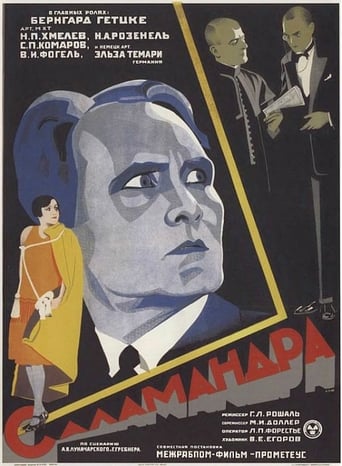 6.3
6.3The film is based on real events and reveals the tragic episodes from the life of the Austrian biologist scientist-materialist Paul Kammerer (1880-1926), hunted by regressive scientists and Catholic reactionaries who committed suicide.
Salamander
1928
A screen adaptation of excerpts from Jack London's dystopian novel of the same name describing the rise of the Oligarchy (the "Iron Heel") in the United States. The film was meant to be screened during theatre performances performed by the same actors.
The Iron Heel
1919
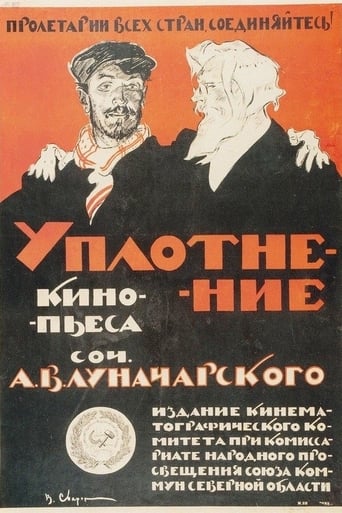 4.9
4.9In the process of housing redistribution, a worker and his daughter are relocated from a damp basement to one of the rooms at a professor's spacious flat. Factory workers begin to visit and the number of guests grows and grows; the professor begins to hold widely attended lectures at the workers' club. Romance blossoms between the professor's youngest son and the worker's daughter, and the two decide to marry...
Uplotneniye
1918
Film credits
1910s · 2 titles
6.8A chronicle of the Russian Revolution of 1917, from the bourgeois democratic February Revolution to the great socialist October Revolution and the final triumph.
Anniversary of the Revolution
1918
5.9This film shows the leaders of organizations that emerged after the Russian Revolution. It is the fragment of ‘Anniversary of the Revolution’ made by Vertov in 1918.
The Brain of Soviet Russia
1919
Series credits
Behind the camera
6.3The film is based on real events and reveals the tragic episodes from the life of the Austrian biologist scientist-materialist Paul Kammerer (1880-1926), hunted by regressive scientists and Catholic reactionaries who committed suicide.
Salamander
1928
A screen adaptation of excerpts from Jack London's dystopian novel of the same name describing the rise of the Oligarchy (the "Iron Heel") in the United States. The film was meant to be screened during theatre performances performed by the same actors.
The Iron Heel
1919
4.9In the process of housing redistribution, a worker and his daughter are relocated from a damp basement to one of the rooms at a professor's spacious flat. Factory workers begin to visit and the number of guests grows and grows; the professor begins to hold widely attended lectures at the workers' club. Romance blossoms between the professor's youngest son and the worker's daughter, and the two decide to marry...
Uplotneniye
1918
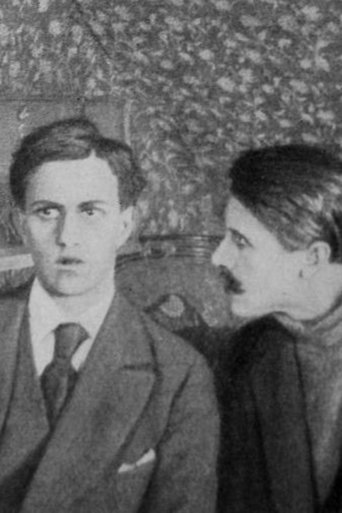 8.0
8.0Propaganda film directed by Mikhail Narokov and Nikandr Turkin. Partially lost.
Smelchak
1919
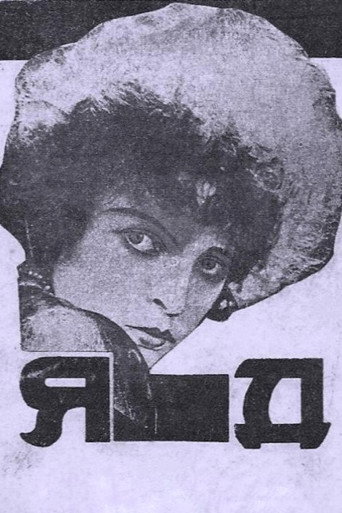 10.0
10.0Partially lost.
Poison
1927