
Known for
Yoshio Kawai is a lowly singer at the Bonbon-za, a third-rate theater in Asakusa. Together with fellow low-ranking actors Tokuri, Kameda, and Hanayama—and centered around Yumi, the beautiful dancer who serves as their mascot—they form a poor but cheerful group of five.
Warau chikyū ni asa ga kuru
1950
 NR
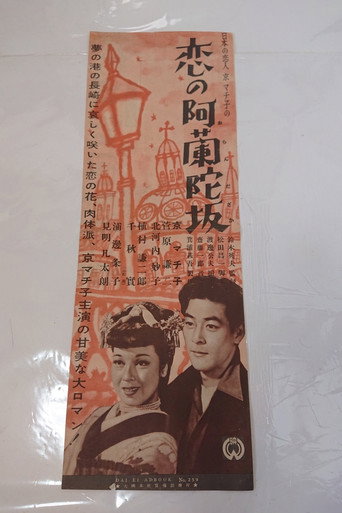
NRSet against the backdrop of Nagasaki, a love story blossoms between an unfortunate circus girl and a shipbuilding engineer.
Koi no Oranda-zaka
1951
 NR
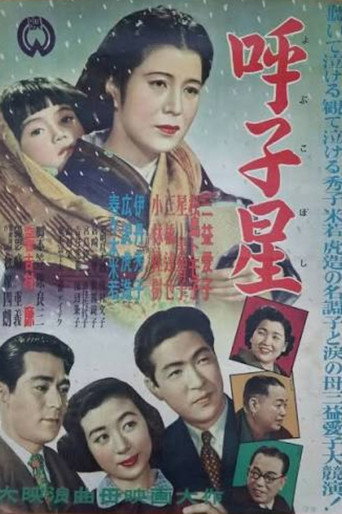
NRNo synopsis available yet.
Yobiko hoshi
1952
 NR
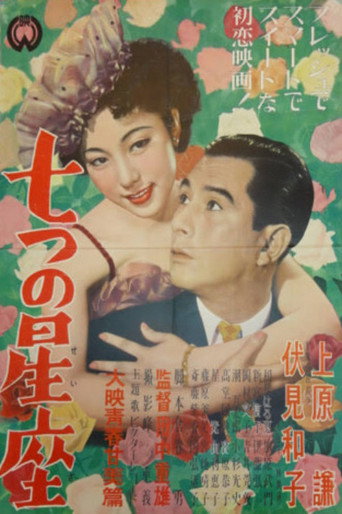
NRA story of first love between a misogynistic astronomer and a dancer he met on the street.
Nanatsu no seiza
1951
 NR
NRIn 1945, in a Shanghai filled with a palpable sense of unease as the war was still raging, Atsuko Kijima and Ryuji Kudo fell in love and exchanged promises of marriage. Ryuji was deployed shortly thereafter, and after the war ended, he was taken to Siberia as a prisoner of war. Atsuko, who had returned to Tokyo, clung to the promise she had made with Ryuji—that if he were safe, he would “come to the garden of St. Nicholas Cathedral at noon on Christmas Day.” Relying on that promise, she went to St. Nicholas Cathedral at noon on Christmas Day in both 1946 and 1947, but Ryuji never appeared.
Tokyo Elegy
1951
 NR
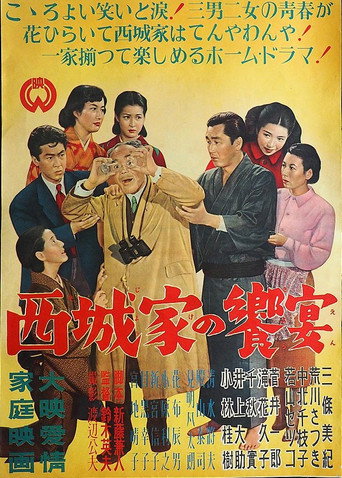
NRNo synopsis available yet.
Saijoke no kyoen
1951
Film credits
1970s · 3 titles
 8.0
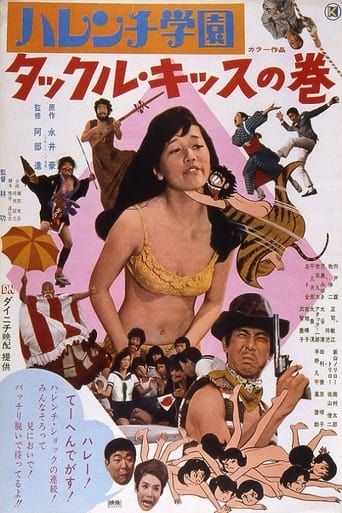
8.0Students against teachers in the wildest kiss-stealing, petting-orgy ever.
Shameless School: Tackle Kiss
1970
 NR
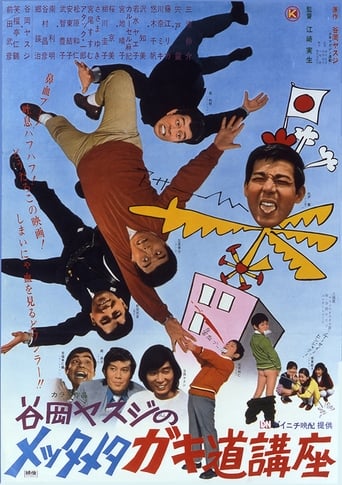
NRComedy about a young man who causes pandemonium by raiding a bar patronized by his father, winning the favors of a hostess and ends up feeling the breasts and hips of all the girls in his father's office.
Go As Messy As Messy Can Be
1971
 NR
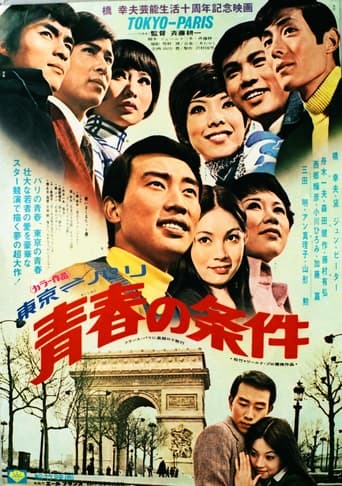
NRA young composer falls in love with the beautiful daughter of a wealthy company president and flies to Paris when he learns she is studying music there. But, when he finally wins her after many difficulties, he somehow feels empty, because his spirit has always been aroused against barriers before him.
Rainbow Over Paris
1970
1960s · 4 titles
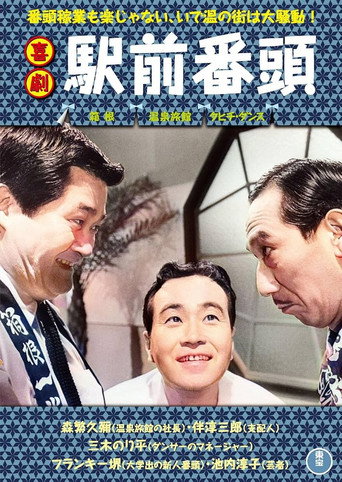 NR
NRThe 16th "Ekimae" feature.
Big Wind at the Spa
1966
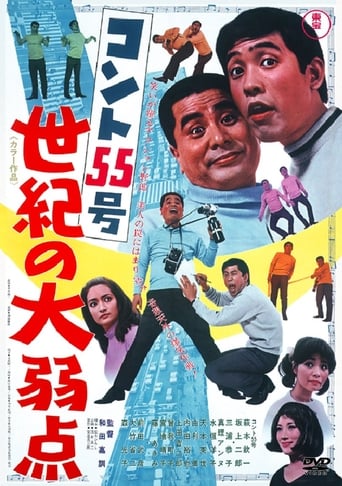 10.0
10.0A Toho film featuring the comedy duo Konto 55, (コント55号), comprised of comedians Kinichi Hagimoto and Jiro Sakagami.
Konto 55: The Weaknesses of the Century
1968
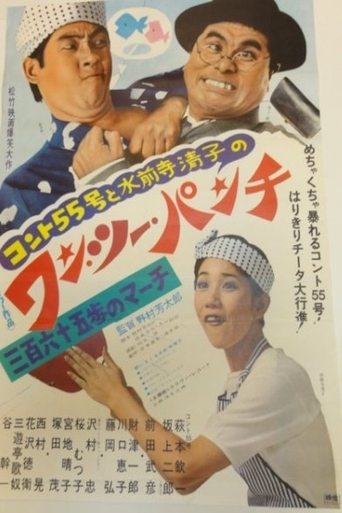 NR
NRTwo men succeed in opening a joint restaurant after hilarious troubles.
One Two Punch
1969
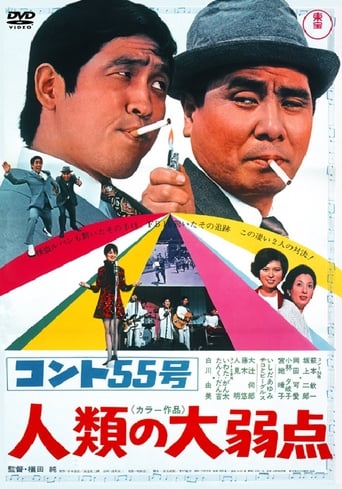 NR
NRA Toho film featuring the comedy duo Konto 55, (コント55号), comprised of comedians Kinichi Hagimoto and Jiro Sakagami.
Konto 55: Mankind's Weaknesses
1969
1950s · 13 titles
Yoshio Kawai is a lowly singer at the Bonbon-za, a third-rate theater in Asakusa. Together with fellow low-ranking actors Tokuri, Kameda, and Hanayama—and centered around Yumi, the beautiful dancer who serves as their mascot—they form a poor but cheerful group of five.
Warau chikyū ni asa ga kuru
1950
NRSet against the backdrop of Nagasaki, a love story blossoms between an unfortunate circus girl and a shipbuilding engineer.
Koi no Oranda-zaka
1951
NRNo synopsis available yet.
Yobiko hoshi
1952
NRA story of first love between a misogynistic astronomer and a dancer he met on the street.
Nanatsu no seiza
1951
NRIn 1945, in a Shanghai filled with a palpable sense of unease as the war was still raging, Atsuko Kijima and Ryuji Kudo fell in love and exchanged promises of marriage. Ryuji was deployed shortly thereafter, and after the war ended, he was taken to Siberia as a prisoner of war. Atsuko, who had returned to Tokyo, clung to the promise she had made with Ryuji—that if he were safe, he would “come to the garden of St. Nicholas Cathedral at noon on Christmas Day.” Relying on that promise, she went to St. Nicholas Cathedral at noon on Christmas Day in both 1946 and 1947, but Ryuji never appeared.
Tokyo Elegy
1951
NRNo synopsis available yet.
Saijoke no kyoen
1951
 NR
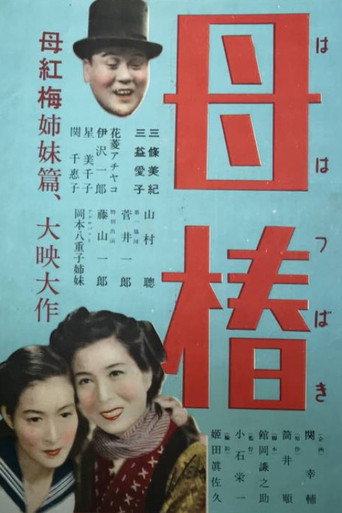
NRKamezo, a manzai comedian, had been taking a break from performing while his partner Tsuruko was giving birth, but Tsuruko announced that she was retiring from the stage. That child was, in fact, the son of Takashi Yashiro, a politician with a promising future. Believing that a relationship between a politician and a female manzai comedian would bring unhappiness to Yashiro and his wife, Tsuruko changed her address and was even preparing to leave the stage. Tsuruko’s alcoholic father, having caught wind of this, snatched the child, Yoko, and squandered the small sum of money he had received from Yashiro on drinking.
Haha tsubaki
1950
 NR
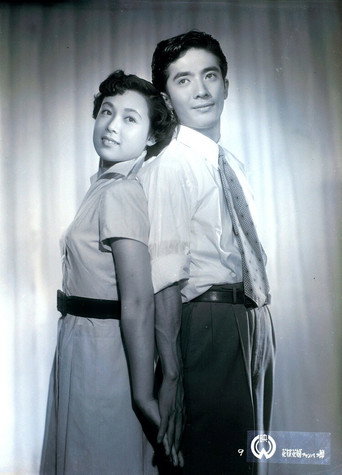
NRNo synopsis available yet.
Hanayome hanamuko chanbara bushi
1952
 NR
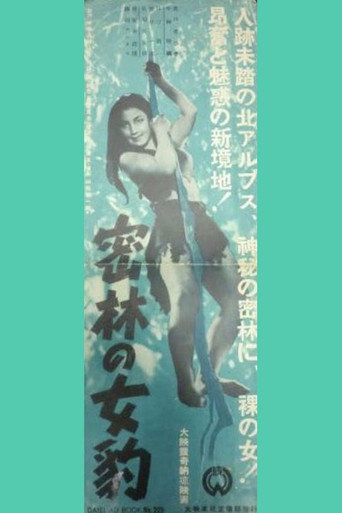
NRA film filled with eroticism and humor, set in the Northern Alps where a naked woman has appeared, as depicted in the article “Naked Woman Appears in the Jungle,” and featuring a showman and a newspaper reporter.
Mitsurin no mehyō
1950
A lively, energetic film featuring a cast of up-and-coming actors, depicting the worries and joys of youth, friendship, and romance.
Hatachi zengo
1950
 6.0
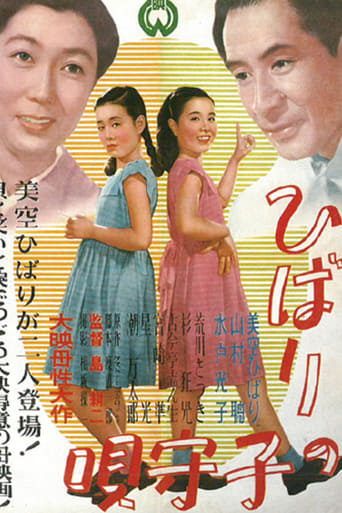
6.0Hibari no komoriuta (ひばりの子守唄, literally "Hibari's Lullaby") is a 1951 black-and-white Japanese film directed by Koji Shima. The movie is based on Das doppelte Lottchen, a novel later adapted as The Parent Trap.
Hibari no komoriuta
1951
 NR
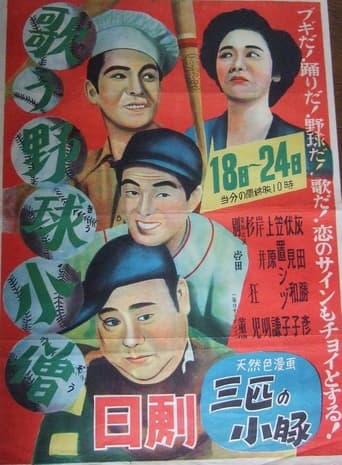
NRA musical comedy about a spirited orphan who forms a youth baseball team and gets caught up in a mix of sports, singing, and crime when he tries to return a star player’s lost money.
The Singing Baseball Kid
1951
 NR
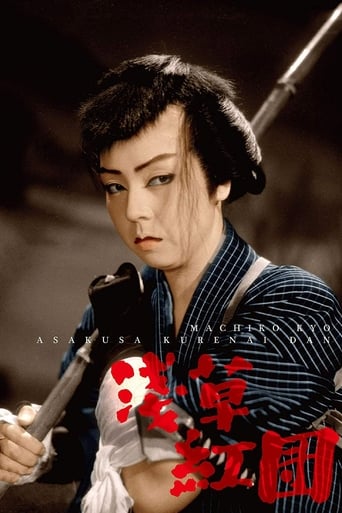
NRNo synopsis available yet.
The Scarlet Gang of Asakusa
1952