
Acting
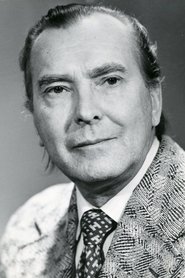
Heino Mandri
Born — Died
1922-09-11 — 1990-12-03
Place of birth
Kohtla-Järve, Viru County, Estonia [now Ida-Viru County]
Known for
Acting
Credits
54 titles
Heino Mandri (September 11, 1922 – December 3, 1990) was an Estonian film and stage actor. Heino Mandri was born in Kohtla-Järve, but his family moved to Tallinn when Mandri was two years old. In 1946, Mandri graduated in the only class of the short-lived Tallinn Theatre School (1942–1946) set up during the German occupation to carry on the work of the former State School of Performing Arts which had been liquidated during the Soviet occupation in 1940. In 1948, Mandri was accused in anti-Soviet activities and sentenced for seven years of forced labor. From 1948 to 1954 he served the sentence in the Viatlag prison camp, Lesnoy, Kirov Oblast in Northern Russia. Mandri was released in 1954 …
Known for
 6.3
6.3A Russian mystery miniseries set both in medieval times and in the days of Perestroika.
Entrance to the Maze
1990
 6.5
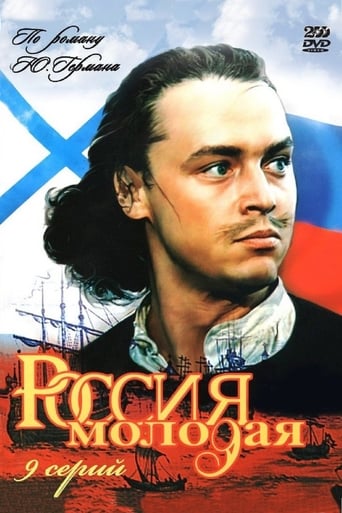
6.5The Russian Empire, the turn of the 17th and 18th centuries, the era of Peter I's reforms. At the center of events are Captain Silvestr Ievlev, Lieutenant of the Customs Troops Afanasy Krykov, and Helmsman Ivan Ryabov. All three are very close to the emperor, who entrusts them with commanding the resistance against the Swedish fleet during the defense of Arkhangelsk. Each of the trio plays an important role in the defense of Arkhangelsk and the capture of the Swedish fleet.
Russia Is Young
1984
 6.1
6.1Torn by personal guilt, Italian General Umberto Nobile reminisces about his 1928 failed Arctic expedition aboard the airship Italia.
The Red Tent
1969
 7.4
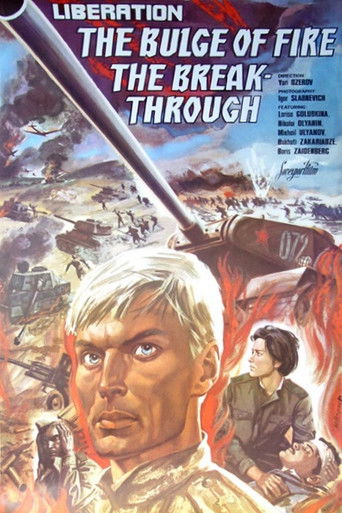
7.4The "Fiery Arc" tells of a grandiose battle on the Kursk Bulge in the summer of 1943. Here was the largest tank battle in the history of World War II. Along with the personal fate of the heroes, the film shows battle scenes, the activities of headquarters and intelligence, those who worked at the front and in the rear.
Liberation - Part 1 : The Fire Bulge
1970
 5.2
5.2Based on the novel “Ukuaru” by Veera Saar, a story about Minna, a young woman who has to make choices in the name of her true love, home, and the continuation of life.
Spring in the Forest
1974
Reactionary and aggressive circles in the United States are trying to establish a dictatorship in the country, preparing to assassinate the president and introduce a state of emergency in the country. The conspiracy is led by the FBI director...
The R Document
1985
Film credits

1990s · 2 titles
 4.7
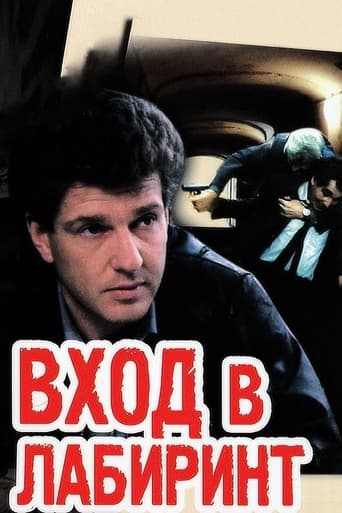
4.7The actions of this mystery movie takes both in the past (in medieval times, as the scientists' hallucinations) and in the days of Perestroika.
Entrance to Labyrinth
1990
 7.0
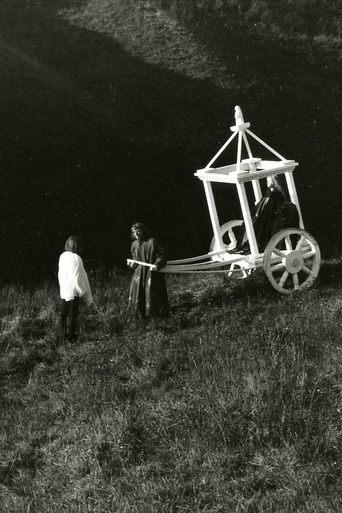
7.0A historical costume drama where the fragments of the adventurous lives of Bernt Notke, one of the most influential Late Gothic painters, and carpenter Michel Sittow are brought together by the story of the panel painting "Danse Macabre" by Notke and the way the painting reached Tallinn, Estonia from Lübeck.
Surmatants
1991
1980s · 16 titles
 6.0
6.0The film is about one of the greatest social hot spots in Estonia during the Soviet times when apartments were distributed by the state, telling the story of a real estate agent and a homeless man. Mass immigration in 1944-1988 led to demographic conflict. Free apartments were mainly given to immigrants despite the fact that local people badly needed places of residence as well. They are not tourists, they live here, but they haven't got a home.
I'm Not a Tourist, I Live Here
1989
 8.0
8.0The love story of Liza Pesentak and the fearless patriot Melelave, who will go through a series of various trials before they find their happiness.
In the Time of the Law of the Wolf
1986
 5.6
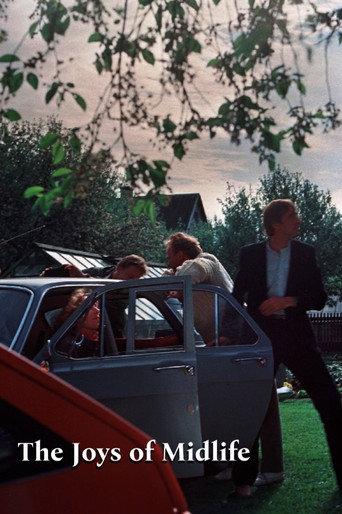
5.6Five people who have recently reached middle-age are driving through Estonia to visit a famous witch-therapist to get rid of their problems. The somber-funny road movie gives a good overview of the life, people and daily problems in Estonia at the end of the Soviet period.
The Joys of Midlife
1987
 7.0
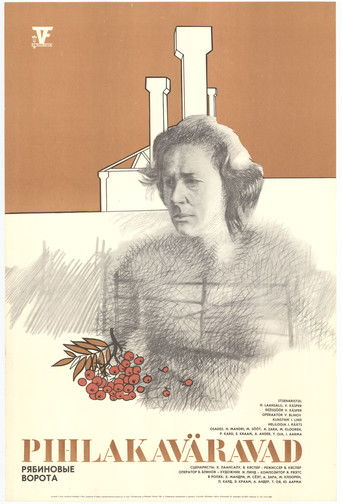
7.0Engineer Lembit with his construction team arrives at a small island to build a sheep farm. They are accommodated in the house of a middle-aged woman Marta and her daughter Kaja. The everyday routine will change when after some time everyone's controlled behaviour starts to change, expressing suppressed problems and yearning for warmth and love.
Rowan Gates
1981
 8.0
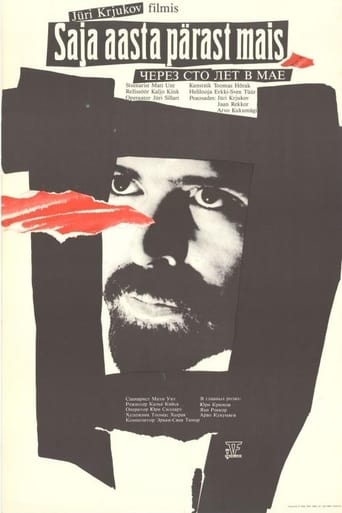
8.0Viktor Kingissepp has been the underground head of the Communist Party of Estonia for three years. He corresponds with Moscow, writes speeches for the members of the Communist Workers' Party and makes leaflets for the events of trade union. His purpose is to overthrow the Republic of Estonia since he does not believe in Estonian independence nor in any national ideals. Yet the clock keeps ticking, tuberculosis spreads rapidly, the world revolution is being postponed. What to do in order to make one's efforts work?
In One Hundred Years in May
1987
 8.5
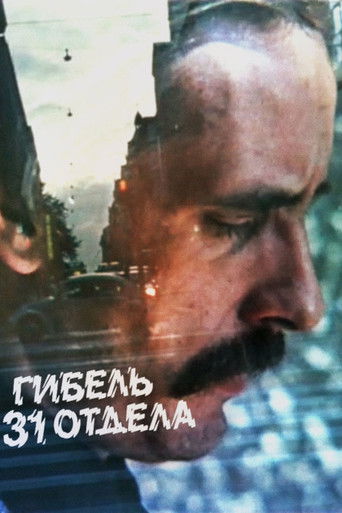
8.5Police officer Jensen orders the evacuation of a leading media group's office building after a bomb threat is made. There won't be any explosion, however, the media group sustains big losses because of the work stoppage and the management requires investigation of the case. Officer Jensen identifies six suspects, then finds out that he is being followed himself, especially when he gets involved in the obscure activities of the mysterious 31st department.
Murder on the 31st Floor
1981
Rich nephews and beautiful girls can not get married, especially when neither of them have actually seen each other.
Faulty Brides
1989
A television film based on the short stories of the American writer O. Henry.
Two Couples and Loneliness
1984
 9.0
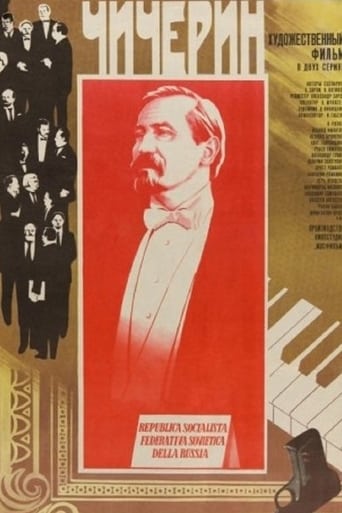
9.0Chicherin - Russian revolutionary, Soviet diplomat, first People's Commissar of Foreign Affairs of the RSFSR and the USSR. Member of the USSR Central Executive Committee of 1-5 convocations, member of the Central Committee of the All-Union Communist Party. Musicologist, author of a book about Mozart. In memory of Chicherin.
Chicherin
1986
 6.8
6.8The movie travels through the 20th century by monitoring a steam boiler. We see the history of Estonia through life, agricultural work and people at different times.
Dance Around the Steam Boiler
1988
 7.5
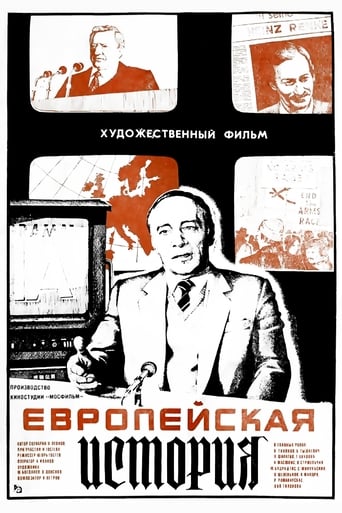
7.5Two candidates are vying for the post of mayor of one of the major Western European cities - the Social Democrat Dr. Hayden and the "free nationalist" Alden. On the eve of the election, an independent journalist receives documents confirming Alden's connection with the secret services. He becomes the object of blackmail, but does not change his intentions to expose Alden.
European Story
1984
 5.7
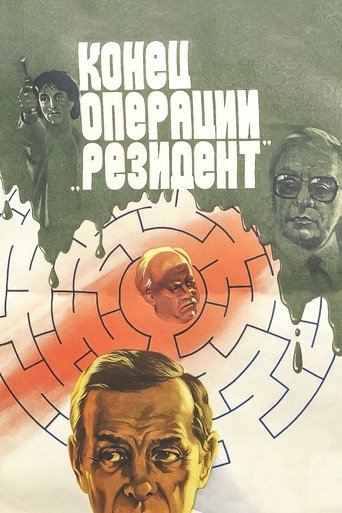
5.7Operation "Resident", which lasted 15 years, is coming to an end. But the indestructible agent of "Nadezhda" has one important mission left. Agent Carl Brockmann, who intends to steal the work of Academician Nikolai Nesterov in the defense sector, has been abandoned in the USSR. KGB leadership asks Mikhail Tulyev to return to the Soviet Union to find the spy. Meanwhile, Brockmann recruits former fascist collaborator Mikhail Kutepov for involvement in a dangerous operation.
The Secret Agent’s End
1986
 7.0
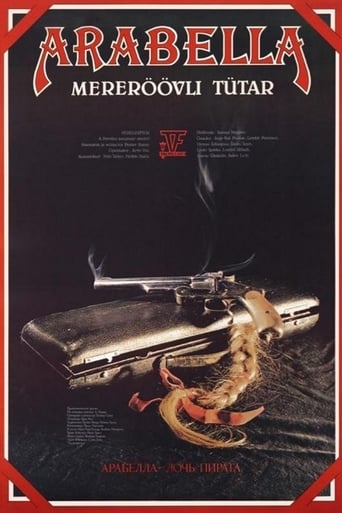
7.0Arabella is a daughter of the world's most terrifying pirate captain. She loves her father but also dreams about a life of a usual girl. One day a weird stranger is saved from the sea who will be the only friend of Arabella. At the same time a rival pirate called Raudpats plans to kidnap the girl. Will she be safe and can she ever live a normal life?
Arabella, the Pirate's Daughter
1983
 5.2
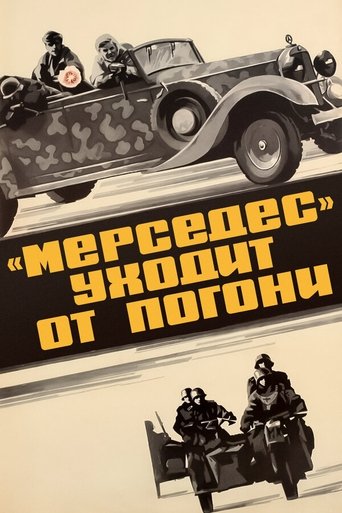
5.2The film is set during World War II. After capturing the "trophy" Mercedes, a group of scouts, disguised as German officers commits a daring raid behind enemy lines (the 116th Motorized Division) on roads controlled by the enemy.
Mercedes Runs Away from the Chase
1981
 4.0
4.0Toomas Stockmann, the head doctor of a water clinic built in a small town by the sea, discovers that the facility is threatened by an infection caused by construction errors in the waterworks. The powerful mayor Peter Stockmann, the doctor's brother, has used his position and connections for commercial and political gain and has ignored the doctor's warnings. The upper class of the town initially supports the doctor's decision to reveal the truth, but the mayor changes due to pressure and personal interests. Dr. Stockmann is labeled an enemy of the people. He must choose whether to stick to his ideas, at the risk of his family, or surrender to demagoguery.
Doctor Stockmann
1989
 8.0
8.0No synopsis available yet.
Bay of Happiness
1988
1970s · 20 titles
7.4The "Fiery Arc" tells of a grandiose battle on the Kursk Bulge in the summer of 1943. Here was the largest tank battle in the history of World War II. Along with the personal fate of the heroes, the film shows battle scenes, the activities of headquarters and intelligence, those who worked at the front and in the rear.
Liberation - Part 1 : The Fire Bulge
1970
5.2Based on the novel “Ukuaru” by Veera Saar, a story about Minna, a young woman who has to make choices in the name of her true love, home, and the continuation of life.
Spring in the Forest
1974
 7.0
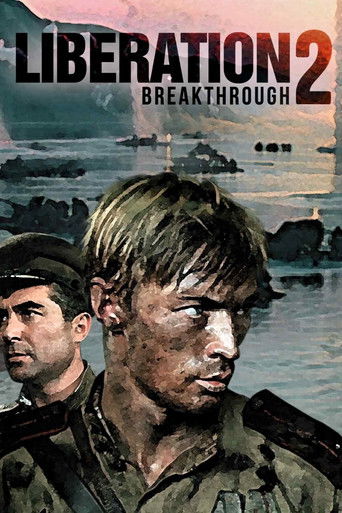
7.0Fascist Italy's prime-minister Mussolini is arrested following the Allies landing in Sicily. Meanwhile, Soviet troops plan their offense towards Kyiv. Lt. Col. Lukin's regiment crosses the Dnieper river as the division's vanguard. Unbeknownst to them, they're merely a ploy to mislead the Germans so the rest of the army can catch them off guard.
Liberation - Part 2 : Breakthrough
1970
 7.5
7.5Joonas and Tiidrik are two men from the island of Saaremaa who recklessly escape from the German prison during the First World War. Yet, there are no peaceful times in their home country neither.
Gladiator
1971
 7.0
7.0Pastor Paul Lempelius comes to the island of HIiumaa that seems to be like the world's end. While serving the pastorate of Reigi in spirit and in truth, Lempelius hopes to get rid of the burden of destiny. However, the local people favour pagan traditions and distrust the strict kingdom of God that Lempelius teaches them. The pastor's beautiful yet childless wife Catharina yearns for joy of life and tenderness that she won't receive from his husband. Instead, a young assistant pastor Jonas Kempe offers her his love. Their love, disregarding all laws, and the primal lifestyle of the islanders will become the touchstone for Lempelius' redemption.
The Pastor of Reigi
1978
 4.7
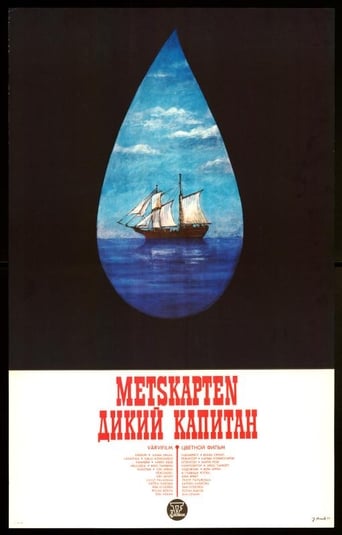
4.7Sailing to South America, the sailing ship "Fortuna" gets stuck in a calm in the middle of the Atlantic. Heat and thirst drive the team crazy, knives are already flashing and the wind is being conjured in the darkness of the night. Captain Kihnu Jõnn has to tame desperate men and trade with heavenly forces in order to bring the ship's crew to the destination port, who want to leave him there.
Forest Captain
1972
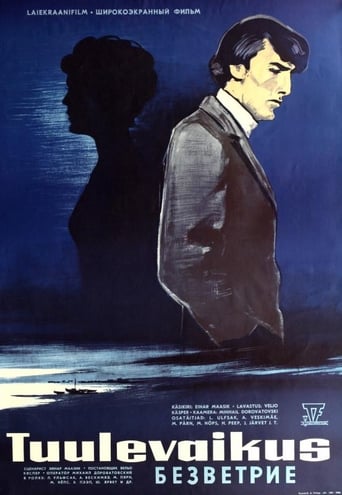 7.0
7.0Taavi is worried about the lack of wind that won't let him do his daily job as a fisherman. But he is definitely not the guy who would just sit and wait for better days to arrive.
Lack of Wind
1971
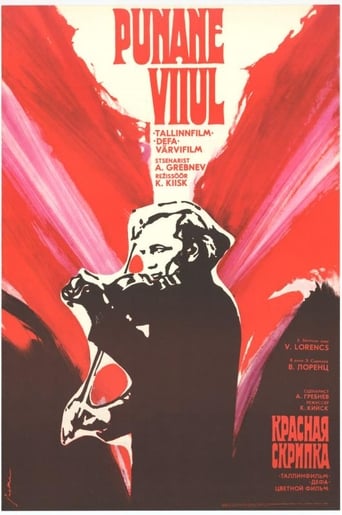 9.0
9.0When Estonian violinist Eduard Sõrmus starts his concert tours in Europe, he is convinced that the world revolution is about to begin. His mission as a Red Violinist is to call the proletariat around the world to join with the revolution. It is only two things - music and revolution - that Eduard has dedicated himself to. His audience is enchanted by his performance and ignited by his ideas. With this knowledge, he travels Europe between the two world wars, accompanied by his faithful friends, his audience's admiration and the hostility of the authorities.
The Red Violin
1975
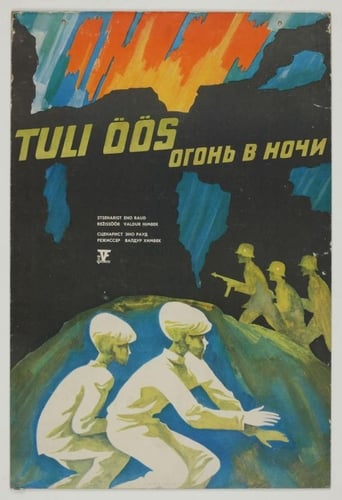 9.5
9.5Ülo and Olev think the German occupation is humiliating and the soldiers are arrogant. But even among Estonians there are people who cannot be trusted - this can have fatal consequences. Witty schoolboys find out that Mr Velirand, who has moved in the apartment that once belonged to their teacher, is a henchman of Fascists. The boys make up their minds to give people warning about the provocator, even if the rebellion is risky and their opponent superior, as it had been in the St George's Night Uprising in 1343.
Fire in the Night
1973
 6.5
6.5This film is an humorous view on the conflict of pedestrians with all growing car traffic.
Pedestrians
1971
 4.2
4.2In 1921, the Cheka became aware that gold and jewelry were stolen from the treasury of Gokhran, and that a special organization was involved in transporting the stolen to Estonia. Scout Maksim Isayev is sent to this country. He establishes that the cipher of the Soviet embassy Olenetskaya works for the German resident Nolmar, with whom employees of Gokhran Kozlovskaya and an appraiser Yakov Shelekhes are associated. As a result of the provocation, Isayev was arrested. In the prison cell, he finds himself together with the famous Russian writer Nikandrov, who could not find himself in post-revolutionary Russia and went abroad. Released soon by the efforts of his comrades, Isayev continues the struggle for the fate of Nikandrov — for his return to his homeland.
Diamonds for the Dictatorship of the Proletariat
1976
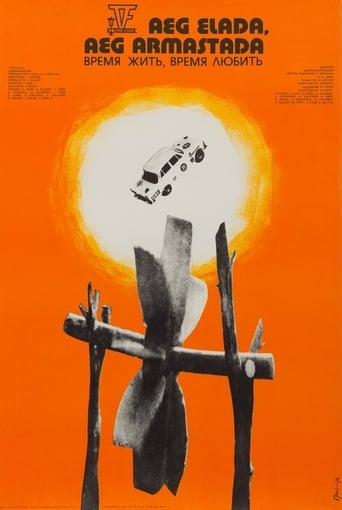 9.0
9.0Debora and Silver get into a serious car accident after a romantic night together. Silver escapes with a slight injury, but Debora's life is in danger and the doctors say there is no hope for her. Doctor Melts sees an opportunity in transplantation of dying Debora's kidneys to save the life of a professor who has a few weeks to live. However, the professor proposes a treatment for Debora that will exclude transplantation. The truth about the price of her life will change Debora's world.
Time to Live, Time to Love
1977
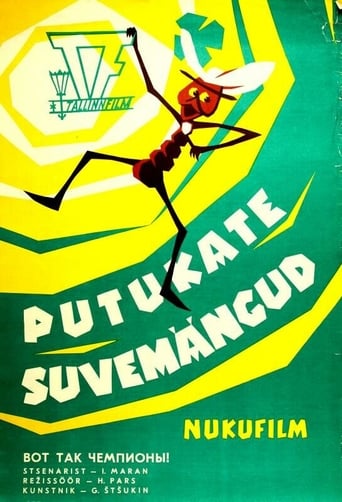 8.0
8.0No synopsis available yet.
Summer Games of Insects
1971
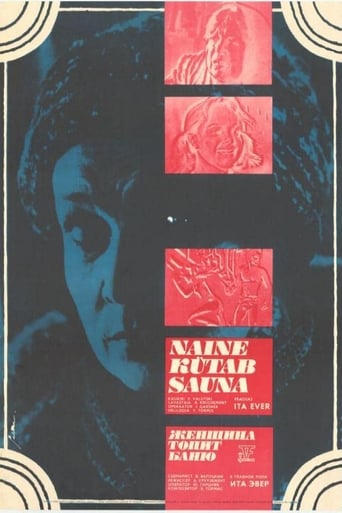 5.6
5.6The story is about a woman, who has to heat up the company's sauna, because the bosses want to entertain foreign visitors. The sauna is situated in a small village where her ex-husband is from, and an old aunt of his is still living. In addition to having to face her bosses she also has to face her past.
A Woman Heats the Sauna
1979
 NR
NRPortrait film about Šarl Piel, a brigadier of builders who is demanding a lot both from himself and others and who is able to overcome the difficulties encountered at work.
Inimeste maja
1974
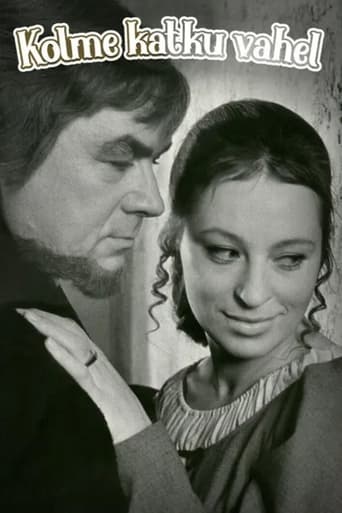 7.0
7.0The story of Balthasar Russow, an Estonian pastor from the 16th century, his life and life's work - writing The Chronicle of Livonia.
Between Three Plagues
1970
 4.0
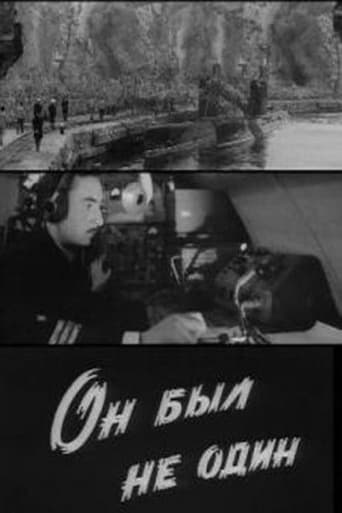
4.0The action takes place in the North of Scandinavia, where Hitler's Germany tried to keep its last frontier. Here by the will of circumstances gets pilot-Navigator uzbek Akbar Ibrahimov, whose plane was shot down in battle, and joins the ranks of the Resistance. Soon he managed to get an officer on a German submarine, and later report on the secret bases of the enemy.
He Wasn't Alone
1970
 NR
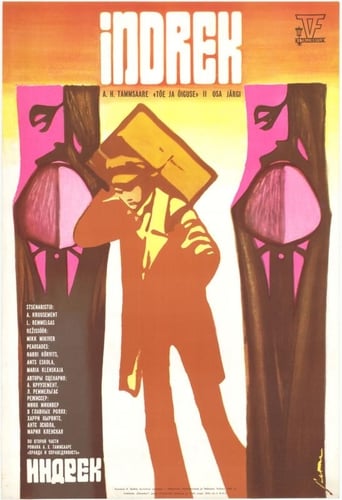
NRBased on the second part of the pentalogy "Truth and Justice" by Anton H. Tammsaare.
Indrek
1976
 7.0
7.0No synopsis available yet.
Countermeasure
1975
No synopsis available yet.
Port
1976
1960s · 10 titles
6.1Torn by personal guilt, Italian General Umberto Nobile reminisces about his 1928 failed Arctic expedition aboard the airship Italia.
The Red Tent
1969
 10.0
10.0A talented young student of astronomy and an experienced strict professor both dream about discovering a supernova. When the student experiences beginner's luck, the whole research group will be excited. Then, opposite scientific approaches collide and decisions must be made - now the greatness of the scientist's spirit will open up.
Supernova
1966
 8.5
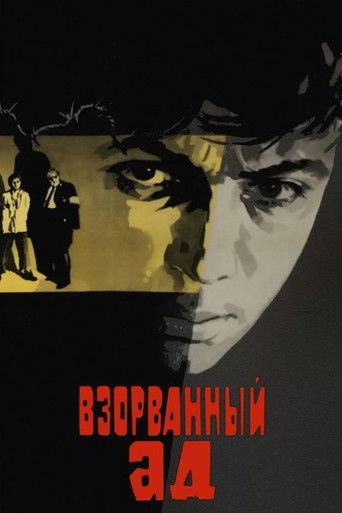
8.5Second world war. In one of the German intelligence schools are preparing sabotage groups of Russian prisoners of war for casting in the USSR. Among them — Nikolai Verezhnikov, who, not being a professional scout, was able to impose their own game and interfere with the plans of the enemy…
Exploded Hell
1967
 5.3
5.3Soviet spy Ladeynikov learns that in one of the pharmaceutical centers in a small resort town works a former German war criminal, Dr. Hass, who is finishing the creation of a deadly chemical gas RH development that he began during World War II, experimenting on POWs. Since Ladeynikov doesn't know Dr. Hass's appearance, Soviet intelligence recruits an actor, Ivan Savushkin, who, during the war, escaped from a prison camp where Hass was testing his gas. Together, they must identify and stop him before he finishes and unleashes his weapon of mass destruction.
The Dead Season
1968
 5.0
5.0After a long night with his old war buddies, Andres Lapeteus regains consciousness in the hospital. How has confusion, bewilderment and alienation developed between these men who once fought together side by side? Is this the inevitable result of the Stalinist regime, the influence of his social climber wife, or the effect of his personal cowardliness and conformism? What happened to Andres Lapeteus?
What Happened To Andres Lapeteus?
1967
 NR
NRA man and a woman are trying to solve a problem that is crucial to their relationship, but their ideas and beliefs have a different vision.
Hills Like White Elephants
1963
 5.1
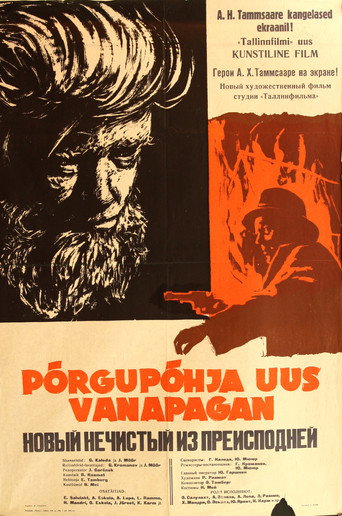
5.1The way Saint Peter explains it to the Devil who's knocking on Heaven's door to collect his share of souls: there will be no more souls, as God has come to doubt if humans are really meant to achieve salvation. If they aren't then how can they be punished posthumous and sent to Hell? There's only one way to make sure if sinning is the human nature, or is it that they simply don't want to better themselves - Devil himself must go down to Earth, in human form, and if he can achieve salvation then so can a human being... Based on A. H. Tammsaare's classic novel of the same name.
The New Devil of Hellsbottom
1965
 7.0
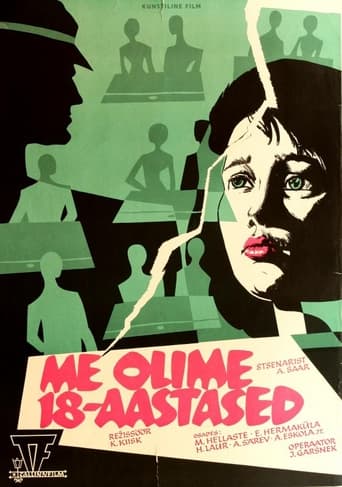
7.0It's 1940 - the first summer of the Soviet occupation on the Estonian island Saaremaa. Teenagers stepping in their lives have important decisions to make. Should they support the Soviet regime or join the resistance?
We Were Eighteen
1965
 5.4
5.4Russian prisoners of war commandeer a tank and lead the Nazis on a cross-country chase in this World War II adventure drama. The Russians use their own tanks so the Nazis can use them as target practice to test a new anti-tank weapon. Knowing that death is near, the brave Russians run amok and tear down German monuments before heading out to a field where female slave laborers are working.
The Lark
1964
 9.0
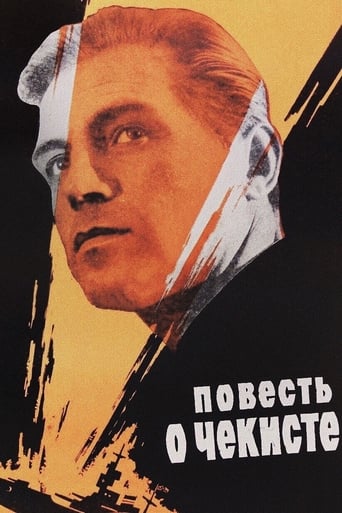
9.0At the end of 1943, during the occupation in Odessa, a new specialist Kraft arrives at the shipyard and soon becomes a chief engineer. It never occurred to anyone that a Soviet intelligence officer was hiding under the guise of a leader showing official zeal. At the decisive moment, when the victorious offensive of the Soviet troops forces the German-Romanian invaders to leave Odessa, on the instructions of the Center, Kraft leaves with them for further work behind enemy lines.
A Tale of a Chekist
1969
1950s · 2 titles
 8.0
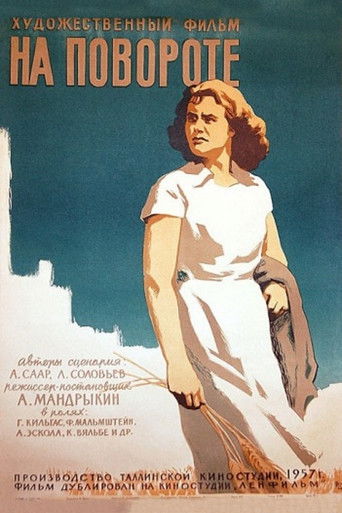
8.0Raivo Kotkas is the new head of the collective farm "Victory". His predecessor Mihkel Vutt has practiced command economy, production has gone down and the cattle has partly perished. Bookkeeper Olep is quite a crook who has played an essential role in the degradation of the collective farm - quite a few good workers have left work because of his cheating. Young agronomist Salme makes up her mind to leave the farm as well. The new chief wins the workers' trust and recovers their belief in the fruitfulness of their work.
Pöördel
1957
 7.0
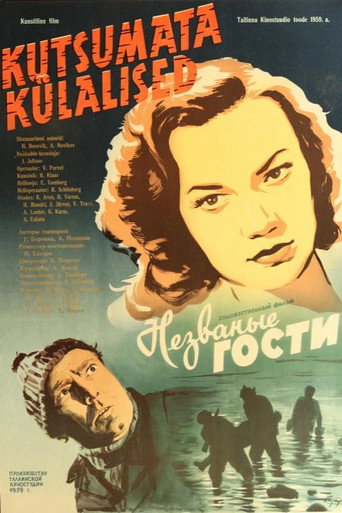
7.0Four Estonians who have escaped to Sweden during the war return to Soviet Estonia in the 1950s. The four saboteurs work for the Western Secret Service. Difficulties arise when they cross the border with an injured companion - the three have to decide what to do next.
Uninvited Guests
1959
Series credits
6.3A Russian mystery miniseries set both in medieval times and in the days of Perestroika.
Entrance to the Maze
1990
6.5The Russian Empire, the turn of the 17th and 18th centuries, the era of Peter I's reforms. At the center of events are Captain Silvestr Ievlev, Lieutenant of the Customs Troops Afanasy Krykov, and Helmsman Ivan Ryabov. All three are very close to the emperor, who entrusts them with commanding the resistance against the Swedish fleet during the defense of Arkhangelsk. Each of the trio plays an important role in the defense of Arkhangelsk and the capture of the Swedish fleet.
Russia Is Young
1984
Reactionary and aggressive circles in the United States are trying to establish a dictatorship in the country, preparing to assassinate the president and introduce a state of emergency in the country. The conspiracy is led by the FBI director...
The R Document
1985