
Directing
Alexander Keewatin Dewdney
Born
1941-08-05 (85)
Place of birth
London, Ontario, Canada
Known for
Directing
Credits
7 titles
Alexander Keewatin Dewdney is a Canadian mathematician, computer scientist, author, filmmaker, and conspiracy theorist. Dewdney is the son of Canadian artist and author Selwyn Dewdney, and brother of poet Christopher Dewdney. He was born in London, Ontario.
Known for
 NR
Gerard Malanga reads his poetry for 24 frames, dances to Velvet Underground for 24 frames, reads for 23 frames, dances for 23 frames, reads for 22 frames, etc., until he is doing both things alternately one frame at a time. An experiment in Audio-visual synaesthesia called Discontinuous film. No frame is missed however brief its exposure because the synthaesthesia increases efficiency of both eye and ear.
Malanga
1967
The imaginary life cycle of a pair of scissors, from birth to reproduction.
Scissors
1966
4 girls in front of a camera trying to be as still as possible while shot in a single fram sequence. Alternating with the girls are black spaces and single frame shots of store mannequins, skeletons, dolls, etc. The sound track is applied with household bleach and a fine pen, rows of dots producing the actual sounds heard, a kind of rushing roaring, the way breathing sounds through a stethoscope. The sound is synchronized directly with any live shot, the black spaces being left silent, building to a kind of expectancy as shots continually shorten. –K. D.
Four Girls
1967
 NR
As the Carter Family sings "Wildwood Flower" an elaborate embroidered border is created around an image of a nude woman riding slowly toward the camera, producing a kind of cameo in motion. Preserved by the Academy Film Archive in partnership with Canadian Film-Makers' Distribution Centre in 2011.
Wildwood Flower
1971
 7.1
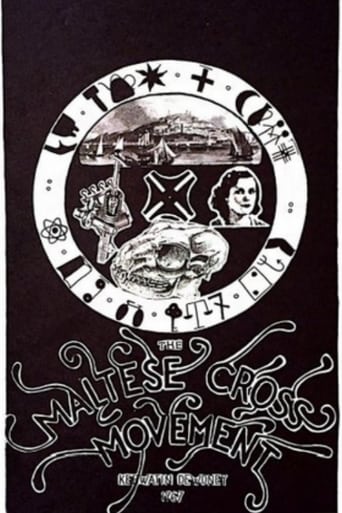
The film reflects Dewdney's conviction that the projector, not the camera, is the filmmaker's true medium. The form and content of the film are shown to derive directly from the mechanical operation of the projector - specifically the maltese cross movement's animation of the disk and the cross illustrates graphically (pun intended) the projector's essential parts and movements. It also alludes to a dialectic of continuous-discontinuous movements that pervades the apparatus, from its central mechanical operation to the spectator's perception of the film's images... (His) soundtrack demonstrates that what we hear is also built out of continuous-discontinuous 'sub-sets.' Preserved by the Academy Film Archive in 2009.
The Maltese Cross Movement
1967
Film credits
Behind the camera
NRGerard Malanga reads his poetry for 24 frames, dances to Velvet Underground for 24 frames, reads for 23 frames, dances for 23 frames, reads for 22 frames, etc., until he is doing both things alternately one frame at a time. An experiment in Audio-visual synaesthesia called Discontinuous film. No frame is missed however brief its exposure because the synthaesthesia increases efficiency of both eye and ear.
Malanga
1967
The imaginary life cycle of a pair of scissors, from birth to reproduction.
Scissors
1966
4 girls in front of a camera trying to be as still as possible while shot in a single fram sequence. Alternating with the girls are black spaces and single frame shots of store mannequins, skeletons, dolls, etc. The sound track is applied with household bleach and a fine pen, rows of dots producing the actual sounds heard, a kind of rushing roaring, the way breathing sounds through a stethoscope. The sound is synchronized directly with any live shot, the black spaces being left silent, building to a kind of expectancy as shots continually shorten. –K. D.
Four Girls
1967
NRAs the Carter Family sings "Wildwood Flower" an elaborate embroidered border is created around an image of a nude woman riding slowly toward the camera, producing a kind of cameo in motion. Preserved by the Academy Film Archive in partnership with Canadian Film-Makers' Distribution Centre in 2011.
Wildwood Flower
1971
7.1The film reflects Dewdney's conviction that the projector, not the camera, is the filmmaker's true medium. The form and content of the film are shown to derive directly from the mechanical operation of the projector - specifically the maltese cross movement's animation of the disk and the cross illustrates graphically (pun intended) the projector's essential parts and movements. It also alludes to a dialectic of continuous-discontinuous movements that pervades the apparatus, from its central mechanical operation to the spectator's perception of the film's images... (His) soundtrack demonstrates that what we hear is also built out of continuous-discontinuous 'sub-sets.' Preserved by the Academy Film Archive in 2009.
The Maltese Cross Movement
1967