
Directing
Philip Hoffman
Born 1955-12-10 · Kitchener, Ontario, Canada
Born in Kitchener, Ontario, Philip Hoffman's filmmaking began with his boyhood interest in photography. As semi-official historian of family life, Hoffman became intrigued by questions of reality in photography and later in cinema. After completing his formal education which includes a Diploma in Media Arts at Sheridan College and a Bachelor of Arts in Literature at Wilfrid Laurier University, Hoffman began working on his films, as well as teaching film, electronic and computer-based media in the Media Arts Program at Sheridan College. Currently Hoffman teaches in the Cinema and Media Arts Department at York University.
Acting credits
Behind the camera
The clean 16mm image is processed normally in a lab. Outdated film stock from the 1980s-90s which Peter Mettler recently gave Philip Hoffman accounts for superimpositions. The tinting and toning was done via 'green' processing with flowers. The shooting and hand developing with flowers was done by Hoffman. It was scanned and then digitally edited by Isiah Medina.
Inner circle
2018
 NR
NRProcessed with conventional photo chemicals and the following flowers: magnolia blossoms, hyacinth, hydrangea, daffodil, rhododendron, pond algae, lilac, oregano (with blooms), comfrey (with blooms), roses, mint, goldenrod, hostas buds after flowering, and wild garlic seeds (a bowlful).
Ending 2
2017
 NR
NRThe clean 16mm image is processed normally in a lab, but the tinting and toning was done via 'green' processing with flowers. The shooting and hand developing with flowers was done by Philip Hoffman. It was scanned and then digitally edited by Isiah Medina.
Ending
2017
 NR
NRvulture sets its sights on farm animals, their surrounding flora, and the farming process. Static shots and slow-moving zooms follow the grazing animals in their minute inter-species exchanges. When left to roam together, the sensibilities of these "beasts" are allowed to surface.
vulture
2019
 4.0
4.0Trees, farm fields with animal livestock, ponds and plants, and natural artefacts disappear in the flicker effect of landscape compositions where sweeping branches carve moving structures into the viewer’s memory, and the transformations of living image threads remind us of the inexhaustible visual exuberance of meadows and grain.
endings
2023
 NR
NRSweep is a road movie to memory, a realization of the need to review footsteps and past events which build myths. The camera gazes at the spaces in-between image and text, photography and memory, body and place. The surface texture of the film, like the land north of Lake Superior, is overdetermined by the discourse of territorialism, the cultural divisions of space and place framed and divided amid the ruins of history. An irritating buzz overlays parts of the soundtrack, signifying the hydro-electric development that has irreparably disrupted life in the north, while at the same time extending a modicum of material benefits. The filmmakers understand themselves as embodying this southern technocracy, and choose to turn the camera onto their own presence and progress of looking. Here, they work against the tendency, present since the days of Flaherty and in his more recent imitators, to objectify Aboriginal peoples within an unnameable (and thus exploitable) landscape.
Sweep
1995
NRSweep is a road movie to memory, a realization of the need to review footsteps and past events which build myths. The camera gazes at the spaces in-between image and text, photography and memory, body and place. The surface texture of the film, like the land north of Lake Superior, is overdetermined by the discourse of territorialism, the cultural divisions of space and place framed and divided amid the ruins of history. An irritating buzz overlays parts of the soundtrack, signifying the hydro-electric development that has irreparably disrupted life in the north, while at the same time extending a modicum of material benefits. The filmmakers understand themselves as embodying this southern technocracy, and choose to turn the camera onto their own presence and progress of looking. Here, they work against the tendency, present since the days of Flaherty and in his more recent imitators, to objectify Aboriginal peoples within an unnameable (and thus exploitable) landscape.
Sweep
1995
"As passing through/torn formations concerns his mother's family heritage, Kitchener-Berlin revolves around his father's family hometown. The slash and the hyphen in the titles suggest both severance from the past and connections to it, an ambivalence that is especially poignant for the descendants of the area's German settlers. The history of the area underpins the film, but refuses to bind it or restrict it from free association. Hoffman assembles a wide range of visual materials, including home movies, television news footage, and archival film, as well as his own characteristically enticing images, to build complex layers of superimpositions analogous to the impressions of memory." (Blaine Allen)
Kitchener-Berlin
1990
 6.5
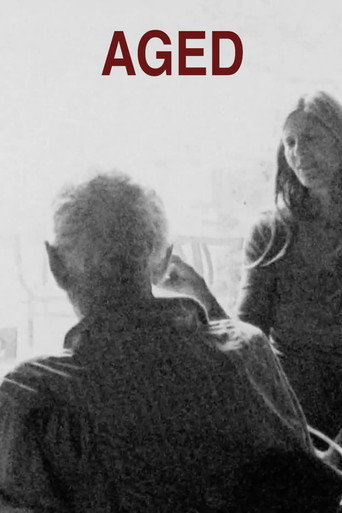
6.5A film by Philip Hoffman that chronicles the final days of his father.
Aged
2015
 3.7
3.7In attempting to deal with his HIV status, the narrator mixes his past and present to give us a portrait of friendships, family ties, and other intimate relationships.
Destroying Angel
1998
 NR
NR“In 1989 I finished the film Kitchener-Berlin and put a close to a cycle of work which dealt directly with myself, and how self is expressed/constructed cinematically. At the same time I took my old super-8 camera out of the closet, and began collecting images, using the single-frame-zoom. Cubist in its visual delivery, the single-frame-zoom builds a splayed reality that brings together disparate vantage points simultaneously, and serves as the glue that blends and bonds peoples, places and spaces in Chimera.” (PH)
Chimera
1996
"The Saugeen River was named Sauking, ‘where it all flows out,’ by the Ojibwa in the early 1800s. It runs into Lake Huron, in central Ontario. The place where I know it is twenty miles south of Owen Sound, near Williamsford, where I spent lots of time in my youth exploring. Over the past twelve years I’ve returned there to film, and collected these moments in a fifteen minute meditation called simply, river." (Philip Hoffman)
river
1989
 NR
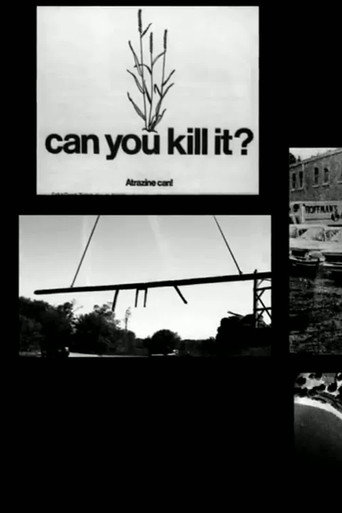
NR"Slaughterhouse has all the ingredients of history but its collage form forces a reading less linear, and more conducive to seeing history anew.." -P. Hoffman
Slaughterhouse
2014
“Inexorable motion as 'seen’ through TV, from the gulf between everyday broadcasts, and everyday, every day. Swelling panic.” (PH)
Technilogic Ordering
1994
 6.2
6.21988 short film by Philip Hoffman.
Passing Through/Torn Formations
1988
6.21988 short film by Philip Hoffman.
Passing Through/Torn Formations
1988
 NR
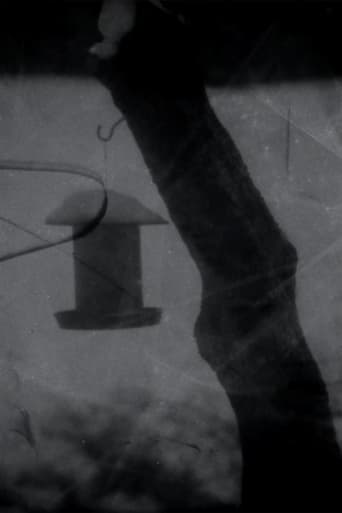
NRFilmed over 2 years (2020–2022), at home and away, Deep 1 is a diaristic meditation, flower/plant processed.
Deep 1
2023
 6.0
6.0A kinetic journey through Expo 67, revisiting Canada’s centennial through the symbols, choreographies, and built environments of the World’s Fair and its construction of (inter)nationalism. Reworking archival footage, By the Time We Got to Expo creates a vibrant collision of textures and forms in order to explore the surfaces, ideologies, and implications of the ‘meeting place’ that was Expo 67.
By the Time We Got to Expo
2015
 10.0
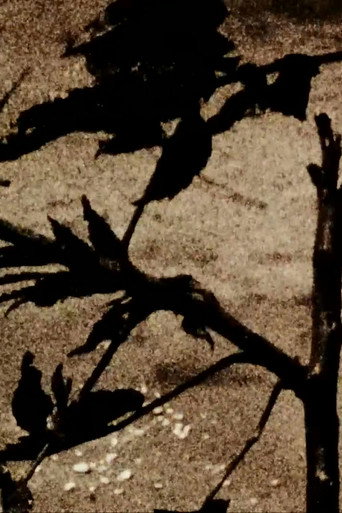
10.0Kokoro Is for Heart features poet Gerry Shikatani and explores the relationships surrounding language, image and sound, set to the backdrop of a gravel pit. When I got the footage back from the lab I was disappointed because of the periodic flipping of the image. After screening the footage several times I realised that the malfunctioning camera rendered the filmed-nature unnatural ...and this poses questions: what is nature? What is natural? Ph
Kokoro Is for Heart
1999
Film images, stills and sound collected over six years coalesce in The Road Ended at the Beach. Hoffman interrogates both the journey, involving famed American photographer and filmmaker Robert Frank, and the process of its documentation as/in film.
The Road Ended at the Beach
1983
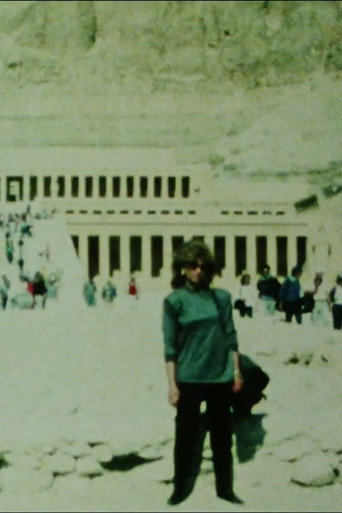
Completed in 2001, what these ashes wanted—which combines hand-processed film, video diaries, found sound, text and narration—is a ritual of grief that seems both shared and private. Our own stories of grief fill the gaps between Hoffman’s images of Egyptian tombs, wintertime frolics and insect activity.
What these ashes wanted
2001
 NR
NR“The bus stopped on the Mexican highway, placing us in full view of a young boy, motionless, on the hot pavement. In this film, the incident is revealed through a poetic text, derived from my written journals. The poetry mixes primarily with Mexican streetscapes which compliment the text in a tonal sense. Most images are twenty-eight seconds long, the ‘breath’ of the 16mm Bolex camera. A lone saxophone (Mike Callich) weaves its way through the narrative, blending to make stronger the tomes and accentuations of the images.” (PH)
Somewhere Between Jalostotitlan and Encarnacion
1984
 NR
NRFilmmaker Philip Hoffman and poet Gerry Shikatani combine to make a cine-poem about the making of gardens, films and poems. Excerpts from Shikatani’s `First Book, Three Gardens of Andalucia’.
ever present going past
2007
 NR
NR"A community workshop held by the Fabulous Festival of Fringe Film in Durham, Ontario, engages participants in a group phytogram creation collaboration. The resulting work suggests a long flow of what the phytogram 'founder,' Karel Doing, posits as a kind of vegetal 'being,' a springtime world beyond what we can know or judge." - Philip Hoffman
451 Saddler Street 44°10’20.6”N 80°49’27.0”W
—