
Directing
Pia Epremian
Place of birth
Chivasso, Turin, Italy
Known for
Directing
Credits
15 titles
(Chivasso, Turin, 1940), only woman filmmaker of the CCI, she spent time on the Turin art scene in the 1960s with her childhood friend and confederate Tonino De Bernardi. Her degree thesis on Proust formed the basis of her first film Proussade 1967, followed by other short and medium-length films, all in 8mm until 1971, when she stop making films. She then moved to Rome to concentrate on psychoanalysis, specialising in the treatment of children and teenagers.
Known for
 10.0
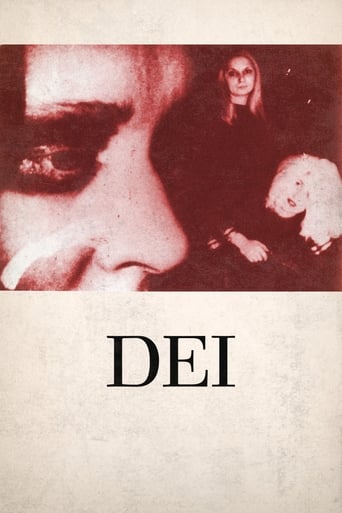
10.0The construction of the film is very simple. Most of the time we see faces in close-up. Three pairs of faces, usually, on three different levels of superimpositions. At first, the faces are very theatrical, made-up. It's not clear whether they are men or women. They move only slightly. They are, indeed, godlike. As the film progresses, very unnoticeably, these faces begin to gain more life and masculine and feminine qualities. At the end of the film, after three hours, the faces are very real, and very human, and sexes and ages are very clearly defined: men, women, children.
Dei
1968
 NR
NRDissolvimento shows two women in domestic interiors who perform two different actions, edited one after the other. In the first, the painter Gigliola Carretti is engaged in an action with a series of sexually explicit props, making the activity resemble the brushing of teeth; in the second, the director herself is seen from behind, seated on a toilet. The film ends with the almost abstract view of cascades of the fountains of Turin.
Dissolvimento
1969
 4.0
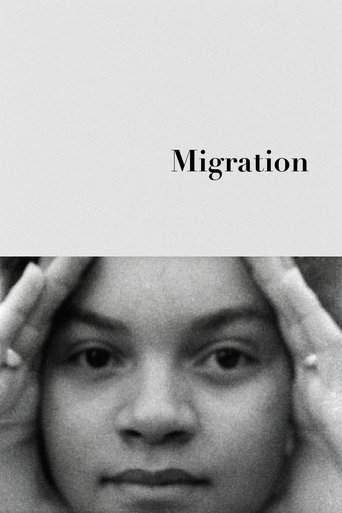
4.0A series of migrants who at times narrate and impersonate shards of myths, among them the Great Goddess, the Virgin of Bach’s Magnificat, the Sulamite of Stockhausen’s Song of Solomon (“I am black but comely”), tales by Herodotus, Kafka, Villon (as set to music by Ezra Pound). Third part of the Flower of Eryngium cycle.
Migration
1970
 NR
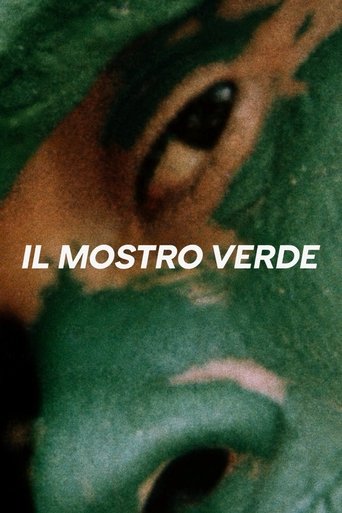
NRShort made for double parallel projections, for which Allen Ginsberg said that it's his favorite underground European film, debut from the director, cheeky hommage to B-movies.
Il mostro verde
1967
 4.0
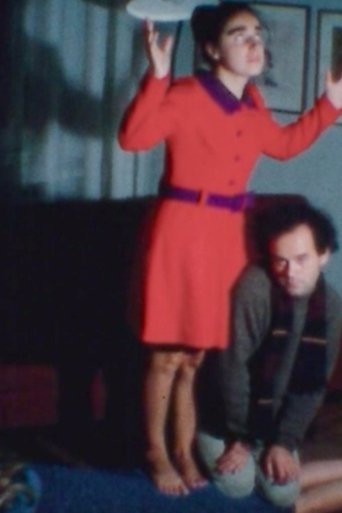
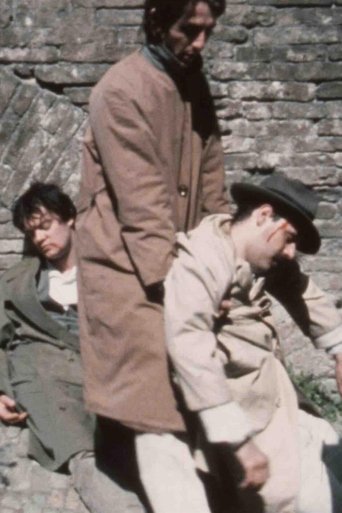
4.0"Medea gathers all my important relatives and friends. Above all my daughter Alida as a child when they found out she had diabetes while she was hospitalised. It was my feeling of being a bad mother and a transmitter of hereditary that made me name the film Medea. All of the characters somehow transmit the inner pains of birth, body and life in a symbolic way" - Pia Epremian
Medea
1968
 NR
NRCollective manifesto by the members of C.C.I. It is a collective film, the result of an operation devoid of any aesthetic purpose: to verify the existence of any harmony between a fairly large group (twelve people) of members of the independent Cooperative. Someone, who had the idea, turned 60 meters of Ektachrome according to the moods –or discontent – of the moment and gave them to others to see. The others reacted, each with their own piece. It was then thought to call the film “circular letter”. It was not so simple and so quick: the operation, which started in June of ’68, ended in March of ’69.
Tutto, tutto nello stesso istante
1969
Film credits
1960s · 4 titles
10.0The construction of the film is very simple. Most of the time we see faces in close-up. Three pairs of faces, usually, on three different levels of superimpositions. At first, the faces are very theatrical, made-up. It's not clear whether they are men or women. They move only slightly. They are, indeed, godlike. As the film progresses, very unnoticeably, these faces begin to gain more life and masculine and feminine qualities. At the end of the film, after three hours, the faces are very real, and very human, and sexes and ages are very clearly defined: men, women, children.
Dei
1968
NRDissolvimento shows two women in domestic interiors who perform two different actions, edited one after the other. In the first, the painter Gigliola Carretti is engaged in an action with a series of sexually explicit props, making the activity resemble the brushing of teeth; in the second, the director herself is seen from behind, seated on a toilet. The film ends with the almost abstract view of cascades of the fountains of Turin.
Dissolvimento
1969
NRShort made for double parallel projections, for which Allen Ginsberg said that it's his favorite underground European film, debut from the director, cheeky hommage to B-movies.
Il mostro verde
1967
 NR
NRNo synopsis available yet.
Piena di fiume
1968
Behind the camera
NRDissolvimento shows two women in domestic interiors who perform two different actions, edited one after the other. In the first, the painter Gigliola Carretti is engaged in an action with a series of sexually explicit props, making the activity resemble the brushing of teeth; in the second, the director herself is seen from behind, seated on a toilet. The film ends with the almost abstract view of cascades of the fountains of Turin.
Dissolvimento
1969
4.0"Medea gathers all my important relatives and friends. Above all my daughter Alida as a child when they found out she had diabetes while she was hospitalised. It was my feeling of being a bad mother and a transmitter of hereditary that made me name the film Medea. All of the characters somehow transmit the inner pains of birth, body and life in a symbolic way" - Pia Epremian
Medea
1968
NRCollective manifesto by the members of C.C.I. It is a collective film, the result of an operation devoid of any aesthetic purpose: to verify the existence of any harmony between a fairly large group (twelve people) of members of the independent Cooperative. Someone, who had the idea, turned 60 meters of Ektachrome according to the moods –or discontent – of the moment and gave them to others to see. The others reacted, each with their own piece. It was then thought to call the film “circular letter”. It was not so simple and so quick: the operation, which started in June of ’68, ended in March of ’69.
Tutto, tutto nello stesso istante
1969
 NR
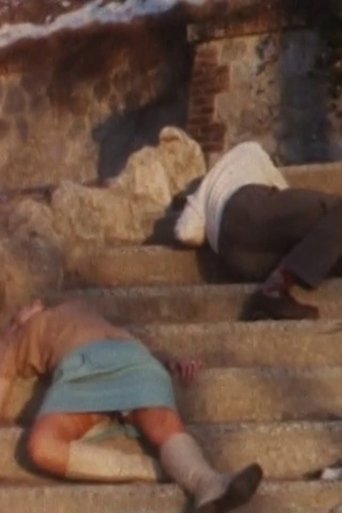
NRSuicide is twofold because, in man's eternal crisis, the attempt to define existence is already suicide, and regarding it as defined by death is suicide once again.
Doppio suicidio
1968
NRSuicide is twofold because, in man's eternal crisis, the attempt to define existence is already suicide, and regarding it as defined by death is suicide once again.
Doppio suicidio
1968
 NR
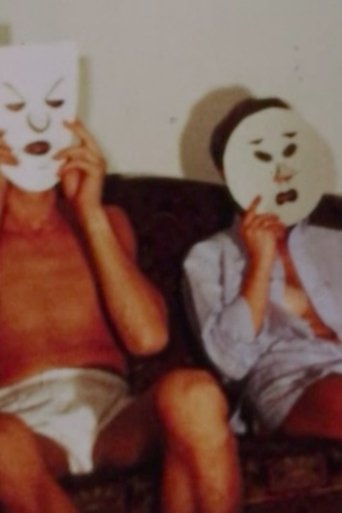
NRNo synopsis available yet.
Proussade
1967
Seated woman. The outstretched finger points back to an act and revives the moment of anguish: it grows and spreads across her face, and there is no possibility of release.
Le vin de la paresse
1968
 NR
NRStraub used to say that this film was the story of a woman. Indeed, it is the tale of a mother with a young daughter who watches and observes other mothers with their children—at the health clinic, on park benches, and finally on a balcony, where one of them looks out at the outside world and at me filming her. (Pia Epremian)
Infiniti sufficienti
1970
 NR
NRThis film represents an encounter with several major icons of the history of western painting, "while attempting"–as the filmmaker says–"to always create a link between art and life, an impertinence with respect to those images that the production of works of documentation [books and magazines] brought to the attention of everyone for the first time." Reclaiming art history in a performative, playful way and evoking the tradition of tableau vivant, Pistoletto with his daughters Cristina and Maria Pioppi "act out" in a series of little scenes: Orpheus and Eurydice, Ernst Ludwig Kirchner, Raphael, Chaim Soutine, James Ensor, Edgar Degas, Vincent Van Gogh.
Pistoletto & Sotheby's
1968
 NR
NRAntonio and the tree, Antonio and the snow, prayer, meditation, sinking, rebelling, temptation, the dream and the emergence, Antonio and the metamorphosis, the face.
Antonio Delle Nevi
1967