
Directing
Karel Dodal
Born — Died
1900-01-28 — 1986-07-06
Place of birth
Prague, Bohemia, Austria-Hungary [now Czech Republic]
Known for
Directing
Credits
19 titles
Known for
An animated short film that explains in a pedagogical way how the radio transmission works. Created by Czech filmmakers it was commissioned by Argentina Schools. The film tells the story of Curious, an extraterrestrial child that reaches the planet earth attracted by the sound waves. There he meets the Queen of Waves, an ethereal figure who teaches her step by step the process by which sound is captured, amplified, modulated and transformed into electromagnetic vibrations to be transmitted by a radial antenna.
The Queen of the Waves
1936
 NR
NRNo synopsis available yet.
An Autumn Song
1937
 8.0
8.0Color abstract animated movie turns into "Saponia" soap advertisement.
The Play of Bubbles
1936
No synopsis available yet.
Meliorace půdy
1933
Tommy goes out to the world and travels in a rocket. The rocket explodes on the way and Tommy falls into some water. A fish throws him to the shore where he finds a mermaid and falls in love with her. They sail away and marry. Lost Cartoon
Tommy and the Mermaid
1930
The draughtsman Jára receives a letter from his girlfriend in which she parts with him. He is very unhappy and tries to shoot himself with a gun. Deranged, he spills ink from a bottle on the table. A clown Bimbo is born from the ink and he thanks Jára for setting him free. He keeps inventing how to surprise the draughtsman and cheer him up. Their friendship, however, is soon over, as the clown has conjured up a girlfriend for Jára. The draughtsman sets off to the open air with his new girlfriend, leaving the drawn forlorn Bimbo desolated in grief for losing a friend. The film is often dated 1927, but the documented censorship record originates from as late as 1930. Information about the year 1927 is on a single surviving copy in an opening title, which is not original. Nothing as to who created the given title and from which sources the person in question drew information about the date of origination of the film was found. The author of the rhymed subheadings is Karel Smrž.
Bimbo's Unfortunate Adventure
1930
Film credits
Behind the camera
An animated short film that explains in a pedagogical way how the radio transmission works. Created by Czech filmmakers it was commissioned by Argentina Schools. The film tells the story of Curious, an extraterrestrial child that reaches the planet earth attracted by the sound waves. There he meets the Queen of Waves, an ethereal figure who teaches her step by step the process by which sound is captured, amplified, modulated and transformed into electromagnetic vibrations to be transmitted by a radial antenna.
The Queen of the Waves
1936
An animated short film that explains in a pedagogical way how the radio transmission works. Created by Czech filmmakers it was commissioned by Argentina Schools. The film tells the story of Curious, an extraterrestrial child that reaches the planet earth attracted by the sound waves. There he meets the Queen of Waves, an ethereal figure who teaches her step by step the process by which sound is captured, amplified, modulated and transformed into electromagnetic vibrations to be transmitted by a radial antenna.
The Queen of the Waves
1936
NRNo synopsis available yet.
An Autumn Song
1937
8.0Color abstract animated movie turns into "Saponia" soap advertisement.
The Play of Bubbles
1936
No synopsis available yet.
Meliorace půdy
1933
Tommy goes out to the world and travels in a rocket. The rocket explodes on the way and Tommy falls into some water. A fish throws him to the shore where he finds a mermaid and falls in love with her. They sail away and marry. Lost Cartoon
Tommy and the Mermaid
1930
The draughtsman Jára receives a letter from his girlfriend in which she parts with him. He is very unhappy and tries to shoot himself with a gun. Deranged, he spills ink from a bottle on the table. A clown Bimbo is born from the ink and he thanks Jára for setting him free. He keeps inventing how to surprise the draughtsman and cheer him up. Their friendship, however, is soon over, as the clown has conjured up a girlfriend for Jára. The draughtsman sets off to the open air with his new girlfriend, leaving the drawn forlorn Bimbo desolated in grief for losing a friend. The film is often dated 1927, but the documented censorship record originates from as late as 1930. Information about the year 1927 is on a single surviving copy in an opening title, which is not original. Nothing as to who created the given title and from which sources the person in question drew information about the date of origination of the film was found. The author of the rhymed subheadings is Karel Smrž.
Bimbo's Unfortunate Adventure
1930
 NR
NR"As Prague’s sole animation studio, IRE-Film depended on international models for inspiration; the influences of Disney and the Fleischers are plainly seen in Veselý koncert (A Cheerful Concert), which promotes Telefunken radios while a loose-limbed cartoon orchestra struggles to play amid the wildlife of the summer outdoors." — Kirk McDowell
A Cheerful Concert
1935
 10.0
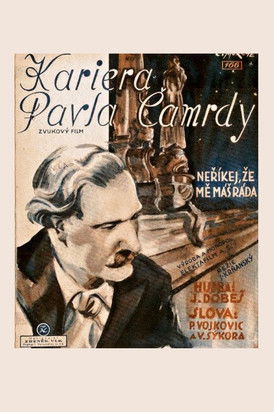
10.0Pavel Čamrda works as a clerk at an administrative bureau in Malá Strana. One day as he is listening to wandering minstrels he falls in love at first sight with a charming girl in the crowd. The superior at the bureau, counsel Švarc, takes ill and Čamrda brings him to his home the official papers for him to sign. What a surprise he has when he discovers that the girl who has smitten him is the counsel's daughter Viktorka. The counsel is ill for a long spell and the entire family becomes used to Čamrda's visits.
Career of Pavel Camrda
1931
Sound waves fill the space around the globe. We watch them as they wander and spread throughout the country. The radio lamps, produced by the Telefunken company, capture them and transform them into perfect tones.
The Sounds of Outer Space
1935
No synopsis available yet.
Fantaisie érotique
1936
No synopsis available yet.
Fantaisie érotique
1936
Felix the Cat paces impatiently nearby a beehive and strenuously contemplates. A swarm flies out of the hive and the bees compose an inscription "Work and Save!" Felix immediately sets off to the city and runs to the building of the Savings Bank with his passbook. He then takes a contented breath: "Good that the bees reminded me..." The commercial features a character inspired by the protagonist of the popular American cartoon, Felix the Cat. The film is an adapted and extended version of the commercial promoting money saving, entitled Felix the Cat Receives a Lesson (1927, production company Elekta Journal Prague).
The New Adventures of Felix the Cat
1927
No synopsis available yet.
Evička otvírá očička
1933
No synopsis available yet.
Evička otvírá očička
1933
Black-and-white abstract animated short of light, shadows, and reflections by The Dodals (Karel Dodal (1900-1986) in collaboration with his wife, Irena Dodalová).
Ideas in Search of Light
1938
Black-and-white abstract animated short of light, shadows, and reflections by The Dodals (Karel Dodal (1900-1986) in collaboration with his wife, Irena Dodalová).
Ideas in Search of Light
1938
 NR
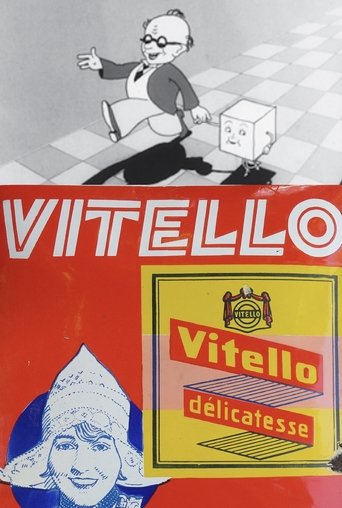
NR"Všechno pro trhanec animates a recipe with anthropomorphic ingredients. Gasparcolor, introduced to the Dodals by experimental animator Oskar Fischinger, is briefly on display. Though Gasparcolor added a new dimension to IRE-Film’s already vibrant animation, the complicated—and expensive—color process brought with it a host of challenges. Because the process required repeated exposures, the workflow had to be altered to allow three color records to be made for each frame. It is easy to see why color was often reserved for a film’s final shot." — Kirk McDowell
Everything for a Scrambled Pancake!
1937