

Directing
Ali Kazimi
Known for
Directing
Credits
15 titles
Ali Kazimi's body of work, which tackles complex issues of race, social justice, migration, history and memory, spans a broad spectrum of genres and media. He founded the Stereoscopic 3D Lab at York University and has received the Donald Brittain Award and the Gemini Award for Best Social/Political Documentary. Born and raised in India, he came to Canada in 1983 and now lives in Toronto, Ontario.
Known for
 6.8
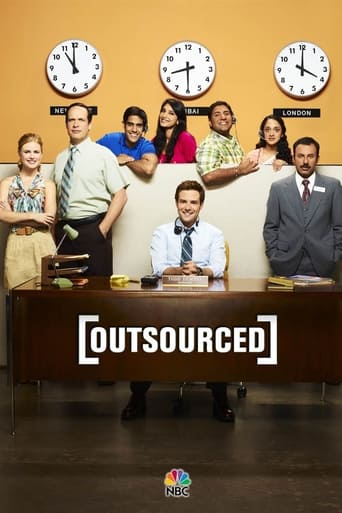
A lone American manages the new call center of an American novelties company in Bombay and must explain American popular culture to his employees as he tries to understand Indian culture.
Outsourced
2010
 10.0
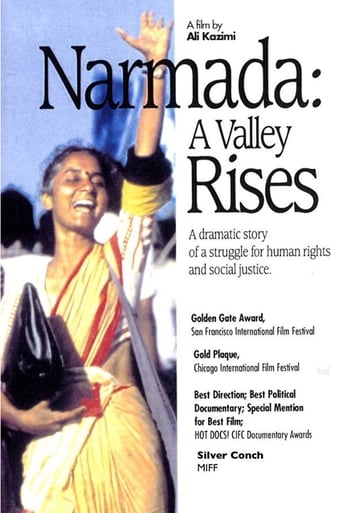
Narmada: A Valley Rises is beautifully photographed, inspiring film. It documents a 200 kilometer non-violent Gandhian march involving 6000 participants. The film offers a compelling and intimate portrait of a unique movement while raises critical and universal issues of human-rights, social justice, and development within a democracy.
Narmada: A Valley Rises
1994
 10.0
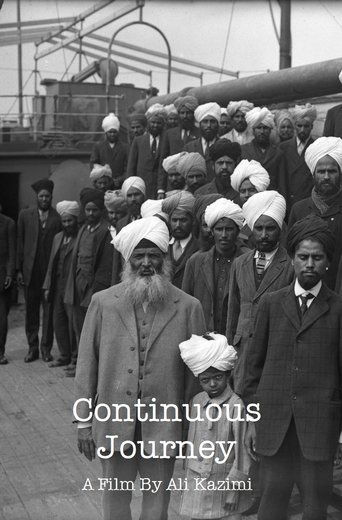
Continuous Journey is an inquiry into the largely ignored history of Canada's exclusion of the South Asians by a little known immigration policy called the Continuous Journey Regulation of 1908. Unlike the Chinese and the Japanese, people from British India were excluded by a regulation that appeared fair, but in reality, was an effective way of keeping people from India out of Canada until 1948. As a direct result, only a half-mile from Canadian shores, the Komagata Maru was surrounded by immigration boats and the passengers were held incommunicado virtual prisoners on the ship. Thus began a dramatic stand-off which would escalate over the course of two months, becoming one of the most infamous incidents in Canadian history.
Continuous Journey
2004
 NR
Fair Play opens a window to the past and allows viewer to feel as if they are in the presence of materially fathomable, historically accurate, life-sized peoples. With the immediacy and presence that only stereoscopic 3D moving images can evoke, Kazimi asks the viewer to rethink history and immerse themselves into the spaces and lives of the characters.
Fair Play
2014
Spanning over a decade, from 1984 to 1996, Shooting Indians: A Journey with Jeffrey Thomas is an ironic documentary journey full of quiet insights and surprising twists. Starting the film as a foreign student in 1984, Kazimi begins to unravel the hidden history of the land that he has chosen as his home. At one level, Shooting Indians is a portrait of Jeffrey Thomas, an Iroquois photographer. The film explores the influences on his life which led him to his career. It was the work of an American photographer from the turn of the century, Edward Curtis, which forced Thomas to closely examine how Indigenous peoples had been photographed in the past. Thomas views Curtis’ monumental work as a “mountain which must be crossed.” On another level is the irony of an Indian from India making a film on a North American Indian and this is woven throughout the fabric of the film.
Shooting Indians: A Journey with Jeffrey Thomas
1997
 NR
In 1915, two Sikh mill-workers, Dalip Singh and Naina Singh, were entrapped by undercover cops and accused of sodomy. Their story becomes a fascinating case study of Vancouver power relations: how police corruption, racism, homophobia, and a covert "whites-only" immigration policy, conspired to maintain the status quo of this colonial port city. Told in four parts, by three separate directors, the film is a hybrid of film forms including drama, documentary and musical.
Rex vs. Singh
2008
Series credits
Behind the camera
10.0Narmada: A Valley Rises is beautifully photographed, inspiring film. It documents a 200 kilometer non-violent Gandhian march involving 6000 participants. The film offers a compelling and intimate portrait of a unique movement while raises critical and universal issues of human-rights, social justice, and development within a democracy.
Narmada: A Valley Rises
1994
10.0Continuous Journey is an inquiry into the largely ignored history of Canada's exclusion of the South Asians by a little known immigration policy called the Continuous Journey Regulation of 1908. Unlike the Chinese and the Japanese, people from British India were excluded by a regulation that appeared fair, but in reality, was an effective way of keeping people from India out of Canada until 1948. As a direct result, only a half-mile from Canadian shores, the Komagata Maru was surrounded by immigration boats and the passengers were held incommunicado virtual prisoners on the ship. Thus began a dramatic stand-off which would escalate over the course of two months, becoming one of the most infamous incidents in Canadian history.
Continuous Journey
2004
NRFair Play opens a window to the past and allows viewer to feel as if they are in the presence of materially fathomable, historically accurate, life-sized peoples. With the immediacy and presence that only stereoscopic 3D moving images can evoke, Kazimi asks the viewer to rethink history and immerse themselves into the spaces and lives of the characters.
Fair Play
2014
Spanning over a decade, from 1984 to 1996, Shooting Indians: A Journey with Jeffrey Thomas is an ironic documentary journey full of quiet insights and surprising twists. Starting the film as a foreign student in 1984, Kazimi begins to unravel the hidden history of the land that he has chosen as his home. At one level, Shooting Indians is a portrait of Jeffrey Thomas, an Iroquois photographer. The film explores the influences on his life which led him to his career. It was the work of an American photographer from the turn of the century, Edward Curtis, which forced Thomas to closely examine how Indigenous peoples had been photographed in the past. Thomas views Curtis’ monumental work as a “mountain which must be crossed.” On another level is the irony of an Indian from India making a film on a North American Indian and this is woven throughout the fabric of the film.
Shooting Indians: A Journey with Jeffrey Thomas
1997
NRIn 1915, two Sikh mill-workers, Dalip Singh and Naina Singh, were entrapped by undercover cops and accused of sodomy. Their story becomes a fascinating case study of Vancouver power relations: how police corruption, racism, homophobia, and a covert "whites-only" immigration policy, conspired to maintain the status quo of this colonial port city. Told in four parts, by three separate directors, the film is a hybrid of film forms including drama, documentary and musical.
Rex vs. Singh
2008
 NR
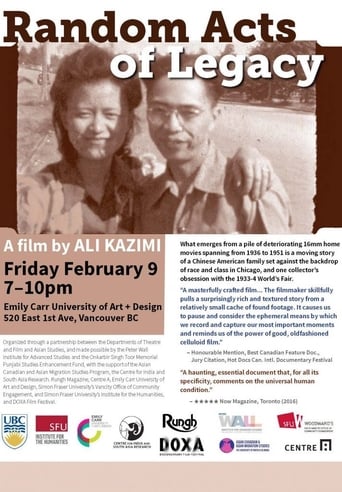
Silas Fung, a Chinese-American, was a sign designer and painter for Sears in Chicago in the 1930’s. Born into a creative family, he was also an avid painter, musician, church-goer, documentarian and father. After he was married (to Edythe) and had children, he decided to continue his passion for filming by documenting their lives. Over the next two or three decades, he amassed his family’s whole life as they became part of the middle class of America. Meanwhile, in the early 21st century, Ali Kazimi was bidding on an online auction for some 16mm nitrate film cans with Silas’ name on them. After winning them and starting the process of cleaning them up, he was contacted by a lady who was bidding on another lot of Silas’ films and wanted to know who had won the second lot. From there, Kazimi began to interview Silas’ daughter, Irena Lam, and other Chinese-American people who grew up at the same time as Irena as well as experts in Sino-American culture.
Random Acts of Legacy
2016
NRSilas Fung, a Chinese-American, was a sign designer and painter for Sears in Chicago in the 1930’s. Born into a creative family, he was also an avid painter, musician, church-goer, documentarian and father. After he was married (to Edythe) and had children, he decided to continue his passion for filming by documenting their lives. Over the next two or three decades, he amassed his family’s whole life as they became part of the middle class of America. Meanwhile, in the early 21st century, Ali Kazimi was bidding on an online auction for some 16mm nitrate film cans with Silas’ name on them. After winning them and starting the process of cleaning them up, he was contacted by a lady who was bidding on another lot of Silas’ films and wanted to know who had won the second lot. From there, Kazimi began to interview Silas’ daughter, Irena Lam, and other Chinese-American people who grew up at the same time as Irena as well as experts in Sino-American culture.
Random Acts of Legacy
2016
 NR
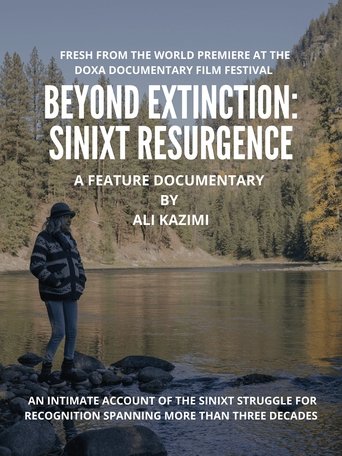
“This is the story about a ghost people who live in a ghost territory.” Thus begins this richly documented history of the struggle for recognition of the Sinixt, one of Canada’s indigenous peoples. While other indigenous peoples have legal rights, the Sinixt have none, because they are officially extinct. But the fact is they’re still there.
Beyond Extinction: Sinixt Resurgence
2022
NR“This is the story about a ghost people who live in a ghost territory.” Thus begins this richly documented history of the struggle for recognition of the Sinixt, one of Canada’s indigenous peoples. While other indigenous peoples have legal rights, the Sinixt have none, because they are officially extinct. But the fact is they’re still there.
Beyond Extinction: Sinixt Resurgence
2022