

Acting
Ahindra Choudhury
Born — Died
1896-08-06 — 1974-11-05
Place of birth
Calcutta, Bengal Presidency, British India [now India]
Known for
Acting
Credits
33 titles
Ahindra Choudhury (1896-1974) was an Indian actor, director, theatre personality, and co-founder of Photo Play Syndicate, a Kolkata-based art organization for bioscope shows. A winner of the Sangeet Natak Akademi Award in 1958, Choudhury was honored by the Government of India in 1963 with the Padma Shri, the fourth-highest Indian civilian award, for his services to the nation. His foray into the movie world was in 1931 with Hrishir Prem, a Jyotish Bandopadhyay film. He retired from acting with Shahjahan, a drama staged on 11 September 1957 at Minerva Theatre, Kolkata. Years later, he appeared in one more film, Shravan Sandhya, in 1974.[8] He acted in 89 films, wrote a screenplay for his mai…
Known for
 9.0
Four sets of friends spend Halloween weekend at the Beautiful Creekside "Kamp of Antietam". Each attending is promised a "Once In A Lifetime" experience, but there's more than just fresh air and fishing going on at the K.O.A.
Tatinir Bichar
1940
 9.0
No synopsis available yet.
Ameeree
1945
 9.0
For the first time in Indian cinema, flashback was used for storytelling.
Roop Lekha
1934
 6.0
Burning with a desire to be a journalist, a young man gets his chance when a publisher -- the father of a friend -- suggests that he write a story on the daily life of the people in his house (several families worth of people). The material turns out to be too incohesive and abundant to work into a pointed, thematic article, and just when he is about to give up, his younger brother asks him a simple question: "How many coal burners are there in Calcutta?" This triggers an idea for a story about Calcutta's pollution -- and the aspiring journalist dreams of myriads of burner-toting citizens invading the publisher's home demanding redress. Maybe he is finally on the way to a story that matters.
Kaleidoscope
1981
An early example of social realism that reached its height with 'Udayer Pathey' and more memorably with 'Chhinnamul', 'Doctor' was meant as a stringent critique of practices that were beginning to be deemed as persistant evils that plague society, namely superstitions, religious dogma and discrimination on the basis of caste. However, that would be a far too simplistic reading of the multiple thematic elements that tie together the narrative of 'Doctor'. The idea of caste based discrimination, violence and upper-caste hypocrisy is placed alongside the notions of generational conflict in a father-son relationship and the idea of a ever-widening generation gap especially in the historical and socio-political context of the film.
Doctor
1940
 9.0
Shyamali, who is both hearing and speech impaired, faces several struggles in life. While the man she marries supports her, she is not accepted by her in-laws.
Shyamali
1956
Film credits
1950s · 10 titles
9.0Shyamali, who is both hearing and speech impaired, faces several struggles in life. While the man she marries supports her, she is not accepted by her in-laws.
Shyamali
1956
Nilachaley Mahaprabhu was a 1957 Indian Bengali biographical film directed by Kartik Chattopadhyay, based on the life of 15th-century mystic Chaitanya Mahaprabhu, who started his spiritual journey and Hindu reform movement, part of the Bhakti movement during his years at Nilachal, the shrine of Jagannath at Puri. It stars Asim Kumar in the titular role with Dipti Roy, Sumitra Devi, Ahindra Choudhury, Bhanu Bandyopadhyay, Nripati Chattopadhyay and Chhabi Biswas in supporting roles.
Nilachaley Mahaprabhu
1957
 7.0
When Mr. Mukherjee's wife drowns herself in the Ganges to save her ailing husband, people start showering her with respect. Years later, things head towards the same direction for her daughter. Uma meets her rival Mrinaal with almost compassion, keeps her son at her refuge and follows the same path of her mother Kangkabati.
Kankabatir Ghat
1955
 NR
A 1955 Bengali Drama Film directed by Haridas Bhattacharya.
Debatra
1955
 7.0
The story revolves around a group of hardened bachelors who meet regularly, and eventually settle for marriage. Purna is a newcomer to the group of bachelors at Professor Chandra Basu's house. Also attending are three other bachelors Akshay, Bipin, and Shirish. Akshay is ousted from the committee when he gets married. He suggests that all members meet at his place instead. Nirmala, the Professor's daughter also joins the crowd becoming the only female member. Purna is attracted to Nirmala and suggests marriage, which Nirmala refuses. Akshay has three sisters Shailabala a child widow, Nripabala and Nirabala. His mother is busy fixing matches for Nripabala and Nirabala. Finally, the two sisters are matched with Shirish and Bipin, while Nirmala and Purna get together.
Chirakumar Sabha
1956
 7.0
The film is a romantic story about a wealthy Brahmo woman and a poor but intelligent Hindu man. It explores their growing love despite societal obstacles. Sarat Chandra Chattopadhyay, combines humor with serious themes and social commentary, creating a timeless story that respects women.
Datta
1951
 10.0
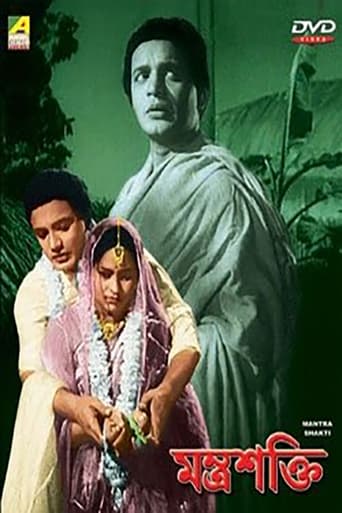
Ambernath a well-educated Sanskrit pundit was different from his childhood. The way he thought and described everything was quite different from others. His master Jagannath Tarka Churamoni loved him a lot and after his death, Ambernath took his place. In such a situation Bani the daughter of local zamindar and Ambernath met. After few days, they got married. Bani were very skeptical about her husband and they were not happy with their relation. Later Ambernath left his wife and stayed alone. In the meantime, Bani also understood the affection and love she had for her husband. She came to know about life and commitment. One day Bani heard that Ambernath was very ill and he stayed in a lonely place. Bani rushed there and put her every effort to make him healthy. Later they came to know each other and lived happily.
The Power of Prayer
1954
 NR
The lesser known 'Sannyasi Rebellion' of the 18th century forms the base of this film. Bankimchandra Chattopadhyay's 'Anandamath' is regarded as one of the most significant patriotic novels that fueled the national movement. India's national song 'Vande Mataram' was actually taken from this novel, which was once banned by the British rulers.
Anandamath
1951
 8.0
Jyotirmoy rejects Sita and marries Anuva without his grandfather's approval. As a result, he gets deprived from his wealth and the entire property goes to Sita. Will Sita help Jyotirmoy?
A Virtuous Woman
1954
 10.0
The life of renowned Bengali poet Michael Madhusudan Dutta.
Michael Madhusudhan
1950
1940s · 12 titles
9.0Four sets of friends spend Halloween weekend at the Beautiful Creekside "Kamp of Antietam". Each attending is promised a "Once In A Lifetime" experience, but there's more than just fresh air and fishing going on at the K.O.A.
Tatinir Bichar
1940
9.0No synopsis available yet.
Ameeree
1945
An early example of social realism that reached its height with 'Udayer Pathey' and more memorably with 'Chhinnamul', 'Doctor' was meant as a stringent critique of practices that were beginning to be deemed as persistant evils that plague society, namely superstitions, religious dogma and discrimination on the basis of caste. However, that would be a far too simplistic reading of the multiple thematic elements that tie together the narrative of 'Doctor'. The idea of caste based discrimination, violence and upper-caste hypocrisy is placed alongside the notions of generational conflict in a father-son relationship and the idea of a ever-widening generation gap especially in the historical and socio-political context of the film.
Doctor
1940
 NR
A 1949 Indian Bengali Drama Film directed by Deb Narayan Gupta.
Dasiputra
1949
 8.0
A 1948 Indian Bengali Drama Film directed by Pashupati Chattopadhyay.
Priyatama
1948
 9.0
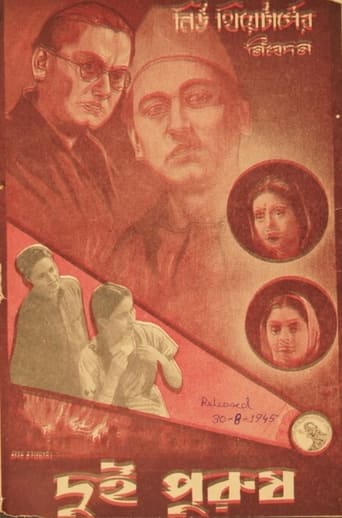
One of the early films of Chhabi Biswas featuring him as a leading man, before he came to be associated with the dominating patriarch roles that have become iconic in Bengali cinema, the film is a tale of the love, relationships and ideals of two generations. Nutubihari is an idealist who has given up his love for Kalyani for the sake of his beliefs. He marries Bimala and becomes a lawyer, fighting for the rights of the poor against the feudal lords. Meanwhile, Kalyani comes to ask refuge after she becomes a widow and is inexplicably accepted by Bimala with a lot of warmth. As the years pass Kalyani's daughter Mamata and Nutu's oldest son Arun fall in love and wish to get married. However, the new-found fame and fortune turns his head and Nutu begins to resemble all the ideals and vices that he had always despised. On the other hand in an ironical turn of events, Arun comes to occupy the position once held by his father, highlighting the generational conflict of ideals.
Two Generations
1945
 NR
The rustic girl left this world and went to heaven. Her Painful memories are what remains behind. The injustice exploitation is suffocating. These conflicts within the unfortunate soil of India have taken many lives. There’s cruelty amongst mankind. There’s injustice and exploitation everywhere. People struggle for their rights. There’s a storm raging in every heart and soul. The earth shivers and wreaks havoc. The raging waves clash on the shores. This enlightens the soul. We can hear the song of a great soul at a distance. It calls out. It calls out to us, to break free from the shackles. We can hear his call. Come Forward. Break free from the shackles. Fight back for freedom. Set yourself free. We’ve sacrificed our lives for the freedom of new India.
Burmar Pathe
1947
Indranath’s son is ill, Guru Omkarananda suggests he pray to the goddess Kamala. His son improves but bad luck follows Indranath; his son and daughter die. Unable to stand the grief the Queen/Kalyani loses her mental equilibrium. Goddess Kamala manifests as Rupasi, the daughter of Omkarananda. Virodhananda and his son Tribhanga are the incarnation of Narad and Narayan on earth. The kingdom goes through difficult times. Omkarananda is arrested and Rupasi goes to meet Bastabesh/Indranath who is attracted to her. Rupasi takes refuge in Birodhananda’s house to avoid Bastabesh’s advances. Birodhananda is interested in getting his son Tribhanga married to Rupasi. Bastabesh goes after Rupasi/Kamala who blinds him. Finally the gods perform their miracle and a repentant Bastabesh is restored his sight and kingdom.
Avatar
1941
 8.0
A 1949 Bengali Drama Film directed by Niren Lahiri.
Niruddesh
1949
 NR
The wealthy, self-obsessed, and possibly crazed Manoj (Barua) is sent by his concerned family to the rural estate of his future father-in-law. Along the way, however, he gets lost and soon finds himself taking shelter in the abode of the railroad stationmaster whose beautiful, down-to-earth daughter, Meena (Kenan Devi), Manoj finds irresistible. When his haughty, progressive-minded fiancée gets wind of this, she freaks out and soon there is a showdown between the two women. In the aftermath, Manoj finds reason to go with his heart and marry Meena.
Shesh Uttar
1942
 7.0
Manoj is from the aristocratic class but has some sort retrograde amnesia; he belongs to the upper-class but is also an outsider, something that enables the possibilities of movement across the class-lines for him. This trope is essential for Barua to articulate the criticism of the indolent upper class in the film. Thus Manoj is both an object of criticism and ridicule while also being one of the critics.
Jawab
1942
 9.0
A 1941 Bengali film directed by Pramathesh Barua; the film was remade in 1963.
Uttarayan
1941
1930s · 9 titles
9.0For the first time in Indian cinema, flashback was used for storytelling.
Roop Lekha
1934
 10.0
Bikash never devotes enough time to his wife, Karuna. Soon, she begins to find solace in the company of her childhood friend, Ashok, destroying their marriage all the more.
Rikta
1939
 9.0
A 1939 Bengali Mythological Film directed by Phani Burma.
Janak Nandini
1939
 10.0
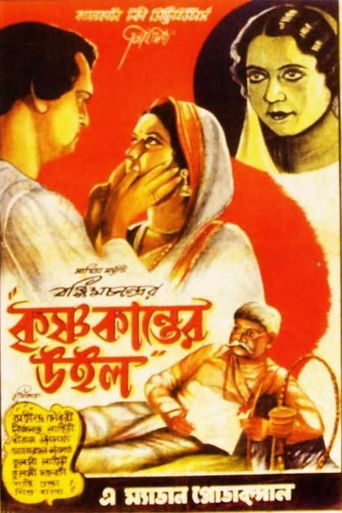
Haralal arranges a fake will and makes Rohini, an orphaned widow, agree to change the original will for the fake one.
Krishnakanter Will
1932
 8.0
Dakshayagna is a pivotal tale in Hindu mythology. It recounts the grand sacrifice ritual organized by Daksha, where his daughter Sati, wife of Lord Shiva, tragically immolates herself due to her father's insult to her husband. Enraged by this, Shiva destroys the sacrifice, leading to the creation of the Shakti Pithas. This event also sets the stage for the reincarnation of Sati as Parvati, who later marries Shiva. The story is central to understanding the complexities of Hindu deities and their interactions.
Dakshayagna
1934
 9.0
A timeless tale of love and devotion, Prabhas Milan transports viewers to ancient India. Set centuries after Krishna departs from Brindavan, the film explores the longing of Radha and the celestial drama that unfolds when Krishna promises his queen, Satyabhama, a divine Parijat tree. As jealousy and divine intervention intertwine, the epic culminates in a poignant reunion between the eternal lovers, Krishna and Radha.
Prabhas Milan
1937
 9.0
A 1935 Bengali Film directed by Jyotish Bandyopadhyay.
Kanthahar
1935
 8.0
A 1939 Mythological Bengali Drama film directed by Hari Bhanja.
Bamanabatar
1939
 10.0
Lord Krishna visits Suryapith with his friend Akrur, where they meet Satyabhama, the daughter of Satrajeet. Akrur proposes to Satyabhama, but she addresses him as a brother, leading him to resent Krishna. Satyabhama, however, falls in love with Krishna. Unaware, Satrajeet arranges Satyabhama’s marriage with Kritabarma. Meanwhile, Jarasandha, the king of Magadh, desires the Syamantak gem to win Jambavati’s hand in marriage. His ally, Satadhanya, also covets Satyabhama. When Satadhanya attacks Satrajeet to seize the gem, Krishna intervenes, defeating him and protecting Satrajeet and Satyabhama. However, Satrajeet distrusts Krishna, hiding the gem with his brother, Prasan. When Prasan is killed by Jarasandha’s spy, who is then slain by Jambavan, Krishna retrieves the gem from Jambavan after defeating him. Later, during Krishna and Satyabhama's wedding, Satyabhama and Akrur kill Satrajeet to seize the gem but are ultimately defeated by Krishna.
Nara Narayana
1939
