

Directing
Alexandra Cuesta
Place of birth
Cuenca, Ecuador
Known for
Directing
Credits
11 titles
Alexandra Cuesta is a filmmaker and artist who lives and works between the United States and Ecuador. Her films combine documentary practices, experimental traditions and visual anthropology. An observer with a pressing curiosity of the world around her, she is interested in documenting the everyday, the ordinary, and believes that cinema is the vehicle to highlight and transcend the poetics of the common experience. Often behind the camera, she finds a connection to the world and to the subjects of her films. She is drawn to stories that exist in the in-between spaces, both in the public and the private spheres - an African poet passing through a Mexican-American neighborhood, the invisibil…
Known for
 7.0
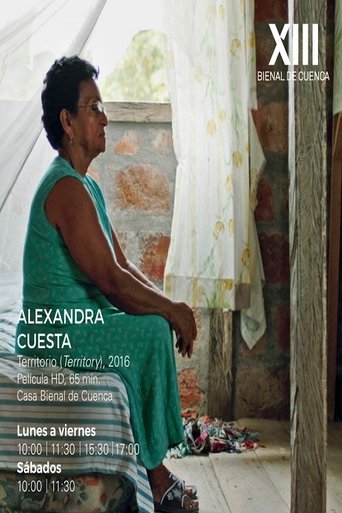
Alexandra Cuesta cites eternal wanderer Henri Michaux as one of the inspirations for her first feature. It’s curious, then, that the opening sequence of Territorio (the first film Cuesta shot in her native Ecuador) shows us a boat heading for the shore. It is very likely that, to Cuesta, the image of water hides the same connotation than it does to the author of “The Sea of Breasts”: returning home, being sheltered in the mother’s womb. Without detouring from the formal approaches of her previous work, Cuesta traces a journey that crosses the country from north to south, drawing a human cartography in which the aim is to achieve an impossible balance between the foreign traveler’s gaze and the earnest familiarity of those who return home temporarily.
Territorio
2016
 NR
An afternoon exercise of piecing together minimal details for safekeeping: my grandmother's garden, her music, recipes for well-being.
Notes, Imprints (On Love): Part II, Carmela
2020
 NR
Shot in Boyle Heights in East Los Angeles, this transitory neighborhood resonates with the poetry of local resident Mapkaulu Roger Nduku. Verses about endings, looking and passing through open up the space projected. A string of tableaus gather a portrait of place and compose a goodbye letter to an ephemeral home.
Farewell
2013
 NR
Experimental short film that meditates on the illusion of movement in cinema and the relationship between image and sound, establishing a formal analogy between both elements. The film plays to resolve the paradox between the relationship between real time and the manipulation of it, based on the cinematographic technique. manipulation of time, based on the cinematographic technique
Lungta
2022
 NR
An autobiographical collection of instances that describe the action of living in a post-industrial landscape, the end of a love story and the politics of what is private and what is public. The camera, as a device for recording and recollection, goes beyond evoking the past to become a tool for the appearance and exorcism of spectres.
Notes, Imprints (On Love): Part I
2020
 NR
Memory and identity are observed through textures of everyday life in a portrait of Jackson Heights, home to a large Latin American immigrant population. Images of street, people, and daily rituals render passing of time in a neighborhood that becomes a mirror not just of another place, but also of the past. The meaning of home is explored and built upon collective recollection.
Recordando El Ayer
2007
Behind the camera
7.0Alexandra Cuesta cites eternal wanderer Henri Michaux as one of the inspirations for her first feature. It’s curious, then, that the opening sequence of Territorio (the first film Cuesta shot in her native Ecuador) shows us a boat heading for the shore. It is very likely that, to Cuesta, the image of water hides the same connotation than it does to the author of “The Sea of Breasts”: returning home, being sheltered in the mother’s womb. Without detouring from the formal approaches of her previous work, Cuesta traces a journey that crosses the country from north to south, drawing a human cartography in which the aim is to achieve an impossible balance between the foreign traveler’s gaze and the earnest familiarity of those who return home temporarily.
Territorio
2016
NRAn afternoon exercise of piecing together minimal details for safekeeping: my grandmother's garden, her music, recipes for well-being.
Notes, Imprints (On Love): Part II, Carmela
2020
NRShot in Boyle Heights in East Los Angeles, this transitory neighborhood resonates with the poetry of local resident Mapkaulu Roger Nduku. Verses about endings, looking and passing through open up the space projected. A string of tableaus gather a portrait of place and compose a goodbye letter to an ephemeral home.
Farewell
2013
NRExperimental short film that meditates on the illusion of movement in cinema and the relationship between image and sound, establishing a formal analogy between both elements. The film plays to resolve the paradox between the relationship between real time and the manipulation of it, based on the cinematographic technique. manipulation of time, based on the cinematographic technique
Lungta
2022
NRAn autobiographical collection of instances that describe the action of living in a post-industrial landscape, the end of a love story and the politics of what is private and what is public. The camera, as a device for recording and recollection, goes beyond evoking the past to become a tool for the appearance and exorcism of spectres.
Notes, Imprints (On Love): Part I
2020
NRMemory and identity are observed through textures of everyday life in a portrait of Jackson Heights, home to a large Latin American immigrant population. Images of street, people, and daily rituals render passing of time in a neighborhood that becomes a mirror not just of another place, but also of the past. The meaning of home is explored and built upon collective recollection.
Recordando El Ayer
2007
 NR
Moving from east to west and back, the windows of a bus frame fleeting sections of urban landscape. Throughout the day, images of riders, textures of light and fragments of bodies in space come together to weave a portrait in motion; a contemplative meditation on public transport in the city of Los Angeles. Isolation, routine and everyday splendor, create the backdrop of this journey, while the intermittent sounds of cars construct the soundscape.
Think of Me
2009
A journey into a foreign country begins with a handheld camera looking through the window of a car. Raindrops in the glass abstract the cityscape separating the inside from the outside. Guided by fragmentation we see mirrors, reflections and shadows. The imminence of danger is at once palpable as it is distant. Shot during the production of Ça Sera Beau (Wale Nourredine 2005), the narrative springs from in-between moments, carrying with it a sense of urgency and chance that render like quick entries in a diary.
Beirut 2.14.05
—
 NR
A meditative film and counterpart to the eponymous album by composer and violinist Bryan Senti, interweaving neoclassical and indigenous Latin American music. Memories document something distant yet also familiar. Manu: A Visual Album is a documentation of the landscapes and traditions of Ecuador that are on the verge of disappearing. Filmed entirely on 16mm, it explores the highlands of the Andes, the coast of Ecuador and parts of the Amazon.
Manu: A Visual Album
2023
NRA meditative film and counterpart to the eponymous album by composer and violinist Bryan Senti, interweaving neoclassical and indigenous Latin American music. Memories document something distant yet also familiar. Manu: A Visual Album is a documentation of the landscapes and traditions of Ecuador that are on the verge of disappearing. Filmed entirely on 16mm, it explores the highlands of the Andes, the coast of Ecuador and parts of the Amazon.
Manu: A Visual Album
2023