

Directing
Rei Hayama
Known for
Directing
Credits
25 titles
Rei Hayama started filmmaking since 2008, after many thoughtful experiences among wildlife at the unique environment in her youth. She studied at Department of Moving Images and Performing Arts, Tama Art University. She has been try seeking the harmoniousness between human and others(animal,wildlife,nature) mainly through film and video works with sound, a poetic writings and symbolical images such as recorded body action. Currently she lives in Japan, and doing screenings and exhibitions at various locations such as film festival, art museum and gallery internationally. In 2016, her work had been screened at Tokyo Metropolitan Museum of Photography(Tokyo), MUSEUM OF THE MOVING IMAGE(New Yor…
Known for
 NR
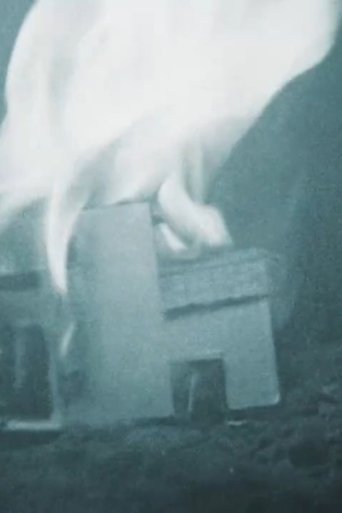
NRA single take of a model of a Japanese home burning down, captured on hand-cranked 16mm film that was processed in coffee instead of traditional chemicals.
Reportage !
2015
 NR
NRThe origin and the end of the world is portrayed by weaving fictitious landscapes of diorama set and the lighting effects into the actual landscapes of 2012 Tokyo. The film is like an old diary.
INITIAL VAPOR
2012
 NR
NRFor Dreaming the Dark: hands that see, eyes that touch, Ana Vaz invited artists and filmmakers whose work trust cinema’s capacity to transform relationships between the body and the camera to propose works that will engage with both perception and embodiment. Could cinema be an art of embodiment? By what rituals and actions could vision become tactile?
Dreaming In The Dark
2018
 NR
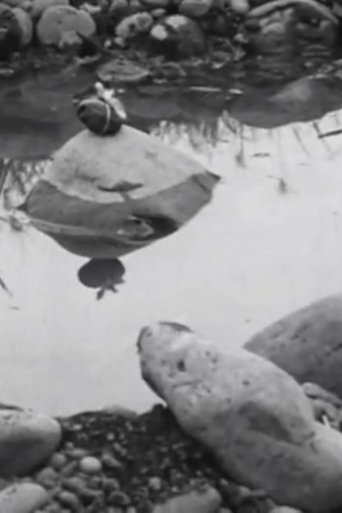
NRThe film was shot in a actual scenery left in the urban life. The leading character, one human (a girl), picks up a small package and opens it. She finds another package inside, so she opens it again. There is bigger package inside.... She opens it again and again and again. Soon, the package becomes bigger than human and this small human turns to drawing of a stone. Story is ritualistic throughout the film, and its soundtrack was made by Japanese onomatopoeia. There a cinema is insisted as an artificial thing of time and story.
Cinema of Stuffing
2010
 NR
NRThe expansiveness of empty landscapes that call attention to their subtle forms in a dynamic macro-perspective, and densely built urban ensembles combined with fragments of dry instructions and inconspicuously urgent communications to create a reserved fictional meditation on the relationship between man and machine.
A.D.A.M.
2014
16min, 2011, shooting format: 16mm film, screening format: HD, col
Emblem
2011
Film credits
Behind the camera
NRA single take of a model of a Japanese home burning down, captured on hand-cranked 16mm film that was processed in coffee instead of traditional chemicals.
Reportage !
2015
NRThe origin and the end of the world is portrayed by weaving fictitious landscapes of diorama set and the lighting effects into the actual landscapes of 2012 Tokyo. The film is like an old diary.
INITIAL VAPOR
2012
NRFor Dreaming the Dark: hands that see, eyes that touch, Ana Vaz invited artists and filmmakers whose work trust cinema’s capacity to transform relationships between the body and the camera to propose works that will engage with both perception and embodiment. Could cinema be an art of embodiment? By what rituals and actions could vision become tactile?
Dreaming In The Dark
2018
NRThe film was shot in a actual scenery left in the urban life. The leading character, one human (a girl), picks up a small package and opens it. She finds another package inside, so she opens it again. There is bigger package inside.... She opens it again and again and again. Soon, the package becomes bigger than human and this small human turns to drawing of a stone. Story is ritualistic throughout the film, and its soundtrack was made by Japanese onomatopoeia. There a cinema is insisted as an artificial thing of time and story.
Cinema of Stuffing
2010
16min, 2011, shooting format: 16mm film, screening format: HD, col
Emblem
2011
 NR
NRFilm THE FOCUS is constructed from rephotographed images collected from old pictorial books of volcano, nomad's culture, war , mountains, some texts and simple color screens that are inserted between images. Nathaniel Hawthorne’s short story “The Earth’s Holocaust” is there as a background of this film.
THE FOCUS
2013
 NR
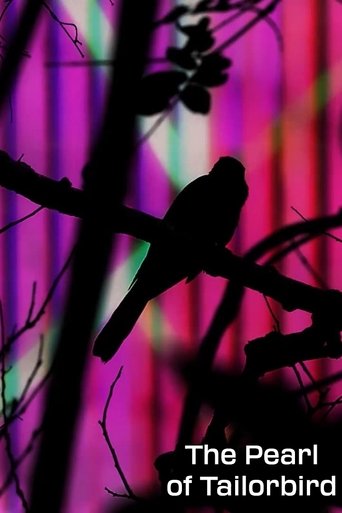
NRThe essence of "The Pearl of Tailorbird" lies in the fortuitous poetry generated through the process of multiple translations – avian to human, phonetic to semantic, textual to visual – in which the latent porosity of language helps give birth to multi-layered resonances. For Hayama, this kind of whimsical linguistic deconstruction underscores the central role of language in the process of anthropocentric world-building – and offers a method for transforming hegemonic modes of knowing into ones perhaps more sensitively attuned to our own origins in the natural world. Coaxing a depth of associative meaning from the rhythmic interplay of sound, text, and imagery, The Pearl of Tailorbird perhaps most resembles lyric poetry – or a hermeneutic puzzle – given spatial form. (www.emptygallery.com)
The Pearl of Tailorbird
2018
NRThe essence of "The Pearl of Tailorbird" lies in the fortuitous poetry generated through the process of multiple translations – avian to human, phonetic to semantic, textual to visual – in which the latent porosity of language helps give birth to multi-layered resonances. For Hayama, this kind of whimsical linguistic deconstruction underscores the central role of language in the process of anthropocentric world-building – and offers a method for transforming hegemonic modes of knowing into ones perhaps more sensitively attuned to our own origins in the natural world. Coaxing a depth of associative meaning from the rhythmic interplay of sound, text, and imagery, The Pearl of Tailorbird perhaps most resembles lyric poetry – or a hermeneutic puzzle – given spatial form. (www.emptygallery.com)
The Pearl of Tailorbird
2018
 NR
NRThe film inspired by the landscape of Friesland, the north part of Netherlands. The flatness of horizon, the history of fought with water suggests us a sense of "Wall" between human and nature.
land
2015
 NR
NRFootsteps of horses and sheep. I run to the forest in a hurry. But I never reach to the forest of my destination. I'm remain in the original place, the place before the tale. After the destination (forest) disappears gradually, aimless footsteps are left on the stage. "Being on the way to somewhere" becomes a story of film in itself. The white light placed in the center of picture is continuously changing its role and prolongs the tail of the tale.
Inaudible footsteps
2015
 NR
NRThe film about human who visits a forest. Observing the existence of human who has to go back to their home, through the experience of the pretend game of being a bird.
Their Bird
2012
 NR
NRDormant Soil / Concrete Reflections is the answer to a poem by Kim Hyesoon entitled “Haeundae Texas Queen Kong”. Produced at the start of the pandemic, Zai and Rei explore the personal effects and thematic resonance of the poem as they travel around their neighborhood.
Dormant Soil/Concrete Reflections
2021
The repeated sequence of "a girl appearing in the woods, burying dead insects and then leaving" is made without a camera. With each repetition, the film images are broken down and the color is fading. The girl is performed by the filmmaker herself, channeling media as a medium. This film is structural but also has a narrative.
A Child Goes Burying Dead Insects
2009
 NR
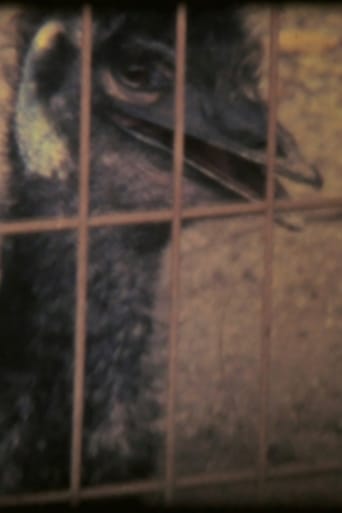
NRThe filmmaker talks about what she sees while she's staring at the projected image of a face of the caged Emu (bird), which is one of a filmmaker's own archive shot by herself at the zoo. In one moment, there's a drop of tear falls from the eye of emu. Even if this one drop of tear has been merely a physiological phenomena to removing dust from its eye, yet the tear touches human mind. The eye of Emu and the tear are not only to make us perceive a human figure in the reflection, but it shows something farther beyond.
On the collinear and reflected on the water
2018
 NR
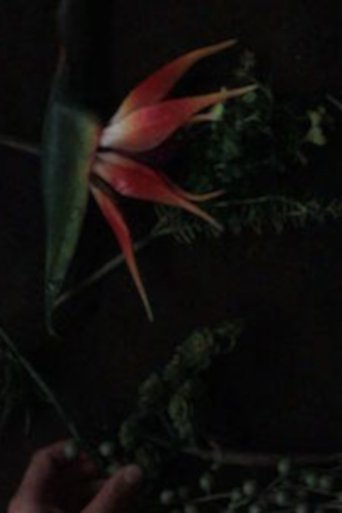
NRArtificial flowers and plants are kept changing its composition. An imitation of shapes of life, water drops, light from rechargeable hand light, endless accompaniment (climb every mountain.) The scenery reminds tiny grave or a small funeral for dead animals and other small creatures. However, this state of scenery gradually changes by the endless composition.
still life composition 'an accompaniment for life'
2015
 NR
NROne day, one moment, there the forest has its own time. The place without meridian. The empty place. The place without human. The place has been thought as "forest" in our memory. This suspense film of forest was shot in the small forest which gets even smaller and forgotten in urban life in Japan. The graphical details, the dark, humid shadows of forest and the digital sound are overlapped.
The knot of meridian
2015
 NR
NRThe story flowing under this film has certain parallels to the theory of bird's hibernation and transformation advocated by Aristotle which is already dated today. In the land, ash snow is falling. The land's flag is fluttering in the blowing wind. And the quail slowly transforms into some other species. When listening to the voice of soil, there is no border in the land.
SOME SMALLNESS COMING FROM LAND
2015
 NR
NRA video sketch at Hayama's bed, situated in Bangkok.
They Can Be Seen From A Distance
2019
 NR
NRComparing the number of photoreceptor cells in eyes of human and hawk, hawk has about 8 times more photoreceptor cells than human. The title of the film is about human eyes. Figure of flying bird in sky as a small black dot is the intimation of things that human can not see. Human has been following the black dot by the desire to fly. On the other hand, bird has been distorted by human as an image or a sign.
1/8
2017
 NR
NRRei Hayama collaborated with Takashi Makino's "Space Noise", and there this "Space Noise Calling" was made. Hayama introduced an old rotary phone to the performance, which is disconnected and the microphone is built-in. Whilst the bells of the disconnected phone is ringing, image of penguins which walking on the artificial ice at zoo, which is visible through the glass, appears and it mixed with Makino's original image of "Space Noise".
Space Noise Calling
2016
 NR
NR2021/video/16:9/sound/12 min
You are new November, old in eternal change
2021
 NR
NRVideo, Color
A Castle Built Upside Down
2011
 NR
NRWhile keep continuing the silent conversation with Goethe's "Theory of Colours", I went toward the nature of Slovakia, a landlocked country of east europe. Various living things, natural caves which hides the overwhelming space in its inside, and the sun. I turned the camera towards (so-called) the insignificant incident, and I paid close attention to those things that related to each other not by language but by the colours that human can not see.
IN SEARCH OF COLOUR
2017
Song written and produced by Sokif Vocals by Calu (Matryoshka)
Waves Burning in Wheat Color
2013