
Production
Eberhard Junkersdorf
Born
1938-09-27 (88)
Place of birth
Berlin, Germany
Known for
Production
Credits
45 titles
Hans-Eberhard Junkersdorf (born 27 September 1938) is a German film producer. A member of the jury at the 38th Berlin International Film Festival, he has produced more than 50 films since 1975.
Known for
 7.0
Tigerenten Club is a German children's television programme. The programme involves a mix of games, quizzes, cartoons and outside reports from the presenters and children, with the aim to educate and entertain. It is produced by SWR in co-operation with other regional broadcasters, and is broadcast on ARD and KiKa. The logo and the name of the programme is based upon the Tigerente or 'Tigerduck', created by German cartoonist Janosch.
Tigerenten Club
1996
 7.0
No synopsis available yet.
Wir in Bayern
2003
No synopsis available yet.
Bavarian Film Awards
1979
 6.7
Three children are accidentally transformed into fish after consuming a potion made by an eccentric scientist. The kids end up in the sea, with one problem: they must find and drink the antidote within 48 hours, or forever remain as fish.
Help! I'm a Fish
2000
 7.0
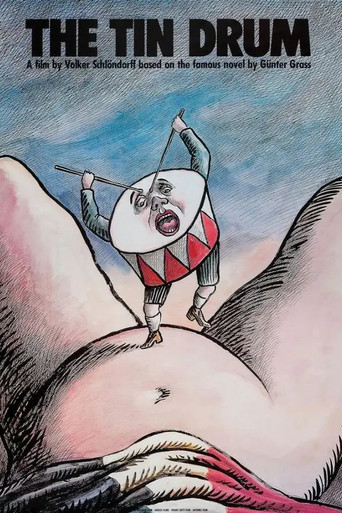
In 1924, Oskar Matzerath is born in the Free City of Danzig. At age three, he falls down a flight of stairs and stops growing. In 1939, World War II breaks out.
The Tin Drum
1979
 5.9
While recuperating in a sanatorium in the mountains, a young boy becomes very close friends with an older baron. But the baron is only using the boy to get to know his mother, the wife of an older diplomat. When the boy realises the baron’s intentions, he becomes jealous, moody and depressed.
Burning Secret
1988
Film credits
1990s · 1 titles

Series credits
7.0Tigerenten Club is a German children's television programme. The programme involves a mix of games, quizzes, cartoons and outside reports from the presenters and children, with the aim to educate and entertain. It is produced by SWR in co-operation with other regional broadcasters, and is broadcast on ARD and KiKa. The logo and the name of the programme is based upon the Tigerente or 'Tigerduck', created by German cartoonist Janosch.
Tigerenten Club
1996
7.0No synopsis available yet.
Wir in Bayern
2003
No synopsis available yet.
Bavarian Film Awards
1979
Behind the camera
6.7Three children are accidentally transformed into fish after consuming a potion made by an eccentric scientist. The kids end up in the sea, with one problem: they must find and drink the antidote within 48 hours, or forever remain as fish.
Help! I'm a Fish
2000
7.0In 1924, Oskar Matzerath is born in the Free City of Danzig. At age three, he falls down a flight of stairs and stops growing. In 1939, World War II breaks out.
The Tin Drum
1979
5.9While recuperating in a sanatorium in the mountains, a young boy becomes very close friends with an older baron. But the baron is only using the boy to get to know his mother, the wife of an older diplomat. When the boy realises the baron’s intentions, he becomes jealous, moody and depressed.
Burning Secret
1988
 6.0
Simon, a famous violinist, sinks into alcoholism. He finds support from his lover, who is also the manager of the orchestra in which he plays. But is she really helping him or is she exploiting his dependence on her? A man who has been through the same experience as Simon, offers to help him...
The Woman of My Life
1986
 7.0
After a chance encounter with a wanted man, a woman is harassed by the police and press until she takes violent action.
The Lost Honor of Katharina Blum
1975
 5.5
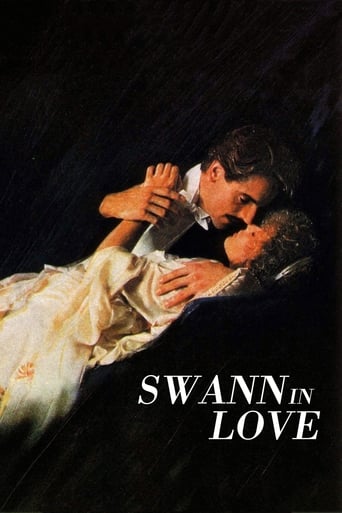
In Belle Époque Paris, a 19th-century Parisian aristocrat falls in love with a lower-class prostitute who seduces him but never loves him.
Swann in Love
1984
 6.2
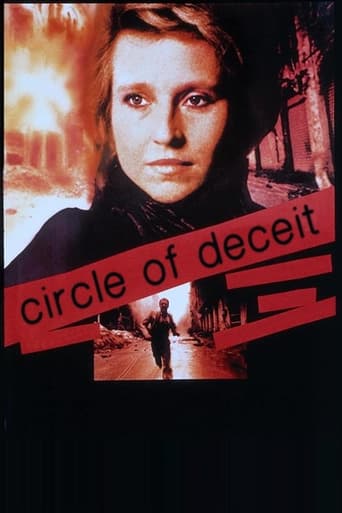
To escape his crumbling marriage, German journalist Laschen travels to Beirut during the fights between Christians and Palestinians to produce an essay. Together with his photographer, he meets some influential people and discovers the everyday face of the war.
Circle of Deceit
1981
 7.0
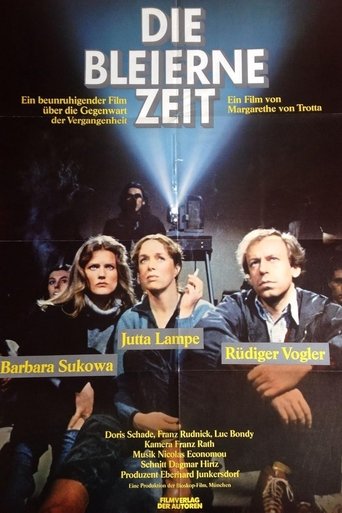
Germany, 1968: The priest's daughters Marianna and Juliane both fight for changes in society, like making abortion legal. However their means are totally different: while Juliane's committed as a reporter, her sister joins a terroristic organization. After she's caught by the police and put into isolation jail, Juliane remains as her last connection to the rest of the world. Although she doesn't accept her sister's arguments and her boyfriend Wolfgang doesn't want her to, Juliane keeps on helping her sister. She begins to question the way her sister is treated.
Marianne and Juliane
1981
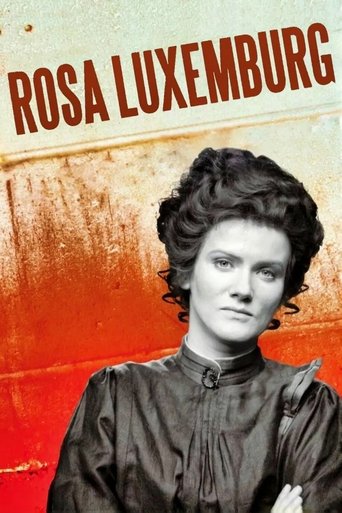 6.5
Polish socialist and Marxist Rosa Luxemburg works tirelessly in the service of revolution in early 20th century Poland and Germany. While Luxemburg campaigns for her beliefs, she is repeatedly imprisoned as she forms the Spartacist League offering a new vision for Germany.
Rosa Luxemburg
1986
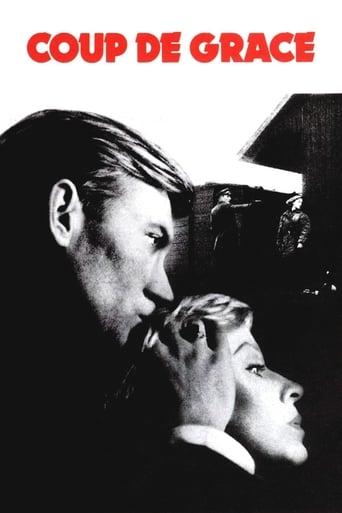 6.4
A countess loves her brother's Prussian-officer friend in the 1919 Baltic area.
Coup de Grâce
1976
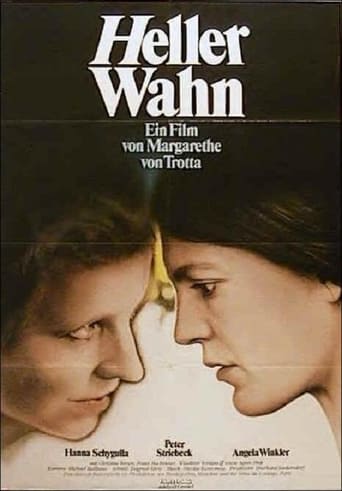 7.0
Two women–a literature professor and a painter–start to rely upon their friendship as an alternative to their unhappy relationships with the men in their lives.
Sheer Madness
1983
 6.2
April 1957: Rational engineer Faber's plane crashes in Mexico, where he learns that he became a father in 1938. He takes a ship from NYC to France and meets cute, young Sabeth. Is it fate?
Voyager
1991
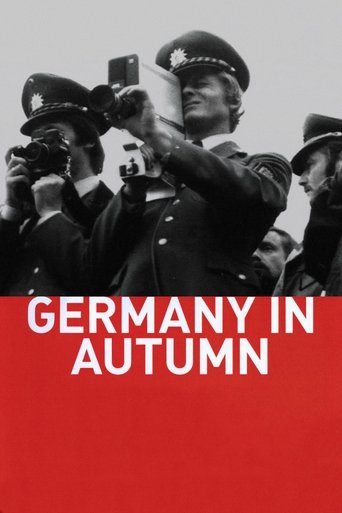 6.4
Nine fictitious documentaries and films reflect the mood of late 1970s Germany, particularly the two-month period in 1977 when a businessman was kidnapped by the RAF (Red Army Faction). The kidnap had been made to orchestrate the release of the original leaders of the RAF, aka the Baader-Meinhof.
Germany in Autumn
1978
 6.2
Achim Bornhak's movie focuses on the restless life of Uschi Obermaier, the icon of the 1968 movement in Germany and groupie. At the age of 16, Uschi is bored by her job in a photo lab, but soon becomes the "it girl" of Munich's club scene. When she gets to know Rainer Langhans, they move to Berlin and live in "Kommune 1", the first politically-motivated commune in Germany. While the other occupants claim she isn't political enough, Uschi just wants to have fun, works as fashion model and leads international music stars in temptation.
Eight Miles High
2007
 6.1
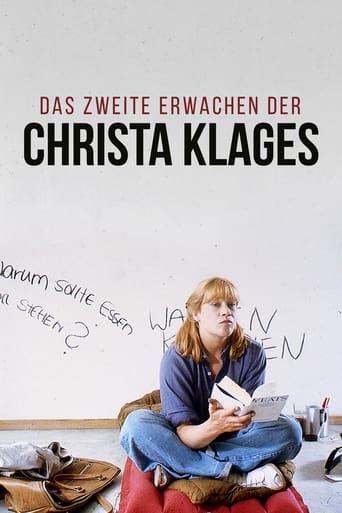
Three people rob a bank to help a day care center that's in debt. Wolf is captured, Werner identified, police suspect Christa is the third. She and Werner ask Hans, a clergyman, to launder the money and give it to the kindergarten. He refuses. They try Ingrid, Christa's friend, who tries to help, but the school rejects the money. When tragedy strikes Werner, Hans helps Christa bolt to a collective in Portugal. Ingrid visits her; their relationship makes the collective nervous, so she returns to Germany and ceases living in hiding. The police are still looking for her and so is a witness to the robbery, Lena, a bank clerk. Lena's interest brings Christa's second awakening.
The Second Awakening of Christa Klages
1978
 5.9
Four aging animals, a dog, a cat, a donkey and a rooster escape from their former homes because they weren't as productive and useful for their owners as they used to be. To avoid death, they all move out on a musical journey to Bremen to find a better life.
The Fearless Four
1997
5.9Four aging animals, a dog, a cat, a donkey and a rooster escape from their former homes because they weren't as productive and useful for their owners as they used to be. To avoid death, they all move out on a musical journey to Bremen to find a better life.
The Fearless Four
1997
 6.1
One of Europe's most beloved folk tale hero, Jester Till is the ultimate prankster embodying the simple wisdom and earthy humor of medieval European peasant folk. In this adventure tale, Till is on his way to the city to visit his grandfather, the slightly absent-minded wizard Marcus. The old man are brewing up a magical happiness potion he feels the townsfolk need. The potion however is tampered with and Marcus vanishes in a horrendous explosion. Till embarks on an adventurous quest to find him.
Jester Till
2003
6.1One of Europe's most beloved folk tale hero, Jester Till is the ultimate prankster embodying the simple wisdom and earthy humor of medieval European peasant folk. In this adventure tale, Till is on his way to the city to visit his grandfather, the slightly absent-minded wizard Marcus. The old man are brewing up a magical happiness potion he feels the townsfolk need. The potion however is tampered with and Marcus vanishes in a horrendous explosion. Till embarks on an adventurous quest to find him.
Jester Till
2003
Pepe is 15. His life in social misery changes completely when he is chosen as the main character of a film production. Shot on location where he lives with his primitive, brutal and authoritarian father, a pig farmer.
The Leading Man
1977
 6.6
East-Berlin, 1961, shortly after the erection of the Wall. Konrad, Sophie and three of their friends plan a daring escape to Western Germany. The attempt is successful, except for Konrad, who remains behind. From then on, and for the next 28 years, Konrad and Sophie will attempt to meet again, in spite of the Iron Curtain. Konrad, who has become a reputed Astrophysicist, tries to take advantage of scientific congresses outside Eastern Germany to arrange encounters with Sophie. But in a country where the political police, the Stasi, monitors the moves of all suspicious people (such as Konrad's sister Barbara and her husband Harald), preserving one's privacy, ideals and self-respect becomes an exhausting fight, even as the Eastern block begins its long process of disintegration.
The Promise
1995
 4.9
Three sisters, played by Fanny Ardant, Greta Scacchi and Valeria Golino, struggle with their illusions, goals and desires in Margarethe von Trotta’s film adaptation of Anton Chekhov’s play.
Love and Fear
1988
 5.7
Sisters Maria and Anna live together. Maria is a most proficient executive secretary, encouraging Anna to finish her studies and start a career. Anna broods, threatens to quit university, takes pills, and keeps a diary. When Maria's relationship with Maurice, the son of her boss, starts to lead to love, Anna takes a selfish and drastic step that plummets Maria into solitude. No longer able to connect with Maurice, Maria does establish a relationship with Miriam, a typist at her office who becomes a surrogate younger sister. But Maria is intrusive as well as helpful. Can this or any relationship work out for this talented woman whose past seems to choke her soul?
Sisters, or The Balance of Happiness
1979
 5.1
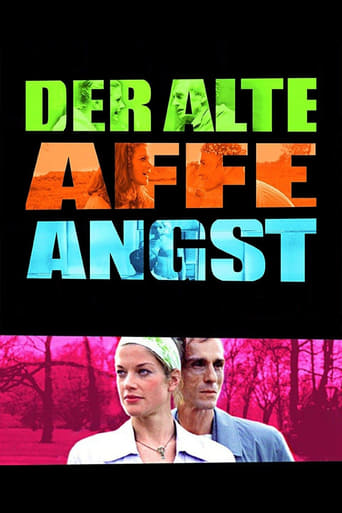
Oskar Roehler's drama Der Alte Affe Angst (Angst) is about the dissolution of a couple. Robert (Andre Hennicke) and Marie (Marie Baumer) have little in common other than their sex life. Since Robert is going through a bout with impotency, they are having a very rocky time. Robert learns that his father, whom he is estranged from, has died. This disturbs Robert so much that he visits a prostitute, and is able to engage in sex with her. Marie discovers the infidelity, and the prostitute has a surprise of her own. Angst was screened at the 2003 Berlin Film Festival.
Angst
2003
 6.2
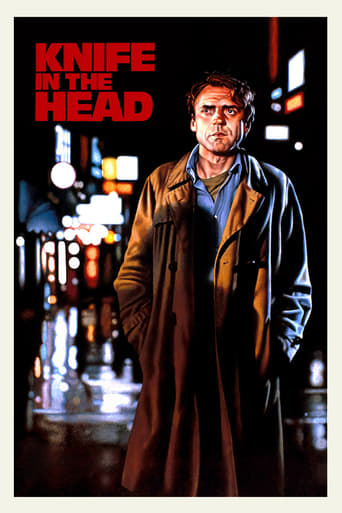
One night when seeking his estranged wife, Hoffmann goes to the youth center where she works. The police are there rounding up radicals who frequent the center - Hoffmann runs into the building and ends up being shot in the head. He awakens with brain trauma, partially paralyzed and unable to speak. The police accuse him of stabbing an officer; the radicals herald him as an innocent victim of police brutality. During his slow recovery at the hospital, Hoffmann must piece together his life and struggle to remember the events of that night.
Knife in the Head
1978
 9.0
“Grotesque dancer” Valeska Gert speaks with inimitable repartee and typical Berlin brashness about her scandals and the people she met. She recreates her grotesque dances and pantomimes for the camera with the young Nastassja Kinski.
Portrait of Valeska Gert
1977
 5.5
Building contractor Jochen Schuster takes out loans worth millions to finance a dubious building project and fulfill the extravagant wishes of his lover. When his mountain of debt is so high that no bank will grant him a loan, he comes up with an idea: he scrapes together the last of his funds and drives up to the banks in a borrowed limousine and wig and tries to borrow money under a false identity. The banks fall for the trick and grant him the loans to "protect German cultural assets". Schuster can hardly believe his luck and handles the unexpected windfall just as irresponsibly as before...
Peanuts - Die Bank zahlt alles
1996
5.5Building contractor Jochen Schuster takes out loans worth millions to finance a dubious building project and fulfill the extravagant wishes of his lover. When his mountain of debt is so high that no bank will grant him a loan, he comes up with an idea: he scrapes together the last of his funds and drives up to the banks in a borrowed limousine and wig and tries to borrow money under a false identity. The banks fall for the trick and grant him the loans to "protect German cultural assets". Schuster can hardly believe his luck and handles the unexpected windfall just as irresponsibly as before...
Peanuts - Die Bank zahlt alles
1996
 7.5
An anxious teacher (played, as is the lead role in all his films, by the director) sits in a beer garden on the hill of the Andechs monastery. While flies drown in his mug of beer, he confronts a life of failure: the wife he ignored, the child he neglected, the teaching duties he has shirked, and his doomed efforts at winning tenure from school officials. Only a dream from the past-the memory of a former liaison with a film star with whom he shared "the Andechs feeling, a feeling that we are not alone" - provides sustenance. Despite an unexpected series of events, longing in Achternbusch's world ultimately remains stronger than fulfilment and thirst better than beer.
Das Andechser Gefühl
1975
 10.0
A dying woman, who stole her best friend's lover, is convinced that a spell has been cast on her, so she orchestrates her former friend's return from a self-imposed exile in Africa in the hopes of breaking the spell.
The African Woman
1990
 6.5
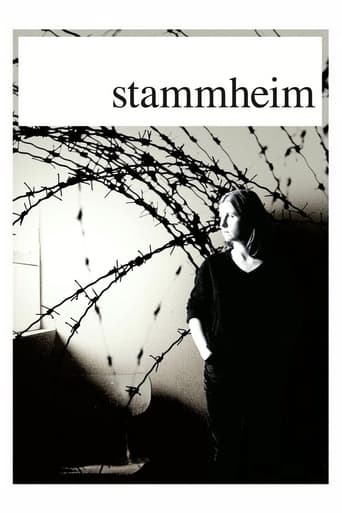
Based on the research for his non-fiction book "Der Baader-Meinhoff-Komplex", "Spiegel" journalist Stefan Aust wrote the screen play to Reinhard Hauff’s controversial feature film that re-narrates the startling trial against the RAF terrorists Baader, Meinhoff, Ensslin, and Raspe. The trial that started in May 1975 in the Stammheim maximum-security prison extended over 192 days and ended with a lifetime sentence for all defendants.
The Baader-Meinhof Gang on Trial
1986
 9.3
An East German man finds a way to cross the border between East and West Berlin. But when he succeeds in bringing his wife out as well, things are not quite as expected.
The Man on the Wall
1982
 7.3
Film version of the musical by the same name: Sunnie, a girl from the province, comes to Berlin to meet rock star Johnnie who had given her his address after a concert. On the subway to Kreuzberg, Sunnie becomes acquainted with a couple of strange people, among them "asphalt cowboy" Bambi. Bambi tells Sunnie that Johnnie’s address in Kreuzberg does not exist. Together, Sunnie and Bambi try to find the rock star in bustling metropolitan Berlin.
Linie 1
1988
Andreas Kramer wants to save his parents' carpentry business from ruin. His brother Jojo persuades him to join a shady shareholders' club. Andreas does indeed make some money. But shortly afterwards Jojo disappears and the club boss is found murdered. Andreas is suspected of the crime.
Im Club der Millionäre
2000
 4.5
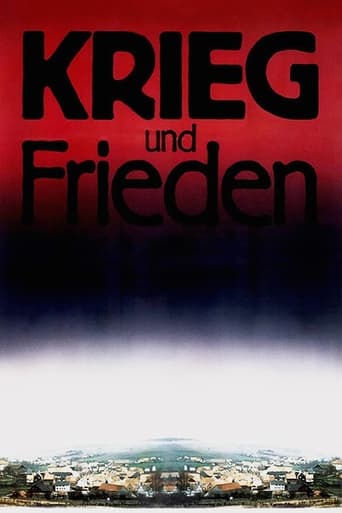
The third episodic film, after Deutschland im Herbst and Der Kandidat, in which notable German filmmakers reflect on the state of their country. A collage of documentary and dramatised sequences dealing with such topics as overkill, peace demonstrations, NATO arms policy, and life after the next war.
War and Peace
1982
 6.7
In 1988, German filmmaker Volker Schlöndorff sat down with legendary director Billy Wilder (1906-2002) at his office in Beverly Hills, California, and turned on his camera for a series of filmed interviews. (A recut of the 1992 TV miniseries Billy, How Did You Do It?)
Billy Wilder Speaks
2006
Ute Lemper sings a collection of art songs by Michael Nyman based on texts by Paul Celan, Wolfgang Amadeus Mozart, William Shakespeare and Arthur Rimbaud. It was filmed at the Musikhalle, Hamburg, 4 February 1992.
The Michael Nyman Songbook
1992
 7.7
Gibbi Westgermany is the name of a former sailor with a Mick Jagger look—leather jacket over the bare chest—who roams the Hamburg neighborhood St. Pauli homeless. His destination is a snack bar in St. Pauli run by his mother. But it is not the safe haven he is looking for.
Gibbi West Germany
1980
 10.0
In this suspense story, the main character, Johann Neudorff, immigrated to Argentina from Germany after World War Two, and has become a successful businessman there. He is unconcerned with the nature of the government there, which at the time of this film (1978) is a military dictatorship. His comfortable existence is disrupted when he discovers that his beloved daughter Laura has become the lover of a political activist who is on the military's hit list. When his daughter is kidnapped, Johann attempts to use his government connections to free both her and her lover. However, his son Alfredo undermines his efforts, and Johann himself is incarcerated in a military prison, but not before he discovers that his daughter and her lover are both dead, killed by the regime.
Blue-Eyed
1989