
Writing
Narottam Vyas
Known for
Writing
Credits
4 titles
Known for
 10.0
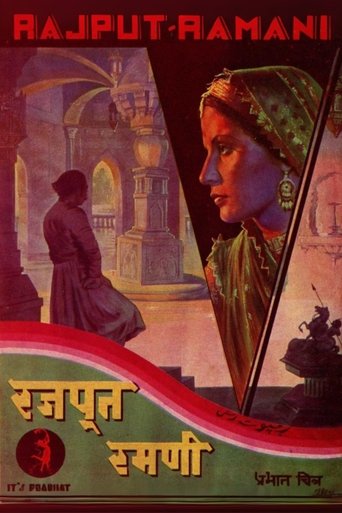
Set in medieval Rajput court, mainly addresses Rajput notions of chivalry. The legendary warrior Mansingh (Phatak) is the nation's strong man but he is cordially hated even by his own people. Claiming to have been offended by Taramati (Tarkhad), he insists to her eminent father that only a marriage (on terms insulting to her) can placate him. He becomes a tyrant imprisoning large numbers of people, and eventually Taramati's father, also in prison, leads a popular revolt, threatening to kill his son-in-law. Only Taramati's decision to protect her husband resolves the conflict.
Rajput Ramani
1936
 7.5
Sant Eknath, a 16th-century poet-saint who challenges caste discrimination by serving and dining with the untouchables. His actions provoke outrage from orthodox Brahmins, leading to his excommunication. Despite opposition, Eknath stands firm in his belief in equality and devotion, inspiring others to join his cause and defending his principles through his spiritual teachings.
Dharmatma
1935
 10.0
Set in two historical epochs, 1735 and 1735. The spirited Miss Queen (Khote), performing in a period play, recalls a previous incarnation when she was the actual person she is now acting on the stage. She inherited the throne because the state of Ranigarh had no constitutional male heirs and her horoscope was deemed auspicious. Instead of being merely a figurehead, she opposes the corrupt minister Jairaj and army commander Mubarak and, following the advice of the court poet (Pahelwan), she makes sure the royal court is accessible to the suffering people.
Life Is a Stage
1935
 7.0
Kodandavarma, a dictator in an ancient Aryan society, rules with a firm hand. When a collapsing statue threatens slaves, Jeevan, a young aboriginal king, saves them and falls in love with Princess Jayanti. The villainous Madhuvrat plots against Kodandavarma, entrapping heir Uttam and forcing dancing girl Lata to seduce him to help the slaves.
Beyond the Horizon
1937
Behind the camera
10.0Set in medieval Rajput court, mainly addresses Rajput notions of chivalry. The legendary warrior Mansingh (Phatak) is the nation's strong man but he is cordially hated even by his own people. Claiming to have been offended by Taramati (Tarkhad), he insists to her eminent father that only a marriage (on terms insulting to her) can placate him. He becomes a tyrant imprisoning large numbers of people, and eventually Taramati's father, also in prison, leads a popular revolt, threatening to kill his son-in-law. Only Taramati's decision to protect her husband resolves the conflict.
Rajput Ramani
1936
7.5Sant Eknath, a 16th-century poet-saint who challenges caste discrimination by serving and dining with the untouchables. His actions provoke outrage from orthodox Brahmins, leading to his excommunication. Despite opposition, Eknath stands firm in his belief in equality and devotion, inspiring others to join his cause and defending his principles through his spiritual teachings.
Dharmatma
1935
10.0Set in two historical epochs, 1735 and 1735. The spirited Miss Queen (Khote), performing in a period play, recalls a previous incarnation when she was the actual person she is now acting on the stage. She inherited the throne because the state of Ranigarh had no constitutional male heirs and her horoscope was deemed auspicious. Instead of being merely a figurehead, she opposes the corrupt minister Jairaj and army commander Mubarak and, following the advice of the court poet (Pahelwan), she makes sure the royal court is accessible to the suffering people.
Life Is a Stage
1935
7.0Kodandavarma, a dictator in an ancient Aryan society, rules with a firm hand. When a collapsing statue threatens slaves, Jeevan, a young aboriginal king, saves them and falls in love with Princess Jayanti. The villainous Madhuvrat plots against Kodandavarma, entrapping heir Uttam and forcing dancing girl Lata to seduce him to help the slaves.
Beyond the Horizon
1937