

Acting
Philippe Sollers
Born — Died
1936-11-28 — 2023-05-05
Place of birth
Talence, Gironde, France
Known for
Acting
Credits
24 titles
Philippe Sollers (born Philippe Joyaux; 28 November 1936 – 5 May 2023) was a French writer and critic. In 1960 he founded the avant garde literary journal Tel Quel (along with writer and art critic Marcelin Pleynet), which was published by Le Seuil and ran until 1982. Sollers then created the journal L'Infini, published first by Denoel, then by Gallimard with Sollers remaining as sole editor. Sollers was at the heart of the period of intellectual fervour in the Paris of the 1960s and 1970s. He contributed to the publication of critics and thinkers such as Jacques Derrida, Jacques Lacan, Louis Althusser, and Roland Barthes. Some of them were later described in his novel Femmes (1983), alongs…
Known for
 3.6
No synopsis available yet.
Vivement dimanche
1998
 8.5
Apostrophes was a live, weekly, literary, prime-time, talk show on French television created and hosted by Bernard Pivot. It ran for fifteen years (724 episodes) from January 10, 1975, to June 22, 1990, and was one of the most watched shows on French television (around 6 million regular viewers). It was broadcast on Friday nights on the channel France 2 (which was called "Antenne 2" from 1975 to 1992). The hourlong show was devoted to books, authors and literature. The format varied between one-on-one interviews with a single author and open discussions between four or five authors.
Apostrophes
1975
 5.0
No synopsis available yet.
Ciné regards
1978
 NR
Amours décolorées is a cinematographic poem to the glory of Mariola San Martin, model, stylist, dancer and Spanish photographer.
Amours décolorées
1998
 NR
No synopsis available yet.
Guy Debord, une étrange guerre
2000
 NR
Couple is a cinematic series of portrait films, which show two persons, who free to do what they wish, in a fixed camera shot of 3:20 minutes.
Couple
1986
Film credits
2020s · 2 titles
 NR
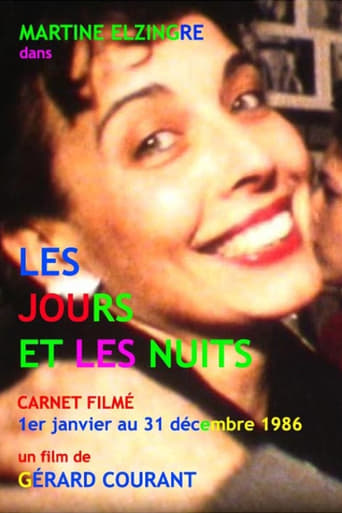
I give a methodical account of my film work: the creation of new series (Lire, Trio, Avec Mariola), the shooting of a new feature film (Amours décolorées which will take ten years to edit) with Mariola San Martin.
Les Jours et les Nuits
2021
 NR
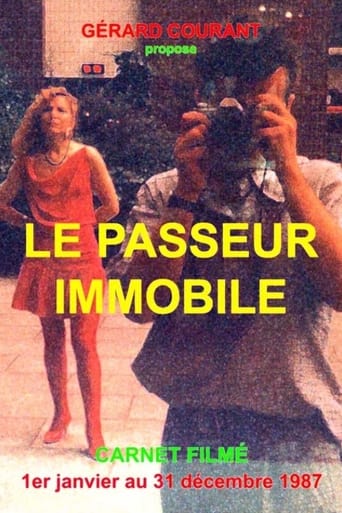
Le Passeur immobile, which covers the year 1987, is a Booklet filmed stuck between The Days and the Nights (1986) and The Artifice and the Fake (1988). These Notebooks have been punctuating my activity as a filmmaker for about fifteen years. They are like a life parallel to my other films and film series (Cinema, Group Portrait, Read, etc.). They are also like a letter to the spectators.
Le Passeur immobile
2021
2010s · 1 titles
2000s · 2 titles
NRNo synopsis available yet.
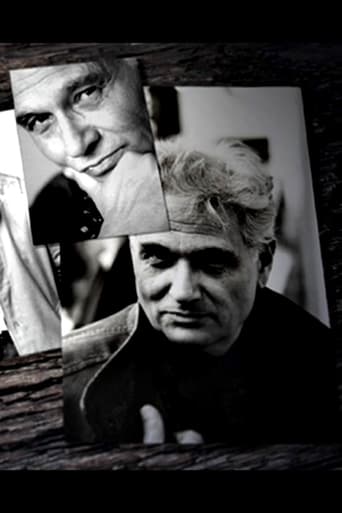
Guy Debord, une étrange guerre
2000
 5.0
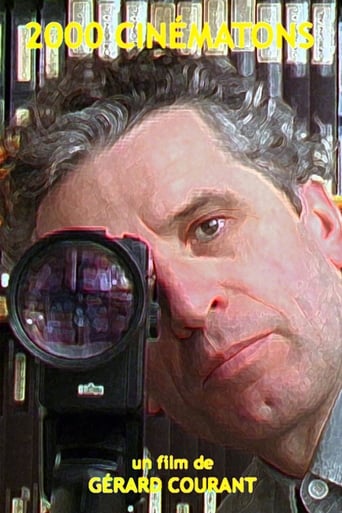
A film about an ongoing cinematic adventure that began in 1978: a vast anthology of personality portraits called Cinématons, dealing with people in the arts. Historical, ethnological, sociological and psychological, this anthology is a living record of the artistic community of the last 20th century which attempts to answer these questions: Why film everyone? Why choose cultural personalities? How do the subjects look at their image? How much exhibitionism and narcissism is involved in being filmed?
2000 Cinématons
2001
1990s · 2 titles
NRAmours décolorées is a cinematographic poem to the glory of Mariola San Martin, model, stylist, dancer and Spanish photographer.
Amours décolorées
1998
 NR
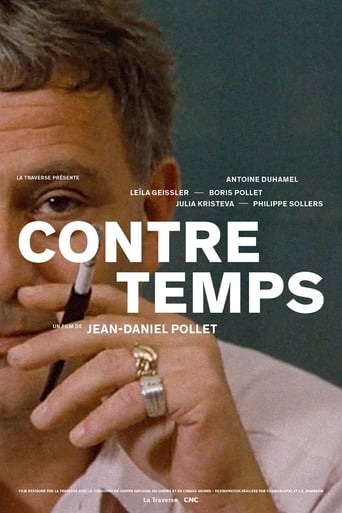
As a rereading of his films, "Contretemps" (in the fight against time), Jean-Daniel Pollet brings together excerpts of his films and a report by Jean Baronnet. The author Philippe Sollers and philosopher Julia Kristeva voice their thoughts.
Contretemps
1990
1980s · 6 titles
NRCouple is a cinematic series of portrait films, which show two persons, who free to do what they wish, in a fixed camera shot of 3:20 minutes.
Couple
1986
 NR
No synopsis available yet.
Avec Mariola
1987
 6.2
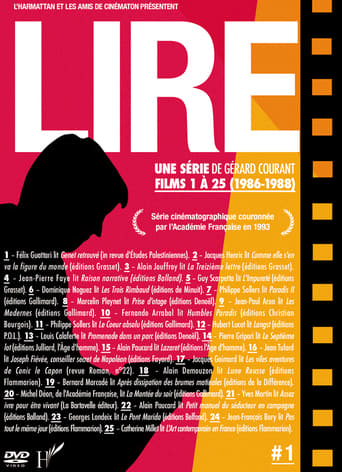
Lire is a cinematographic series of filmed portraits that shows, in a single large fixed and sound sequence shot of 3 minutes 20 seconds, a writer reading the beginning of his last published book.
Lire
1986
 NR
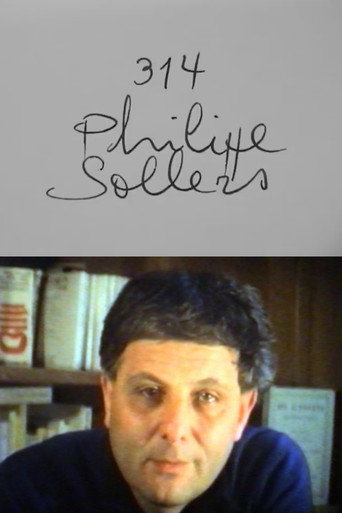
No synopsis available yet.
Cinématon n°314 : Philippe Sollers
1984
Reel 32 of Gérard Courant’s on-going Cinematon series.
Cinématon XXXII
1984
 NR
Jean-Luc Godard and Philippe Sollers meet in Paris to discuss Godard's film Je vous salue, Marie, and many other things.
Godard / Sollers : L’entretien
1985
1970s · 2 titles
 4.9
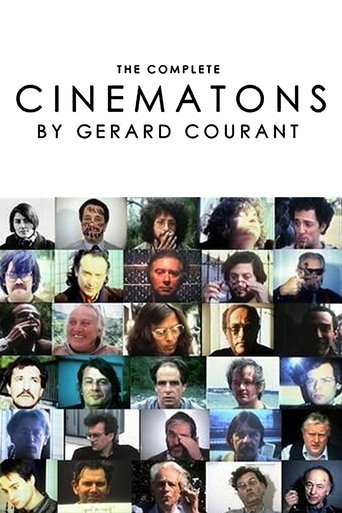
Cinématon is a 156-hour long experimental film by French director Gérard Courant. It was the longest film ever released until 2011. Composed over 36 years from 1978 until 2006, it consists of a series of over 2,821 silent vignettes (cinématons), each 3 minutes and 25 seconds long, of various celebrities, artists, journalists and friends of the director, each doing whatever they want for the allotted time. Subjects of the film include directors Barbet Schroeder, Nagisa Oshima, Volker Schlöndorff, Ken Loach, Benjamin Cuq, Youssef Chahine, Wim Wenders, Joseph Losey, Jean-Luc Godard, Samuel Fuller and Terry Gilliam, chess grandmaster Joël Lautier, and actors Roberto Benigni, Stéphane Audran, Julie Delpy and Lesley Chatterley. Gilliam is featured eating a 100-franc note, while Fuller smokes a cigar. Courant's favourite subject was a 7-month-old baby. The film was screened in its then-entirety in Avignon in November 2009 and was screened in Redondo Beach, CA on April 9, 2010.
Cinématon
1978
 6.2
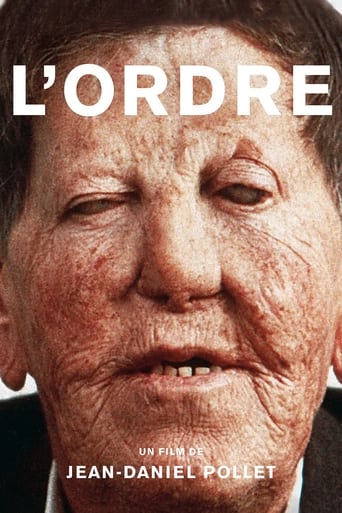
Pollet provides an insight into life on the leper colony of Spinalonga, an island off Crete, through the eyes of Raimondakis, who tells the story of his life to the camera after having been excluded from his community to spend years of his life on the island with his fellow sufferers. Themes addressed include love, community, companionship and death and the importance of these values to all people whatever their state of health.
The Order
1973
1960s · 3 titles
 6.6
Six vignettes set in different sections of Paris, by six directors. St. Germain des Pres (Douchet), Gare du Nord (Rouch), Rue St. Denis (Pollet), and Montparnasse et Levallois (Godard) are stories of love, flirtation and prostitution; Place d'Etoile (Rohmer) concerns a haberdasher and his umbrella; and La Muette (Chabrol), a bourgeois family and earplugs.
Six in Paris
1965
No synopsis available yet.
Artaud
1966
 5.5
Éric Rohmer's short for the portmanteau film Paris vu par (Six in Paris, 1965), concerning a haberdasher and his umbrella. Convinced he has killed a man, Jean-Marc flees and spends an anxious few days waiting for the death of the stranger to be reported in the newspapers...
Place de l'Étoile
1965
Series credits
3.6No synopsis available yet.
Vivement dimanche
1998
8.5Apostrophes was a live, weekly, literary, prime-time, talk show on French television created and hosted by Bernard Pivot. It ran for fifteen years (724 episodes) from January 10, 1975, to June 22, 1990, and was one of the most watched shows on French television (around 6 million regular viewers). It was broadcast on Friday nights on the channel France 2 (which was called "Antenne 2" from 1975 to 1992). The hourlong show was devoted to books, authors and literature. The format varied between one-on-one interviews with a single author and open discussions between four or five authors.
Apostrophes
1975
5.0No synopsis available yet.
Ciné regards
1978
Behind the camera
NRNo synopsis available yet.
Guy Debord, une étrange guerre
2000
NRNo synopsis available yet.
Guy Debord, une étrange guerre
2000
 5.8
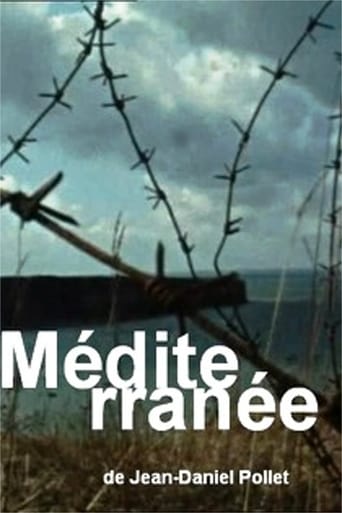
[Here] Pollet made a work that is the very definition of what French critics like to call an ovni or ufo (as in ‘unidentified filmic object’). [It] has been described as being ‘like a comet in the sky of French cinema,’ an ‘unknown masterpiece,’ and an ‘unprecedented’ work that refuses interpretation even as it has provoked reams of critical writing. Its rhythmic collage of images – a girl on a gurney, a fisherman, Greek ruins, a Sicilian garden, a Spanish corrida – is accompanied by an abstract commentary written by Sollers, and only the somber lyricism of Antoine Duhamel’s score holds the film’s elements together. At first viewing, you fear that [it] might fly apart into incoherent fragments. Instead, over the course of its 45 minutes it invents its own rules, and you realize you’re watching something like the filmic channeling of an ancient ritual.
Méditerranée
1963