
Sound
Kathleen Shannon
Born — Died
1935-11-11 — 1998-01-09
Place of birth
Vancouver, British Columbia, Canada
Known for
Sound
Credits
22 titles
Kathleen Shannon was a Canadian sound editor, picture editor, producer and director. Shannon lobbied for more resources for women’s filmmaking at the National Film Board which led to the creation of Studio D in 1974.
Known for
 9.0
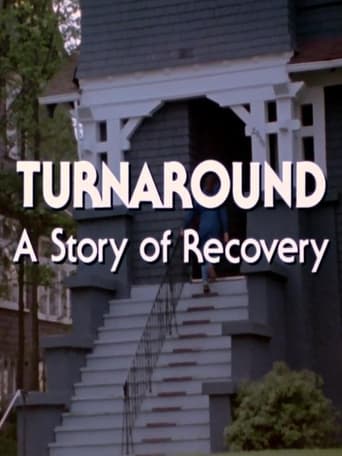
9.0The women who seek help at Aurora House share a common illness: they are physically and psychologically dependent on alcohol, prescription drugs, street drugs, or a combination of these. This documentary focuses on the lives of five women at various stages of their rehabilitation. In the supportive and healing atmosphere of women helping other women, they are confronting the issues and feelings they had previously drunk or drugged out of consciousness.
Turnaround: A Story of Recovery
1984
 NR
NRThis short documentary is a celebration of life on planet Earth. Made from haunting visual images selected from 50 years of NFB productions, the film looks at human beings, their place on earth, and their deep interconnection with all other beings. Evocations of forces that threaten the planet and all its inhabitants also offer avenues for reflection.
Mother Earth
1991
 3.0
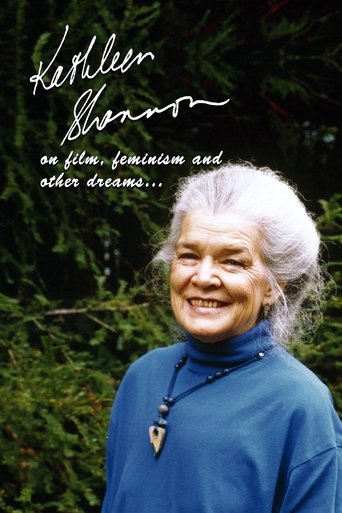
3.0With quiet intelligence and wry humour, retired documentary filmmaker Kathleen Shannon takes us through the arc of her life and career. Beginning with childhood, moving through her formative years, to her overwhelming desire to give women a chance to tell their stories, this film paints a vibrant portrait of one woman who blazed the way. It's a story of struggle, persistence, and success… and of course, of the NFB's Studio D.
Kathleen Shannon: On Film, Feminism & Other Dreams
1997
Women relate their experiences with marriage and motherhood, punctuated by commercials for weddings, among other things. A seminal work by Kathleen Shannon, who founded Studio D, a production entity dedicated to women making films at the National Film Board of Canada.
Challenge for Change: “… and They Lived Happily Ever After”
1975
 6.0
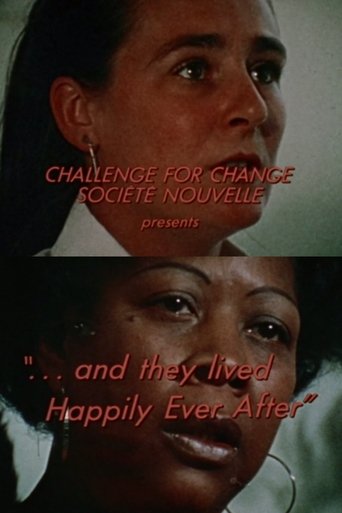
6.0A group of young girls and married women express their views of marriage and motherhood while glossy advertisements extolling romance, weddings, and babies flash across the screen in contrast to their words. Could the solution to dashed expectations be as simple as growing up before marriage? Part of the Challenge for Change program.
...and They Lived Happily Ever After
1975
A tribute to Indigenous women everywhere, this short documentary focuses on 5 women from across Canada. Of varied ages and backgrounds, they have achieved success in a variety of careers: as the Yukon legislature's first Indigenous woman minister (Margaret Joe), as a deck hand on a fishing boat (Corinne Hunt), as a teacher (Sophie MacLeod), as a lawyer (Roberta Jamieson), and as a band council chief (Sophie May Pierre - St. Mary’s Indian Band of the Ktunaxa Nation off the Ktunaxa Nation).
Doctor, Lawyer, Indian Chief
1986
Film credits
Behind the camera
9.0The women who seek help at Aurora House share a common illness: they are physically and psychologically dependent on alcohol, prescription drugs, street drugs, or a combination of these. This documentary focuses on the lives of five women at various stages of their rehabilitation. In the supportive and healing atmosphere of women helping other women, they are confronting the issues and feelings they had previously drunk or drugged out of consciousness.
Turnaround: A Story of Recovery
1984
NRThis short documentary is a celebration of life on planet Earth. Made from haunting visual images selected from 50 years of NFB productions, the film looks at human beings, their place on earth, and their deep interconnection with all other beings. Evocations of forces that threaten the planet and all its inhabitants also offer avenues for reflection.
Mother Earth
1991
Women relate their experiences with marriage and motherhood, punctuated by commercials for weddings, among other things. A seminal work by Kathleen Shannon, who founded Studio D, a production entity dedicated to women making films at the National Film Board of Canada.
Challenge for Change: “… and They Lived Happily Ever After”
1975
Women relate their experiences with marriage and motherhood, punctuated by commercials for weddings, among other things. A seminal work by Kathleen Shannon, who founded Studio D, a production entity dedicated to women making films at the National Film Board of Canada.
Challenge for Change: “… and They Lived Happily Ever After”
1975
6.0A group of young girls and married women express their views of marriage and motherhood while glossy advertisements extolling romance, weddings, and babies flash across the screen in contrast to their words. Could the solution to dashed expectations be as simple as growing up before marriage? Part of the Challenge for Change program.
...and They Lived Happily Ever After
1975
6.0A group of young girls and married women express their views of marriage and motherhood while glossy advertisements extolling romance, weddings, and babies flash across the screen in contrast to their words. Could the solution to dashed expectations be as simple as growing up before marriage? Part of the Challenge for Change program.
...and They Lived Happily Ever After
1975
A tribute to Indigenous women everywhere, this short documentary focuses on 5 women from across Canada. Of varied ages and backgrounds, they have achieved success in a variety of careers: as the Yukon legislature's first Indigenous woman minister (Margaret Joe), as a deck hand on a fishing boat (Corinne Hunt), as a teacher (Sophie MacLeod), as a lawyer (Roberta Jamieson), and as a band council chief (Sophie May Pierre - St. Mary’s Indian Band of the Ktunaxa Nation off the Ktunaxa Nation).
Doctor, Lawyer, Indian Chief
1986
 NR
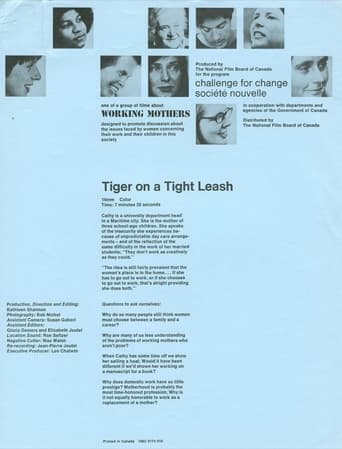
NRCathy, mother of three, is a university department head in a Maritime city. She speaks of the insecurity she experiences because of unpredictable day care arrangements, and of the reflection of the same difficulty in the work of her married students. 'They don't work as creatively as they could.' Part of the Working Mothers series produced by Kathleen Shannon as part of the Challenge for Change program at the National Film Board of Canada.
Tiger on a Tight Leash
1974
NRCathy, mother of three, is a university department head in a Maritime city. She speaks of the insecurity she experiences because of unpredictable day care arrangements, and of the reflection of the same difficulty in the work of her married students. 'They don't work as creatively as they could.' Part of the Working Mothers series produced by Kathleen Shannon as part of the Challenge for Change program at the National Film Board of Canada.
Tiger on a Tight Leash
1974
 NR
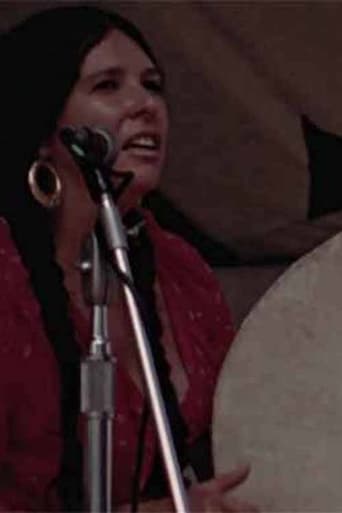
NRAlanis Obomsawin, a North American Indian who earns her living by singing and making films, is the mother of an adopted child. She talks about her life, her people, and her responsibilities as a single parent. Her observations shake some of our cultural assumptions.
Our Dear Sisters
1975
NRAlanis Obomsawin, a North American Indian who earns her living by singing and making films, is the mother of an adopted child. She talks about her life, her people, and her responsibilities as a single parent. Her observations shake some of our cultural assumptions.
Our Dear Sisters
1975
Kathy worked as a nurse in Greece and then came to Canada. She and her family live in northern Alberta, where they are developing a farm. Kathy works outside the home as a nurse, sews for the children, maintains the house, and helps with the farm work.
Luckily I Need Little Sleep
1974
Kathy worked as a nurse in Greece and then came to Canada. She and her family live in northern Alberta, where they are developing a farm. Kathy works outside the home as a nurse, sews for the children, maintains the house, and helps with the farm work.
Luckily I Need Little Sleep
1974
 NR
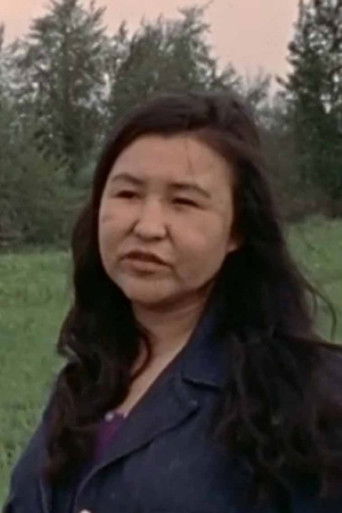
NRThis short film is told in the first person by Rose, a Métis woman from northern Alberta who has left a difficult life in the city to rediscover her roots by returning to her Woodland Cree community. Rose reveals the racism, isolation and health issues she faced when trying to make a life for herself outside her home community, and how she is able to help others now that she has reconnected to her culture. The film is part of a 1970s series of eleven films title Working Mothers by producer/director Kathleen Shannon, exposing inequality for women in accessing education, childcare, and equal pay. These films led to the creation of Studio D at the National Film Board, the world’s first feminist production studio.
Like the Trees
1974
NRThis short film is told in the first person by Rose, a Métis woman from northern Alberta who has left a difficult life in the city to rediscover her roots by returning to her Woodland Cree community. Rose reveals the racism, isolation and health issues she faced when trying to make a life for herself outside her home community, and how she is able to help others now that she has reconnected to her culture. The film is part of a 1970s series of eleven films title Working Mothers by producer/director Kathleen Shannon, exposing inequality for women in accessing education, childcare, and equal pay. These films led to the creation of Studio D at the National Film Board, the world’s first feminist production studio.
Like the Trees
1974
No synopsis available yet.
They appreciate you more
1974
Joy is a research biologist, a consultant to a large company. She is also a widow with two school-age children. In discussing her own dilemmas she speaks for many other women. "The powers that be know that women do work, but they turn a deaf ear." Apart from "discrimination against women," Joy sees the absence of universal day care as a loss for children too.
Mothers Are People
1974
Joan is a welfare mother with seven children. Originally from the Maritimes, she now lives in Montréal. She would like to work as a waitress, and feels she'd be a better mother if she could. But day care costs more than she can afford.
Would I Ever Like to Work
1974
 9.0
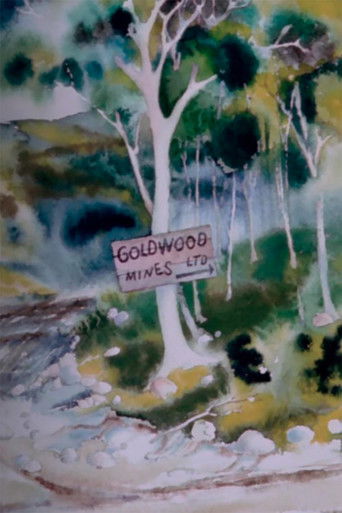
9.0Kathleen Shannon describes the look and feel of her childhood to an artist friend, and uses his paintings and her visit to the ruins of the mining site where she grew up to reflect on her early life and how it influenced the adult she became.
Goldwood
1975
9.0Kathleen Shannon describes the look and feel of her childhood to an artist friend, and uses his paintings and her visit to the ruins of the mining site where she grew up to reflect on her early life and how it influenced the adult she became.
Goldwood
1975