
Directing
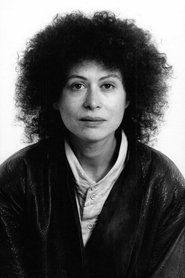
Claudine Eizykman
Born — Died
1945-04-22 — 2018-06-22
Place of birth
Paris, France
Known for
Directing
Credits
15 titles
As a filmmaker she has made a dozen films (Selection Committee Prize at the Knokke-Le-Zoute Festival in 1974-75), videos and - in collaboration with Guy Fihman a dozen holographic films and devices to record and present them. Since 1969 she has published numerous studies on narrative cinema ("La Jouissance Cinéma", 1976, ed. 10/18), video art, experimental and avant-garde film, notably on the Vasulkas, Peter Kubelka, Jonas Mekas, Andy Warhol... From 1993 to late 1995, she programmed films for the French Cinémathèque in a regular slot called Cabinet d'Amateur. Since late 1998, she has programmed experimental and avant-garde films for the Forum des Images in Paris. She was a co-founder of th…
Known for
 NR
NRHome movies shot on Super 8mm by W+B Hein over 10 years.
Home Movies 1971-81
1985
 7.0
7.0Jonas Mekas assembles 160 portraits, appearances, and fleeting sketches of underground and independent filmmakers captured between 1955 and 1996. Fast-paced and archival in spirit, the film celebrates the avant-garde as its own “nation of cinema,” a vital community existing outside the dominance of commercial film.
Birth of a Nation
1997
 5.0
5.0Covers the making of the multicolored magazine for technological arts, Melba, edited by Claudine Eizykman and in which Guy Fihman, Dominique Willoughby, among others, were active participants, with 5 issues published between 1976 and 1979.
Melba Film Coop
2019
 NR
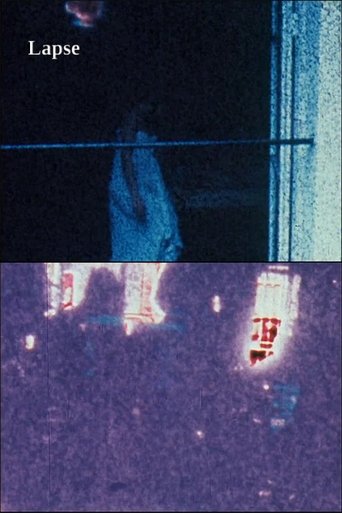
NRLapse is a research of a porous state of the cinematographic material which by "intra-photogrammic fragmentation" (Claudine Eizykman) and encrustation of grains unfolds in its crackling like a film in mesh.
Lapse
1981
 5.0
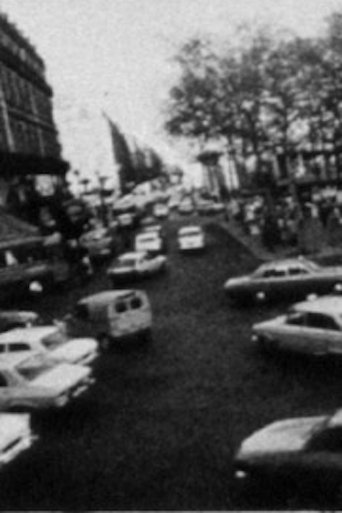
5.0A portion of a building, Maine Montparnasse, filmed from the 5th floor of a neighboring building according to architectural lines, is transformed by geometric movements more or less fast blurring our perception.
Maine Montparnasse
1972
 NR
NRThe same sequence is mingled with itself, calibrated according to curves that draw shapes on the blue or on the yellow, creating shifts in the thickness for a search of volumetric effects.
Moires Mémoires
1978
Film credits
Behind the camera
NRLapse is a research of a porous state of the cinematographic material which by "intra-photogrammic fragmentation" (Claudine Eizykman) and encrustation of grains unfolds in its crackling like a film in mesh.
Lapse
1981
5.0A portion of a building, Maine Montparnasse, filmed from the 5th floor of a neighboring building according to architectural lines, is transformed by geometric movements more or less fast blurring our perception.
Maine Montparnasse
1972
NRThe same sequence is mingled with itself, calibrated according to curves that draw shapes on the blue or on the yellow, creating shifts in the thickness for a search of volumetric effects.
Moires Mémoires
1978
 NR
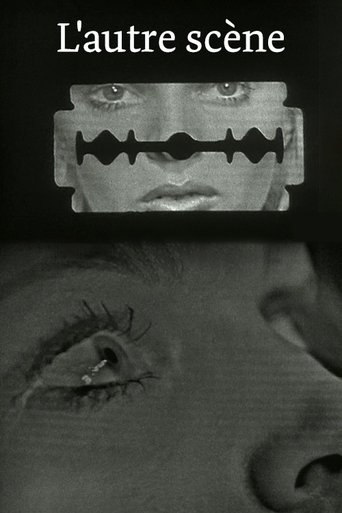
NRIn L'Autre Scène, the images and the sound material try to manifest the mechanism of an advertisement around the blade.
L'autre scène
1969
 4.8
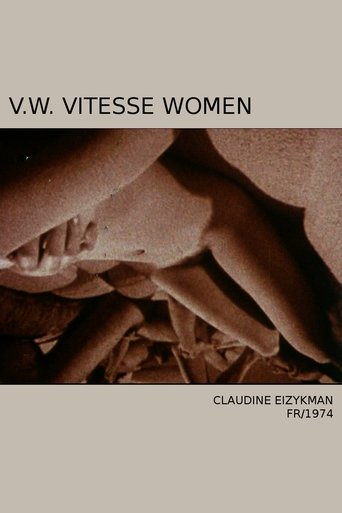
4.8Claudine Eizykman with VITESSE WOMEN, presents a torrent, dazzling film that intersects several sequences according to various rhythms, sometimes close to the perceptive thresholds, allowing the deregulation of the senses desired by Rimbaud, opening the way to another mode of perception. —Michel Nuridsany, Le Figaro
V.W. Vitesse Women
1974
 NR
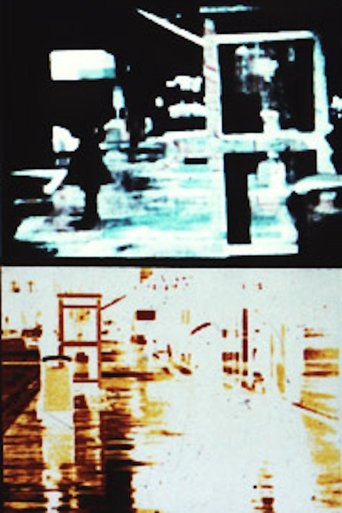
NRA single plan and its inverted double: a portion of the Avenue de l'Opera, cut out in the city where "the zoom gliding over this space, rather in a deserted space, which anticipates or participates in a disaster. "(Claudine Eizykman in Erres, No. 5, Toulouse, 1978).
Operneïa
1980
 NR
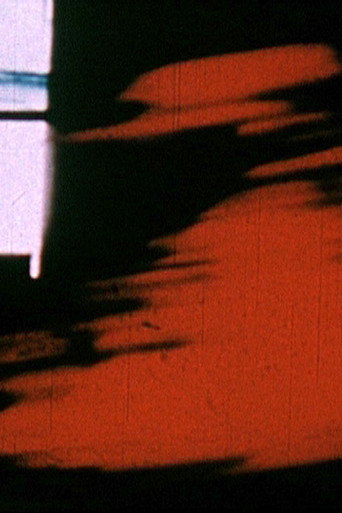
NRNo synopsis available yet.
Bruine Squamma 3ème partie : Séries Saturées
1977
 5.0
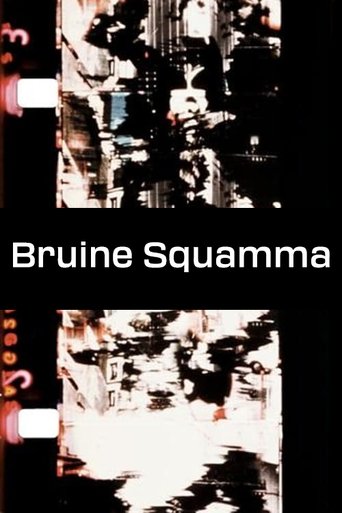
5.0"As Guy Fihman said, Bruine Squamma is also the story of a woman (N.K.) coming out of her house (Mozart House) speeding (tunnels) to join a man (Bléneau + cloud). And yet I wanted the shape of the film to be the furthest, the most secant, the most tenuous possible, a continuum of beats where fluctuate incessant metamorphoses swirls. I wanted to travel in a shaky and fixed form, states that continue to wither and get caught in unfixable beats." --Claudine Eizykman
Bruine Squamma
1977
No synopsis available yet.
Tours de Tours
1972
Claudine Eizykman repeats a few images - a woman on a stairway, the courtyard on an apartment building, a man at a desk - with variations, including superimposition. Sometimes the images appear in an abstracted version of color negative film, a mix of pale pinks and blacks, but more often her colors are relatively natural. Her superimpositions do not take the form of multiple exposures like Lebrat's, in which the light of each layer adds to the others and overall the image grow brighter. Instead she runs her film through the last so that dark areas in another : light is lost rather than gained.
Bruine Squamma 2ème partie : Séries Brutes
1977
This is the first of three parts in the two-hour version, that Eizykman considers each part able to stand on its own.
Bruine Squamma 1ère partie : Séries Mêlées
1977
No synopsis available yet.
Socialisme et Barbarie
1972