

Directing
Sky Hopinka
Born
1984-01-01 (42)
Place of birth
Ferndale, Washington, USA
Known for
Directing
Credits
38 titles
Sky Hopinka is currently an MFA candidate at the University of Wisconsin Milwaukee in film, video, and new genres. He is learning his tribal heritage language, Hočak, and working on various video projects that stem from ideas of contemporary indigenous linguistic concepts, identity, and representational imagery.
Known for
 NR
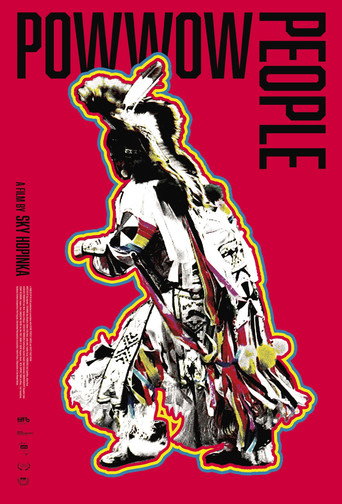
Powwow People is a portrait of a powwow and its participants.
Powwow People
2025
 NR
In Electric Snakes, Adrian C. Louis’s thirteenth poetry collection, no one is spared his critical eye, including himself. These powerful and often humorous poems cover myriad subjects: Trump, music, zombies, Jimmy John’s, childhood, caller ID, venetian blinds, magpies, love, and Mom.
Electric Snakes
2019
 5.0
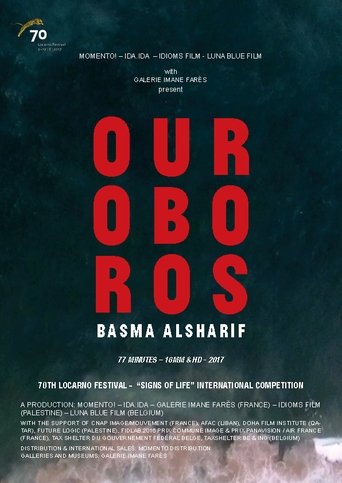
This film is an homage to the Gaza Strip and to the possibility of hope beyond hopelessness. Ouroboros, the symbol of the snake eating its tail, is both end and beginning: death as regeneration. A 74-minute experimental narrative film that turns the destruction of Gaza into a story of heartbreak, Ouroboros asks what it means to be human when humanity has failed. Taking the form of a love story, the film's central character is Diego Marcon, a man who embarks on a circular journey to shed his pain only to experience it, again and again. In the course of a single day, his travel fuses together Native American territories, the ancient Italian city of Matera, a castle in Brittany, and the ruins of the Gaza Strip into a single landscape.
Ouroboros
2017
 5.8
Filmed during the 2016 Standing Rock protests in South Dakota, Sky Hopinka's Dislocation Blues offers a portrait of the movement and its water protectors, refuting grand narratives and myth-making in favour of individual testimonials.
Dislocation Blues
2017
 5.5
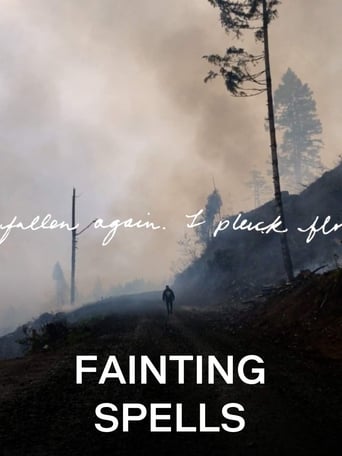
Told through recollections of youth, learning, lore, and departure, this is an imagined myth for the Xąwįska, or the Indian Pipe Plant - used by the Ho-Chunk to revive those who have fainted.
Fainting Spells
2018
 6.0
Against landscapes that the artist and his father traversed, audio of the father in the Ho-Chunk language is transcribed using the International Phonetic Alphabet, which tapers off, narrowing the distance between recorder and recordings, new and traditional, memory and song.
Jáaji Approx.
2015
Film credits
2020s · 2 titles
 5.0
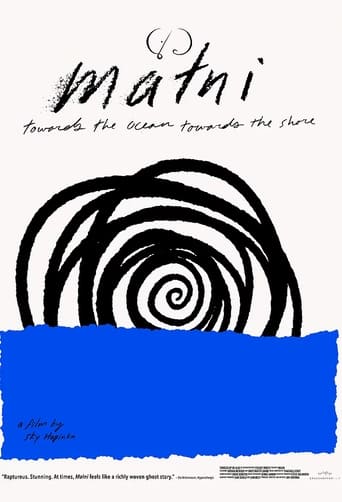
An experimental look at the origin of the death myth of the Chinookan people in the Pacific Northwest, following two people as they navigate their own relationships to the spirit world and a place in between life and death.
maɬni—towards the ocean, towards the shore
2020
 10.0
In late 2021, Cleveland’s baseball team was reborn as the Guardians. This documentary, directed by Lance Edmands, chronicles the saga of that name change, which has its roots in a forgotten legend named Louis Sockalexis, and the tragedy that enveloped his story more than a century ago.
Deerfoot of the Diamond
2022
Behind the camera
NRPowwow People is a portrait of a powwow and its participants.
Powwow People
2025
NRIn Electric Snakes, Adrian C. Louis’s thirteenth poetry collection, no one is spared his critical eye, including himself. These powerful and often humorous poems cover myriad subjects: Trump, music, zombies, Jimmy John’s, childhood, caller ID, venetian blinds, magpies, love, and Mom.
Electric Snakes
2019
5.8Filmed during the 2016 Standing Rock protests in South Dakota, Sky Hopinka's Dislocation Blues offers a portrait of the movement and its water protectors, refuting grand narratives and myth-making in favour of individual testimonials.
Dislocation Blues
2017
5.5Told through recollections of youth, learning, lore, and departure, this is an imagined myth for the Xąwįska, or the Indian Pipe Plant - used by the Ho-Chunk to revive those who have fainted.
Fainting Spells
2018
5.5Told through recollections of youth, learning, lore, and departure, this is an imagined myth for the Xąwįska, or the Indian Pipe Plant - used by the Ho-Chunk to revive those who have fainted.
Fainting Spells
2018
6.0Against landscapes that the artist and his father traversed, audio of the father in the Ho-Chunk language is transcribed using the International Phonetic Alphabet, which tapers off, narrowing the distance between recorder and recordings, new and traditional, memory and song.
Jáaji Approx.
2015
6.0Against landscapes that the artist and his father traversed, audio of the father in the Ho-Chunk language is transcribed using the International Phonetic Alphabet, which tapers off, narrowing the distance between recorder and recordings, new and traditional, memory and song.
Jáaji Approx.
2015
 7.0
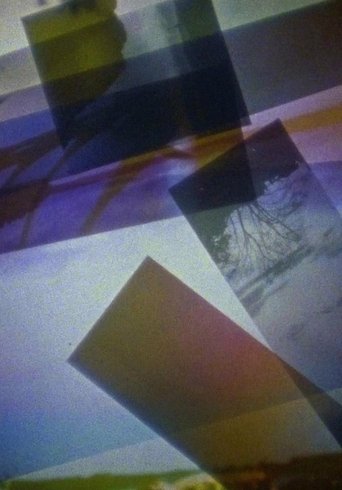
Images of landscapes are cut and fragmented, as a hand guides their shape and construction. The voice tells a story about a not too distant past, and elements of nostalgia are assembled in terms of lore.
Lore
2020
7.0Images of landscapes are cut and fragmented, as a hand guides their shape and construction. The voice tells a story about a not too distant past, and elements of nostalgia are assembled in terms of lore.
Lore
2020
5.0An experimental look at the origin of the death myth of the Chinookan people in the Pacific Northwest, following two people as they navigate their own relationships to the spirit world and a place in between life and death.
maɬni—towards the ocean, towards the shore
2020
5.0An experimental look at the origin of the death myth of the Chinookan people in the Pacific Northwest, following two people as they navigate their own relationships to the spirit world and a place in between life and death.
maɬni—towards the ocean, towards the shore
2020
5.0An experimental look at the origin of the death myth of the Chinookan people in the Pacific Northwest, following two people as they navigate their own relationships to the spirit world and a place in between life and death.
maɬni—towards the ocean, towards the shore
2020
 4.0
Featuring speakers of Chinuk Wawa, an Indigenous language from the Pacific Northwest, WAWA begins slowly, patterning various forms of documentary and ethnography. Quickly, the patterns tangle and become confused and commingled, while translating and transmuting ideas of cultural identity, language, and history.
Wawa
2014
 NR
For Dreaming the Dark: hands that see, eyes that touch, Ana Vaz invited artists and filmmakers whose work trust cinema’s capacity to transform relationships between the body and the camera to propose works that will engage with both perception and embodiment. Could cinema be an art of embodiment? By what rituals and actions could vision become tactile?
Dreaming In The Dark
2018
 7.0
The title of this video, taken from the texts of the architect Kengo Kuma, suggests a way of looking at everything as “interconnected and intertwined” - such as the historical and the present and the tool and the artifact. Images and representations of two structures in the Portland Metropolitan Area that have direct and complicated connections to the Chinookan people who inhabit(ed) the land are woven with audio tapes of one of the last speakers of chinuk wawa, the Chinookan creole. These localities of matter resist their reduction into objects, and call anew for space and time given to wandering as a deliberate act, and the empowerment of shared utility.
Anti-Objects, or Space Without Path or Boundary
2017
A deal between two men threatens to unravel as tensions rise in this contemporary look at Indigenous language and culture.
Trade
2013
 NR
An exploration of Fort Marion, the US fort where Native American prisoners of war were placed.
Cloudless Blue Egress of Summer
2019
Examines evolving regional traditions in country/Americana music across Oklahoma, Texas, Washington, and Louisiana.
When I Was a Waterfall
—
 5.0
An Unangam Tunuu elder describes cliffs and summits, drifting birds, and deserted shores. A group of students and teachers play and invent games revitalizing their language. A visitor wanders in a quixotic chronicling of earthly and supernal terrain. These visions offer glimpses of an island in the center of the Bering Sea.
Visions of an Island
2015
“In a single day, how many really nonsignifying fields do we cross? Very few, sometimes none. Here I am, before the sea; it is true that it bears no message."–Roland Barthes, Mythologies. Here you are before the trees traverses Indigenous presence in the Hudson River Valley, Wisconsin, and the areas in-between. Presented in three channels, each screen focuses on different homelands and their complex relationships with history, landscape, power and institutional means of oppression.
Here you are before the trees
2020
 6.0
A global portrait documenting the year's events, Cinetracts '20 features the work of an international lineup of 20 filmmakers. Capturing the zeitgeist in their own backyard, the artists' short films are the culmination of a year-long residency project.
Cinetracts '20
2020
This is a travelogue of sorts, as two friends whose lives intersect and diverge, look at the road and the vessels we use as means to traverse landscapes both contemporary and historical, and of the spirit and of the body.
Just a Soul Responding
—
This is a travelogue of sorts, as two friends whose lives intersect and diverge, look at the road and the vessels we use as means to traverse landscapes both contemporary and historical, and of the spirit and of the body.
Just a Soul Responding
—
 5.5
Texts and performances by the late Indigenous poet Diane Burns bind Sky Hopinka’s dazzling and mysterious blend of original and found sources, which continues the filmmaker’s exploration of language, storytelling, and transcendent ways of seeing.
I'll Remember You as You Were, Not as What You'll Become
2016
 NR
The last piece in the constellation of works including Kicking the Clouds, Mnemonics of Shape and Reason, and the text Hello Trouble as well as a series of etched photographs. A letter to a sibling, reflecting on our pasts and ourselves, and the parents and grandparents we knew and could never know. Told in three channels, the voices and the texts overlap and are distant, where a return to the road is a return to solitude as the memories of our grandmothers shape a present loneliness and a gathering of futures.
In Dreams and Autumn
2021
 6.0
The video traverses the history and the memory of a place shared by both the Ho-Chunk and the settler. Red Banks, a pre-contact Ho-Chunk village site near present day Green Bay, WI was also the site of Jean Nicolet’s landing, who in 1634 was the first European what is today Wisconsin. Images and text are used to explore this space alongside my grandmother’s recollections. Each serve as representations of personal and shared memory, as well as representations of practices and processes of remembrance.
Kunįkága Remembers Red Banks, Kunįkága Remembers the Welcome Song
2015
 NR
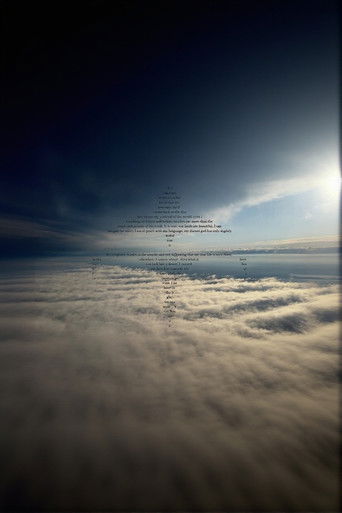
He Who Wears Faces on His Ears, Sky Hopinka (2025) The piece moves through Indigenous mythologies and the ways they echo across present-day landscapes, surfacing as quiet and persistent currents. Drawing from the Ho-Chunk story of Red Horn (also known as He Who Wears Faces on His Ears) it circles the thresholds between human and spirit realms, attending to the cyclical routes that pattern myth, memory, and language. Its gestures orbit cloud, text, and road, where language folds into atmosphere and re-emerges as shifting trace. Figures and places double and invert; images drift toward and away from legibility. Voices gather in a loose polyphony, touching the presences that shape how place is sensed and understood. What emerges is less a narrative than a return, an ongoing movement through stories that persist across time. Calligram text from Yves Bonnefoy’s The Arrière-Pays Music by Thad Kellstadt Additional Music by Wisconsin Dells Singers
He Who Wears Faces on His Ears
—
 NR
“Hopinka’s video Mnemonics of Shape and Reason (2021) traverses the memory of a place and space visited by the artist. Employing an original syntax of storytelling, the artist interweaves scattered and reassembled landscapes with layers of captured audio, poetic text, and music. A rhythmic account of the spiritual implications of colonial plunder, Hopinka’s fluid reflections transmute ideas of spiritual malleability tied to land, sky, sea, myth, place, and personhood.”
Mnemonics of Shape and Reason
2021
 NR
In this video drawing from Bob Dylan's song "Just Like Tom Thumb's Blues," layers of experiences circling loss and longing are overlaid between images of landscapes and movement. In the song, a stranger's listlessness and exhaustion are woven through and around Juarez, Mexico, and so, too, are these stories woven around original discontent and uncertainty as they move through an uneasy negotiation with the strangeness of the American pioneer spirit.
When you're lost in the rain
2019
This film is based on the tale of the four water spirits known as Island Weights. In the creation story of Ho-Chunk, the artist’s home nation, the spirits are placed at the Earth’s cardinal points, ensuring that its rotation is not chaotic. Ho-Chunk, now known as Wisconsin, translates as “People of the Great Voice” and stretches from Red Banks to Trempealeau, and from Minneapolis to Milwaukee. The film is divided into 5 parts — Wijirawaséwe (Island Weights), yoiréreginarere (the west), rek’úhuhíra (the south), hą́boguominàgara (the east), siniwagúreginągere (the north) — and follows an individual as he recounts his journey along the boundaries of Ho-Chunk lands. Visually, the viewer is drawn from the tumultuous waves of the Mississippi to serene forests, tranquil lakes, enormous shopping malls, earthen effigies and Ho-Chunk relics. The narrator is not only looking for the spirits, but also wishes to honor them.
The Island Weights
2021
 7.0
Moments of resistance are collapsed and woven together; from documentation of the Indigenous led occupation of Alcatraz, to the reclamation of Cahokia and the repatriation of the ancestors, to one’s reflections on their body as they exist in the world today, These are gestures that meditate on the carceral inception and nature of the reservation system, and where sovereignty and belligerence intersect and diverge.
Sunflower Siege Engine
2023
7.0Moments of resistance are collapsed and woven together; from documentation of the Indigenous led occupation of Alcatraz, to the reclamation of Cahokia and the repatriation of the ancestors, to one’s reflections on their body as they exist in the world today, These are gestures that meditate on the carceral inception and nature of the reservation system, and where sovereignty and belligerence intersect and diverge.
Sunflower Siege Engine
2023
 NR
An experimental documentary, Kicking the Clouds is centered on a 50-year-old cassette tape of a Pechanga language lesson between the director’s grandmother and great-grandmother, and contextualized by an interview with his mother in his Pacific Northwest hometown.
Kicking the Clouds
2022
 5.0
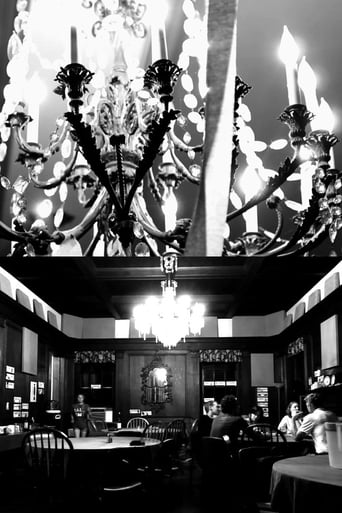
A group of students and teachers gather in an historical mansion in the woods of West Virginia for a week-long retreat in spoken Latin. I observe and I participate while navigating the errata with my camera.
Venite et Loquamur
2015