

Production
Eiko Kujo
Born — Died
1935-10-22 — 2014-04-30
Place of birth
Tokyo, Tokyo Prefecture, Japan
Known for
Production
Credits
25 titles
Kujyo Kyoko (October 22, 1935 - April 30, 2014) was a Japanese actress, theater, film producer from Azabu, Tokyo. The stage name of the actress was Eiko Kujo (Kujo Eiko). Real name is Eiko Terayama (Torayama Eiko). Husband Shuji Terayama. After graduating from Mihoda Gakuen Junior High School · High School, she debuted on the stage of Shochiku Opera Group under the name of Eiko Kujo. After that, she moved to Shochiku movie and appeared in Yoshitaro Nomura's film "Yellow cherries" (1960) etc etc. In 1967 Shuji Terayama, Tadanori Yokoo and others founded "Drama Laboratory / Ceiling Arts", and Kujo is responsible for the production. Also made a movie. In 1970 she got divorced from Terayama (…
Known for
 5.3
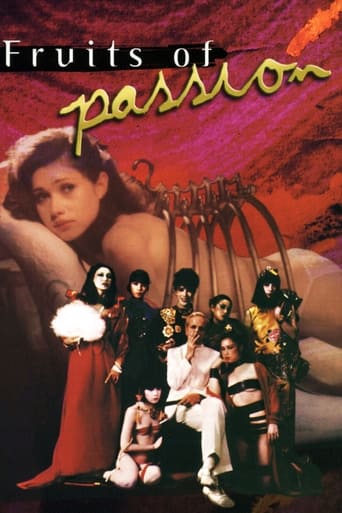
5.3A girl named O loves a rich, and much older man. She is subjected to a variety of humiliating experiences to prove her unconditional obedience to him in a Chinese brothel. A poor boy sees her and falls in love with her. To get the money needed to sleep with her, he takes part in rebellious acts.
Fruits of Passion
1981
 7.4
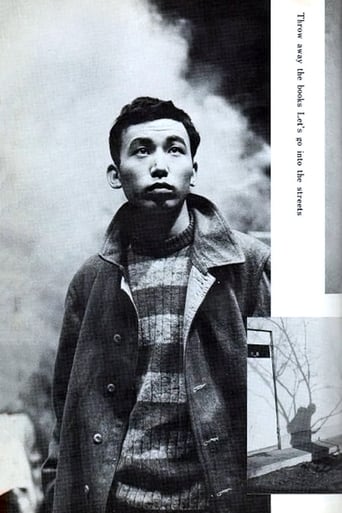
7.4An experimental, psychedelic odyssey through Japanese subculture experienced via the eyes of a disillusioned young man, who must contend with intense familial dysfunction, psychosexual alienation, and existentialist malaise.
Throw Away Your Books, Rally in the Streets
1971
 7.5
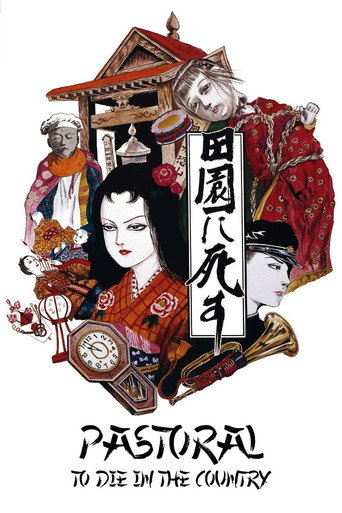
7.5A director faces creative block while working on his latest film – a reimagination of his adolescence growing up in a mountain village in rural Japan.
Pastoral: To Die in the Country
1974
 7.1
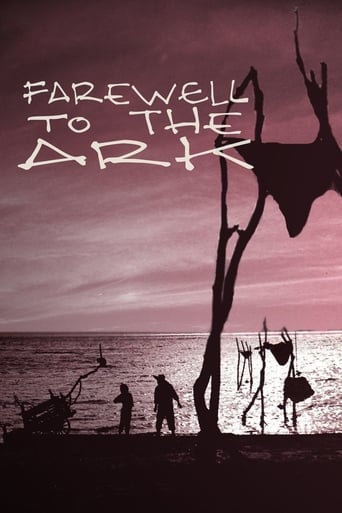
7.1A surreal, isolated village sees its inhabitants gradually leave behind their mutual traditions and superstitions as they leave for the city. Among them are two cousins who love each other and who get into a quarrel with other villagers.
Farewell to the Ark
1984
 7.0
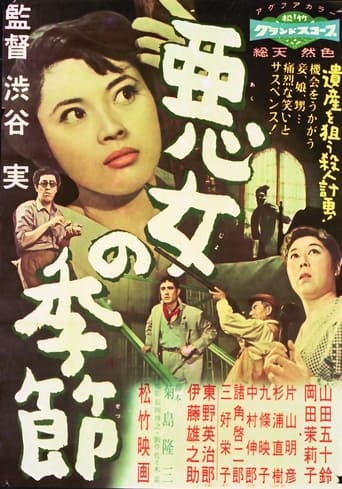
7.0The common-law wife and daughter of a wealthy old man plot to murder him and steal his fortune, with the help of their male acquaintances.
The Days of Evil Women
1958
 NR
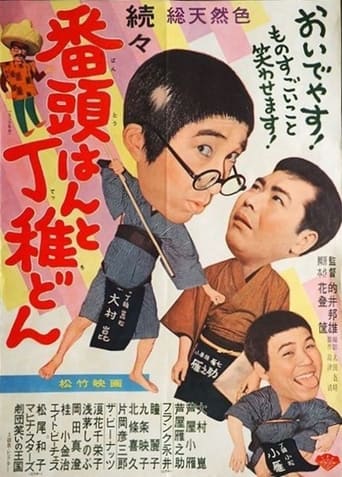
NR1961 Japanese movie
Zokuzoku bantōhan to detchidon
1961
Film credits
1960s · 9 titles
NR1961 Japanese movie
Zokuzoku bantōhan to detchidon
1961
 7.0
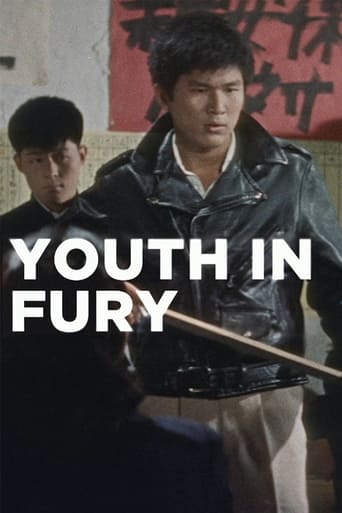
7.0Amidst the 1960 Japanese-American mutual security treaty, alienated young nihilist Takuya struggles to find his footing between his do-nothing wealth and the outer Western extremism as major student protests take place.
Youth in Fury
1960
 NR
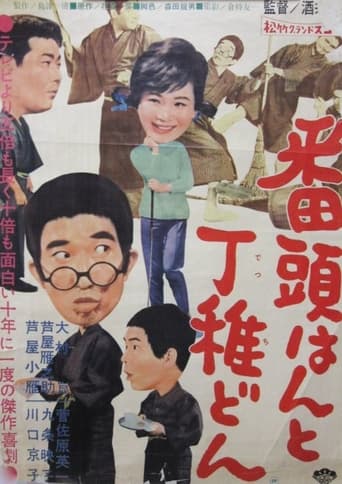
NR1960 Japanese movie
Bantōhan to detchidon
1960
 NR
NR1960 Japanese movie
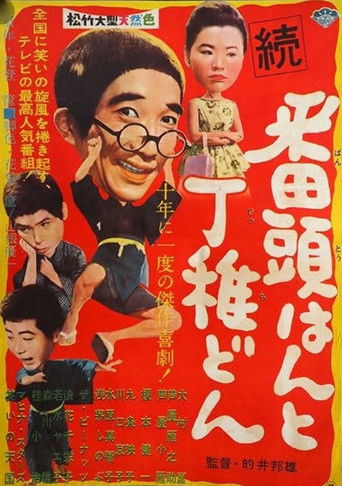
Zoku bantōhan to detchidon
1960
 NR
NRThe film is based on the 1959 hit song of the same name by the Three Cats.
Yellow Cherries
1960
 NR
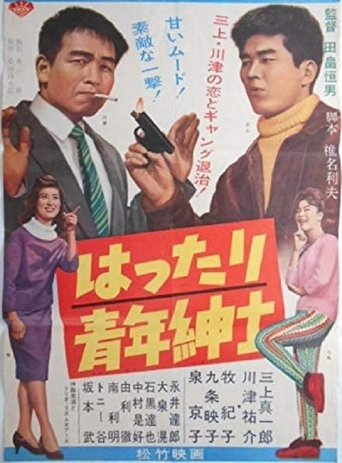
NRJapanese comedy film.
Hattari Seinen Shinshi
1961
 6.0
6.0An experimental fantasy short dedicated to questioning whether or not man is a prisoner of time.
The Cage
1964
 NR
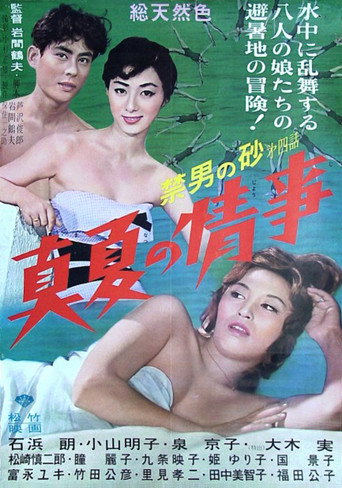
NRNo synopsis available yet.
Princess in Edo
1960
 NR
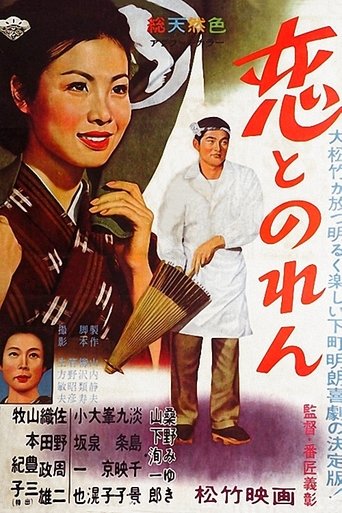
NROtami and daughter Yuri run the Matsuoka, a 150-year-old Japanese-style inn in Tokyo which they plan to renovate into a modern hotel before the ‘64 Tokyo Olympics. Maki, the son of the owner of the Benten Hotel, likes Yuri and wants to get closer to her. So, he asks Milton, an American exchange student, to stay at her inn so he can get closer to her. But Yuri is in love with Shin, a cook at her inn. And although Shin likes her too, the two are constantly bickering. Complicating matters more, is that every other available girl also likes Shin including Chikako, who lives at his boarding house, and Chikoma, who is a geisha. One day when Yuri gets a phone call, she suspects that her mother might be having an affair. But it turns out that Otami reunited with her old flame Tomo, who also used to work as a chef at the inn but left because he feared that their class backgrounds were too different. When Shin learns that Yuri is going to marry...will history repeat itself?
Love and the Shop Curtain
1961
1950s · 5 titles
7.0The common-law wife and daughter of a wealthy old man plot to murder him and steal his fortune, with the help of their male acquaintances.
The Days of Evil Women
1958
 NR
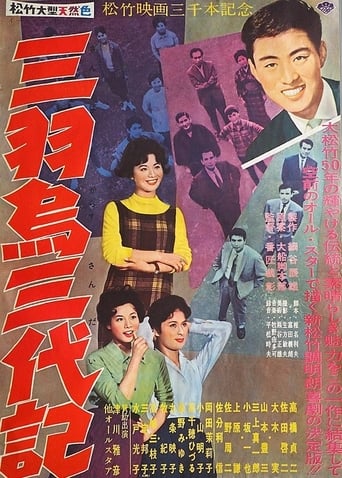
NRThe story tells of Tsuchiya, a university professor and a widower who is in love with a widow who runs a small restaurant, and his son is in love with a runaway girl who turns out to be the leader of a religious sect. Kusano is the henpecked proprietor of a rice biscuit shop who dreams of owning a bird and dog shop and his daughter is in love with a boarder, employed by the private detective agency searching for the runaway girl. The agency head has his own dream of arranging thirty marriages and has already accomplished twenty-seven. Tatsumi is a newspaper reporter who dreams of a big scoop to enable him to marry a girl TV producer and his friend a mountain climbing enthusiast who dreams of joining a Himalayan expedition but is opposed by his wife. His love of the mountains is shared by a boarder in their home and by a fishmonger's son.
Tokyo Omnibus
1959
 6.2
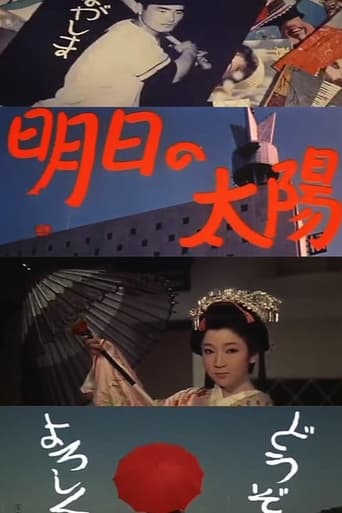
6.2Shochiku's up-and-coming stars take the stage in a series of short skits parodying popular films of the time.
Tomorrow's Sun
1959
 NR
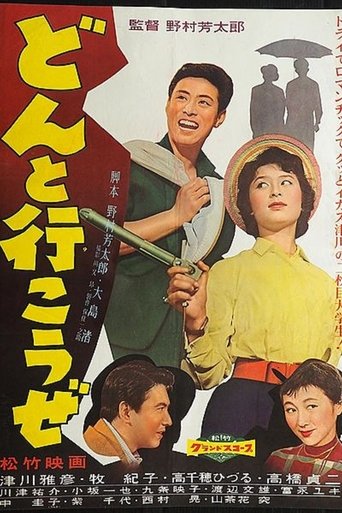
NRComedy about the trials and tribulations of youth.
Donto ikōze
1959
 NR
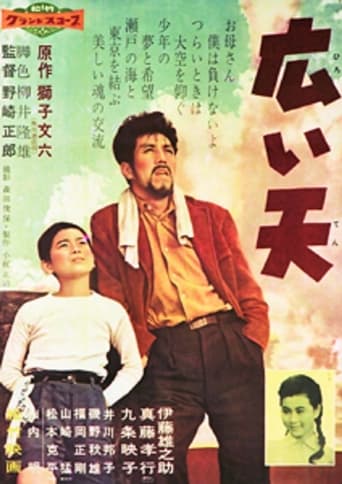
NRA boy, who is separated from his mother in an air raid, endures suffering and grief alongside his kind uncle.
Hiroi Ten
1959
Behind the camera
5.3A girl named O loves a rich, and much older man. She is subjected to a variety of humiliating experiences to prove her unconditional obedience to him in a Chinese brothel. A poor boy sees her and falls in love with her. To get the money needed to sleep with her, he takes part in rebellious acts.
Fruits of Passion
1981
7.4An experimental, psychedelic odyssey through Japanese subculture experienced via the eyes of a disillusioned young man, who must contend with intense familial dysfunction, psychosexual alienation, and existentialist malaise.
Throw Away Your Books, Rally in the Streets
1971
7.5A director faces creative block while working on his latest film – a reimagination of his adolescence growing up in a mountain village in rural Japan.
Pastoral: To Die in the Country
1974
7.1A surreal, isolated village sees its inhabitants gradually leave behind their mutual traditions and superstitions as they leave for the city. Among them are two cousins who love each other and who get into a quarrel with other villagers.
Farewell to the Ark
1984
 5.0
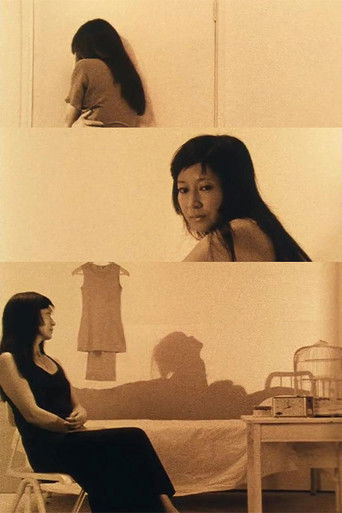
5.0As a family goes on with their day, the shadows on their walls lead a completely different life.
The Woman with Two Heads
1977
 4.0
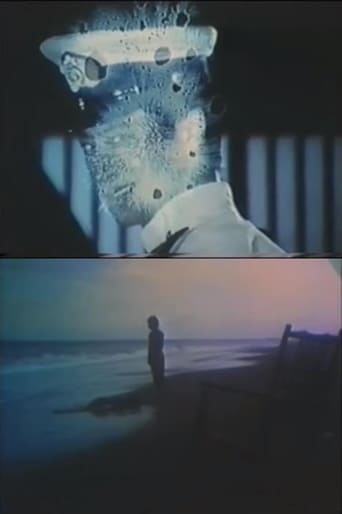
4.0Visions of characters by the seaside from one's memory are erased by the filmmaker's hand.
The Eraser
1977
6.0An experimental fantasy short dedicated to questioning whether or not man is a prisoner of time.
The Cage
1964
 4.2
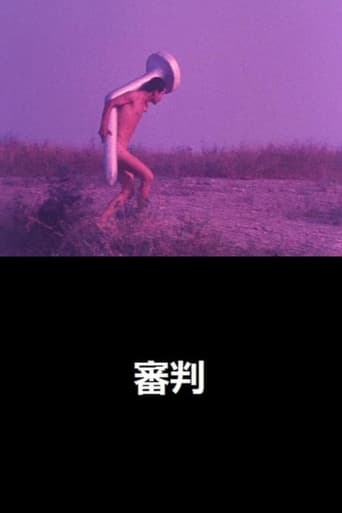
4.2A surrealist work of psychosexual intensity in which the motif of the nail remains deliberately ambiguous: endless hammering, a phallic presence, violent penetration and political rebellion.
The Trial
1975
Using bluescreen video techniques, Terayama playfully—and with a silent film theatricality—posits a series of postmodern vignettes featuring realities-within-realities as his protagonist attempts some kind of relationship with a nude woman on the screen-within-the-screen. In his struggles to “free” her, he exposes the absurd flimsiness, deceptiveness and mutability of both the cinema experience and our human dimension.
An Attempt to Describe the Measure of a Man
1978
In this Borgesian satire on knowledge and technology, bibliophilic desire leads to the construction of a pedal-powered reading machine. Resembling a combination of gymnastic contraption, printing press and early cinematic apparatus, the machine’s purpose remains ambiguous. And like this machine, Terayama’s film connects his work in poetry, motion picture and graphic design by weaving together printed and projected, still and moving images.
The Reading Machine
1977
 2.0
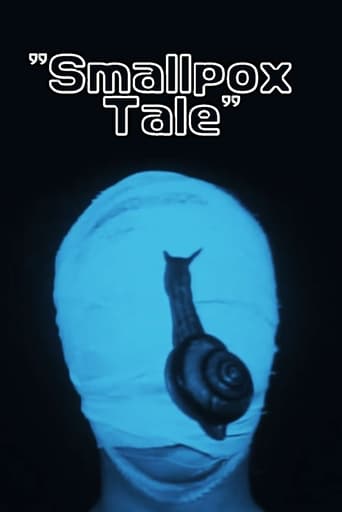
2.0The smallpox virus has created its own unique atmosphere in Terayama’s film where the skin of a bandaged adolescent and the surface of the filmic image are subjected to a bizarre ‘disturbance’ as snails cross the screen and nails are hammered into the skull of the ailing patient. Illness in this film is as much a psychic entity as a physical one and manifests itself in an array of theatrical tableaux from grotesque women rigorously brushing their teeth to a snooker game where the players in white face makeup behave like automata. A Tale of Smallpox uses a medical theme to chart the traumatic dream life of Terayama’s times, evincing deep-rooted concerns in the Japanese national psyche that hark back to the upheaval of Meiji modernisation and the devastation of World War Two.
Smallpox Tale
1976