
Directing
Józef Robakowski
Known for
Directing
Credits
44 titles
Known for
The film is an experimental documentary form, made using the stop-motion method. It is a single shot in total plan, showing an aerial view of the Balucki Market in Lodz. The realization method involved recording two frames every five seconds without changing the camera setting. From 'The Workshop of the Film Form'.
The Market
1970
A film sketch for a portrait of Stanislaw Ignacy Witkiewicz by multimedia artist Jozef Robakowski.
Witkacy
1981
 7.4
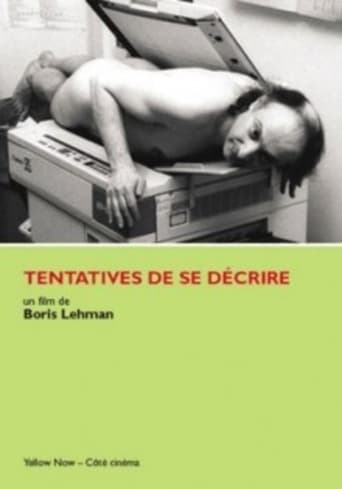
7.4Trying to describe oneself is a movie about representation. How it is possible, through film, to describe oneself and describe others. With the camera as mirror and third eye. At first, a collage-like combination of letter-writing, investigation and journey, something between documentary and feature film. Finally, a portrait of Boris Lehman from 1989 to 1995, part II of BABEL.
Trying to Describe Oneself
2005
 6.6
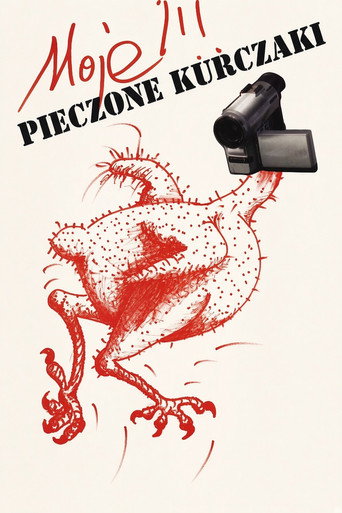
6.6A young married couple and their everyday hardships. Unemployed Wojtek decides to sell grilled chicken from a street stall. His wife Agata is a film student making a documentary on her husband.
My Roasted Chicken
2002
Experimental short film by Józef Robakowski & Ryszard Meissner.
After the Man
1970
This film belongs to a group of works that constitute manifestations of Robakowski’s engaged attitude towards social reality. Here, his interests focus on the rhythm of the city, the dynamics of passing cars, recorded with a fast-panning camera set at a single point. The video recording is accompanied by Robakowski’s voice, commenting off-screen, with constantly varying intonation and speed of uttering words, on what is happening in the street. The energy of the urban landscape is contrasted with the calmness of the space in which the camera is placed, which introduces a tension that reflects the author’s emotional state.
Cars, Cars!
1985
Film credits
2000s · 4 titles
7.4Trying to describe oneself is a movie about representation. How it is possible, through film, to describe oneself and describe others. With the camera as mirror and third eye. At first, a collage-like combination of letter-writing, investigation and journey, something between documentary and feature film. Finally, a portrait of Boris Lehman from 1989 to 1995, part II of BABEL.
Trying to Describe Oneself
2005
6.6A young married couple and their everyday hardships. Unemployed Wojtek decides to sell grilled chicken from a street stall. His wife Agata is a film student making a documentary on her husband.
My Roasted Chicken
2002
 NR
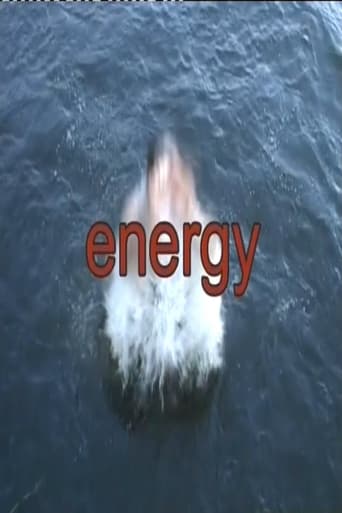
NRA highly expressive cry from the author of the manifesto, uttered while his head emerges from the water: "I should like to tell you all that art is energy!"
The Energy Manifesto!
2003
 NR
NRA fictional telephone conversation between the filmmaker and his mother on her birthday. A performative reflection on the relationship between public and private spheres in which the maker turns his back to the camera, simultaneously shielding himself, and engages the viewer in the (im)possibility of bridging the gap between the man and his mother. Capturing the intimate conversation seems to be a way of keeping a personal memory alive while it merges with the viewer’s memory.
Conversation With My Mother
2004
Behind the camera
The film is an experimental documentary form, made using the stop-motion method. It is a single shot in total plan, showing an aerial view of the Balucki Market in Lodz. The realization method involved recording two frames every five seconds without changing the camera setting. From 'The Workshop of the Film Form'.
The Market
1970
A film sketch for a portrait of Stanislaw Ignacy Witkiewicz by multimedia artist Jozef Robakowski.
Witkacy
1981
A film sketch for a portrait of Stanislaw Ignacy Witkiewicz by multimedia artist Jozef Robakowski.
Witkacy
1981
Experimental short film by Józef Robakowski & Ryszard Meissner.
After the Man
1970
This film belongs to a group of works that constitute manifestations of Robakowski’s engaged attitude towards social reality. Here, his interests focus on the rhythm of the city, the dynamics of passing cars, recorded with a fast-panning camera set at a single point. The video recording is accompanied by Robakowski’s voice, commenting off-screen, with constantly varying intonation and speed of uttering words, on what is happening in the street. The energy of the urban landscape is contrasted with the calmness of the space in which the camera is placed, which introduces a tension that reflects the author’s emotional state.
Cars, Cars!
1985
An experimental film by Józef Robakowski.
The Mechanical Cameraman
2003
 NR
NRThe equation of organically generated soundtrack with the video image.
Video Kisses
1992
Here, the line serves the purpose of manifesting the artists marked pursuit in the 1970s to “brighten various structures of discipline”.
The Idle Line
1992
The expression of the fascination of a problem of the ANGLES existance as of its kind intuitive geometry. The imaginary "MODEL" became the main subject of my artistic activity since many years. I am wondering, how the geometry, whose intentions are only practical purposes, can exist in art. I decided to create ANGLES as the energetic, cultural, sign in a form of a personal fetish, in order to make this problem important. I have a feeling, that having three angles at disposal, I will be able to put them, in any way, on the so called REALITY, but also on my biological motivity. Thanks to this operation, I want to cause a kind of the energetic tension. This TENSION should be an essence of this absurd work, i.e. the way of taking on its own articulation to the selfdependent existing matter.
The Energy Angles
2004
 3.3
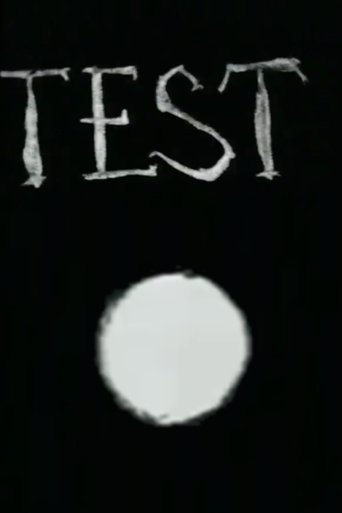
3.3White circles appear and disappear on a black surface.
Test I
1971
A performance staged during the WRO 96 festival, entitled Monitor Polski. The artist presented a device in which his body was a conductor through which electricity flowed, with the voltage gradually increased at the artist's request and with the participation of the audience. Interest in the phenomenon of energy and reflection on artistic creation had already appeared in Robakowski's earlier works, such as O palcach (About Fingers, 1982) and Moje Videomasochizmy (My Videomasochisms, 1989).
I Am Electric
2005
 NR
NRFrom 'The Workshop of the Film Form'. // In I'm Going Robakowski attempted an iconoclastic representation of the human body. He initiated a situation in which the materiality of film engaged in a dialogue with the materiality of the human body. Over the course of the film, the growing fatigue of the body carrying the film camera can be heard in the artist's voice and increasingly heavy breathing. The effect is that of the artist delving into his own materiality. The subject becomes merely a thing among things, a living fragment of the matter. With their attempt to shift the "film gaze" onto the machine (a non-anthropocentric point of perception of the world), Robakowski's Records most fully illustrate the antivoyeuristic ambitions of structuralist cinema, which aimed to subvert the traditional voyeuristic model.
I'm Going
1973
A swing imposes its rhythm, independent of the commentator; it forms the rhythmic score for the filmmaker's singing.
La - Lu
1985
The protagonist climbs the steps of a tower, loudly counting each step. The end of his climb also marks the end of the film.
Ide...
1973
An autobiographical, auto-therapeutic take, laced with deadpan humor. Here we learn about another identity crisis as Robakowski speaks of his fear of putting on his late grandfather’s glasses.
Glasses
1992
"...We came to the conclusion that the event recorded on the film does not have to be logically interpreted or named, because its meaning or even nonsense is justified by the fact that this phenomenon took place in a state of war."
War State
1982
From 'The Workshop of the Film Form'.
Exercise
1973
In Impulsators, Robakowski rejects the narrative film form and the representational function in the spirit of his radical manifestations against the illusory character of traditional film in the 1970s, such as e.g. Test, Test II. Like Impulsators, those non-camera films came into being as a result of perforation of film stock, which thus lets through in a desired way the light from the projector, which is in turn “fixed” on the retina and produces after-images. The movement of the film stock generates lively flicker targeted directly at the viewer’s body, above their imagination. Immersed in the trance rhythm, the impulsator becomes a new psychophysical force.
Impulsators
1999
 NR
NRA short showing Robakowski peeling and eating an apple, which itself produces the sound.
Acoustic Apple
1994
The film is dedicated to the memory of American surrealist Paul Sharits. Sharits sent Robakowski a film score with a proposal to use it in a film production, but the outbreak of martial law prevented the idea from being realised. The film was not made until 2004. The film was created as a result of a very rigorous, constructivist formal procedure, subordinating specific visual values to the melodic line of the musical piece. During the screening, as the notes of the composition are played, corresponding colours appear on the screen, eight colours that correspond to the notes of Fryderyk Chopin's Mazurka Op. 68 No. 4. The vibration of the changing colours and the radiance of the light create a coherent whole with the composer's nostalgic piece. The colourful fields pulsating to the rhythm of the music evoke, on the one hand, the American's structural cinema and, on the other, show the almost vital energy of colour.
Attention: Light!
2004
A film consisting of two shots recorded by a camera mounted on a lorry driving through Brooklyn, New York. At the beginning, in the foreground, we see a woman with a camera leaning against the roof of the vehicle, behind her the urban landscape of a run-down neighbourhood flashes by. The camera is mobile, gradually moving from the woman towards the direction of travel, showing an intersection of narrow streets and a cherry-coloured car, which it then follows. We hear the sounds of the surroundings and the creaking of the lorry. The title card appears, followed by the first notes of a song sung off-screen. The song hummed by the author is the pre-war tango ‘Pamiętasz Capri’ from Mieczysław Fogg's repertoire. It is the soundtrack for the second shot showing the viaduct with the expressway. The camera is positioned with its back to the direction of travel, and we see cars driving behind the lorry and heavy traffic on the street, reminiscent of classic shots from American films.
I Was a Boy in New York
1989
A sort of mini-biography of Robakowski.
About My Fingers
1982
Rectangles pulsate to an electronic sound loop.
Dynamic Rectangle
1972
NRA highly expressive cry from the author of the manifesto, uttered while his head emerges from the water: "I should like to tell you all that art is energy!"
The Energy Manifesto!
2003
Experimental short film by Józef Robakowski.
Videosong
1993
A resulted from Robakowski's re-editing the video Łódź Kaliska (1986) which he had shot together with Witold Krymarys. It was footage from an arranged situation: an unrestrained party shared by members of the eponymous group and artists associated with the Pitch-In Culture group. Robakowski and Krymarys filmed their walk through the city, which ended with a party at The Loft, an important informal meeting place on the map of avant-garde Łódź. Actions carried out in the streets, in the Balaton Bar and at The Loft were intended to form the visual element for a music video that was to accompany a popular song celebrating the working-class Łódź. A year later, Robakowski reinterpreted the video: he re-edited the recorded material, slowed it down, changed the colours, and chose Witold Lutosławski’s Symphony No. 3 as background music.
A Party with Lutoslawski
1987
The violent text resonates with the harsh energy of the music videos—for instance Powietrza (More Air), 1986, in which the band frantically cries for oxygen in then politically oppressive Poland. Robakowski’s recurrent appearance in his own videos could easily be seen as narcissistic, but his collaboration with Mowska demonstrates where his allegiances lie—with the rebellious spirits.
More Air!
1986
 NR
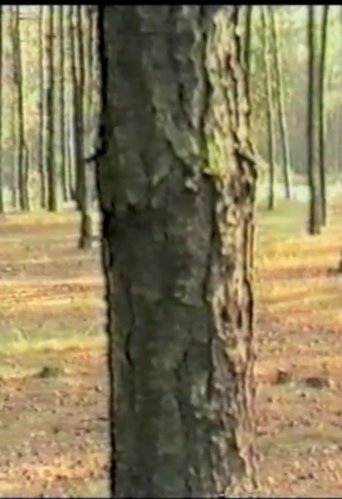
NRThe camera records the trajectory and dynamics of Robakowski's movement: he walks, turns and spins with his head up in the woods.
Dancing with Trees
1985
 NR
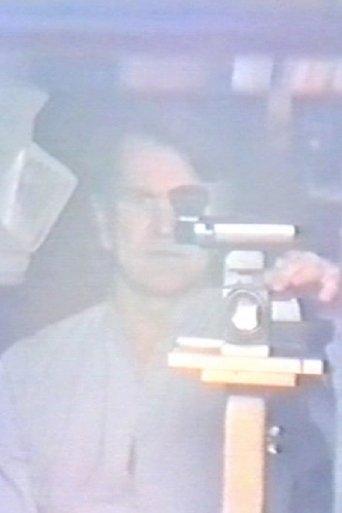
NRRobakowski directs the camera to zoom back and forth.
Nearer – Further
1985
 NR
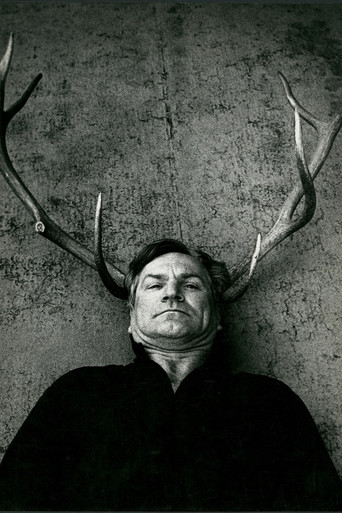
NROne of the three epitaphs that Robakowski created between 1966 and 1994, in an installation entitled Mr Deer (Self-Epitaph). The static shot from a bird’s-eye perspective shows the artist lying on a red and pink carpet with deer antlers attached to his head. Holding a burning cigarette in his mouth and exhaling smoke, the performer delivers a longer, unintelligible monologue; the words are gibberish, as if he were speaking with his mouth full. Robakowski commented on his self-epitaph: “Today, after almost thirty years, another epitaph appears, this time of ‘Mr Deer’, to personify the desire for arrogant gestures. It is meant to decry the miserable fate of the contemporary artist as a naïve fool, a bootlicker and creator of beautiful ideas and things…”.
Mr. Joseph's Last Will
1990
 NR
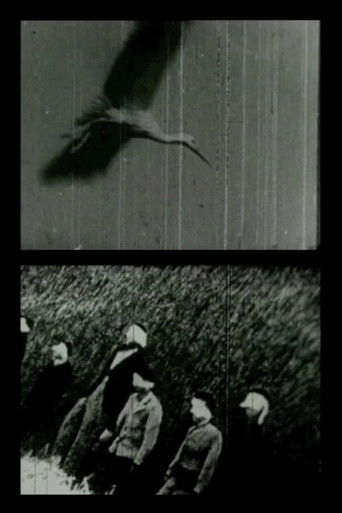
NRA short film by Józef Robakowski
6,000,000
1962
A film with Robakowski's characteristic single-shot structure, filmed from the perspective of a character who struggles to walk along a forest path, constantly complaining of nagging pain in his leg.
Ouch, My Leg Hurts
1990
No synopsis available yet.
Kino to potęga
1985
 NR
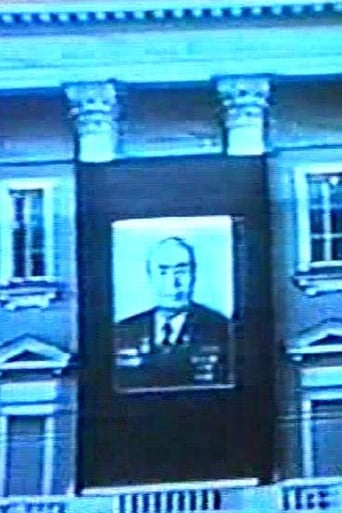
NRVideo: Józef Robakowski, music: Laibach Werkstatt, production: Exchange Gallery.
Brezhnev's Funeral
1982
 NR
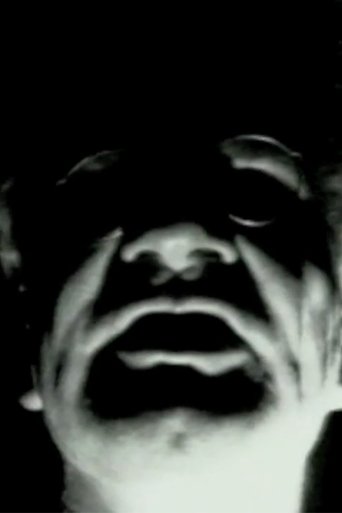
NRince the 1970s, Robakowski has been experimenting with the category of the author, transferring the authorship of his works onto the film camera. Implementing the strategy of biological-mechanical records, Robakowski continues his experiments, carried out since the 1970s, consisting in the transfer of the authorship of the film onto the film camera, as well as initiates relations between the mechanical medium and the human organism. On the one hand, it embraces collaboration, on the other, human struggle with the machine, extending from the “integration” of its logic and the attempts at its “anthropomorphisation”.
1, 2, 3, 4 (Light Cheeks)
1993
Abstract, geometric forms, became the basis for the most outstanding works of the avant-garde sculptor Katarzyna Kobro. With her 'Spatial Compositions', she created her own artistic language, with which she aroused a lot of criticism, which was based on the traditional assumption that a sculpture should be a compact, modelled mass. However, the task of "Composition" was to shape forms that were to come into being. Kobro, however, still wanted to change the space surrounding people with her own art.
The Spatial Compositions of Katarzyna Kobro
1971
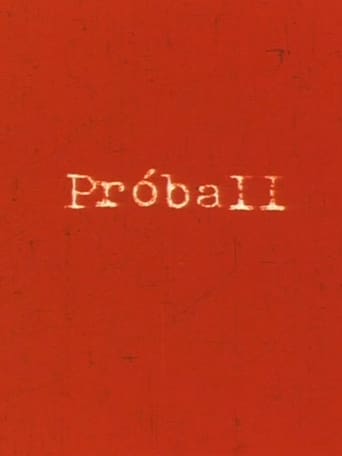 6.1
6.1A classical organ composition by Johann Sebastian Bach “stretches” a red strip of film; An exploration of musical memory.
An Attempt (Test II)
1971
In the sensual erotic piece, Robakowski revisits three experiences of homosexuality he encountered as a child, a teenager, and an adult. In an interview, he recalled the homosexual games he witnessed and participated in at an orphanage. He illustrated episodes of his intimate story with images from the lives of a gay couple he met in Montreal. Warm, soothing shots of the two men contrast with the artist's words, delivered in a blunt, intimidating voice.
Joseph's Touch
1989
Short tribute to Valie Export.
For Valie Export
2006
Experimental film by Józef Robakowski.
Yaga, Answer the Phone...
1992