
Camera
Johannes Hammel
Born
1963-01-01 (63)
Place of birth
Basel, Switzerland
Known for
Camera
Credits
9 titles
Known for
 7.0
"The Bathers" lets a woman happily bathing in a swimming pool disappear into the decomposing grains of the holiday film.
Die Badenden
2003
Johannes Hammel’s three-part Jour Sombre. He employed home movies shot in the 1950s and ’60s, of trips into the mountains, hikes across a glacier, alpine huts and lakes. We see groups of people spread out across the alpine landscape, in the background the dazzling white of the sun’s bright reflection from a glacier. Binoculars are pointed upward. At the sky, or the sun? Then a bubble appears, filling the picture and virtually swallowing the landscape. There’s a glare, as if a ray of light reflected from the ice were burning directly into the camera lens or our retina. Other bubbles follow, and the entire scene begins to boil. Heinz Ditsch’s soundtrack encourages this unsettling scenario. In the next part a swimming woman is harassed by nicks and scratches covering large areas, and what was originally idyllic becomes fractured and furrowed like dried clods of dirt. The soundtrack provides fitting crackling and scraping.
Jour Sombre
2011
 NR
This classic motif of a still life is followed by a home movie from the 1960s: A man and a woman are eating and drinking?a normal everyday activity, though there is nothing natural about it. Their movements are slowed down, the gloomy soundtrack accompanying these scenes implies a threat in the near future.
Last Supper
—
 8.0
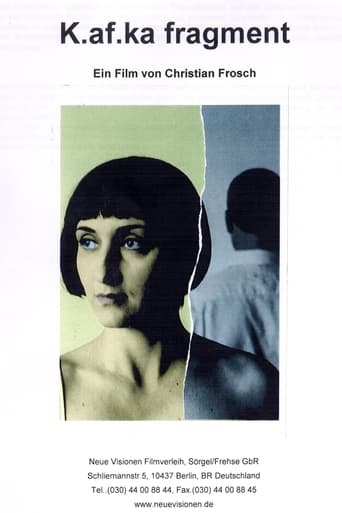
An experimental study about the love between Franz Kafka and his adored Felice based on their correspondence.
K.aF.ka - Fragment
2001
 NR
No synopsis available yet.
Family Portraits
2024
 2.0
The Lovers is the second part of a small trilogy, dealing with the extinction of memories. In the first part, The Bathers, the two protagonists were subject to the chemical decomposition of the film material. The Lovers, on the other hand, transforms an old Super8 porn film into both a tragic love story and a horror movie, and finally into a memory, that is being destroyed in the inner world. (Viennale 04)
The Lovers
2004
Behind the camera
7.0"The Bathers" lets a woman happily bathing in a swimming pool disappear into the decomposing grains of the holiday film.
Die Badenden
2003
Johannes Hammel’s three-part Jour Sombre. He employed home movies shot in the 1950s and ’60s, of trips into the mountains, hikes across a glacier, alpine huts and lakes. We see groups of people spread out across the alpine landscape, in the background the dazzling white of the sun’s bright reflection from a glacier. Binoculars are pointed upward. At the sky, or the sun? Then a bubble appears, filling the picture and virtually swallowing the landscape. There’s a glare, as if a ray of light reflected from the ice were burning directly into the camera lens or our retina. Other bubbles follow, and the entire scene begins to boil. Heinz Ditsch’s soundtrack encourages this unsettling scenario. In the next part a swimming woman is harassed by nicks and scratches covering large areas, and what was originally idyllic becomes fractured and furrowed like dried clods of dirt. The soundtrack provides fitting crackling and scraping.
Jour Sombre
2011
NRThis classic motif of a still life is followed by a home movie from the 1960s: A man and a woman are eating and drinking?a normal everyday activity, though there is nothing natural about it. Their movements are slowed down, the gloomy soundtrack accompanying these scenes implies a threat in the near future.
Last Supper
—
8.0An experimental study about the love between Franz Kafka and his adored Felice based on their correspondence.
K.aF.ka - Fragment
2001
NRNo synopsis available yet.
Family Portraits
2024
2.0The Lovers is the second part of a small trilogy, dealing with the extinction of memories. In the first part, The Bathers, the two protagonists were subject to the chemical decomposition of the film material. The Lovers, on the other hand, transforms an old Super8 porn film into both a tragic love story and a horror movie, and finally into a memory, that is being destroyed in the inner world. (Viennale 04)
The Lovers
2004
 3.7
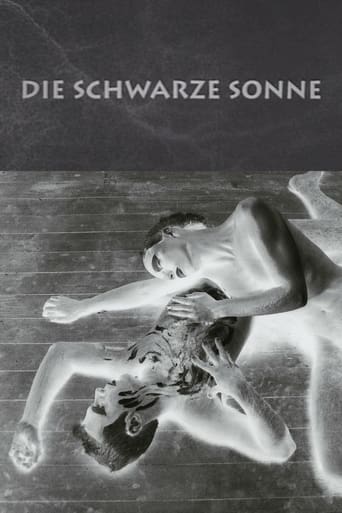
Based on Samuel R. Delany’s short novel ‘Aye, and Gomorrah...’, where the sci-fi premise of radiation-resistant state-neutered space travellers allows the author to explore androgyny, sexual identity, etc. Hammel uses Delany’s story to create a spookily beautiful world where asexual bodies live in the contradiction between their unarousable loneliness and desire for intimacy and contact.
The Black Sun
1992
3.7Based on Samuel R. Delany’s short novel ‘Aye, and Gomorrah...’, where the sci-fi premise of radiation-resistant state-neutered space travellers allows the author to explore androgyny, sexual identity, etc. Hammel uses Delany’s story to create a spookily beautiful world where asexual bodies live in the contradiction between their unarousable loneliness and desire for intimacy and contact.
The Black Sun
1992
 NR
Johannes Hammel's system of transitions subjects the human body to an extreme test: In constant danger of being swallowed up by a space ending in a black void or becoming stuck to a various surfaces and smacking sounds, an insect-like being undergoes a transformation which is beyond physical reason. In jittery montages the body (again Guszner) extricates itself in convulsive movements, though painlessly, to a point at which the ability of this (or one's own) body is barely believable.
MAZY-systems of transitions
—