
Directing
Pat Rocco
Born — Died
1934-02-09 — 2018-11-10
Known for
Directing
Credits
46 titles
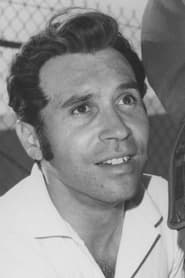
Pat Rocco was born Pasquale Vincent Serrapica in 1934 to an Italian-American family in Brooklyn, New York. Moved to California at 11, and "came out" at 13. Had his own radio show, in which he featured as a singer, at 16, and recorded an album at 19. As a charismatic, openly gay youth, Rocco pursued a career in entertainment in Southern California, singing and appearing on televised talent shows. Appeared in some early TV shows in the late 40s and early 50s, and created the part of Mack the Knife in the West Coast premiere of "The Threepenny Opera". A job as a photographer of male nude studies turned into a successful mail-order business of his own 8mm and 16mm films. Shown publicly for the …
Known for
 3.7
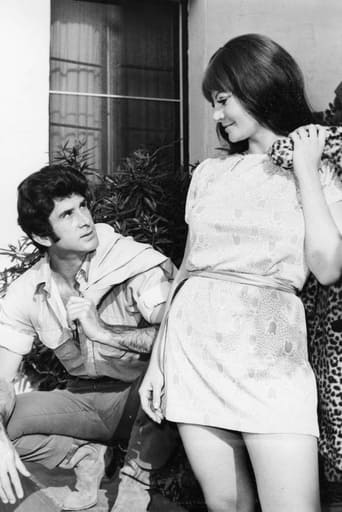
3.7A handsome male model is involved with a young lady, but begins to question his sexual orientation.
Someone
1968
 4.0
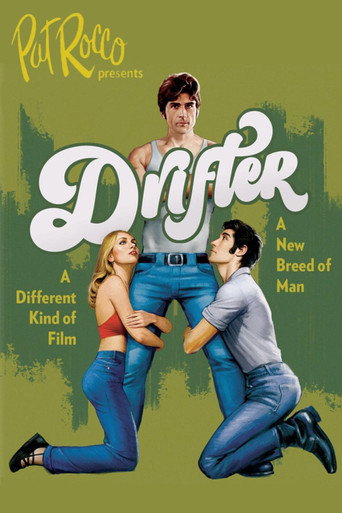
4.0A bisexual hustler tries to find a niche in the disparate worlds of straights and gays. He begins exploring relationships with members of both worlds, but his affairs do not go well.
Drifter
1975
 3.3
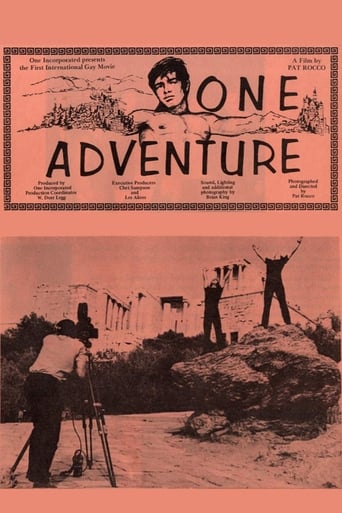
3.3ONE Adventure was filmed in 1972, only three years after the Stonewall riots. The trip was organized by One, Inc., whose members wanted a record of the trip to show audiences at home. The film chronicles a trip across Europe with Pat Rocco, Rev. Troy Perry, and six others.
ONE Adventure
1973
 3.7
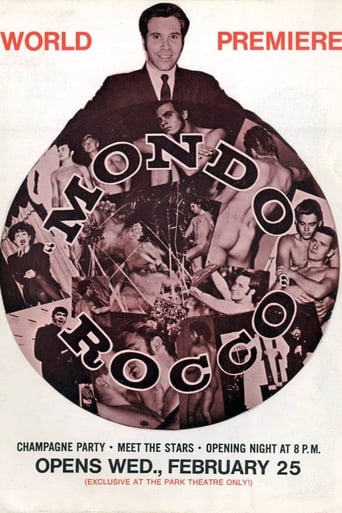
3.7Mondo Rocco is a collection of short films weaved together as it was seen in the Park Theater in Los Angeles in 1969/1970. Charming in their innocence, Rocco's films captured important moments in gay history and are an invaluable resource.
Mondo Rocco
1970
 2.0
2.0A southern California college jock spends a day at the beach with his best buddy. It turns from fraternal to romantic and sexual. Is it just a fantasy, though? If so, is it about to come true?
Autumn Nocturne
1968
Short film by Pat Rocco starring Joe Adair.
A Matter of Life
1968
Film credits
1970s · 4 titles
3.3ONE Adventure was filmed in 1972, only three years after the Stonewall riots. The trip was organized by One, Inc., whose members wanted a record of the trip to show audiences at home. The film chronicles a trip across Europe with Pat Rocco, Rev. Troy Perry, and six others.
ONE Adventure
1973
3.7Mondo Rocco is a collection of short films weaved together as it was seen in the Park Theater in Los Angeles in 1969/1970. Charming in their innocence, Rocco's films captured important moments in gay history and are an invaluable resource.
Mondo Rocco
1970
 4.5
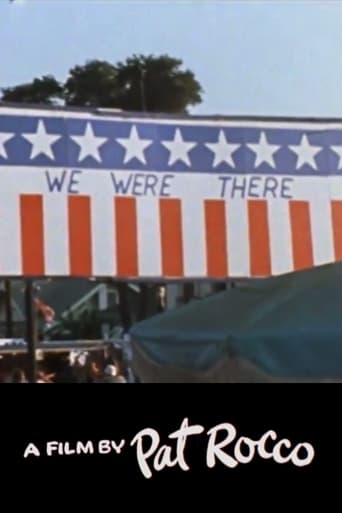
4.5A look at the Gay Pride Celebrations in San Francisco and L.A. in the US bicentennial year of 1976.
We Were There
1976
 NR
NRIn January 1970, filmmaker and activist Pat Rocco went to a gay nightclub on W. El Segundo Blvd. in the Gardena neighborhood of Los Angeles called Meat Market. They were advertising a nude dancing performance, which had become the focus of some controversy and led to arrests of the dancers and the manager. In the short documentary, Rocco arrives just as one of the arrests is taking place, capturing footage of the police leading the dancers, Michael Craig and Bob Philpot, out of the nightclub. His intention was to film the dance as evidence for a court case involving the dancer Bob Philpot—regarded as the first male nude go-go dancer—who had been previously arrested on obscenity charges. Rocco speaks with Walter Culpepper, a Los Angeles lawyer who represents the dancers charged and explains the nature of the charges. Patrons of Meat Market are interviewed and describe the dance performance as more artistic than sexual in nature.
Meat Market Arrest
1970
Behind the camera
3.7A handsome male model is involved with a young lady, but begins to question his sexual orientation.
Someone
1968
3.7A handsome male model is involved with a young lady, but begins to question his sexual orientation.
Someone
1968
4.0A bisexual hustler tries to find a niche in the disparate worlds of straights and gays. He begins exploring relationships with members of both worlds, but his affairs do not go well.
Drifter
1975
4.0A bisexual hustler tries to find a niche in the disparate worlds of straights and gays. He begins exploring relationships with members of both worlds, but his affairs do not go well.
Drifter
1975
3.3ONE Adventure was filmed in 1972, only three years after the Stonewall riots. The trip was organized by One, Inc., whose members wanted a record of the trip to show audiences at home. The film chronicles a trip across Europe with Pat Rocco, Rev. Troy Perry, and six others.
ONE Adventure
1973
3.7Mondo Rocco is a collection of short films weaved together as it was seen in the Park Theater in Los Angeles in 1969/1970. Charming in their innocence, Rocco's films captured important moments in gay history and are an invaluable resource.
Mondo Rocco
1970
2.0A southern California college jock spends a day at the beach with his best buddy. It turns from fraternal to romantic and sexual. Is it just a fantasy, though? If so, is it about to come true?
Autumn Nocturne
1968
Short film by Pat Rocco starring Joe Adair.
A Matter of Life
1968
 8.2
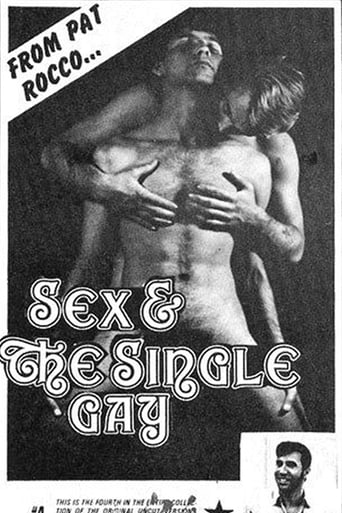
8.2A collection of short films by Pat Rocco.
Sex and the Single Gay
1970
8.2A collection of short films by Pat Rocco.
Sex and the Single Gay
1970
 NR
NRNude sunbathing.
Sunny Boys
1968
 10.0
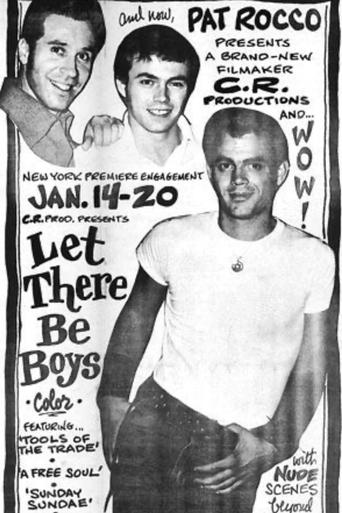
10.0Compilation of loops produced by C.R. Productions, a company created by Chuck Robinson, a protégé of Pat Rocco’s who starred in several of his loops as Brian Reynolds. Compilation of loops.
Let There Be Boys
1969
4.5A look at the Gay Pride Celebrations in San Francisco and L.A. in the US bicentennial year of 1976.
We Were There
1976
 NR
NRA nude solo ballet performed in the streets of LA in the early morning hours.
Breath of Love
1969
 3.0
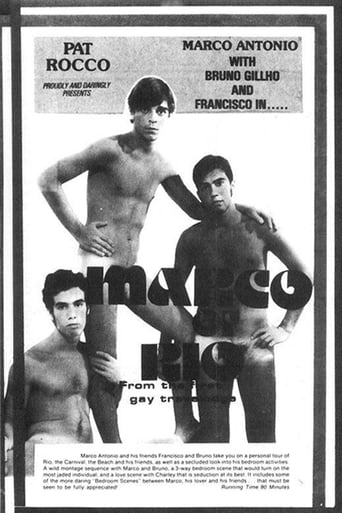
3.0Marco Antonio and his friends Francisco and Bruno take you on a perosnal tour of Rio, the Carnival, the Beach and his friends, as well as a secluded look into his bedroom activities.
Marco of Rio
1969
3.0Marco Antonio and his friends Francisco and Bruno take you on a perosnal tour of Rio, the Carnival, the Beach and his friends, as well as a secluded look into his bedroom activities.
Marco of Rio
1969
3.0Marco Antonio and his friends Francisco and Bruno take you on a perosnal tour of Rio, the Carnival, the Beach and his friends, as well as a secluded look into his bedroom activities.
Marco of Rio
1969
 1.0
1.0Directed by pioneering gay documentary and erotica filmmaker Pat Rocco, Changes is a profile of Jennifer Michaels, a trans person living in Los Angeles.
Changes
1970
 1.0
1.0"In his first venture into serious ballet, Pat Rocco presents Brian Reynolds in a soul-searching story of birth, life, and love. With exceptionally beautiful choreography by Lynn MacMurrey, we see Brian "being born" in an array of multi-colored patterns, finally bursting forth into life by discovering himself alone on top of a mountain. Upon seeing himself for the first time in a clear mountain pool, he becomes keenly aware of his loneliness and ventures forth in search of love. Dancing nude up and down streets, he finally comes upon Erik Carlson. Immediately the scene changes to an all black background as the two perform a pas de deux of love and lovemaking that must be seen to be truly appreciated. This is the first known nude ballet performed by two males that has ever been presented on the screen - and it promises to be one of the most successful films to ever come from Pat Rocco's Bizarre Productions."
A Breath of Love
1971
1.0"In his first venture into serious ballet, Pat Rocco presents Brian Reynolds in a soul-searching story of birth, life, and love. With exceptionally beautiful choreography by Lynn MacMurrey, we see Brian "being born" in an array of multi-colored patterns, finally bursting forth into life by discovering himself alone on top of a mountain. Upon seeing himself for the first time in a clear mountain pool, he becomes keenly aware of his loneliness and ventures forth in search of love. Dancing nude up and down streets, he finally comes upon Erik Carlson. Immediately the scene changes to an all black background as the two perform a pas de deux of love and lovemaking that must be seen to be truly appreciated. This is the first known nude ballet performed by two males that has ever been presented on the screen - and it promises to be one of the most successful films to ever come from Pat Rocco's Bizarre Productions."
A Breath of Love
1971
 NR
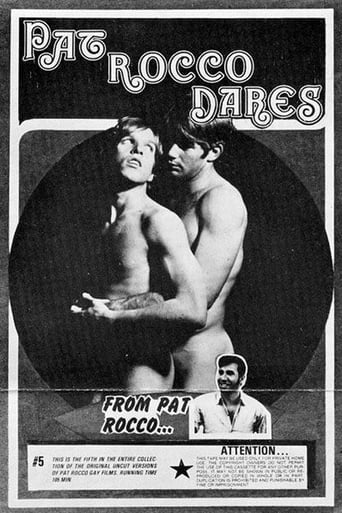
NRA wild series of daring "male" movies including "Marco of Rio," filmed entirely in Brazil!!
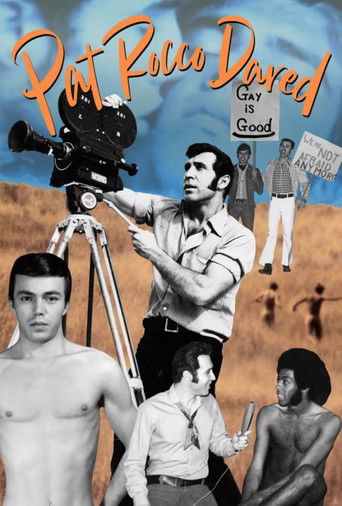
Pat Rocco Dares
1969
NRA wild series of daring "male" movies including "Marco of Rio," filmed entirely in Brazil!!
Pat Rocco Dares
1969
 NR
NRJones strips off clothes while pantomiming walking down Sunset Boulevard. Overlaid with film elements of the Sunset Strip signs in Hollywood, California.
Strip Strip
1968
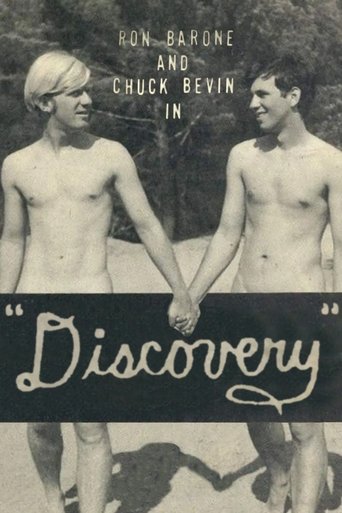 2.8
2.8Two young men meet and fall in love in Disneyland.
Ron and Chuck in Disneyland Discovery
1969
Pioneering LGBTQ activist and local Los Angeles filmmaker Pat Rocco (1934-2018) is singularly legendary for using his camera not just to joyfully portray gay love, but also as a tool of direct action in documenting the gay revolution of the late 1960s. Among his myriad community efforts includes the founding of S.P.R.E.E., or Society of Pat Rocco Enlightened Enthusiasts, which grew into a major hub and support system for entertainment artists of various stripes. This 30-minute documentary highlights S.P.R.E.E.’s various activities, beginning with a charitable Christmas party and culminating with five kaleidoscopic, orgy-filled minutes of the S.P.R.E.E. drama workshop’s original production of “Myra Breckinb*tch.”
S.P.R.E.E. on a Spree
1970
 NR
NRPat Rocco's fictionalized document of the 1977 Christopher Street West carnival and parade.
Silent No More
1977
NRPat Rocco's fictionalized document of the 1977 Christopher Street West carnival and parade.
Silent No More
1977
We go "around the world" of naked Tom in this motion picture which is also available in the Super 8 size.
The Anatomy of Tom
—
NRIn January 1970, filmmaker and activist Pat Rocco went to a gay nightclub on W. El Segundo Blvd. in the Gardena neighborhood of Los Angeles called Meat Market. They were advertising a nude dancing performance, which had become the focus of some controversy and led to arrests of the dancers and the manager. In the short documentary, Rocco arrives just as one of the arrests is taking place, capturing footage of the police leading the dancers, Michael Craig and Bob Philpot, out of the nightclub. His intention was to film the dance as evidence for a court case involving the dancer Bob Philpot—regarded as the first male nude go-go dancer—who had been previously arrested on obscenity charges. Rocco speaks with Walter Culpepper, a Los Angeles lawyer who represents the dancers charged and explains the nature of the charges. Patrons of Meat Market are interviewed and describe the dance performance as more artistic than sexual in nature.
Meat Market Arrest
1970
Two magnetic personalities meet for the first time in this Bizarre Production as Voldemar teams up with newcomer Tiny Tom (in his very first film) in an appealing story that you will want to watch over and over .....
A Very Special Friend
1968
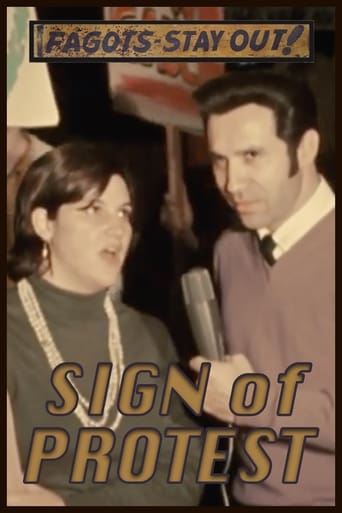 NR
NRThis short documentary focuses on protests surrounding a homophobic sign that hung behind the bar of Barney's Beanery in West Hollywood for many years.
Sign of Protest
1970
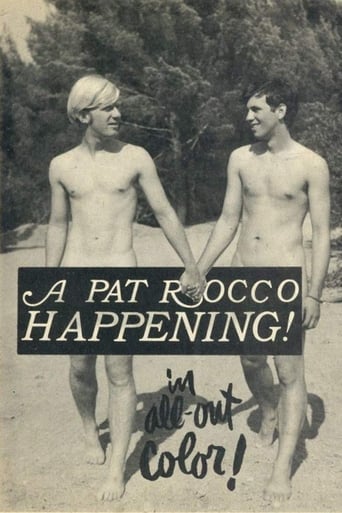 NR
NRA collection of short films by Pat Rocco.
A Pat Rocco Happening!
1968
NRA collection of short films by Pat Rocco.
A Pat Rocco Happening!
1968
 5.0
5.0During a 48-hour pass, a cute young navy recruit gets more than he bargains for when he stays at a cheap hotel.
Get That Sailor
1973
 NR
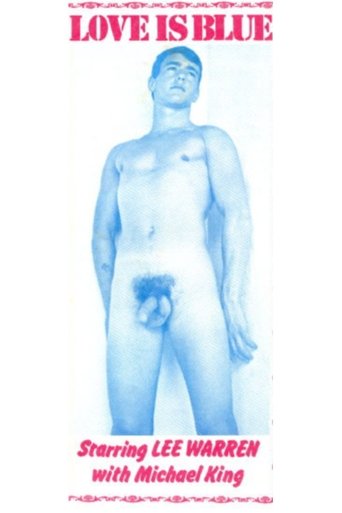
NRMike is discovered alone on a lonely beach. His mood is quiet and pensive as he is surprised and disturbed by a young man (Lee) who walks up next to him and smiles down. They boys greet and walk to a more secluded section of the beach. Lee persuades Mike to remove his clothes and they both stretch out and relax in the sun. Now Lee makes a strange advance as he puts his hand on Mike's bare chest and starts to rub downward. Mike grabs Lee's hand and throws it off – realizing the homosexual advances Lee was about to make – and rises to dress and leave. Lee looks sullen and depressed as he realizes he made the wrong move and he walks behind a rock to watch Mike dress. But Mike sees Lee. He sees the yearning expression on his face. A strange sensation comes over Mike. He walks behind the rock with Lee and looks deep into his eyes. A silent message is conveyed between the two boys. Slowly, Lee kneels in front of Mike, and Mike allows him to perform a sex act on him.
Love Is Blue
1968
 8.0
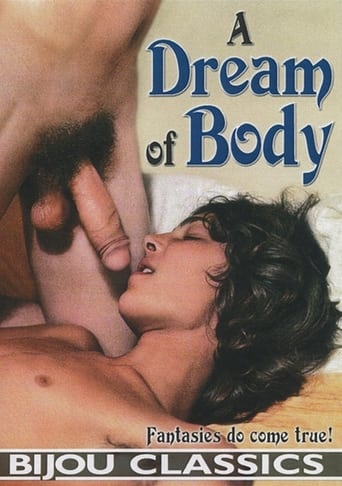
8.0This is the story of Ted, a dreamer whose secret desires come to life as he encounters a variety of men and escapes into elaborate sexual fantasies.
A Dream of Body
1972
 8.2
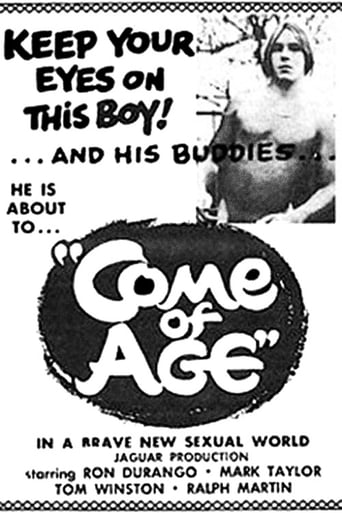
8.2When a pretty, young country boy with long, golden hair and bronze colored skin arrives in Hollywood from Nebraska, he is quickly introduced to the joy of gay sex during a series of highly capricious encounters involving other sexy young men.
Come of Age
1971
 8.2
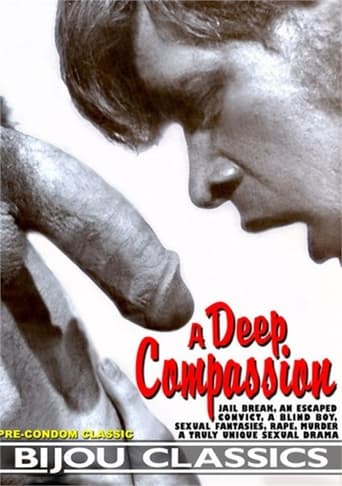
8.2Step into a rose-colored world of a young blind boy who lives in a fantasy of beauty and sex until an escaped convict turns that world upside-down.
A Deep Compassion
1972
8.2When a pretty, young country boy with long, golden hair and bronze colored skin arrives in Hollywood from Nebraska, he is quickly introduced to the joy of gay sex during a series of highly capricious encounters involving other sexy young men.
Come of Age
1971
8.2Step into a rose-colored world of a young blind boy who lives in a fantasy of beauty and sex until an escaped convict turns that world upside-down.
A Deep Compassion
1972