

Directing
Robert Huot
Place of birth
Staten Island, NY
Known for
Directing
Credits
43 titles
Some painters and sculptors approach our art with a kind of chauvinistic arrogance. Their use of film, however interesting as documentation, is fundamentally exploitative. Robert Huot has been one of the most inventive and rigorous of the younger generation of radical painters. He brings the same attributes to film, along with an inquisitiveness that is by no means cautious. He tries, not to exploit film, but to find out what film is. Huot's films will seem 'simple' to many. In fact, he is doing basic work that we film-makers ought to have done for ourselves decades ago, work that is both an addition and a reproach to film art.
Known for
 6.4
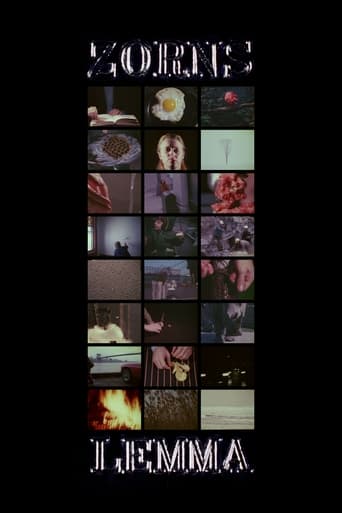
6.4Zorns Lemma is a 1970 American structural film by Hollis Frampton. It is named after Zorn's lemma (also known as the Kuratowski–Zorn lemma), a proposition of set theory formulated by mathematician Max Zorn in 1935. Zorns Lemma is prefaced with a reading from an early grammar textbook. The remainder of the film, largely silent, shows the viewer an evolving 24-part "alphabet" (where i & j and u & v are interchanged) which is cycled through, replaced and expanded upon. The film's conclusion shows a man, woman and dog walking through snow as several voices read passages from On Light, or the Ingression of Forms by Robert Grosseteste.
Zorns Lemma
1970
 7.0
7.0Jonas Mekas assembles 160 portraits, appearances, and fleeting sketches of underground and independent filmmakers captured between 1955 and 1996. Fast-paced and archival in spirit, the film celebrates the avant-garde as its own “nation of cinema,” a vital community existing outside the dominance of commercial film.
Birth of a Nation
1997
 NR
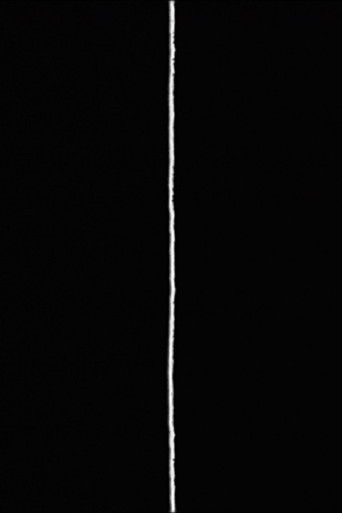
NRLEADER and SCRATCH are extensions of Huot's early interest in minimalism. They are successful in reducing the number of filmic variables so completely that essential qualities and potentials of the materials of film can be felt. While SCRATCH is nothing more than eleven minutes of dark leader with a continuous handmade scratch, the resulting imagery varies a good deal, depending on how deeply Huot dug into the emulsion: when the scratch is shallow, for example, it seems to bead and move up through the image; when the scratch is deep, it seems to remain within the frame, vibrating horizontally.
Scratch
1967
 NR
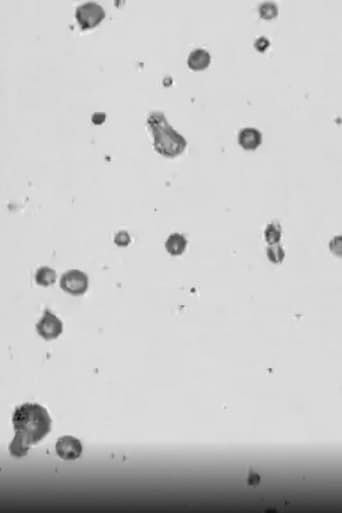
NR“An extraordinary ebbing and flowing, dotting and pulsing ‘abstract’ field film. The filmmaker-painter Huot painted this film by spray painting a 12 minute length of clear film. When projected this single gesture contains a fascinating atomized space.”—Michael Snow
Spray
1967
 5.0
5.0In this "fourteen-part drill for the camera," Frampton created a portrait gallery of his art-world friends engaging in a variety of ordinary activities.
Manual of Arms
1966
"Beautiful Movie" is a filmic cameo during which a passage of blue film leader and clear film painted red introduces a lovely image of a woman, naked from the waist up, sitting on a brass bed, combing her hair. When we first see the woman, she is well out of focus, but during the following minute or so she slowly becomes clear. As soon as the image is completely clear, however, Huot dissolves to an image of himself sitting in a similar position, combing his own hair. This image quickly goes out of focus, and the viewer sees the original passage of leader and painted film, this time in reverse, forming the other half of a filmic frame. "Beautiful Movie" is a quietly feminist work; Huot revised the traditional tendency to worship female beauty by suggesting that, yes women are lovely, but there is no physical reason why men cannot be lovely in the same way.—Scott MacDonald, “The Films of Robert Huot: 1967 to 1972”, Quarterly Review of Film Studies, Summer 1980.
Beautiful Movie
1974
Film credits
Behind the camera
NRLEADER and SCRATCH are extensions of Huot's early interest in minimalism. They are successful in reducing the number of filmic variables so completely that essential qualities and potentials of the materials of film can be felt. While SCRATCH is nothing more than eleven minutes of dark leader with a continuous handmade scratch, the resulting imagery varies a good deal, depending on how deeply Huot dug into the emulsion: when the scratch is shallow, for example, it seems to bead and move up through the image; when the scratch is deep, it seems to remain within the frame, vibrating horizontally.
Scratch
1967
NR“An extraordinary ebbing and flowing, dotting and pulsing ‘abstract’ field film. The filmmaker-painter Huot painted this film by spray painting a 12 minute length of clear film. When projected this single gesture contains a fascinating atomized space.”—Michael Snow
Spray
1967
"Beautiful Movie" is a filmic cameo during which a passage of blue film leader and clear film painted red introduces a lovely image of a woman, naked from the waist up, sitting on a brass bed, combing her hair. When we first see the woman, she is well out of focus, but during the following minute or so she slowly becomes clear. As soon as the image is completely clear, however, Huot dissolves to an image of himself sitting in a similar position, combing his own hair. This image quickly goes out of focus, and the viewer sees the original passage of leader and painted film, this time in reverse, forming the other half of a filmic frame. "Beautiful Movie" is a quietly feminist work; Huot revised the traditional tendency to worship female beauty by suggesting that, yes women are lovely, but there is no physical reason why men cannot be lovely in the same way.—Scott MacDonald, “The Films of Robert Huot: 1967 to 1972”, Quarterly Review of Film Studies, Summer 1980.
Beautiful Movie
1974
 NR
NRCostumed Capers...Fetish and Fantasy...Punk Pleasure...a must for those who enjoy erotic humor.
Erotic Trilogy
1980
 NR
NRFilm by Robert Huot.
Rolls: 1971
1971
 NR
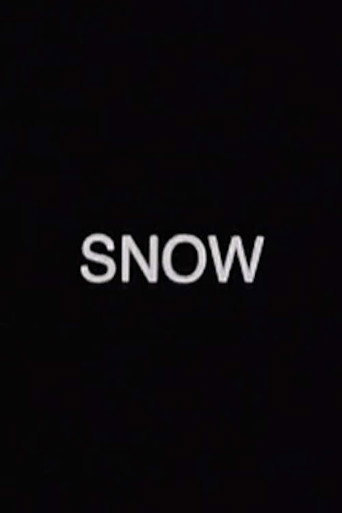
NRA section from ROLLS: 1971, which I feel stands well on its own. The continuous field of falling snow appears to break into three planes or zones of different density and speed. I think of Snow in some sense as nature's answer to SPRAY. - Robert Huot
Snow
1971
 NR
NRNo synopsis available yet.
Super 8 Diary - 1984
1984
 NR
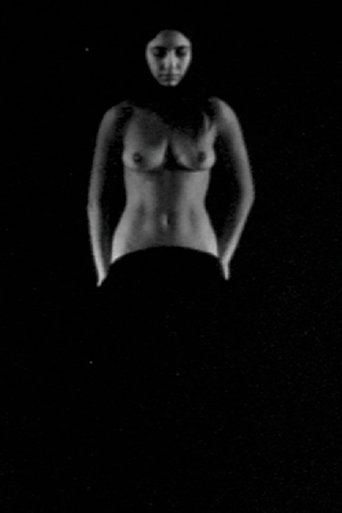
NR“For Black and White Film, Huot created his own photographic imagery for the first time. After a few moments of darkness, a young woman (Sheila Raj) lowers a covering of some kind, slowly revealing her naked body. She reaches outside the circle of light, which illuminates only her silvery form, scoops up dark paint, and, beginning with her feet, gradually paints her entire body. When she has become invisible except for the faint sheen of the paint, she drops her arms, looks straight ahead, and the film fades to total darkness. The serenity of the film, which is structurally reflected by Huot’s presentation of the action from a single position in a single take, its sensuality, and the aura of ritual it creates (Raj always moves in a formal way and, except when she needs to look for the paint, looks modestly down) make Black and White Film a quietly haunting work.”—Scott MacDonald, “The Films of Robert Huot: 1967 to 1972”, Quarterly Review of Film Studies, Summer 1980.
Black and White Film
1969
 NR
NRA punk spoof with music by Georg Deitl, lyrics by Robert Huot, performed by George A and The Super Connie featuring Bobby Beethoven. Plus electronic music by Brendt Conrad. Starring the beautiful Ama Zeena and sinister Dick Darth.
Cum Foo
1981
 6.0
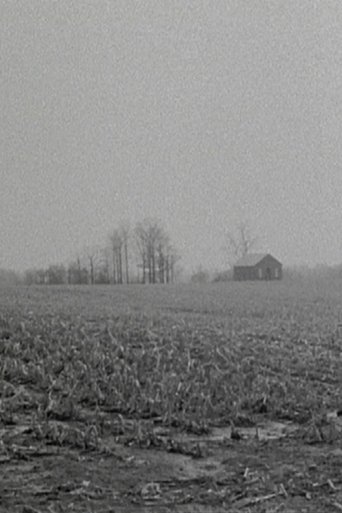
6.0One Year (1970) is a series of forty-nine rolls of 16mm film, nearly all of them unedited except in the camera, and all of them silent. The flares at the beginnings and ends of the rolls are not eliminated and, as a result, become a form of visual punctuation. The rolls are arranged so that, as title implies, we move gradually through an entire year, from winter to winter. The most interesting aspect of the overall organization, however, involves the fact that the first quarter of One Year (1970) is very different from the final three-quarters: this change reflects a fundamental alteration in Huot's approach to film.
One Year
1970
 NR
NRNo synopsis available yet.
Sound Movie
1972
 NR
NRNo synopsis available yet.
Super 8 Diary - 1985
1985
Two reels projected simultaneously, with slight variations in speed.
From Loops
1967
 NR
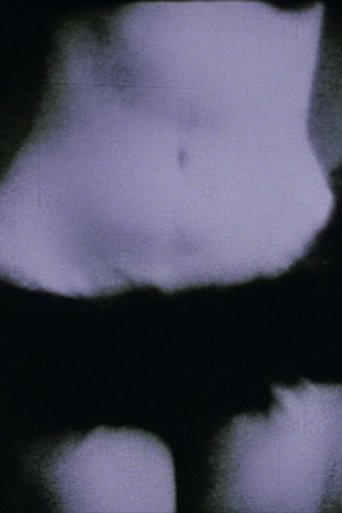
NRIn CROSS-CUT--A BLUE MOVIE, Huot presents a minimal passage of intercutting between found footage of a hoochy-coochy dancer and a blue leader, organized as a pair of inversely related geometric progressions. The resulting film is amusing (because of the pun in the title, the speed of the editing, and the funny fast-motion shimmy of the dancer); highly rhythmic (both because of the intercutting itself, and because of the rhythms added by the dancer's movements, the flutter of dust particles on the blue leader, and the waver of scratch marks on the footage of the dancer); and formally interesting because of Huot's creation of a montage which so energetically goes nowhere.
Cross-Cut–A Blue Movie
1969
 NR
NRNo synopsis available yet.
Super 8 Diary - 2007
2007
By 1968, Huot had begun to use photographic imagery, fusing his continuing concern with minimalism and an interest in the erotic. RED STOCKINGS is a demonstration of the power of a single frame of photographic imagery. Except for one frame, the entire three-minute film is a continuous, uniform red which creates a variety of afterimages and other optical illusions. When the lone frame flashes by halfway through the film, the imagery is difficult to identify, but it has a somewhat erotic quality which, when I first saw the film, sent me to the rewind. I scanned the red until I located the frame and discovered an image of a naked female crotch. The title clarifies the erotic joke, which, however, exists only if the viewer is willing to examine the film closely enough to be sure of what is there.
Red Stockings
1969
 NR
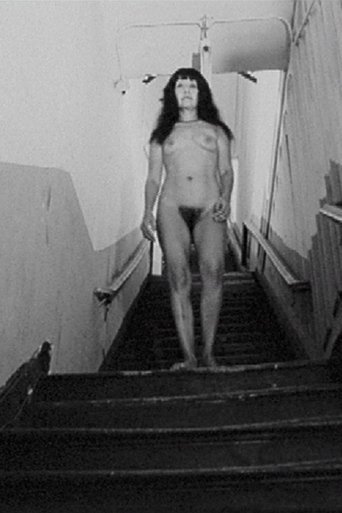
NRThe motif of having people slowly approach the camera first appears in Nude Descending the Stairs, an interesting minimalist work made up of three single-take, single-angle black and white silent rolls during each of which one person - in one instance, Huot dressed in a white painter's jumpsuit; in the others, a naked woman (Marie Antoinette) - slowly descends a four storey staircase toward the camera. Because of the camera's upward angle, the descents are translated into level forward motions during which the two people grow larger with each step they take. The film's concern with the manipulation of space and with the details of human motion through it, accounts for both the title and the inscription 'for Duchamp and Muybridge.
Nude Decending the Stairs
1970
 NR
NR…was shot in black and white Super 8mm and is accompanied by a soundtrack of drumming and deep breathing. The camera fades in and out on a symmetrical series of lovely, grainy close-ups of the naked, apparently sleeping forms of a male and a female (Huot himself and Carol Kinne). The film is closely related to, and would be especially interesting screened with Willard Maas’ Geography of the Body, Tara Iimura’s Love, and Yoko Ono’s Fly.
Fades and Close-Ups
1978
 NR
NRNo synopsis available yet.
Super 8 Diary - 1993
1993
 NR
NRNo synopsis available yet.
Super 8 Diary - 2010
2010
 NR
NRNo synopsis available yet.
Super 8 Diary - 1988
1988
The Super-8 films include some of Huot’s most impressive filmmaking and some of the most impressive Super-8 filmmaking I’ve seen anywhere. Ironically, the handling ease and lower expense of the smaller gauge have resulted in finished films much less personally revealing than the earlier 16mm diaries and much more consciously directed toward audiences: for example, what sexuality we do see in the recent films is in the nature of performance; often Huot and his wife, painter Carol Kinne, design environments, costumes, and sound tracks for comic, pixilated sexual escapades. The Super-8 films continue to reveal Huot’s life, but there is no longer the sense of personal investigation evident in Rolls : 1971. In its place is Huot’s pleasure in recording the beautiful and enjoyable elements of his life and sharing them with viewers.
Notes 1984, Part.3
1984
 NR
NRNo synopsis available yet.
Hollis Frampton 1936-1984
1984
Super 8 diary film by Robert Huot
Diary: 1979, Part 1
1979
 NR
NRNo synopsis available yet.
Super 8 Diary - 2000
2000
 NR
NRNo synopsis available yet.
Super 8 Diary - 1987
1987
 NR
NRNo synopsis available yet.
Super 8 Diary - 1996
1996
 NR
NRFilm by Robert Huot.
Third One Year Movie, 1972
1972
 NR
NRNo synopsis available yet.
Super 8 Diary - 2009
2009
 NR
NRNo synopsis available yet.
Super 8 Diary - 1994
1994
 NR
NRNo synopsis available yet.
Super 8 Diary - 1989
1989
 NR
NRNo synopsis available yet.
Super 8 Diary - 2006
2006
 NR
NRNo synopsis available yet.
Super 8 Diary - 1991
1991
 NR
NRNo synopsis available yet.
Super 8 Diary - 1982
1982
 NR
NRNo synopsis available yet.
Super 8 Diary - 1990
1990
 NR
NRDark, Scenes from the Barn superimposes bucolic barnyard activities with jarring images of hidden desire
Dark, Scenes from the Barn
1992
 NR
NR“…(a) serialist comparison-contrast of the variations in nine naked male and female torsos.
Turning Torso Drawdown
1972
 NR
NRNo synopsis available yet.
Super 8 Diary - 2003
2003
 NR
NRNo synopsis available yet.
Super 8 Diary - 1986
1986
 NR
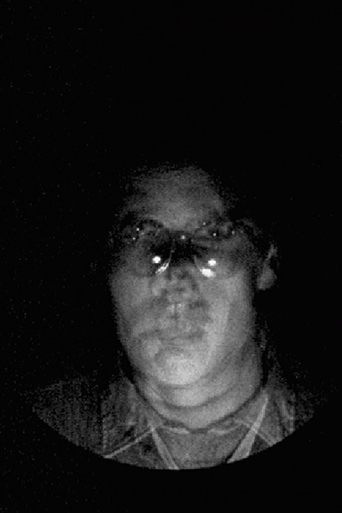
NRThis film is the quadruple superimposition of four faces, two men and two women. These images often appear to be one fantastic undulating face perpetually changing. The images are shot thru a circular mat in an attempt to get away from the dominant rectangular film image (much as earlier filmmakers have done). I have recently added a sound track, on separate cassette tape. It is the Talking Head’s ‘Seen and Not Seen.’ The film can be viewed with or without the track—or first with, then without. (Robert Huot)
Face of Faces
1973