
Directing
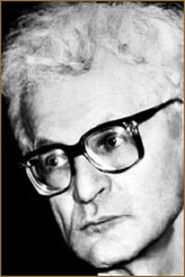
Pavel Kogan
Born — Died
1931-07-09 — 1998-11-03
Place of birth
Leningrad, Russia, Soviet Union [now Saint Petersburg, Russia]
Known for
Directing
Credits
23 titles
Pavel Kogan was born on July, 9, 1931 in Leningrad. He got two external high school degrees, that of Leningrad State University and GITIS; was employed as dumb performer by Kirov (presently Mariinsky) Opera. Finding himself, by vagaries of fate, in the cinema, he directed more than 35 documentary films. These films include, on the one hand, such as “The band of military tunes” (1968) in partnership with P. Mostovoy, which got the best film award, the Golden Dove, of Leipzig Festival; on the other hand, such as the full-length “Mutiny in Sobibor” (1989) being a revelation to Pavel himself as it was his first encounter with the Jewish subject and the topic of European Jewry’s holocaust, and be…
Known for
 NR
NRAlisa Freyndlikh in a rush — there isn't a single calm, free minute. Rehearsals, discussions of roles with Igor Vladimirov, her daughter Varya's birthday, daytime and evening performances, meetings with the audience...
Alisa Freyndlikh
1979
 7.5
7.5No synopsis available yet.
The Limit of Possible
1984
 5.6
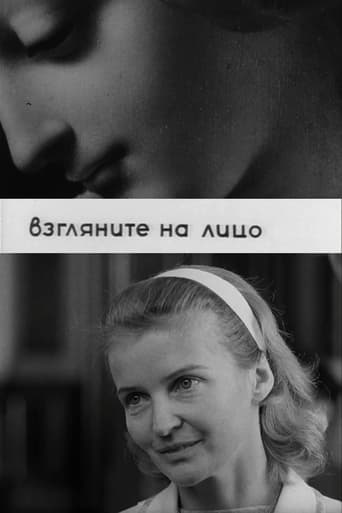
5.6The Hermitage Museum. Visitors gather around a tour guide. “You are standing before Leonardo da Vinci’s painting Madonna Litta. Look at her face: it is beautiful.” A hidden camera studies the faces of the people assembled in the museum with the same “careful, attentive, loving regard for the human being” as da Vinci’s painting itself.
Look at the Face
1966
 10.0
10.0“Like the right and left hand Your soul is close to my soul We are sealed shut, blissfully and warmly, Like the right and left wing…” The life and art of Pavel Kogan and Lyudmila Stanukinas, two famous Leningrad documentary filmmakers, can best be expressed by the Tsvetaeva stanza cited above. They are the main characters of this film, which their student Viktor Kossakovsky shot during Pavel Kogan’s final months. For Lyudmila Stanukinas, Lyalya, as those close to her called her, her husband was her only reason for existence. She was with him until the end and held onto his extinguishing life as much as she could.
Pavel and Lyalya (A Jerusalem Romance)
1998
Film from the Leningrad Documentary Film Studio.
Proud Humility
1965
 9.0
9.0The plot is based on a conflict that arose at the architectural design institute.
The House is Being Built
1978
Film credits
Behind the camera
NRAlisa Freyndlikh in a rush — there isn't a single calm, free minute. Rehearsals, discussions of roles with Igor Vladimirov, her daughter Varya's birthday, daytime and evening performances, meetings with the audience...
Alisa Freyndlikh
1979
7.5No synopsis available yet.
The Limit of Possible
1984
5.6The Hermitage Museum. Visitors gather around a tour guide. “You are standing before Leonardo da Vinci’s painting Madonna Litta. Look at her face: it is beautiful.” A hidden camera studies the faces of the people assembled in the museum with the same “careful, attentive, loving regard for the human being” as da Vinci’s painting itself.
Look at the Face
1966
Film from the Leningrad Documentary Film Studio.
Proud Humility
1965
9.0The plot is based on a conflict that arose at the architectural design institute.
The House is Being Built
1978
 NR
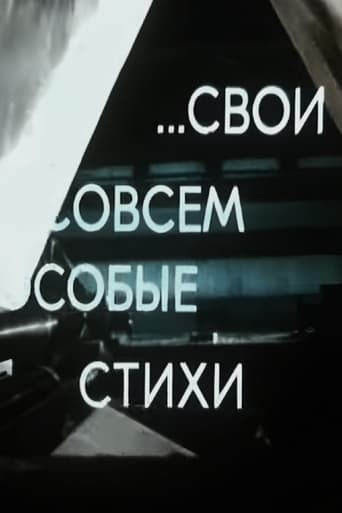
NRThis poetic core in youngsters is also touched in Stanukina's less known Your very personal poetry (Свои, совсем особые стихи, 1982), a wonderful film about a poetry class. It is here that one recalls Kogan's admiration of Lyalya's emotional documentary skills. And it is here that one recalls Kosakovsky's depiction of Lyalya as a person of extraordinarily prosperous feelings, sensitive and energetic, childish and female, shrill and quiet. The young poets are marvellously sneaky, respectfully adoring and creatively playing with - maybe even deconstructing - "Aleksandr Sergeevich", Mr. Pushkin, Russia's exclusive trade mark of high culture and literature.
Your Very Personal Poetry
1982
 NR
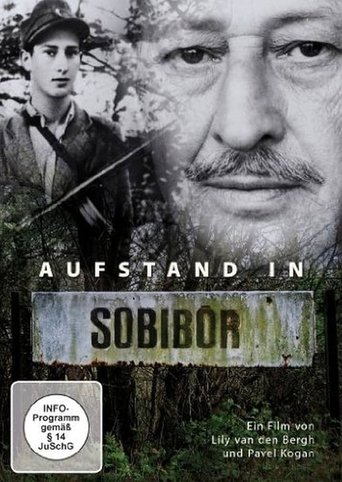
NRRevolt in Sobibor is a beautifully filmed portrait of four survivors of the uprising in the Sobibór extermination camp in Eastern Poland, close to the Russian border.
Revolt in Sobibor
1989
Profession — Operator
1987
 NR
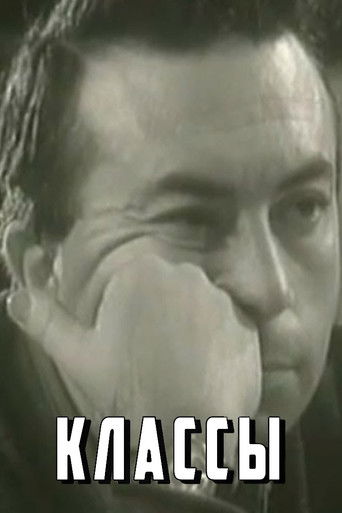
NRThe art of theater is a complex craft. In 19 minutes, you can’t convey everything that is taught over five years. Our film is only a short walk through the Lunacharsky State Institute of Theatre Arts, a cinematic panorama of three directing classes. The classes of M. O. Knebel, A. A. Goncharov, and A. V. Efros.
Classes
1967
NRThe art of theater is a complex craft. In 19 minutes, you can’t convey everything that is taught over five years. Our film is only a short walk through the Lunacharsky State Institute of Theatre Arts, a cinematic panorama of three directing classes. The classes of M. O. Knebel, A. A. Goncharov, and A. V. Efros.
Classes
1967
Cinematic surveillance of people standing in line at Lenin's Mausoleum in Red Square.
Day by Day
1968
Using the example of one GITIS course, led by People's Artist of the Republic Professor Maria Osipovna Knebel, the training methods for future theatre directors are demonstrated.
In Directing Classes
1966
Using the example of one GITIS course, led by People's Artist of the Republic Professor Maria Osipovna Knebel, the training methods for future theatre directors are demonstrated.
In Directing Classes
1966
About life in the village of Verkola, the birthplace of the great Russian writer Fyodor Abramov, to whose memory the painting is dedicated. The northern Arkhangelsk region where the writer Fyodor Abramov grew up. Portraits of the writer's fellow countrymen, residents of the village of Verkola, their lives, work, and daily life.
Give Us This Day
1988
 NR
NREveryday life at a sweets factory: a grey, grinding existence. An invited lecturer speaks of fine feelings, of love and courtship, but he does not know what it takes to produce a box of chocolates that someone would bring to a beloved woman on International Women’s Day. Falling snow covers the streets. Then spring comes, followed by summer, but in the smoking room, in rare minutes of rest, the factory workers will keep talking about a life that is passing.
Summer Is Coming Soon
1987
 NR
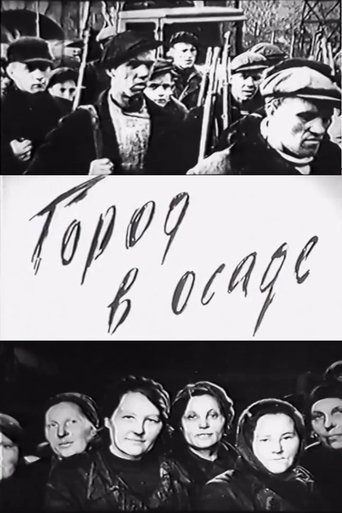
NRIn the postwar years, many photographs and newsreels taken during the Siege were confiscated and destroyed for presenting too “subjective” a view of the events of that time. This film is the result of a long search through the Leningrad archives. Out of thousands of surviving wartime photographs, the director selected four hundred that had never before been used in cinema. The film is a montage of these historical documents, accompanied by the voices of poets Olga Berggolts and Alexander Prokofyev, radio announcer Yuri Levitan, and the sounds of air raid sirens…
City Under Siege
1969
 NR
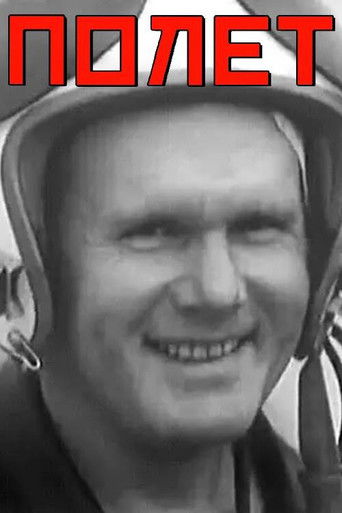
NRPortrait of test pilot Alexander Shcherbakov.
Flight
1972
NRPortrait of test pilot Alexander Shcherbakov.
Flight
1972
A film about the history, drama, and glory of Russian ballet abroad. The film is based on interviews with Russian ballerinas Natalia Makarova, Nina Vyrubova, Irina Grzhebina, Irina Vasilyeva, Olga Vershinina-Debasile, and theatrical designers Dmitry Bushen and Alexander Vasiliev.
Russian Ballet Without Russia
1990
A look back at the 1969 Ice Hockey World Championships in Stockholm.
Big Hockey
1969
 NR
NRTells about the everyday life of the military music orchestra. The most difficult thing is to play a parade concert or “defile”. A defile is when military musicians play a march in motion, without straying from a clear marching step, or from the rhythm, without violating the strict musical pattern. For a professional, this is not so difficult to do, but how did an orchestra from a generally ordinary military unit manage to do this?
Military Music Orchestra
1968
About the first visit to Russia of Mstislav Rostropovich and Galina Vishnevskaya after 16 years of forced emigration.
Mstislav Rostropovich. The Return
1990