
Acting
Gen Funabashi
Born — Died
1931-02-03 — 1974-09-17
Place of birth
Obihiro, Japan
Known for
Acting
Credits
36 titles
Known for
 8.0
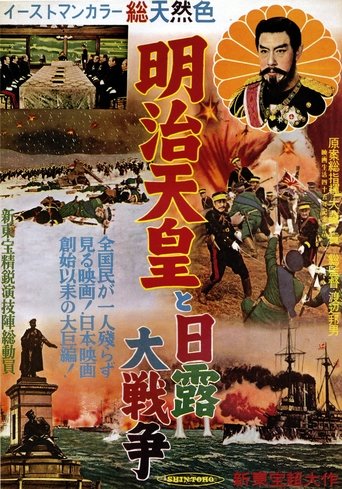
8.0Meiji Tenno portrays the buildup to the Russo-Japan War. In addition to showing the political events that led to war, it also shows the era from the story of a farm family in rural Japan that sends their son off to war. As such, it could be considered an anti-war movie, showing how, while war is devised by governments, the people do not really understand what war is, and its combatants often do not know what they are fighting for.
Emperor Meiji and the Great Russo-Japanese War
1957
 NR
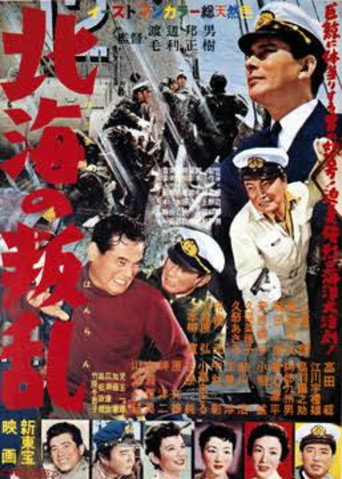
NRA maritime action drama set aboard a whaling ship rocked by a labor-management conflict. Shintoho's second color feature.
Mutiny in the North Sea
1956
No synopsis available yet.
Employee with the Secret Savings and the Autocrat Company President: The Employee with the Secret Savings Fights Bravely
1956
 8.0
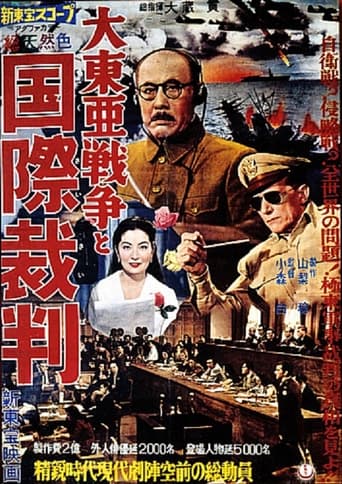
8.0In 1941, overpopulated Japan faces an economic boycott and its armed forces push further to the south. And despite negotiations between Japan and the U. S. A. war is declared with the attack on Pearl Harbour. Victories follow for Japan on land and sea and her forces push forward to the borders of India. But gradually the tide turns in favour of the Allies and after the atom bombings of Hiroshima and Nagasaki, Japan is compelled to accept the Potsdam Declaration and by the order of the Emperor agrees to unconditional surrender. Under the supervision of the occupation forces the International Military Tribunal opens in Tokyo to try the Japanese war leaders. Established in the cause of justice, and to prevent future aggressive wars the trials drag on for two and a half years. And on December 23, 1948, General Tojo and six other war leaders mount the thirteen steps to the gallows at Tokyo's Sugamo prison.
The Pacific War and the International Military Tribunal
1959
 NR
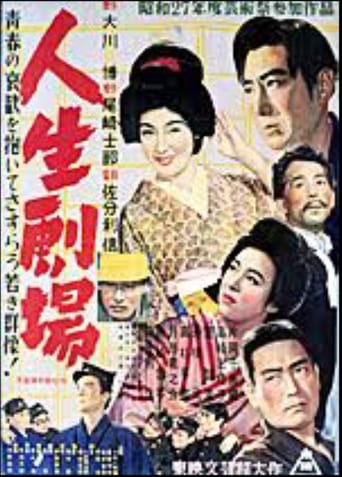
NRPart one of Shin Saburi's Theater of Life adaptation.
Jinsei Gekijo: dai ichi bu
1952
 NR
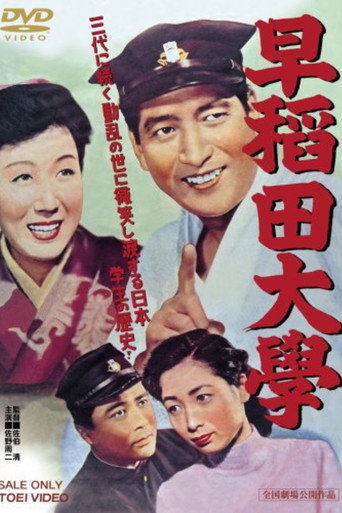
NRIn the 15th year of the Meiji era (1882), Ōkuma Shigenobu, expelled from the Council of State by the Satsuma-Chōshō clique, poured his personal fortune into establishing the Tokyo Professional School in a tea field in Waseda Village. With seven professors, including Takada Sanae and Tsubouchi Yūzō, and eighty-seven students, government interference extended even to finances; Ono Azusa, who tirelessly worked to secure funding, died from overwork.
Waseda University
1953
Film credits
1960s · 3 titles
 NR
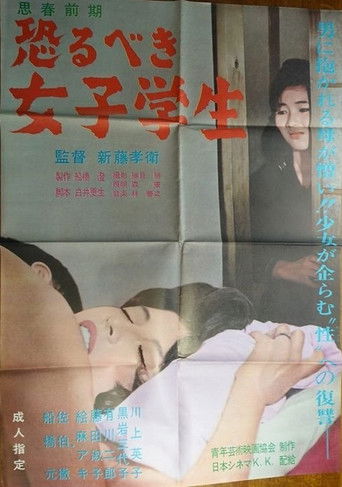
NRPink film directed by Takae Shindo.
Osorubeki joshi gakusei: Shishun zenki
1964
 NR
NRA strange cult spreads its evil influence across the country, and it's up to Akakage to find out what the nefarious organization is up to. Based on Episodes 1 through 3 and Episodes 5 through 6 of the 1967 Akakage TV Series
Ninjascope: The Magic World of Ninjas
1968
Japanese comedy film.
弥次喜多珍道中 中仙道の巻
1960
1950s · 32 titles
8.0Meiji Tenno portrays the buildup to the Russo-Japan War. In addition to showing the political events that led to war, it also shows the era from the story of a farm family in rural Japan that sends their son off to war. As such, it could be considered an anti-war movie, showing how, while war is devised by governments, the people do not really understand what war is, and its combatants often do not know what they are fighting for.
Emperor Meiji and the Great Russo-Japanese War
1957
NRA maritime action drama set aboard a whaling ship rocked by a labor-management conflict. Shintoho's second color feature.
Mutiny in the North Sea
1956
No synopsis available yet.
Employee with the Secret Savings and the Autocrat Company President: The Employee with the Secret Savings Fights Bravely
1956
8.0In 1941, overpopulated Japan faces an economic boycott and its armed forces push further to the south. And despite negotiations between Japan and the U. S. A. war is declared with the attack on Pearl Harbour. Victories follow for Japan on land and sea and her forces push forward to the borders of India. But gradually the tide turns in favour of the Allies and after the atom bombings of Hiroshima and Nagasaki, Japan is compelled to accept the Potsdam Declaration and by the order of the Emperor agrees to unconditional surrender. Under the supervision of the occupation forces the International Military Tribunal opens in Tokyo to try the Japanese war leaders. Established in the cause of justice, and to prevent future aggressive wars the trials drag on for two and a half years. And on December 23, 1948, General Tojo and six other war leaders mount the thirteen steps to the gallows at Tokyo's Sugamo prison.
The Pacific War and the International Military Tribunal
1959
NRPart one of Shin Saburi's Theater of Life adaptation.
Jinsei Gekijo: dai ichi bu
1952
NRIn the 15th year of the Meiji era (1882), Ōkuma Shigenobu, expelled from the Council of State by the Satsuma-Chōshō clique, poured his personal fortune into establishing the Tokyo Professional School in a tea field in Waseda Village. With seven professors, including Takada Sanae and Tsubouchi Yūzō, and eighty-seven students, government interference extended even to finances; Ono Azusa, who tirelessly worked to secure funding, died from overwork.
Waseda University
1953
Japanese comedy film.
Tōkaidō yajikita chin dōchū
1959
 7.7
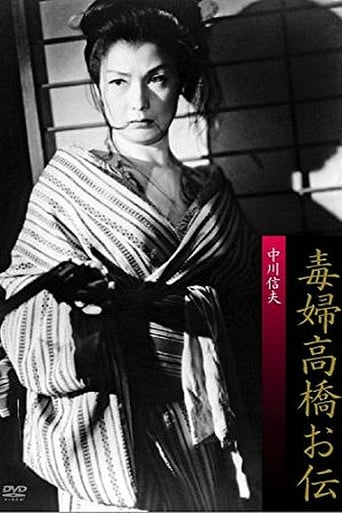
7.7In 1870's Tokyo, Den steals to support the daughter of her first marriage and her consumptive second husband. She falls in love with a young policeman, but is coerced into becoming the mistress of and procurer for a vice boss.
A Wicked Woman
1958
 10.0
10.0For the poor, Edo is Hell on Earth, starving under the rule of Tanuma Okitsugi, corrupt councilor to the shogun. But the courageous vagabond called “Kageboshi” (Shadow Avenger), will fight for the common folk, robbing the rich so the people will have rice. Tanuma’s henchmen will hire an evil swordsman to pose as Kageboshi, starting a wave of murder, kidnapping and robbery, searching for two antique sword-guards that will reveal the hiding place of a fortune in buried gold. But who will claim the gold? The poor of Edo, or the conniving Tanuma? Only Kageboshi’s flashing sword, tearing through Tanuma’s bloodthirsty minions, can forestall his wicked schemes.
Kagebôshi: The Shadow Avenger
1959
 7.0
7.0In May 1945, Japan's defeat was imminent after the attacks on Saipan, Iwo Jima, and the Philippines, and Tokyo was reduced to a sea of fire by another massive air raid. However, within the Ministry of the Army, there were still officers who were enthusiastic about a decisive battle on the mainland. Eventually, the Okinawa garrison was annihilated, and the US military was approaching the mainland, but on July 27th, the Potsdam Conference between the US, Britain, and the Soviet Union broadcast the Triple Joint Declaration, which set out the final terms of surrender for Japan.
日本敗れず
1954
 5.0
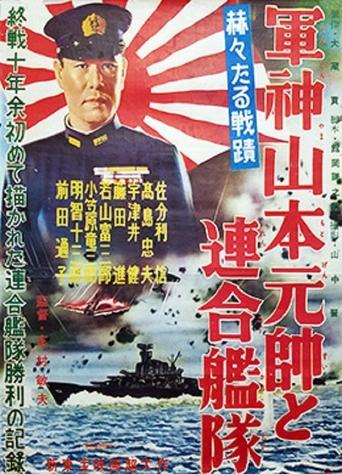
5.0Admiral Isoroku Yamamoto leads the Combined Fleet of the Imperial Japanese Navy to defeat the American Fleet.
Admiral Yamamoto and the Allied Fleets
1956
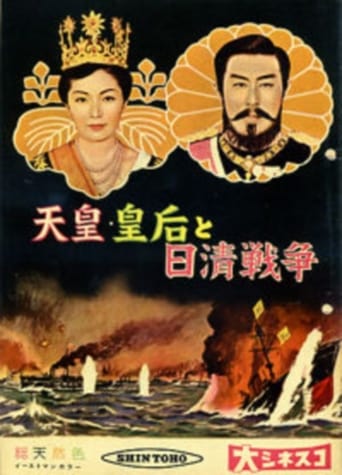 NR
NRNo synopsis available yet.
Emperor & Empress Meiji and the Sino-Japanese War
1958
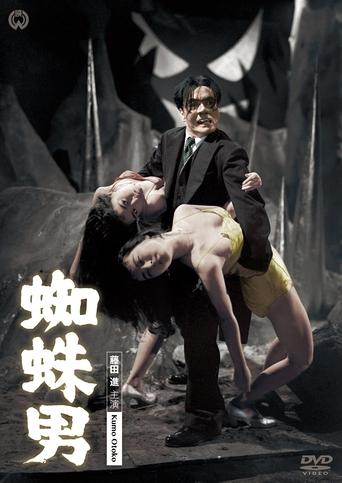 5.9
5.9A spider-like man kidnaps young women and tortures them in his cellar. Adaptation of Edogawa Ranpo's novel.
The Spider-Man
1958
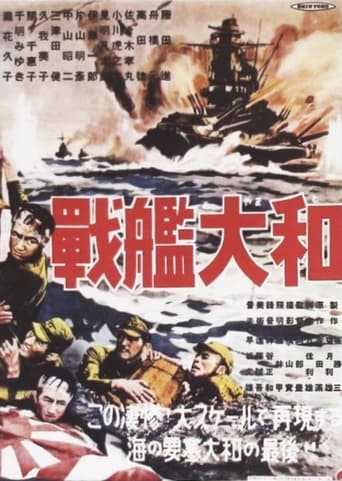 NR
NRThe film is about the Yamato's suicide mission to Okinawa in March 1945 to defend the homeland threatened by U.S. bombers. Adapted from Mitsuru Yoshida's 1952 book "Requiem for the Battleship Yamato".
The Battleship Yamato
1953
Japanese crime film.
Nude Woman and Murder Maze
1959
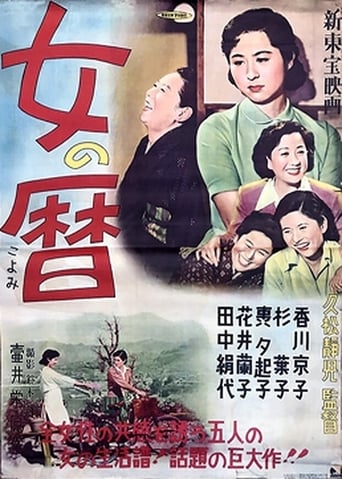 8.0
8.0The story of five sisters.
Five Sisters
1954
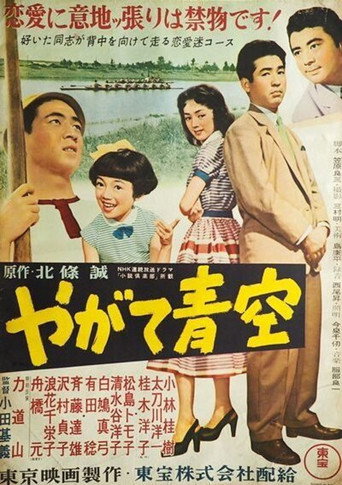 NR
NRNo synopsis available yet.
Detour to Love
1955
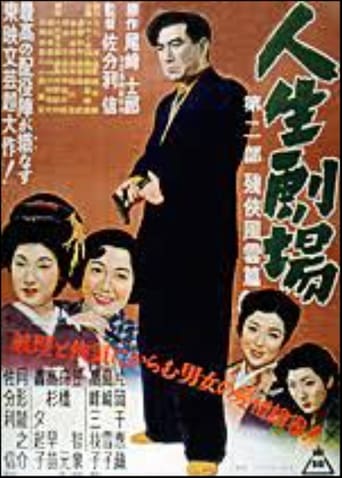 NR
NRPart two of Shin Saburi's Theater of Life adaptation.
Jinsei Gekijo: dai ni bu
1953
Yuri is looking forward to marrying her fiancé Minoru. However, a few days before the wedding she falls victim to his brother Takehiko, and against her will, she becomes Takehiko's wife. The day after the wedding, Yuri begins her silent revenge by not talking to her husband. She retains her love for Minoru and never gives herself to Takehiko's embrace again. She also contributes large sums of money from Takehiko's fortune to charity.
Stormy Virtue
1959
Japanese comedy film released to commemorate the 10th anniversary of Shintoho's founding.
Holiday in Japan
1958
Japanese film.
Santōshain to onna hisho
1955
 NR
NR1956 japanese movie.
Employee with the Secret Savings and the Autocrat President: The Autocrat President's Pure Heart
1956
Japanese film.
The Vassal's Neck
1955
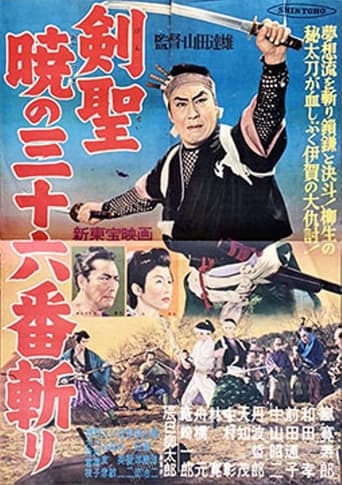 NR
NRNo synopsis available yet.
剣聖 暁の三十六番斬り
1957
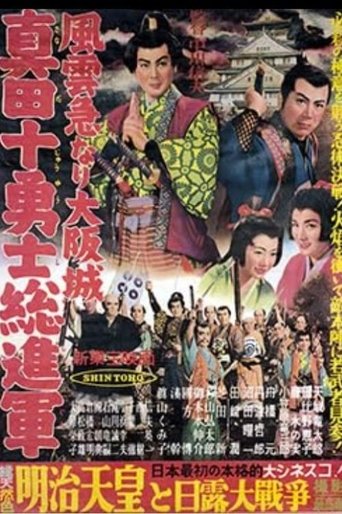 NR
NRAfter defeat in the Battle of Skigahara, Yukimura Sanada and his Ten Braves scatter across the country to spy in order to be prepared for the final battle at Osaka Castle, trying to bring an end to the fighting by revealing the secret will of Toyotomi Hideyoshi, if they can get their hands on it!
Storming Osaka Castle: The Sanada Ten Braves
1957
Utako Mitsuya's film debut.
Forever in Our Hearts
1956
1958 jidaigeki directed by Masaki Mori for Shintoho.
関八州喧嘩陣
1958
 NR
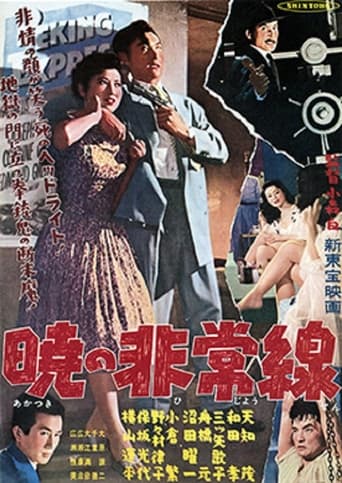
NR1957 crime film
Cordon at Dawn
1957
Japanese drama film and Setsuko Miyuki's film debut.
Kimi yue ni
1953
 NR
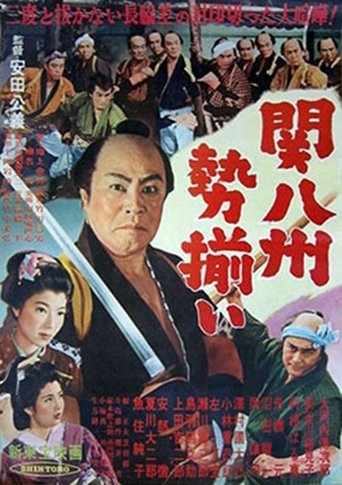
NRDuring the Tenpo era, the peasants of the Kanto region were in dire straits due to successive natural disasters. Maebashi's boss, Shiroganeya Ginjiro, allied with the magistrate Yamaoka Jintayu, and, using his baton as a shield, he committed a series of evil acts, earning the peasants' animosity. At this time, Omaeda Eigoro, who had been on a long journey, returned with his horseman Kunisada Chuji. Eigoro was popular with yakuza all over the country, and the Shiroganeya family, whose territory had been disturbed until then, were alarmed by the news of Eigoro's return.
関八州勢揃い
1954
Japanese comedy film.
ノイローゼ兄さんガッチリ娘
1956
 NR
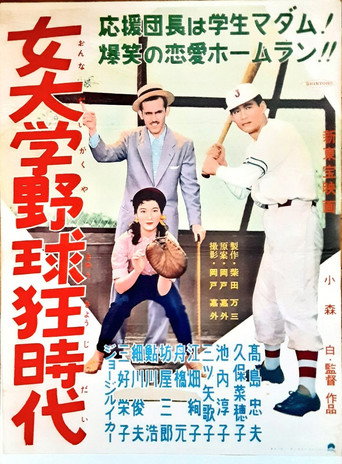
NRJapanese comedy film.
Onna daigaku yakyūkyō jidai
1956