
Acting
Emery Hermans
Known for
Acting
Credits
3 titles
Known for
 6.3
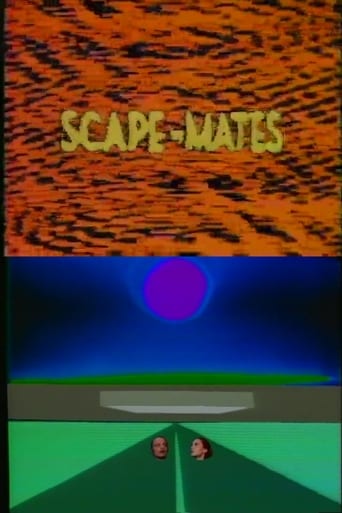
6.3In one of his first experiments in video, Emshwiller creates an electronic landscape of both abstract and figurative elements, where colorized dancers are chroma-keyed into a mutable, computer-animated environment. Working with the "Scan-i-mate," an early analog video synthesizer, Emshwiller choreographs an architectural, illusory video space, in which frames proliferate within frames, disembodied heads and hands move within a collage of animated forms, and the dancers and their environment are subjected to constant transformations through image processing. With its witty interplay of the "real" and the "unreal" in an electronically rendered videospace, and the skillful manipulation and articulation of a sculptural illusion of three-dimensionality, Scape-mates introduced a new vocabulary of video image-making.
Scape-Mates
1972
 5.5
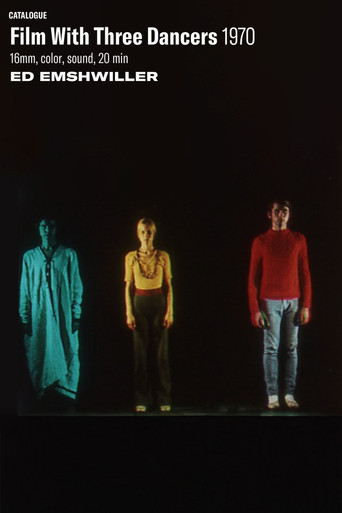
5.5In this spin-off from his original plan for Relativity (1966), Emshwiller continued with his desire to penetrate “space in a kind of flying camera, a dream of flying, a kind of sensual, sexual imagery where you were constantly going into an unknown space.” A trio of dancers (Carolyn Carlson, Emery Hermans, Bob Beswick) appear "first in leotards, then in bluejeans, then naked, as they “pass through rituals of movement.”
Film with Three Dancers
1971
 6.5
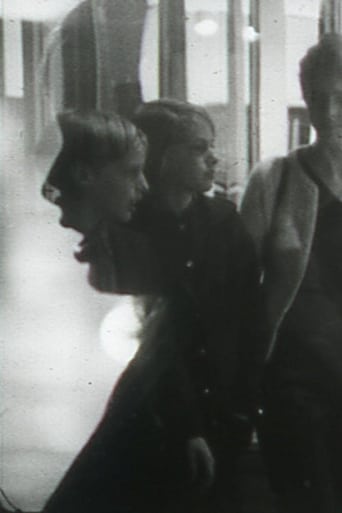
6.5This independent underground feature films two dancers (Carolyn Carlson and Emery Hermans) in silhouettes and shadows. Other couples discuss their relationships and lives in a candid display of self revelation. Street dances and conversations combine in a collage of people and places in this black and white film.
Image, Flesh and Voice
1969
Film credits
1970s · 2 titles
6.3In one of his first experiments in video, Emshwiller creates an electronic landscape of both abstract and figurative elements, where colorized dancers are chroma-keyed into a mutable, computer-animated environment. Working with the "Scan-i-mate," an early analog video synthesizer, Emshwiller choreographs an architectural, illusory video space, in which frames proliferate within frames, disembodied heads and hands move within a collage of animated forms, and the dancers and their environment are subjected to constant transformations through image processing. With its witty interplay of the "real" and the "unreal" in an electronically rendered videospace, and the skillful manipulation and articulation of a sculptural illusion of three-dimensionality, Scape-mates introduced a new vocabulary of video image-making.
Scape-Mates
1972
5.5In this spin-off from his original plan for Relativity (1966), Emshwiller continued with his desire to penetrate “space in a kind of flying camera, a dream of flying, a kind of sensual, sexual imagery where you were constantly going into an unknown space.” A trio of dancers (Carolyn Carlson, Emery Hermans, Bob Beswick) appear "first in leotards, then in bluejeans, then naked, as they “pass through rituals of movement.”
Film with Three Dancers
1971