

Acting
Susumu Namishima
Born — Died
1922-10-03 — 1995-01-01
Place of birth
Kagoshima, Kagoshima Prefecture, Japan
Known for
Acting
Credits
58 titles
Known for
 9.0
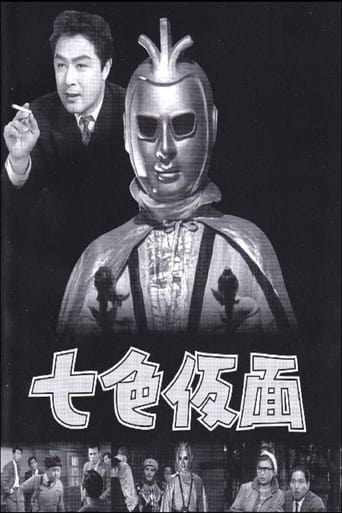
Seven Color Mask (七色仮面, Nanairo Kamen) is the name and title character of a tokusatsu TV series, later called New Seven Color Mask (新七色仮面, Shin Nanairo Kamen). It was created by Kōhan Kawauchi, who also created Moonlight Mask. This B&W TV show was the first superhero TV series by Toei Company Ltd. It was broadcast on NET (now TV Asahi) from June 3, 1959 to June 30, 1960, with a total of 57 episodes divided into 7 segments. Aside from being Toei's first TV superhero show, this series was also the debut of actor Sonny Chiba, who was 19 at the time, who took over the title role from Susumu Namijima after Episode 32.
Nanairo Kamen
1959
 NR
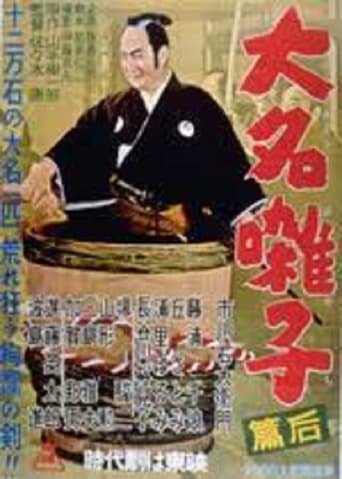
Period drama directed by Yasushi Sasaki.
Lords of Oppression 2
1957
 7.4
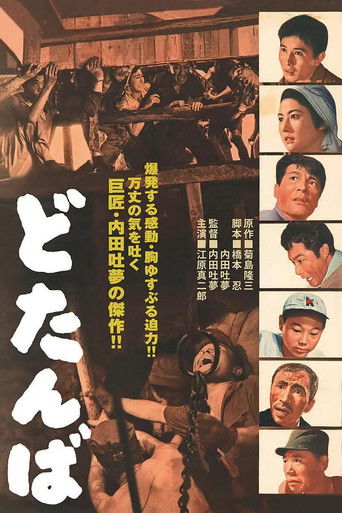
Based on a 1956 television feature on Japan’s national network, NHK, this is one of Uchida’s rarest films. A socially conscious drama with a contemporary backdrop, Dotanba focuses on the attempts to rescue a group of trapped miners. The title is a figure of speech — (essentially “last minute” or “eleventh hour”) — that refers to a situation of peril. The film boasts a script co-written by Uchida and Akira Kurosawa’s frequent screenwriter, Shinobu Hashimoto, and stars Kurosawa’s frequent star Takashi Shimura.
The Eleventh Hour
1957
 NR
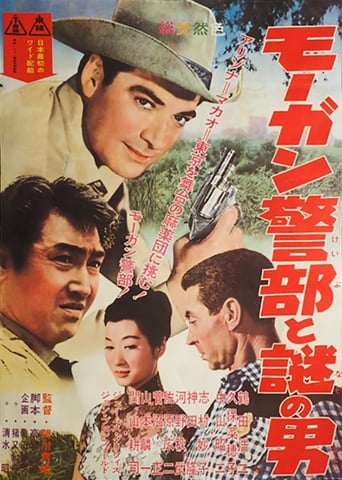
Detective Morgan and the Japanese police cooperate to unveil the truth of the mysterious death of Morgan’s friend in Arizona.
Officer Morgan and a Man of Mystery
1961
 NR
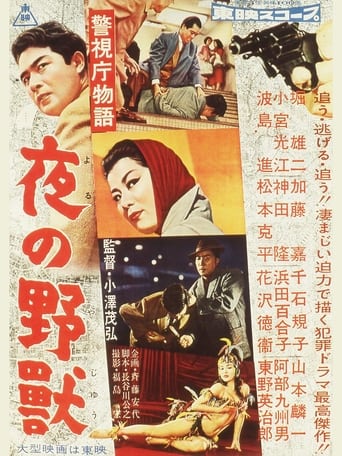
After discovering a slaughtered corpse, the investigating team of the Tokyo Metropolitan Police Department began canvassing the area around the crime scene. As a result, they found a wallet with bloodstains that seemed to belong to the victim, a woman's wallet that did not fit the field, earrings, and other valuable materials, which led them on a foot search. The woman's purse had been picked up by a male prostitute on the subway, and from the prostitute's testimony, they were able to identify the pickpocket's face, but the next day, the man was found dead in a road accident, apparently murdered.
Police Precinct: The Pickpocket Killer
1957
 NR
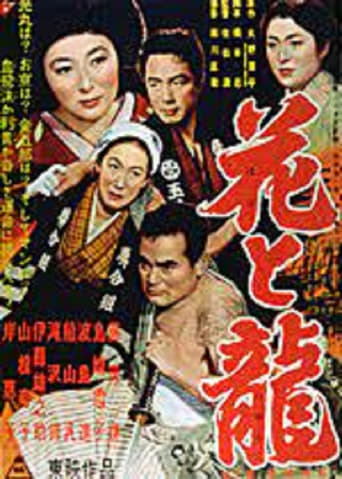
Dai-ni-bu: Aijô ruten: Kiyoshi Saeki directed movie
Hana to ryû - Dai-ni-bu: Aijô ruten
1954
Film credits
1960s · 21 titles
NRDetective Morgan and the Japanese police cooperate to unveil the truth of the mysterious death of Morgan’s friend in Arizona.
Officer Morgan and a Man of Mystery
1961
 NR
Daughter of a lumber shop in Edo strives to protect her family business from the competitor. Sado Masasaburo, the founder of Sado Masa, one of the oldest lumber merchants in Kiba, has recently become very old and ill, and his tomboyish daughter Nobuko, a native of Edo, cannot stand the methods of Tadayoshi, who has risen to prominence through unscrupulous business practices. In a thrilling period drama in which Hibari plays a chic and stubborn lumberyard girl who, together with her partner Takakura Ken, punishes an evil lumber merchant. A thrilling youth drama that combines familiar songs with the stubbornness and love of Hibari and Takakura.
Feisty Edo Girl Nakanori-san
1961
 NR
No synopsis available yet.
Ayausgî G-Man - ânkoku gai no yagû
1960
 NR
1960 Toei war movie.
Storming Squadron
1960
 NR
The third film in the Taro series, following "The World's Most Noble Guy: Taro's Eternity" and "The World's Most Noble Guy: Taro's Rush." Taro, who had painstakingly graduated from the University of Merchant Marine after six years, was on his way to work for Saikai Kaiun on a tourist ship on the Beppu route. He was in a euphoric mood, teasing a young lady playing golf on the deck, and helping the geisha Umeka who was being harassed by a drunkard, with his natural sense of justice, as the ship arrived at Beppu Port.
The World's Most Noble Guy: Taro's Whirlwind
1961
 NR
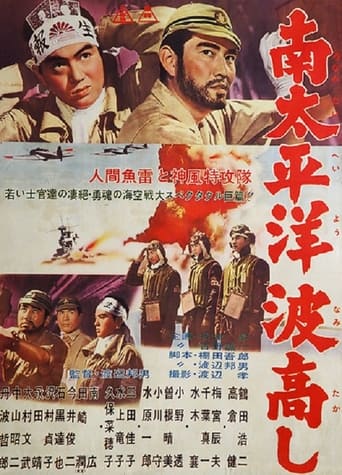
1962 Japanese movie
South Pacific Waves Are High
1962
 7.0
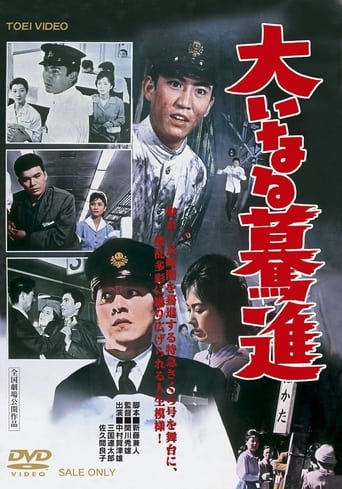
A human drama of crew and passengers on a special express train named “Sakura” from Tokyo to Nagasaki...
Devotion to Railway
1960
 8.0
Sheriff Goro goes undercover to investigate drug smugglers.
Outlaw Under a Blue Canopy
1960
 NR
1961 Japanese movie
腕まくり七色娘
1961
 NR
G-men of Japan fifth installment. A young detective, questioning a double suicide involving his police officer friend and a Turkish girl, travels all the way from Kyushu to Tokyo. Disguising himself as a yakuza member, he intends to root out the underworld's base of operations, weaving together love, guns, and violence to unravel the mystery behind the enigmatic incident and the true nature of evil. This thrilling action drama combines suspense with excitement, depicting a tale filled with love, fists, and firearms.
G-men of Japan 5: Skyscraper Wolves
1960
 9.0
Ichiro (Chiba) is a scrappy little sport in a big car and funny hat always looking for some fun and some extra cash on the side. He and his friends get themselves involved in some shady business dealings involving a kidnapping.
Man with the Funky Hat
1961
 NR
The First Investigation Department is investigating a murder case that took place at a government agency, with particular attention to finding an alibi for the suspects. A security guard was killed in the building, the safe was broken into, but nothing was stolen. The three suspects have alibis, but who then killed the guard and broke into the safe? The 15th work from the popular series "Keishicho Monogatari", which documents the activities of the First Investigation Division of the Capital Police Department. Sonny Chiba's first film role as one of the seven detectives.
Police Department Part 15: Alibi
1961
 8.0
The murder took place at a hotel in Matsushima. The victim is a woman about 28 years old. The suspect is a young man who visited her the night before, and the evidence, in addition to shoe horns and handkerchiefs, is soap with the name of the tavern. When detectives at Shiogama Station followed the man's tracks, it turned out that he had come from Ueno.
Police Precinct Part 17
1961
8.0The murder took place at a hotel in Matsushima. The victim is a woman about 28 years old. The suspect is a young man who visited her the night before, and the evidence, in addition to shoe horns and handkerchiefs, is soap with the name of the tavern. When detectives at Shiogama Station followed the man's tracks, it turned out that he had come from Ueno.
Police Precinct Part 17
1961
 6.5
Shinichi “Sonny” Chiba returns as the reckless son of a private detective takes on the case of a minor league baseball pitcher who disappears right before signing a contract into the major leagues. Meanwhile, the body of an orthopedist is discovered in the river.
Man with a Funky Hat: The 20,000,000 Yen Arm
1961
 NR
The third and final installment of Seven-Color Mask: Red Jaguar.
Seven-Color Mask: Red Jaguar - The Final Trump Card
1960
 NR
The second installment of Seven-Color Mask: Red Jaguar.
Seven-Color Mask: Red Jaguar - Million Dollar Showdown
1960
 NR
The first installment of Seven-Color Mask: Red Jaguar.
Seven-Color Mask: Red Jaguar - Horror of the Black Hand
1960
 NR
The third and final installment of Seven-Color Mask: Three Aces.
Seven-Color Mask: Three Ace - The Dancing Gold Demon
1960
 NR
The second installment of Seven-Color Mask: Three Aces.
Seven-Color Mask: Three Ace - Midday Kidnapping Order
1960
 NR
The first installment of Seven-Color Mask: Three Aces.
Seven-Color Mask: Three Ace - The Devil's Claw Marks
1960
1950s · 35 titles
NRPeriod drama directed by Yasushi Sasaki.
Lords of Oppression 2
1957
7.4Based on a 1956 television feature on Japan’s national network, NHK, this is one of Uchida’s rarest films. A socially conscious drama with a contemporary backdrop, Dotanba focuses on the attempts to rescue a group of trapped miners. The title is a figure of speech — (essentially “last minute” or “eleventh hour”) — that refers to a situation of peril. The film boasts a script co-written by Uchida and Akira Kurosawa’s frequent screenwriter, Shinobu Hashimoto, and stars Kurosawa’s frequent star Takashi Shimura.
The Eleventh Hour
1957
NRAfter discovering a slaughtered corpse, the investigating team of the Tokyo Metropolitan Police Department began canvassing the area around the crime scene. As a result, they found a wallet with bloodstains that seemed to belong to the victim, a woman's wallet that did not fit the field, earrings, and other valuable materials, which led them on a foot search. The woman's purse had been picked up by a male prostitute on the subway, and from the prostitute's testimony, they were able to identify the pickpocket's face, but the next day, the man was found dead in a road accident, apparently murdered.
Police Precinct: The Pickpocket Killer
1957
NRDai-ni-bu: Aijô ruten: Kiyoshi Saeki directed movie
Hana to ryû - Dai-ni-bu: Aijô ruten
1954
 6.0
Private eye Bannai Tarao (Chiezo Kataoka) and his assistant Masako (Chizuru Kitagawa) investigate the mysterious murder of a baseball player who was killed in the middle of a game.
Foul Play
1955
 NR
The fifth installment of the Metropolitan Police Department story series. This time, detectives from the Tokyo Metropolitan Police Department's First Investigative Division are once again in action, full of thrills and speed, in pursuit of the perpetrator of a mysterious murder that suddenly occurred at an auto race track.
Police Precinct Part 5
1957
 7.5
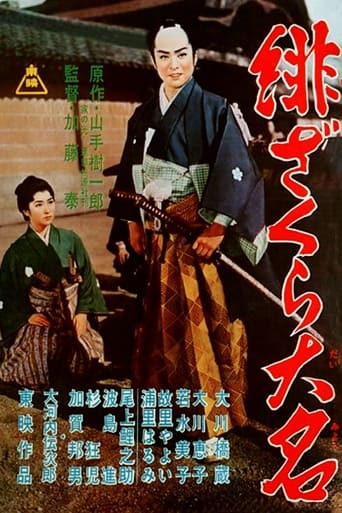
Light-hearted samurai comedy. The second son of a feudal lord runs away from an arranged marriage. He saves the life of a princess whom he gets to fall in love with. It turns out that she is just his prospective bride.
The Scarlet Cherry Lord
1958
 7.0
Toruhan, a king’s retainer, embarks on a journey to find a royal treasure that can only be revealed though secret codes hidden in seven crosses carried by his fellow samurai.
The Seven Vows
1956
 NR
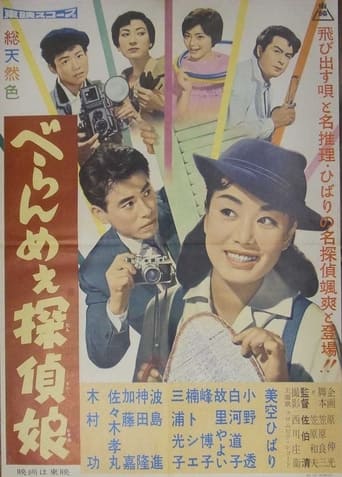
Woman private eye Emiko goes undercover to reveal the truth of a murder case.
Tokyo Detective Girl
1959
 NR
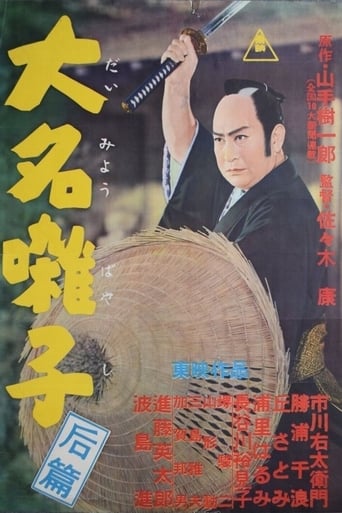
Period drama directed by Yasushi Sasaki.
Lords of Oppression
1957
 7.0
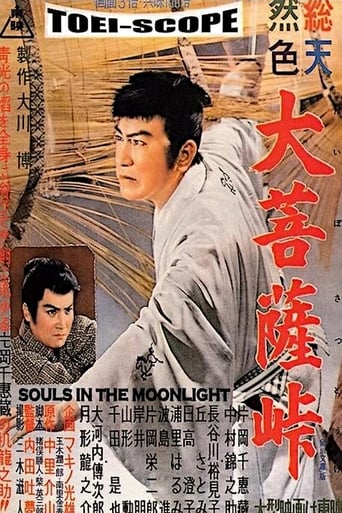
First part of the famous Dai-bosatsu toge trilogy, based on Kaizan Nakazato’s unfinished long series of novels (41 books, written from 1913 to 1941). Set in the last period of the Tokugawa Shogunate, Daibosatsu Toge tells the story of Tsuke Ryunosuke, a nihilistic swordmaster who doesnt hesitate to kill anyone, bad or good. Despite the authors explicit refusal, the series were later made into plays and movies several times.
Souls in the Moonlight
1957
 7.0
Genji Kurô is a master swordsman and entrusted with protecting the ancient sword Kaen by the Otsubo family.
Tales of Young Genji Kuro
1957
 NR
The second installment of Seven-Color Mask.
Seven-Color Mask: Terrifying Revenge
1959
 NR
Sequel to the movie Denko karate uchi.
Meteor Karate Strike
1956
 NR
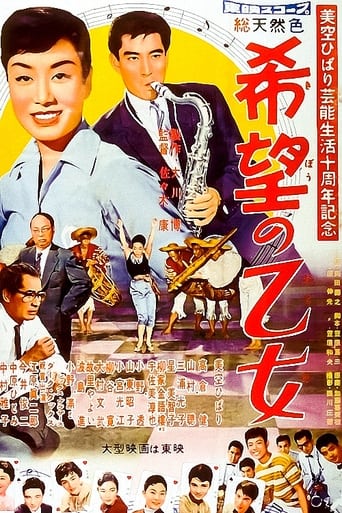
Sayuri, a young woman born to a simple life on a farm, moves to Tokyo to pursue a life long dream of becoming a singer. Through dance, music, and songs, this story shows how a girl raised on a farm was able to make her dream a reality, with the love of those around her.
With Songs in My Heart
1958
 NR
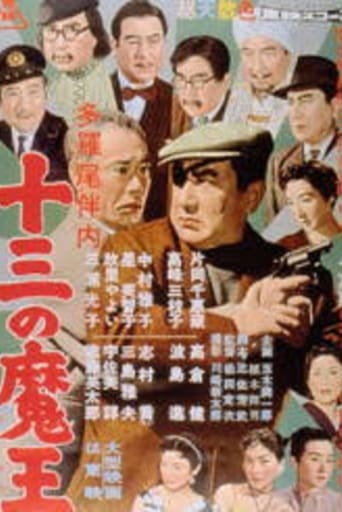
Japanese mystery film.
Man of Thirteen Eyes
1958
 7.0
The adventures of Goro and his fellow samurai continue in its second installment. While being held captive by the enemy pirate Ongo, Goro discovers the whereabouts of the missing seventh cross. Will he succeed in bringing all seven cross together to reveal the secret code of the royal treasure?
The Seven Vows, Part 2
1957
 7.0
The adventures of Goro and his fellow samurai concludes. After their turbulent journey, the seven crosses are finally united to reveal the secret of the royal treasure.
The Seven Vows, Part 3
1957
 NR
No synopsis available yet.
Speed Crazy
1959
 7.0
Eighth film in the Boy Detectives Club series.
The Boy Detectives Club – The No-Headed Man
1958
 NR
Ken Takakura's screen debut, following his admission into Toei ranks via the studio's annual New Faces program, came surprisingly enough in this pair of Okinawa karate films. The two-parter was released on Jan. 29, 1956 as two thirds of a triple feature. Both halves run just under one hour. The fighting is actually pretty good for the time, and it's fun to see Takakura as an impatient, bearded karate rascal.
Lightning Karate Blow
1956
 NR
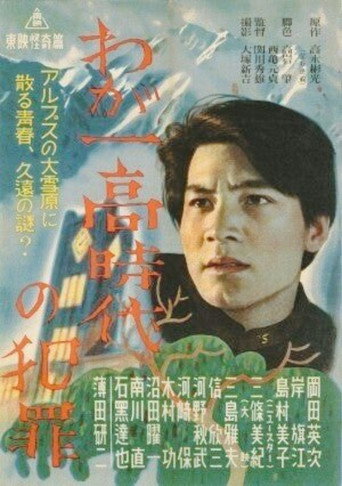
Based on a novella in the Kyosuke Kozu series. The story depicts the meeting between Kyosuke Kozu and Kenzo Matsushita, as well as student dorm life and social customs in the 1930s, and the social climate following the Second Sino-Japanese War.
Waga ichidaka jidai no hanzai
1951
 NR
1956 movie from Japan
鞍馬天狗 第一話 白馬の密使
1956
 NR
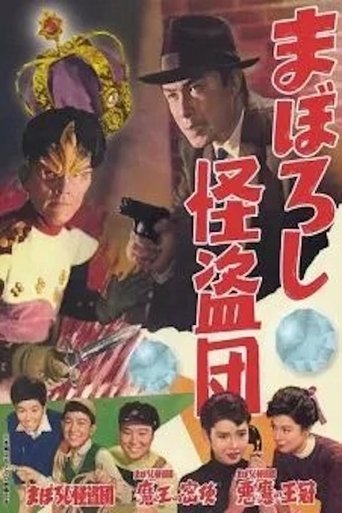
This is the first film in the third installment of the adventure film for boys that depicts the battle between a thief who calls himself "the secret envoy of the Demon Lord" and private investigator Hideo Sayama. In the Toei, the roles are twenty faces and Kogo (Twenty Faces) and Akechi Kogo, with a content that seems to be strongly conscious of the "boys' Detectives" series of Edogawa Rampo, which was later made into a movie.
Maboroshi Kaito Dan
1955
Seventh film in the Boy Detectives Club series.
The Boy Detectives Club – The Invisible Fiend
1958
 9.0
The fourth installment of G-men of Japan
G-men of Japan 4: Special Armed Unit Mobilization
1956
 NR
The first installment of Seven-Color Mask: King Rose.
Seven-Color Mask: King Rose - Devil's Rose
1959
 10.0
Fifth film in the Boy Detectives Club series.
The Boy Detectives Club – The Revenge of Twenty Faces
1957
 NR
Tai Kato's first film directed at Toei.
Lovestruck Ronin
1957
Sixth film in the Boy Detectives Club series.
The Boy Detectives Club – The Glow-in-the-Dark Monster
1957
 NR
The third installment of Seven-Color Mask.
Seven-Color Mask: Chase of Death
1959
 NR
The second installment of Seven-Color Mask: King Rose.
Seven-Color Mask: King Rose - Disappearing Gentleman
1959
 NR
King Rose returns, unleashing terror from beyond the grave. Detective Kotaro Ran, as Seven-Color Mask, investigates eerie crimes. As he unravels the mystery, he faces deadly traps and a final battle to stop King Rose's reign.. The third and final installment of Seven-Color Mask: King Rose.
Seven-Color Mask: King Rose - Challenge from the Dead
1959
 NR
The first installment of Seven-Color Mask.
Seven-Color Mask
1959
 NR
The fourth and final installment of Seven-Color Mask.
Seven-Color Mask: Triumph of the South Sea
1959
