
Camera
Ingo Kratisch
Born
1945-05-13 (81)
Place of birth
Nejdek, Czech Republic
Known for
Camera
Credits
15 titles
Ingo Kratisch is a German film director, screenwriter and cinematographer.
Known for
Sophie, fourteen years old, rides her bike to a remote area after school to read a book about the holocaust. She collides with Joseph, who is the same age, on her bike, and their paths become intertwined. A pile of paving stones next to a bunker triggers an idea: they want to dedicate a stone to each person murdered by the Nazis.
Die Steine
1985
Henry Angst receives a farewell letter that promises an unspeakably cheerful death and calls his previous life into question. As a result, he leaves his wife and gives up his job. In a hotel room, he plays heads and tails and chooses the random path. The next day he meets Rita, a young woman whose contradictory nature attracts him.
Henry Angst
1980
No synopsis available yet.
Lohn und Liebe
1974
No synopsis available yet.
Gelände, gezeichnet
1994
 7.0
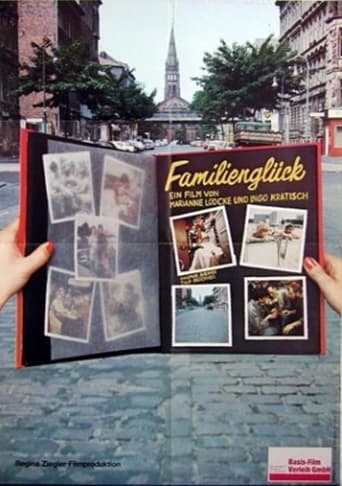
7.0Manfred, a lathe operator, and Manuela, a seamstress, marry and try to find happiness together. They have two children in quick succession and realize that their simultaneous material advancement is beyond their strength. Marianne stops working and Manfred's position in the company deteriorates. The atmosphere between the two becomes more irritable, even more so when Marianne finds a new job. She becomes increasingly distant from Manfred, who is suspicious of her emancipation, and ends up sleeping with another man. But the two move towards each other and, after five years of marriage, find their way back together.
A Happy Family Life
1975
 NR
NRHARUN FAROCKI – TAKE TWO combines two perspectives on filmmaker Harun Farocki. For his TV documentary “Die Sache mit der Realität. Eine Collage über Dokumentarfilm” (1996), Lothar Schuster had a long conversation with Farocki, whom he had known since the late 1960s. Farocki discusses the idea of the Enlightenment, the compositional patterns of his films, the relationship between image and text. Ingo Kratisch, responsible for the camera in many of Farocki’s films between 1977 and his death, used his photo and film camera to record casual observations during the shooting of “The Creators of Shopping Worlds”(2001), “In Comparison”(2009), “Serious Games”(2009/10) and other films. In HARUN FAROCKI – TAKE TWO, Schuster’s and Kratisch’s footage alternates; discourse and observation comment and complement each other. On the one hand the gradual construction of thoughts during speech, on the other the act of patiently waiting, making pauses and preparing to shoot.
Harun Farocki - Take Two
2019
Behind the camera
Sophie, fourteen years old, rides her bike to a remote area after school to read a book about the holocaust. She collides with Joseph, who is the same age, on her bike, and their paths become intertwined. A pile of paving stones next to a bunker triggers an idea: they want to dedicate a stone to each person murdered by the Nazis.
Die Steine
1985
Sophie, fourteen years old, rides her bike to a remote area after school to read a book about the holocaust. She collides with Joseph, who is the same age, on her bike, and their paths become intertwined. A pile of paving stones next to a bunker triggers an idea: they want to dedicate a stone to each person murdered by the Nazis.
Die Steine
1985
Henry Angst receives a farewell letter that promises an unspeakably cheerful death and calls his previous life into question. As a result, he leaves his wife and gives up his job. In a hotel room, he plays heads and tails and chooses the random path. The next day he meets Rita, a young woman whose contradictory nature attracts him.
Henry Angst
1980
No synopsis available yet.
Lohn und Liebe
1974
No synopsis available yet.
Lohn und Liebe
1974
No synopsis available yet.
Gelände, gezeichnet
1994
7.0Manfred, a lathe operator, and Manuela, a seamstress, marry and try to find happiness together. They have two children in quick succession and realize that their simultaneous material advancement is beyond their strength. Marianne stops working and Manfred's position in the company deteriorates. The atmosphere between the two becomes more irritable, even more so when Marianne finds a new job. She becomes increasingly distant from Manfred, who is suspicious of her emancipation, and ends up sleeping with another man. But the two move towards each other and, after five years of marriage, find their way back together.
A Happy Family Life
1975
7.0Manfred, a lathe operator, and Manuela, a seamstress, marry and try to find happiness together. They have two children in quick succession and realize that their simultaneous material advancement is beyond their strength. Marianne stops working and Manfred's position in the company deteriorates. The atmosphere between the two becomes more irritable, even more so when Marianne finds a new job. She becomes increasingly distant from Manfred, who is suspicious of her emancipation, and ends up sleeping with another man. But the two move towards each other and, after five years of marriage, find their way back together.
A Happy Family Life
1975
NRHARUN FAROCKI – TAKE TWO combines two perspectives on filmmaker Harun Farocki. For his TV documentary “Die Sache mit der Realität. Eine Collage über Dokumentarfilm” (1996), Lothar Schuster had a long conversation with Farocki, whom he had known since the late 1960s. Farocki discusses the idea of the Enlightenment, the compositional patterns of his films, the relationship between image and text. Ingo Kratisch, responsible for the camera in many of Farocki’s films between 1977 and his death, used his photo and film camera to record casual observations during the shooting of “The Creators of Shopping Worlds”(2001), “In Comparison”(2009), “Serious Games”(2009/10) and other films. In HARUN FAROCKI – TAKE TWO, Schuster’s and Kratisch’s footage alternates; discourse and observation comment and complement each other. On the one hand the gradual construction of thoughts during speech, on the other the act of patiently waiting, making pauses and preparing to shoot.
Harun Farocki - Take Two
2019
 8.0
8.0Horst Wolland is a welder in Berlin who tries to move up the career ladder to better provide for his family. He is on the verge of being promoted when the working conditions worsen, triggering a strike. Wolland stays out of it, but he also refuses to tell his manager who the strike leader is, so he is not promoted. Wolland understands what solidarity means and tries to organize another strike.
The Wollands
1973
Georg, a self-confident man of 40, feels it as a heavy defeat when his wife suddenly leaves him. He has always been the superior man, to whom his wife now reacts with speechless contempt. In numerous contacts with people for whom he feels affection, he tries to catch himself.
Logik des Gefühls
1982
The title describes the state of Berlin, which was a construction site for years after the fall of the wall, celebrating itself as it became something that could not yet be named. A city - full of history - in the future. Kratisch and Sartory observed the building project of Berlin for a period of nine years.
Noch nicht und nicht mehr
2000
Documentary film.
Das Gleiche wollen und das Gleiche nicht wollen
1991
Documentary
O logischer Garten
1988
Documentary
O logischer Garten
1988