
Directing
Christopher Nupen
Born — Died
1934-09-30 — 2023-02-19
Place of birth
South Africa
Known for
Directing
Credits
32 titles
Christopher Nupen (1934-2023) was a South African-born filmmaker based in the United Kingdom specialising in biographical documentaries of musicians.
Known for
 8.0
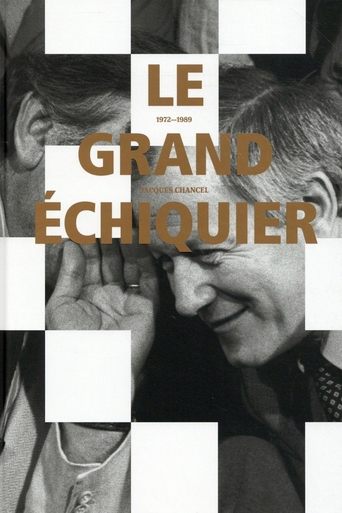
Le Grand Échiquier is a French variety television program created and presented by Jacques Chancel. It aired at 8:30 pm on the first channel of the ORTF from January 12, 1972 to July 12, 1972, then on the second color channel of the ORTF from September 1972 to December 1974, and finally on Antenne 2 from January 1975 to December 21, 1989. The program returned to France 2 on December 20, 2018 and is hosted by Anne-Sophie Lapix.
Le Grand Échiquier
1972
 NR
Documentary film about Vladimir Ashkenazy's and Daniel Barenboim's 1966 performance of Mozart's Concerto for 2 Pianos in E-flat major with the English Chamber Orchestra, featuring the full performance as well as biographical information and a look at the rehearsal process.
Double Concerto
1966
 NR
The struggles of the world’s Jewish people over the course of several centuries are expressed and explored through the music they inspired in this documentary from the BBC and Opus Arte. We Want the Light brings together harrowing tales from Holocaust survivors with performances of music by such legendary composers as Mahler, Bach, Mendelssohn, and Brahms. Interviews with: Alice Sommer Herz, Jacques Stroumsa, Evgeny Kissin, Vladimir Ashkenazy, Zubin Mehta, Itzhak Perlman, Pinchas Zukerman, Toby Perlman, Michael Haas, Elyakim Ha’etzni, Norman Lebrecht, Margaret Brearley, Paul Lawrence Rose, Daniel Barenboim, Yirmiyahu Yovel, Uri Toeplitz & Anita Lasker-Wallfisch. Featuring: Gürzenich-Orchester Köln, Cologne Cathedral Children’s Choir & Cologne Opera Chorus.
We Want the Light
2004
 7.0
Christopher Nupen's record of the concert given by five young musicians in the new Queen Elizabeth Hall at London's South Bank, in 1969. The Trout is an exuberant explosion of youthful enjoyment in music: first from Schubert himself, who wrote his famous Trout quintet when he was 22 years old, and then from five young artists of the highest rank. They pick up the spirit of Schubert's music magnificently, both in preparation and rehearsal, and in their 1969 performance of the work, which has become one of the most remembered ever given. Includes personal introductions by Christopher Nupen and Jacqueline du Pré and features the legendary 1969 performance of The Trout with Daniel Barenboim, Itzhak Perlman, Jacqueline du Pré, Pinchas Zukerman and Zubin Mehta.
The Trout
1970
 NR
Pollini plays flawlessly, with the greatest finesse and sensitivity, very much in tune with each composer's personal style. His performances are exemplary in every respect. The video and audio are quite acceptable, given their 1970s vintage. Böhm and Abbado are at home in this repertoire, and the Wiener Philharmoniker in excellent form, notwithstanding a few strange noises coming from the horns.
Beethoven, Mozart & Brahms Piano Concertos
1979
 NR
From his home in Granada, pioneering guitarist Andres Segovia looks back on his 60-year music career and his contribution to Western music.
Segovia at Los Olivos
1976
Film credits

Series credits
Behind the camera
NRDocumentary film about Vladimir Ashkenazy's and Daniel Barenboim's 1966 performance of Mozart's Concerto for 2 Pianos in E-flat major with the English Chamber Orchestra, featuring the full performance as well as biographical information and a look at the rehearsal process.
Double Concerto
1966
NRDocumentary film about Vladimir Ashkenazy's and Daniel Barenboim's 1966 performance of Mozart's Concerto for 2 Pianos in E-flat major with the English Chamber Orchestra, featuring the full performance as well as biographical information and a look at the rehearsal process.
Double Concerto
1966
NRThe struggles of the world’s Jewish people over the course of several centuries are expressed and explored through the music they inspired in this documentary from the BBC and Opus Arte. We Want the Light brings together harrowing tales from Holocaust survivors with performances of music by such legendary composers as Mahler, Bach, Mendelssohn, and Brahms. Interviews with: Alice Sommer Herz, Jacques Stroumsa, Evgeny Kissin, Vladimir Ashkenazy, Zubin Mehta, Itzhak Perlman, Pinchas Zukerman, Toby Perlman, Michael Haas, Elyakim Ha’etzni, Norman Lebrecht, Margaret Brearley, Paul Lawrence Rose, Daniel Barenboim, Yirmiyahu Yovel, Uri Toeplitz & Anita Lasker-Wallfisch. Featuring: Gürzenich-Orchester Köln, Cologne Cathedral Children’s Choir & Cologne Opera Chorus.
We Want the Light
2004
7.0Christopher Nupen's record of the concert given by five young musicians in the new Queen Elizabeth Hall at London's South Bank, in 1969. The Trout is an exuberant explosion of youthful enjoyment in music: first from Schubert himself, who wrote his famous Trout quintet when he was 22 years old, and then from five young artists of the highest rank. They pick up the spirit of Schubert's music magnificently, both in preparation and rehearsal, and in their 1969 performance of the work, which has become one of the most remembered ever given. Includes personal introductions by Christopher Nupen and Jacqueline du Pré and features the legendary 1969 performance of The Trout with Daniel Barenboim, Itzhak Perlman, Jacqueline du Pré, Pinchas Zukerman and Zubin Mehta.
The Trout
1970
NRPollini plays flawlessly, with the greatest finesse and sensitivity, very much in tune with each composer's personal style. His performances are exemplary in every respect. The video and audio are quite acceptable, given their 1970s vintage. Böhm and Abbado are at home in this repertoire, and the Wiener Philharmoniker in excellent form, notwithstanding a few strange noises coming from the horns.
Beethoven, Mozart & Brahms Piano Concertos
1979
NRFrom his home in Granada, pioneering guitarist Andres Segovia looks back on his 60-year music career and his contribution to Western music.
Segovia at Los Olivos
1976
NRFrom his home in Granada, pioneering guitarist Andres Segovia looks back on his 60-year music career and his contribution to Western music.
Segovia at Los Olivos
1976
 NR
Documentary about pianist and Holocaust survivor Alice Sommer Herz. In the concentration camps she played more than 100 concerts, and credits music for saving her life.
Alice Sommer: Everything Is a Present
2009
NRDocumentary about pianist and Holocaust survivor Alice Sommer Herz. In the concentration camps she played more than 100 concerts, and credits music for saving her life.
Alice Sommer: Everything Is a Present
2009
 NR
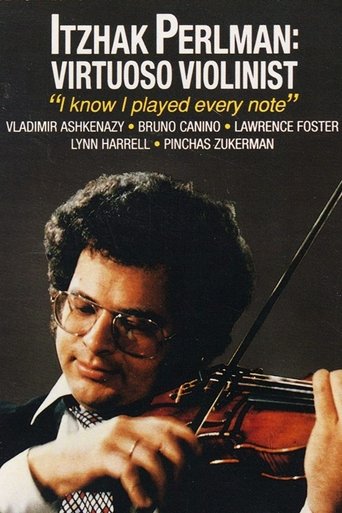
Documentary on the life and career of violinist Itzhak Perlman, including interviews, archival footage, and concert performances.
Itzhak Perlman: Virtuoso Violinist
1978
This performance in May 1970, at St. John’s Smith Square, was filmed before the onset of Jacqueline du Pré’s illness in the early days of the Barenboim/du Pré/Zukerman Trio, which promised to become one of the great Piano Trios of all time. They play Beethoven’s "Piano Trio Opus 70, No. 1".
The Ghost
1970
 NR
A tribute to Jacqueline du Pré to mark the thirtieth anniversary of her death thirty years ago, on 19 October 1987. The film contains archive footage shot during Jacqueline du Pré’s lifetime which captures some glorious and professionally filmed live performances. It also remembers both her personality and her music through the memories and tributes of her closest friends and colleagues.
Jacqueline du Pré: A Gift Beyond Words
2017
NRA tribute to Jacqueline du Pré to mark the thirtieth anniversary of her death thirty years ago, on 19 October 1987. The film contains archive footage shot during Jacqueline du Pré’s lifetime which captures some glorious and professionally filmed live performances. It also remembers both her personality and her music through the memories and tributes of her closest friends and colleagues.
Jacqueline du Pré: A Gift Beyond Words
2017
 NR
Documentary and concert recording by Christopher Nupen
Jacqueline Du Pré – And The Elgar Cello Concerto
—
 NR
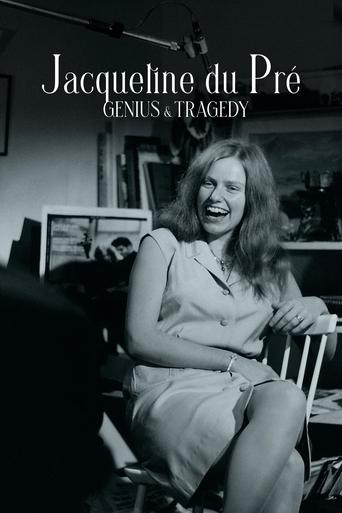
Yo-Yo Ma narrates a documentary about the remarkable cellist Jacqueline du Pré, whose life and career were cut short by multiple sclerosis.
Jacqueline du Pré: Genius and Tragedy
2025
 NR
The Greatest Love and the Greatest Sorrow is a film which sets out to bring the viewer closer, not to the details of Schubert's life, but to the spirit of what he was trying to express with what he called his creative gift and with which he tried "to brighten the world". The film begins with the funeral of Beethoven, at which Schubert was a torch-bearer, His story is told almost entirely in music written in the twenty months that remained to him after that date, together with quotations from Schubert's letters, diaries and the words that he chose to set in some of his songs. Includes personal introductions by Christopher Nupen and Jacqueline du Pré and features the legendary 1969 performance of The Trout with Daniel Barenboim, Itzhak Perlman, Jacqueline du Pré, Pinchas Zukerman and Zubin Mehta.
The Greatest Love and the Greatest Sorrow
1994
 8.0
A re-release of two of Christopher Nupen's most cherished Jacqueline du Pré films. The first is a portrait film which was epoch-making when it premiered; the second is a performance film which was described by the French opera and film director Jean-Pierre Ponelle as the most successful translation of musical performance onto the screen that he had ever seen.
Jacqueline du Pré in Portrait
2004
 NR
Documentary about Soviet-born pianist Vladimir Ashkenazy.
Ashkenazy Observed
1987
 NR
In this stunning film by Christopher Nupen, Segovia returns to the Granada of his youth, site of his personal and musical formation. The world-famous Alhambra—empty of tourists, between midnight and 4 AM—plays host to a deeply moving selection of Segovia’s signature pieces, many in his own arrangements, all imbued with the meditative, profoundly soulful qualities that lifted him to the pinnacle of artistry and helped him redefine what was considered possible for guitarists.
Andrés Segovia: The Song of the Guitar
1977
NRIn this stunning film by Christopher Nupen, Segovia returns to the Granada of his youth, site of his personal and musical formation. The world-famous Alhambra—empty of tourists, between midnight and 4 AM—plays host to a deeply moving selection of Segovia’s signature pieces, many in his own arrangements, all imbued with the meditative, profoundly soulful qualities that lifted him to the pinnacle of artistry and helped him redefine what was considered possible for guitarists.
Andrés Segovia: The Song of the Guitar
1977
 9.0
Director Christopher Nupen paints an honest, moving portrait of Jacuqeline Du Pre, the cellist who mesmerized audiences every time she took the stage. Du Pre (whose life also inspired the film Hilary and Jackie) transcended other players on the horizon from the moment she debuted at age 16 and broke the hearts of classical music enthusiasts everywhere when she had to retire 11 years later after multiple sclerosis left her unable to play.
Remembering Jacqueline Du Pre
1994
 NR
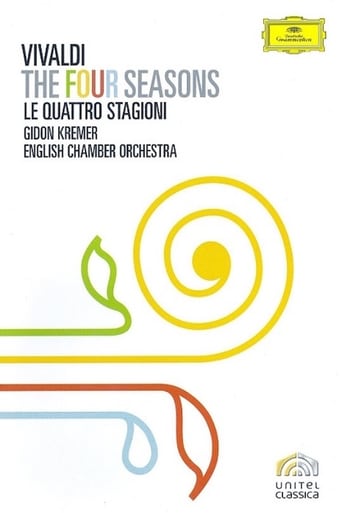
In April 1981 violinist Gidon Kremer performed Vivaldi's Four Seasons leading the English Chamber Orchestra recorded in the baroque library of the monastery in Polling, near Munich. It is, as one would expect from a master violinist, a superbly insightful performance. The sound is resonant and satisfying although surely not true 5.1, and those who wish to have this music on video might well investigate it.
Vivaldi Le Quattro Stagioni
2008
 8.5
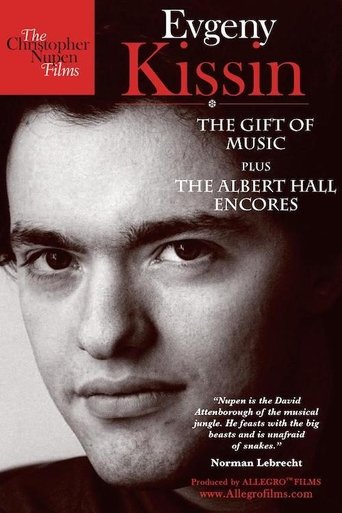
Evgeny Igorevich Kissin was born in Moscow on the 10th of October 1971. He started to play the piano at the age of two, as soon as he was tall enough to reach the keyboard and he has not looked back from that day to this. His is a very rare story of continued success that has had the simultaneous blessing of critics, the public and musicians alike. This film by Christopher Nupen shows Kissin in preparation, interview, rehearsal and performance, with several dazzling performances shot live on stage, in true concert conditions. It also contains all the encores from Kissin's memorable Promenade concert at the Royal Albert Hall, London, in August, 1997—the first Prom concert by a soloist, it attracted the biggest audience in all the 103 year history, very nearly six thousand people. The music is by Liszt, Gluck, Haydn, Beethoven, Schubert, Paganini, Kissin himself and Chopin, the composer for whom Kissin feels the closest affinity.
Evgeny Kissin: The Gift of Music
1999
8.5Evgeny Igorevich Kissin was born in Moscow on the 10th of October 1971. He started to play the piano at the age of two, as soon as he was tall enough to reach the keyboard and he has not looked back from that day to this. His is a very rare story of continued success that has had the simultaneous blessing of critics, the public and musicians alike. This film by Christopher Nupen shows Kissin in preparation, interview, rehearsal and performance, with several dazzling performances shot live on stage, in true concert conditions. It also contains all the encores from Kissin's memorable Promenade concert at the Royal Albert Hall, London, in August, 1997—the first Prom concert by a soloist, it attracted the biggest audience in all the 103 year history, very nearly six thousand people. The music is by Liszt, Gluck, Haydn, Beethoven, Schubert, Paganini, Kissin himself and Chopin, the composer for whom Kissin feels the closest affinity.
Evgeny Kissin: The Gift of Music
1999
 NR
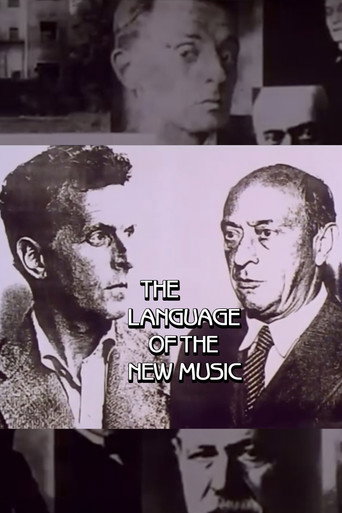
This is a film about Ludwig Wittgenstein and Arnold Schoenberg; two men whose lives and ideas run parallel in the development of Viennese radicalism. Both men emerged from the turmoil of the Habsburg Empire in its closing days with the idea of analyzing language and purging it with critical intent, believing that in the analysis and purification of language lies the greatest hope that we have. They never met and might never have fully understood one another, because while the nature of their genius they found themselves alone breaking new ground of the very frontiers of their respective disciplines. But their work springs from the same soil and shares a common ethical purpose, so that their ideas and methods echo and illuminate those of each other to a remarkable degree.
The Language Of The New Music
1985
 NR
A documentary portrait of famed Ukrainian-American violinist Nathan Milstein (1903–92), covering his life and career through conversations with the artist and with some of his notable students, interspersed with brief performances and followed by two concert performances.
Nathan Milstein: In Portrait
1992
NRA documentary portrait of famed Ukrainian-American violinist Nathan Milstein (1903–92), covering his life and career through conversations with the artist and with some of his notable students, interspersed with brief performances and followed by two concert performances.
Nathan Milstein: In Portrait
1992
This film is a portrait film of Vladimir Ashkenazy directed by Christopher Nupen. It includes sequences with Itzhak Perlman, Daniel Barenboim, Edo de Waart and the Rotterdam Philharmonic Orchestra. There is music by Beethoven, Chopin, César Franck and Stravinsky. It is also a closely observed account of one of the most demanding and rewarding of all professions. In 1972, after seeing it, Ingmar Bergman said it was the best documentary he had seen about a living musician.
Vladimir Ashkenazy: The Vital Juices Are Russian
1970
 NR
Born with the gift from nature, polished by years of painstaking work, Pinchas Zukerman was between the ages of 7 and 17 the best teaching that could possibly be found. His well-spent youth established him with an international career before he was 21. The close friendship between the artist and the director, Christopher Nupen, provides not only an interesting documentary but also a touching immersion in the intimacy of one of the greatest violinists the world has ever known.
Pinchas Zukerman: Here to Make Music
1975
 NR
Two Christopher Nupen films about the music and the artistic intentions of Pyotr Ilyich Tchaikovsky, one of the greats and a composer who appeals to millions of people.
Tchaikovsky: Women & Fate
1988