
Writing
Étienne de Jouy
Born — Died
1784-09-12 — 1846-09-04
Place of birth
Jouy-en-Josas, Yvelines, France
Known for
Writing
Credits
6 titles
Known for
 7.0
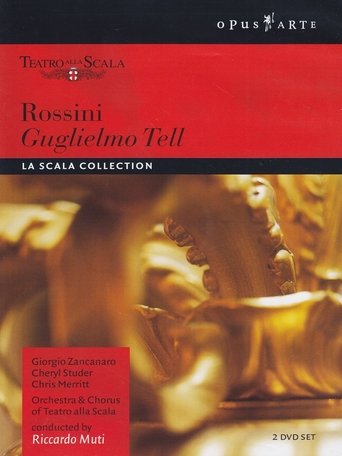
Live from La Scala Wednesday 14 December 1988.
Guglielmo Tell
1988
 6.5
Live from La Scala Wednesday 10 December 2003
Rossini: Moïse et Pharaon
2003
 NR
New production. Recorded live at Royal Opera House, July, 05, 2015.
Guillaume Tell
2015
 NR
Live from Munich June 2014. Guillaume Tell , in a new production by 30-year-old Wunderkind stage director Antú Romero Nunes, opens this year’s Munich Opera Festival with an orgy of fabulous singing.
Guillaume Tell
2014
 6.5
The hero of this admirably complete August 2013 Guillaume Tell from Pesaro is homegrown maestro Michele Mariotti. The inimitable overture is (mercifully) unstaged and terrifically played, with splendid cello and flute solos: the fine standard never flags. Rossini’s extraordinary 1829 score audibly presages Meyerbeer, Berlioz, Glinka, Verdi and Wagner, among many others. Graham Vick’s direction privileges class conflict, with a clenched fist on the red-and-white forecurtain. The Edwardian costumes place Austrians in white evening garb; the black-clad Swiss polish the floor while the rulers savor a filming (much of that to follow) — the fisherman Ruodi, in a boat with a blonde and fake scenery, with Tell and his family providing tech support. Vick deploys geographical and historical kitsch liberally but not (always) pointlessly. Ron Howell’s pretentious, mannered choreography, however, beggars belief.
Rossini: Guillaume Tell
2013
“Let us assume that Switzerland is truly a paradise. The music hereto was written long ago. We have merely forgotten it.” (Daniel Schmid) This is the material from which the most Swiss of all operas is made: the legendary Wilhelm Tell – a Swiss hero: straightforward, a primus inter pares of the indomitable freedom fighters, a good shot, surefire. A myth that becomes a poetic playground: nature in turmoil, the struggle for freedom and forbidden love. A legendary overture at a gallop with an iconic post horn motif – all this and much more in the thirty-seventh and last opera by Rossini.
William Tell
1987
Behind the camera
7.0Live from La Scala Wednesday 14 December 1988.
Guglielmo Tell
1988
6.5Live from La Scala Wednesday 10 December 2003
Rossini: Moïse et Pharaon
2003
NRNew production. Recorded live at Royal Opera House, July, 05, 2015.
Guillaume Tell
2015
NRLive from Munich June 2014. Guillaume Tell , in a new production by 30-year-old Wunderkind stage director Antú Romero Nunes, opens this year’s Munich Opera Festival with an orgy of fabulous singing.
Guillaume Tell
2014
6.5The hero of this admirably complete August 2013 Guillaume Tell from Pesaro is homegrown maestro Michele Mariotti. The inimitable overture is (mercifully) unstaged and terrifically played, with splendid cello and flute solos: the fine standard never flags. Rossini’s extraordinary 1829 score audibly presages Meyerbeer, Berlioz, Glinka, Verdi and Wagner, among many others. Graham Vick’s direction privileges class conflict, with a clenched fist on the red-and-white forecurtain. The Edwardian costumes place Austrians in white evening garb; the black-clad Swiss polish the floor while the rulers savor a filming (much of that to follow) — the fisherman Ruodi, in a boat with a blonde and fake scenery, with Tell and his family providing tech support. Vick deploys geographical and historical kitsch liberally but not (always) pointlessly. Ron Howell’s pretentious, mannered choreography, however, beggars belief.
Rossini: Guillaume Tell
2013
“Let us assume that Switzerland is truly a paradise. The music hereto was written long ago. We have merely forgotten it.” (Daniel Schmid) This is the material from which the most Swiss of all operas is made: the legendary Wilhelm Tell – a Swiss hero: straightforward, a primus inter pares of the indomitable freedom fighters, a good shot, surefire. A myth that becomes a poetic playground: nature in turmoil, the struggle for freedom and forbidden love. A legendary overture at a gallop with an iconic post horn motif – all this and much more in the thirty-seventh and last opera by Rossini.
William Tell
1987