

Directing
Nguyễn Trinh Thi
Known for
Directing
Credits
17 titles
Nguyen Trinh Thi is a Hanoi-based independent filmmaker and video/media artist. Her diverse practice has consistently investigated the role of memory in the necessary unveiling of hidden, displaced or misinterpreted histories; and examined the position of artists in the Vietnamese society. Nguyen studied journalism, photography, international relations and ethnographic film in the United States. Her films and video art works have been shown at festivals and art exhibitions including Jeu de Paume, Paris; CAPC musée d’art contemporain de Bordeaux; the Lyon Biennale 2015; Asian Art Biennial 2015, Taiwan; Fukuoka Asian Art Triennial 2014; Singapore Biennale 2013; Jakarta Biennale 2013; Oberhau…
Known for
 NR
NRResisting the westernised reliance on images for creating narratives, telling stories and experiencing the world, How to Improve the World turns to music and sound as a way of perceiving through listening. Originally a 3-channel installation, this aurally centred work reflects on the past, present and future of indigenous cultures of the people in Vietnam’s Central Highlands.
How to Improve the World
2021
 NR
NREleven Men combines footage from a range of Vietnamese classic feature films produced by the state-owned Vietnam Feature Film Studio with Franz Kafka’s short story Eleven Sons. Focusing on a single actress, Nhu Quynh, and spanning three decades of her career, Eleven Men transposes Kafka’s male family imaginary to the analysis of a woman’s relation to her lovers.
Eleven Men
2016
 NR
NRThe film uses footage from Trần Đắc’s eponymous feature-length classic produced by the state-owned Vietnam Feature Film Studio. Based on the story of a real-life hero, the original 1973 film was made to provide encouragement to young soldiers serving in the war. Accompanied by Stravinsky’s Rite of Spring, this recut, with its rapid rhythm and suspenseful images leading to ambiguous intervals imbued with both violence and sensuality, facilitated a multilayered experience that disturbs and detours from the source material’s clear-cut message, content and aesthetics. An exploration of cinematic language, the film simultaneously investigates the narratives generated by collective memory and official history, as it seeks and questions the truth and the possibility to construct it from images. A pioneering found footage work in Vietnam, Song to the Front exemplifies Nguyễn Trinh Thi’s experiments with moving images.
Song to the Front
2011
 2.7
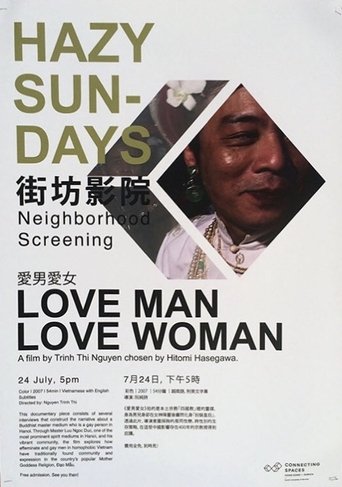
2.7Through Master Luu Ngoc Duc, one of the most prominent spirit mediums in Hanoi, and his vibrant community, the film explores how effeminate and gay men in homophobic Vietnam have traditionally found community and expression in the country’s popular Mother Goddess Religion, Đạo Mẫu.
Love Man Love Woman
2007
 NR
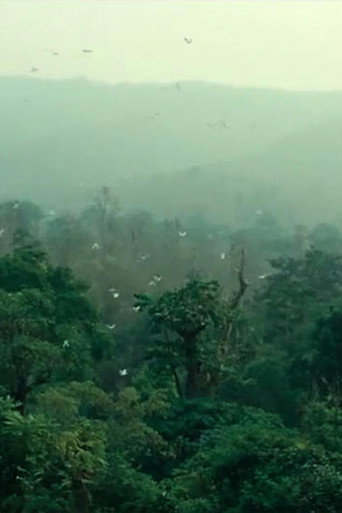
NR47 Days, Sound-less by Vietnamese artist Nguyễn Trinh Thi is a film that explores the relationships between sound and silence, vision, language, colours and their absence. Nguyễn identifies “peripheries”—including natural landscapes used as backdrops, uncredited characters and soundtracks from American and Vietnamese movies—that reveal more-than-human perspectives. Offering new ways of looking and listening, 47 Days, Sound-less invites audiences to reflect on the inextricable relationship between a place and its inhabitants.
47 Days, Sound-less
2024
 3.0
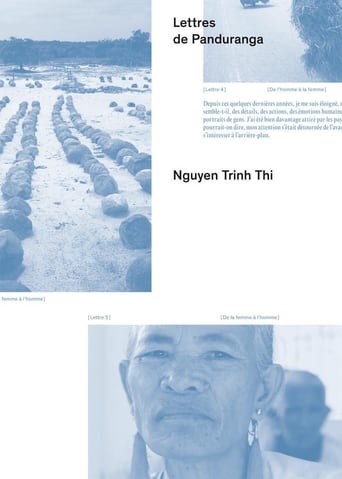
3.0In Vietnamese artist Thi Nguyen’s tranquil essay film, a letter exchange unveils the changing uses of space in various provinces and the different ways its inhabitants remember history.
Letters from Panduranga
2016
Behind the camera
NRResisting the westernised reliance on images for creating narratives, telling stories and experiencing the world, How to Improve the World turns to music and sound as a way of perceiving through listening. Originally a 3-channel installation, this aurally centred work reflects on the past, present and future of indigenous cultures of the people in Vietnam’s Central Highlands.
How to Improve the World
2021
NRResisting the westernised reliance on images for creating narratives, telling stories and experiencing the world, How to Improve the World turns to music and sound as a way of perceiving through listening. Originally a 3-channel installation, this aurally centred work reflects on the past, present and future of indigenous cultures of the people in Vietnam’s Central Highlands.
How to Improve the World
2021
NRResisting the westernised reliance on images for creating narratives, telling stories and experiencing the world, How to Improve the World turns to music and sound as a way of perceiving through listening. Originally a 3-channel installation, this aurally centred work reflects on the past, present and future of indigenous cultures of the people in Vietnam’s Central Highlands.
How to Improve the World
2021
NREleven Men combines footage from a range of Vietnamese classic feature films produced by the state-owned Vietnam Feature Film Studio with Franz Kafka’s short story Eleven Sons. Focusing on a single actress, Nhu Quynh, and spanning three decades of her career, Eleven Men transposes Kafka’s male family imaginary to the analysis of a woman’s relation to her lovers.
Eleven Men
2016
NRThe film uses footage from Trần Đắc’s eponymous feature-length classic produced by the state-owned Vietnam Feature Film Studio. Based on the story of a real-life hero, the original 1973 film was made to provide encouragement to young soldiers serving in the war. Accompanied by Stravinsky’s Rite of Spring, this recut, with its rapid rhythm and suspenseful images leading to ambiguous intervals imbued with both violence and sensuality, facilitated a multilayered experience that disturbs and detours from the source material’s clear-cut message, content and aesthetics. An exploration of cinematic language, the film simultaneously investigates the narratives generated by collective memory and official history, as it seeks and questions the truth and the possibility to construct it from images. A pioneering found footage work in Vietnam, Song to the Front exemplifies Nguyễn Trinh Thi’s experiments with moving images.
Song to the Front
2011
2.7Through Master Luu Ngoc Duc, one of the most prominent spirit mediums in Hanoi, and his vibrant community, the film explores how effeminate and gay men in homophobic Vietnam have traditionally found community and expression in the country’s popular Mother Goddess Religion, Đạo Mẫu.
Love Man Love Woman
2007
NR47 Days, Sound-less by Vietnamese artist Nguyễn Trinh Thi is a film that explores the relationships between sound and silence, vision, language, colours and their absence. Nguyễn identifies “peripheries”—including natural landscapes used as backdrops, uncredited characters and soundtracks from American and Vietnamese movies—that reveal more-than-human perspectives. Offering new ways of looking and listening, 47 Days, Sound-less invites audiences to reflect on the inextricable relationship between a place and its inhabitants.
47 Days, Sound-less
2024
3.0In Vietnamese artist Thi Nguyen’s tranquil essay film, a letter exchange unveils the changing uses of space in various provinces and the different ways its inhabitants remember history.
Letters from Panduranga
2016
3.0In Vietnamese artist Thi Nguyen’s tranquil essay film, a letter exchange unveils the changing uses of space in various provinces and the different ways its inhabitants remember history.
Letters from Panduranga
2016
3.0In Vietnamese artist Thi Nguyen’s tranquil essay film, a letter exchange unveils the changing uses of space in various provinces and the different ways its inhabitants remember history.
Letters from Panduranga
2016
 NR
NRExplores a subjective understanding of the artist’s homeland, Vietnam. Nguyen interrogates local, official histories and external viewpoints on Vietnam, together with the wider ideals of women and men, the role of the artist in society, and the landscape as metaphor. The 55-minute video proposes a homegrown authority that is derived from the artist’s own culture, expanding the concept of "Fourth Cinema," which was originally conceived by Māori filmmaker Barry Barclay in the 1990s. According to Barclay, “Fourth Cinema” is a cinema by, about, and for indigenous peoples defined in opposition to the framework of First (American), Second (Art House) and Third (Third World) Cinema.
Fifth Cinema
2018
 NR
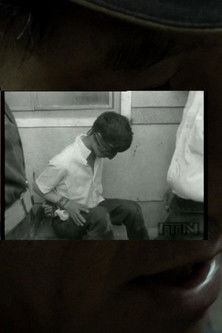
NRThree-Channel Video, Four-Channel Sound, 15 minutes Different versions of the same history – one personal, another depicted by cinema, the third described by the media – are laid on top of each other and collapsed. Mixing footage from 80s and 90s Hong Kong movies, with wire service footage of the Vietnam War and the Vietnamese refugee crisis in Hong Kong from the late 70s until 1997, with an interview with the owner of ‘Paul’s Records’ in Hong Kong, Everyday’s the Seventies continues to explore Nguyễn’s interests in gaps, holes and disconnections in between personal memories/history and other kinds of collective histories. ‘Reading from Below’, Times Art Center Berlin, 2020 State of Motion 2020: Rushes of Time, Singapore 2020 “The sun teaches us that history is not everything”, Osage Art Foundation, Hong Kong 2018 Installation, Glasgow Short Film Festival, Glasgow, Scotland 2018 https://wp.me/p2M4CU-ao
Everyday’s the Seventies
2018
Set in a factory in Asia during an undefined celebration event, Europeans in suits are seen in long wandering shots as they greet one another, shake hands discreetly, and look about themselves expectantly. Further into this ambiguous opening, and propelled by classical Western opera and symphonic orchestrations, Asian workers are observed putting finishing touches of paint and polish onto gleaming surfaces of what will soon be on display in motorbike showrooms. The images and music are sharply punctuated by the abrupt and raw intrusions of live factory sounds that conclude in a jarring visual exclamation, exhuming the verses of an Emily Dickinson poem and laying them out in a contemporary and globalized context.
I died for beauty
2012
 NR
NRUsing ‘exquisite corpse’, a method by which each collaborator adds to a composition in sequence, the filmmaker began her journey over the Vietnam War’s notorious Ho Chi Minh Trail. This interconnected system of jungle roads connecting the North with the South was instrumental for the eventual victory of the Vietnamese communists from the North over the American-backed Southern regime in 1975. Tens of thousands of people died along this trail during the war as it was heavily bombed by the American army. Along these roads, the filmmaker asked local villagers to contribute their tales while the camera was observing their present-day life, merging past with present, reality with fiction, in her effort to assemble a piece of collective history, a history told by the people from the bottom up.
Chronicle of a Tape Recorded Over
2010
 NR
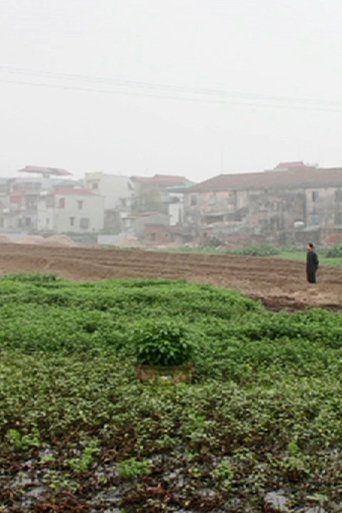
NRComposed of found photographs from newspaper reports that show people pointing into a seemingly empty landscape: something often found in Vietnamese newspapers as photographers usually arrive at the scene of an event only after it has taken place.
Landscape Series #1
2013
 NR
NRSet in a factory in Asia during an undefined celebration event, Europeans in suits are seen in long wandering shots as they greet one another, shake hands discreetly, and look about themselves expectantly. Further into this ambiguous opening, and propelled by classical Western opera and symphonic orchestrations, Asian workers are observed putting finishing touches of paint and polish onto gleaming surfaces of what will soon be on display in motorbike showrooms. The images and music are sharply punctuated by the abrupt and raw intrusions of live factory sounds that conclude in a jarring visual exclamation, exhuming the verses of an Emily Dickinson poem and laying them out in a contemporary and globalized context.
I Died for Beauty
2012
 NR
NRVietnam the Movie uses a carefully structured montage of clips from drama and documentary films to give a chronological account of Vietnamese history from the mid-1950s to the late 1970s, encompassing the end of French colonialism and America’s involvement in the Vietnam War. But this is no conventional history lesson. Rather, the excerpts chosen contrast a variety of external and often oppositional views, ranging from mainstream Hollywood drama to European art-house. Source material from the US includes Apocalypse Now, Born on the Fourth of July and Forrest Gump, whilst Europe is represented by the works of Harun Farocki, Rainer Werner Fassbinder, Werner Herzog and Jean-Luc Godard. The result suggests that any ‘true’ picture of Vietnam has been lost to the multiplicity of symbolic purposes to which the country, its people and their tribulations have been put.
Vietnam the Movie
2014