
Known for
 7.3
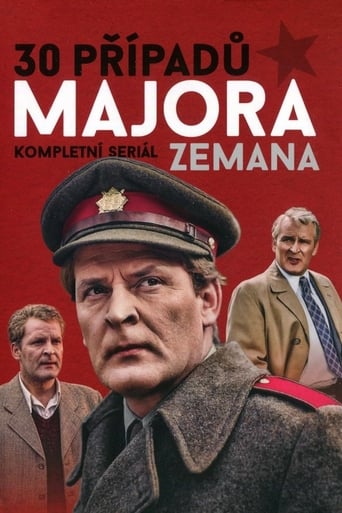
Thirty Cases of Major Zeman is a Czechoslovak action-drama television show intended as a political propaganda to support the official attitude of the communist party. The series were filmed in the 1970s. Each episode encompasses one year, and investigations are stylized to that year. Most are inspired by real cases. The series follows the life of police investigator Jan Zeman during his career from 1945 to 1975.
Thirty Cases of Major Zema
1976
 NR
No synopsis available yet.
Nejmladší z rodu Hamrů
1975
 5.6
A bitter sweet comedy that follows a highly appointed Chancellor who set to step down from his position after years of service to his country. With just two last days left to enjoy his palatial villa before he is finally evicted, his situation gradually goes from bad to worse.
Leaving
2011
 5.2
No synopsis available yet.
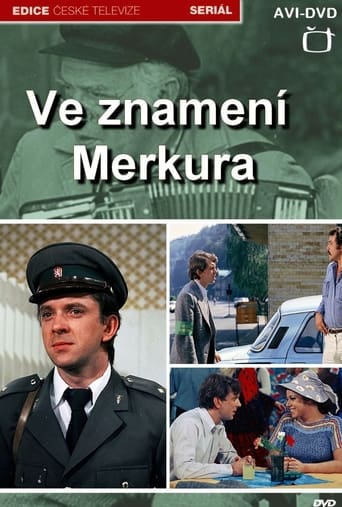
Ve znamení Merkura
1979
 8.8
No synopsis available yet.
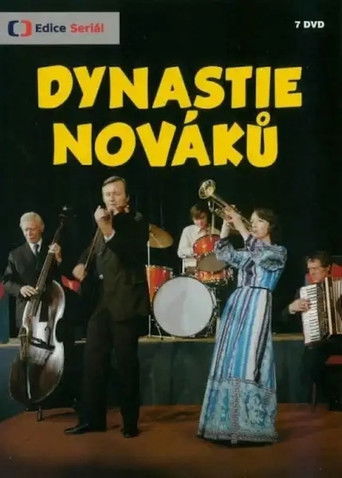
Dynastie Nováků
1982
 NR
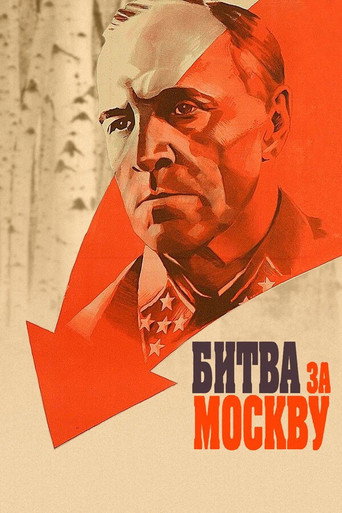
The Battle of Moscow is a 1985 Soviet multi-part war narrative, presenting a dramatized account of the 1941 Battle of Moscow and the events preceding it. The battle was the first major defeat of German Wehrmacht in the Second World War.
Battle of Moscow
1985
Film credits
1980s · 10 titles
NRThe Battle of Moscow is a 1985 Soviet multi-part war narrative, presenting a dramatized account of the 1941 Battle of Moscow and the events preceding it. The battle was the first major defeat of German Wehrmacht in the Second World War.
Battle of Moscow
1985
 5.9
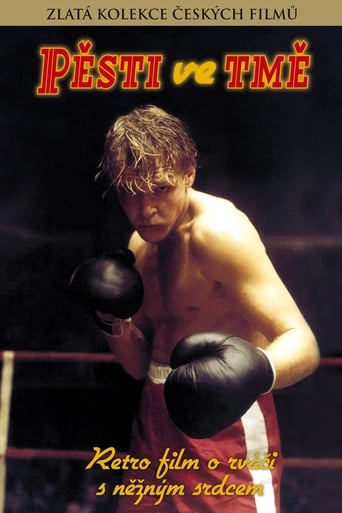
The year is 1936, the nervous atmosphere of the Nazi threat penetrates into the sport. Upgrade boxe Vilda Jakub will compete with German Kurt Schaller. The Nazis decisions are used in order to win his master even the dirtiest means. Vilda inspect their game and focus on the preparation of environmental events. The story culminates in the victory of one of the two lovers, between which Vilda tense moments in the decision.
Pěsti ve tmě
1987
 9.0
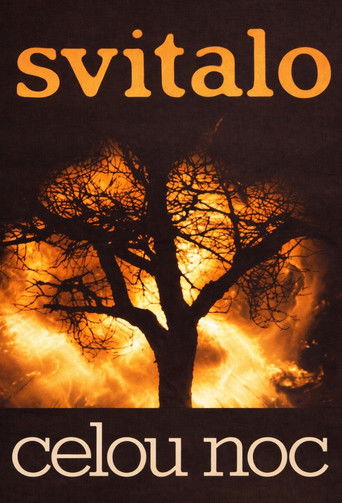
The Czech film Svítalo All Night was made to commemorate the 35th anniversary of the liberation of Czechoslovakia by the Soviet Army and is dedicated to all those who fought and gave their lives in Prague in the May Uprising of 1945. Behind the historical events, the creators see mainly their simple, unassuming participants. Thus, we are presented with a number of apt portraits, whether it is the central hero Dr. Soukup and nurse Daniela on the side of the fighting Czechs, or a captain and a simple private in a Red Army unit coming to the aid of the fighting Prague, or an old, war-weary German major, who only realises the senselessness of the war at the sight of a fanatical, cynical lieutenant for whom Nazi ideology represents the meaning of life.
Svítalo celou noc
1980
 7.0
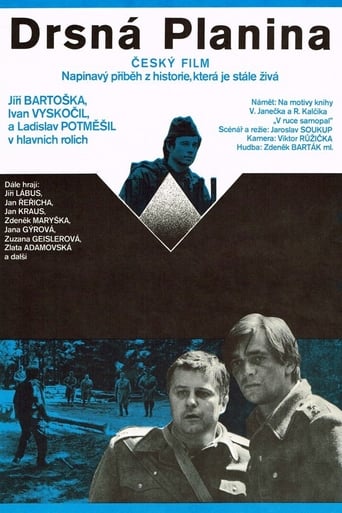
Chronicle of frontier division Czech police (SNB) in the years 1946 - 1949.
Drsná Planina
1980
 7.5
The hero of the opening story, the Postman Puppet (directed by Zdeněk Troška), works as a postman in the mountains. When his wife is taken to the maternity ward, he goes on his usual hike through the solitudes. Little Libor goes after the father of two girls (Petr Pospíchal), who longs for a son. Meanwhile, the weather on the ridges worsens sharply. An experienced mountaineer and his little friend spend the night in a makeshift shelter... The second episode of Hádanka (directed by Jan Ekl) has a criminal plot. A new father (Vlastimil Hašek) gets drunk with friends in a wine bar and the next day becomes a suspect in a murder. He doesn't remember the critical moments, but his testimony leads to the capture of the real perpetrator... The main character of the final short story True Love (directed by Vladimír Drha) is a frat boy (Pavel Zedníček) who spends whole days in pubs. He gets a harsh lesson from his wife, who refuses to let him see the baby...
How a Man Gives Birth
1980
 7.0
The film thematically follows the stories of the TV series "30 cases of Major Zeman". We can meet Major Zeman again with Lieutenant Colonel Zitny, Major Hradec and Lieutenant Gajdoš. The film is set in 1972 in a South American country and shows the activities of an international counter-revolutionary headquarters, which the central character of the film - Major Hradec - uncovers even at the cost of his own life. The film was largely shot in Cuba. The film is an edited version of the series episodes 27 and 28 "Messages from an Unknown Land" and "Hostages in Bella Vista".
Rukojmí v Bella Vista
1980
 7.2
A young Czech couple are terrorized by their funny family.
Don't Take the Sweater Off
1981
 7.5
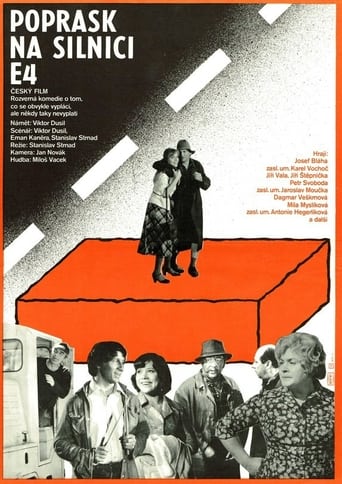
Car transport of the locomotive is difficult, as the cargo is bulky. The three-man crew of the tractor therefore experiences many difficulties on the long journey across Bohemia...
Poprask na silnici E 4
1980
 4.6
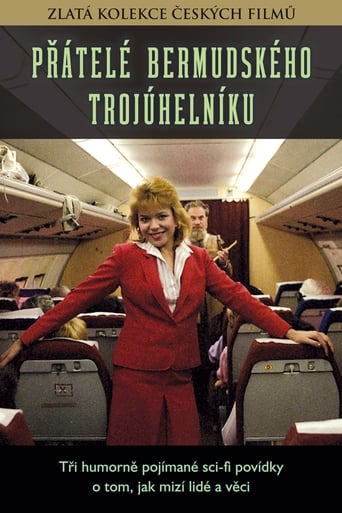
The idea of mystery unites the three debut stories - the original Bermuda Triangle with its mysterious phenomena has begun to shift and can be traced anywhere in the world, including Czech and Slovak territory. Here, too, unexplained shifts in space and time occur. This idea is supported by the aforementioned short stories, but the inventiveness of the subject matter and staging is very heavy-handed, and the film passed through the cinemas without much interest.
Přátelé bermudského trojúhelníku
1987
The theme is inspired by the real life stories of Czechoslovak cyclists Jan Vesely and Jan Kubro. It offers us a look behind the scenes of big races, conflicts with coaches and inner tensions in borderline situations.
Čestné kolo
1989
1970s · 19 titles
The television program *Svátek melodií* (Holiday of Melodies) marked the 30th anniversary of Pragokoncert, the former Czechoslovak arts agency established in 1948, which represented socialist-era artists for both domestic and international stages. The concert is hosted by actress Hana Maciuchová and Tomáš Sedláček. Leading pop stars of the late 1970s perform a selection of songs, including such once-famous hits as "Co takhle dát si špenát," "Kolotoč," "Klaudie," "Snad jsem se ti zdál," "Do re mi la," "Song se má hrát," "Motorest," "Hrajte starý rokenrol," "Chanson d’amour," "Malovaný džbánku," "Jsem tvá," and "Tentokrát se budu smát já." The Pragokoncert Grand Orchestra is conducted by Milivo Uzelac and Ladislav Štaidl.
Holiday of Melodies
1978
 9.0
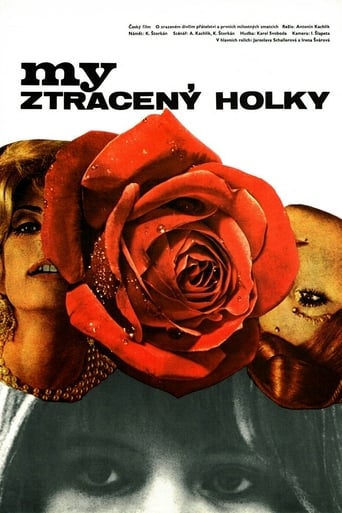
Zofie and Dominika, two girls of very different temperaments, become friends during hop-picking volunteer work in the summer. Zofie (Jaroslava Schallerová) is serious to the point of reticence and she is delighted with her friendship with Dominika. For the self-assured and superficial Dominika (Irena Svárová) the whole thing is just a momentary whim. When she leaves the work camp before everybody else, she doesn't even say goodbye to Zofie. The two girls meet again after the holidays as first-year students at medical school, and become close again during the nursing techniques class.
We, the Lost Girls
1972
 7.0
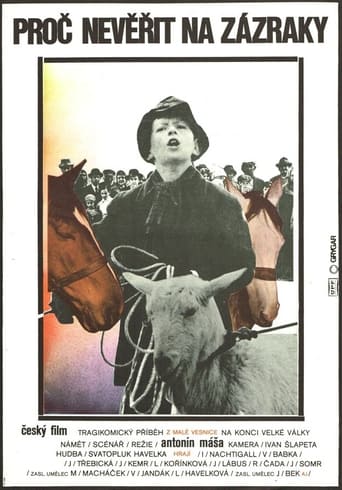
Wartime events from a child's perspective were a popular theme during the previous regime - here it is a twelve-year-old village boy who experiences dangerous situations with retreating Nazi troops in picturesque South Bohemia... Any attempt to achieve a more believable depiction is destroyed by the staging's grandeur, and in the end the result is an awkward piece, suitable at most for celebrating the relevant national holidays. A longer copy with a tragic ending is stored in the NFA. Milda is shot unnoticed by an SS major.
Proč nevěřit na zázraky
1978
 9.0
The 11-year old Jakub is living in a children's home, when he is picked up by his father. The father has been "away" for four years, the boys mother doesn't want the child. Jakub gradually finds out, that his father is hiding a secret from him. But they gradually manage to build a warm relationship and a promising new life in the city.
Jacob
1977
 9.0
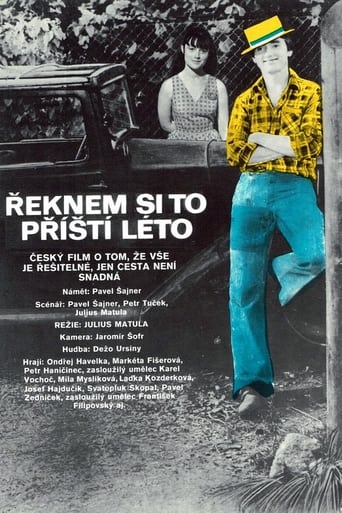
Karel, a young man with an unknown past, but with a defined set of values and an ideal moral code, arrives in the village in the middle of the harvest. For the ordinary, down-to-earth villagers, Karel's lifestyle is hard to understand and they simply do not accept him into their midst. The summer ends and he leaves with his message again somewhere else. Perhaps he will return here next year to try to repeat his strange mission...
Řeknem si to příští léto
1978
 7.0
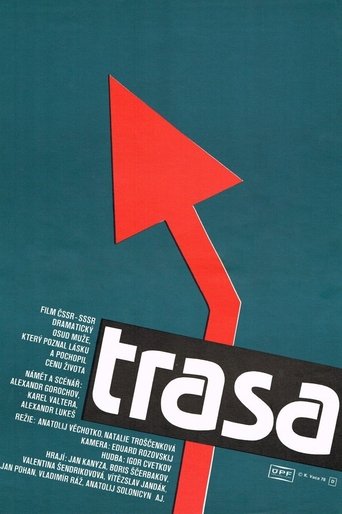
Experiences of a Tatra factory driver during demanding load tests of Tatra 148 trucks in extremely harsh climatic conditions during the construction of the Nizhnevartovsk oil pipeline.
Trasa
1979
Those who take too long to choose their life partner usually take too long - so goes the old saying. Even a long indecisive girl, who is looking in vain for someone who would fully impress her, is convinced of its truth...
Takže ahoj
1971
 6.5
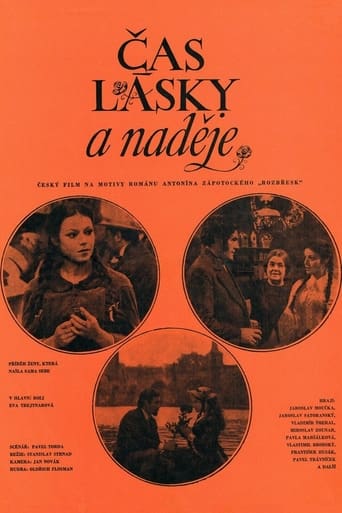
A colour-printed melodramatic selanca from the beginnings of the organised labour movement in Bohemia... Antonín Zápotocký, the second workers' president, is the author of the literary novel Rozbřesk - the plot is said to be inspired by the fate of his grandmother and mother.
Čas lásky a naděje
1976
Three short stories ("Zelenáči 1945", "Silvestr 1948" and "Zimní vítr 1951") about members of the SNB units guarding the Šumava border in the post-war years. Ivo Toman had artistic supervision over the debutants. The theme of the third short story was made in 1959 for the film "Entry Forbidden" by František Vláčil, who was also starting at the time.
Boty plné vody
1976
No synopsis available yet.
Josefina
1974
 6.0
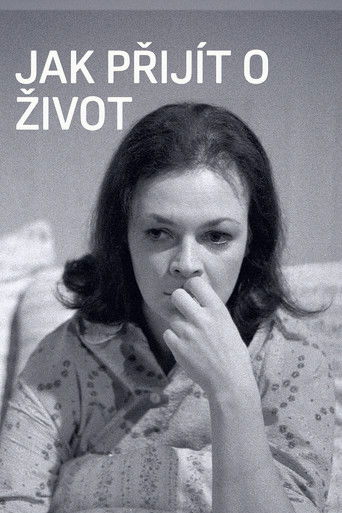
No synopsis available yet.
Jak přijít o život
1974
 4.2
A short story film depicting the three different faces of crime. In the short story "The Weekend", Karas kills a woman he raped some time ago in order to silence her. However, he accidentally kills another woman. In "Hostages", a drug addict, Chaban, terrorizes the hospital's operating team, but the disciplined doctors handle the difficult situation. In "The Pickpocket", the thief Benda wants to return to his trade immediately after his release, but his attempt ends tragically.
The Motive for Murder
1975
4.2A short story film depicting the three different faces of crime. In the short story "The Weekend", Karas kills a woman he raped some time ago in order to silence her. However, he accidentally kills another woman. In "Hostages", a drug addict, Chaban, terrorizes the hospital's operating team, but the disciplined doctors handle the difficult situation. In "The Pickpocket", the thief Benda wants to return to his trade immediately after his release, but his attempt ends tragically.
The Motive for Murder
1975
A young and shy bachelor wants to get his driver's license. His driving school teacher, however, is used to "noticing", takes bribes and only gives his pupils their licence for bottles. His pupil, depressed and depressed, becomes close to a colleague, learns to drive at night and not only that...
Přikázaný směr jízdy
1977
 8.0
In the era of normalization, even seemingly buried agent stories came back. This one takes place in the immediate post-war years and tells the story of the discovery of a spy network that an American diplomat was spinning on Czech territory. He was unsuccessful: first, a close associate, who was proven to have collaborated with the Nazis during the war, committed suicide, followed by the intervention of the vigilant Security Service. However, the fleeing Americans were joined "in return" by a Czechoslovak agent... This naive adventure story could hardly be taken seriously. The book, which served as the basis for the film, was written based on actual events that took place in 1948.
Quiet American in Prague
1978
A television adaptation of the poetic play by Vítězslav Nezval. The love story of the knight de Grieux and the sinful saint Manon was staged for the television screen with an extraordinary sense of poetic value in 1970. Poetic salons with many mirrors, decorative candlesticks, flowing curtains.
Manon Lescaut
1970
 3.3
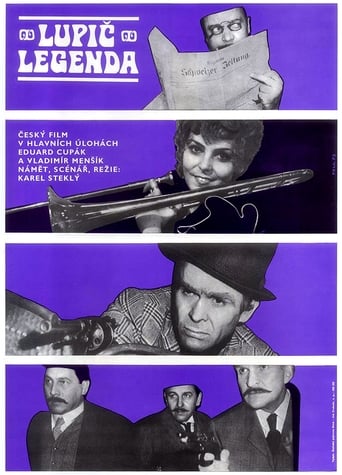
It is 1905. The police director gets Jindrich Legenda (Eduard Cupák) shadowed as, yet Legenda had served his sentence for a burglary, the jewels have not been found. Russian revolution encouraged also Czech workers to fight for their rights. Radical anarchists are followed by Legenda's friend Karel Wohryzek (Vladimír Mensík) who was forced to collaborate with the police as he was convicted of pornography distribution.
Legenda, the Robber
1973
 5.3
The bank officer Bedrich Hroch is sent by the bank director to the zoo, which asked an allocation of one and half kg of gold for a gold tooth for a hippo. During the check up of the hippo's teeth Bedrich is swallowed by the hippo. The man does not die in the hippo's guts and he chats quite happily with his frightened wife Dása. Journalist Pip Karen, his friend is also present to the dialogue and he has immediately an idea how to use this special situation. He tells to the new minister Borovec and his opponent professor Fibinger that there is a hippo in the zoo which can speak. He also tells them how to use this situation for a political propaganda.
Hroch
1973
 10.0
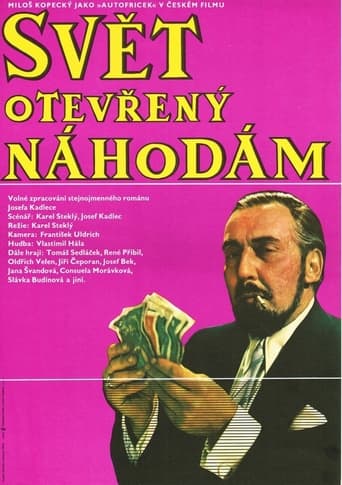
An unemployed young man in the second half of the 1930s, he tries various ways of making a living and, under the influence of a group of communist youth, eventually goes to Spain as an inter-brigadista...
Svět otevřený náhodám
1972
1960s · 7 titles
 10.0
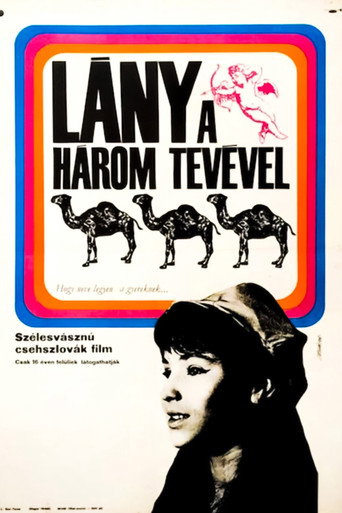
The fates of the women are repeated: the 16-year-old daughter of a 32-year-old mother is also pregnant. Like her mother, the child remains unmarried and fatherless. From him, the girl receives only an exotic postcard with the titular three camels...
The Girl with Three Camels
1967
 6.2
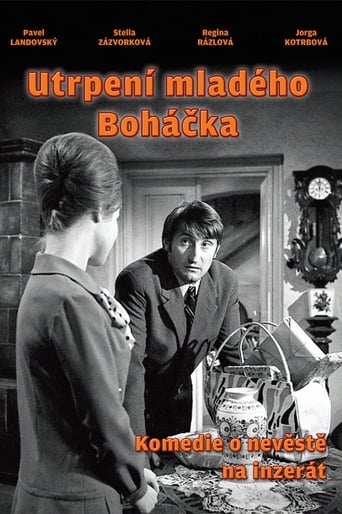
Tóna Bohácek has been a great worry to his mother, Mrs Bohácková. All his friends equal in age are already married and some of them even have children - only Tóna still has nothing. Mother Bohácková thus publishes an ad in the Lonely Hearts column on behalf of her son. From among the girls who responded, she picks out Janicka, a girl from the neighboring village, and then forces Tóna to go to have a look at her and bring her home. The date of the two young people, however, does not turn out well due to the embarrassment on both sides, and Tóna returns home drowning in the feeling of ridiculousness. On the way, he picks up hitchhiker Kveta from Prague. Only then, he realizes that the mother with her festive dinner is waiting for him and Janicka at home and thus asks Kveta to substitute for the girl from the ad.
Young Bohácek's Sufferings
1969
 6.0
A young boy from Prague is trying to find a Soviet soldier from the old 1945 picture.
The Lost Photography
1960
 6.7
Jurácek's feature debut is shot in two parts. In the first, a corporal accompanies a new recruit with a sore Achilles tendon for his physical, and all the girls or young women they see are played by the same actress (Ruzickova). In the longer second segment, shot with the help of the Czechoslovakia army, the soldiers pass the time during basic training and maneuvers by talking about girls.
Every Young Man
1966
 5.0
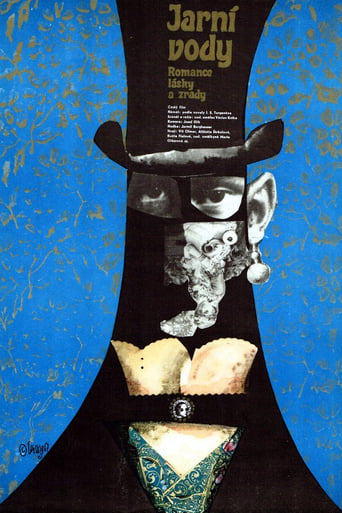
Sanin, an aging Russian nobleman, recalls his unfulfilled love for a simple girl with whom he fell in love during his youthful travels, but left her for a short-lived love affair with a selfish high society beauty.
Jarní vody
1968
A medium-length story about the birth of a father and son friendship.
Oranžový měsíc
1962
 8.0
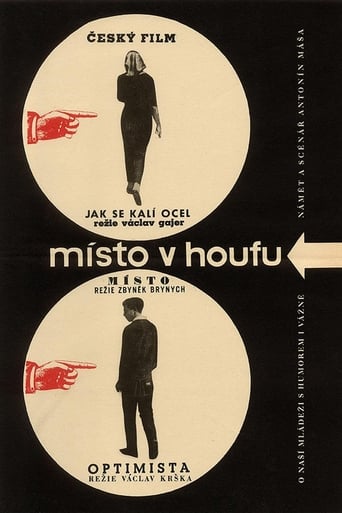
A film in five episodes, all based on an attempt to show the life of young people today, their feelings and relationships, their behaviour in public and private life.
A Place in the Crowd
1964
1950s · 3 titles
 8.5
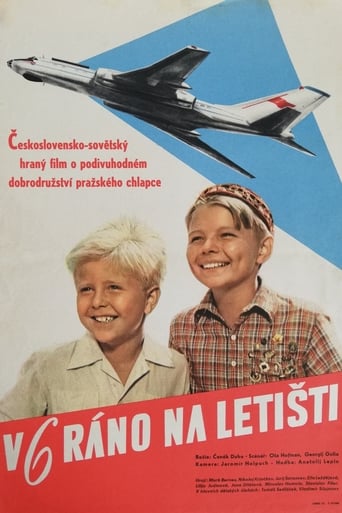
The nine-year-old Prague boy Pepiček flies to Moscow as an involuntary stowaway on an airplane. Together with the Soviet pioneer Mischa, he pursues an alleged agent in the hustle and bustle of the World Festival and is flown back to Prague in the evening.
Six O'Clock at the Airport
1958
 6.0
A boy dreams of winning an ice hockey game. Meanwhile, a professional hockey star moves into the neighborhood, offering his services as a goalkeeper--leading two rival teams of Prague schoolboys, The Little Lions and The Devil Street Boys, to fall over themselves in order to gain his favor. The goalie's son, basking in his father's glory, is asked to replace a member of the Lions team, prompting the usual boyish rivalries and battles. Some of the Lions players are so preoccupied with the impending "big game" that their schoolwork suffers, to the chagrin of their teachers and parents.
The Goalkeeper Lives On Our Street
1957
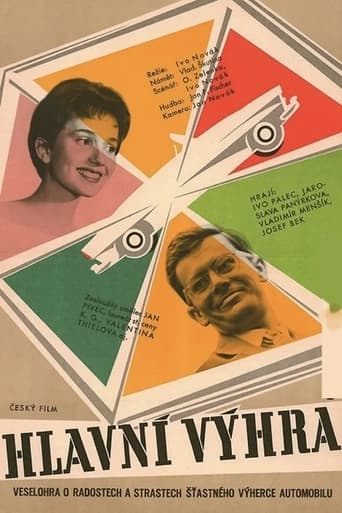 6.5
A comedy about a young salesman Havelka, who gets his life's wish. He wins his dream car Spartacus in a lottery. So together with his fiancée, they experience a happiness they have never known before and have no idea that their dream car will complicate their lives...
Hlavní výhra
1959
Series credits
7.3Thirty Cases of Major Zeman is a Czechoslovak action-drama television show intended as a political propaganda to support the official attitude of the communist party. The series were filmed in the 1970s. Each episode encompasses one year, and investigations are stylized to that year. Most are inspired by real cases. The series follows the life of police investigator Jan Zeman during his career from 1945 to 1975.
Thirty Cases of Major Zema
1976
NRNo synopsis available yet.
Nejmladší z rodu Hamrů
1975
5.2No synopsis available yet.
Ve znamení Merkura
1979
8.8No synopsis available yet.
Dynastie Nováků
1982