
Directing
Claus Peymann
Born
1937-06-07 (89)
Place of birth
Bremen, Germany
Known for
Directing
Credits
39 titles
Known for
 9.0
9.0Political talk show on current topics presented by Maybrit Illner.
maybrit illner
1999
 4.7
4.7No synopsis available yet.
Nachtcafé
1987
 4.7
4.7No synopsis available yet.
Kulturzeit
1995
 6.5
6.5No synopsis available yet.
Titel, Thesen, Temperamente
1967
A 30-minute weekly cultural magazine program. The head of aspekte, Wolgang Herles, describes the program as follows: "For 40 years, "aspekte" has repeatedly set out to enrich television with cultural contrasts. "aspekte" understands culture not as the sum of facts and events, but as the taste, the sound, the rhythms of the times. It has proven itself as a journal of true luxury and fashions as well as an instrument of public education and information."
aspekte
1965
No synopsis available yet.
Im Dialog
1997
Film credits
Series credits
9.0Political talk show on current topics presented by Maybrit Illner.
maybrit illner
1999
4.7No synopsis available yet.
Nachtcafé
1987
4.7No synopsis available yet.
Kulturzeit
1995
6.5No synopsis available yet.
Titel, Thesen, Temperamente
1967
A 30-minute weekly cultural magazine program. The head of aspekte, Wolgang Herles, describes the program as follows: "For 40 years, "aspekte" has repeatedly set out to enrich television with cultural contrasts. "aspekte" understands culture not as the sum of facts and events, but as the taste, the sound, the rhythms of the times. It has proven itself as a journal of true luxury and fashions as well as an instrument of public education and information."
aspekte
1965
No synopsis available yet.
Im Dialog
1997
 7.0
7.0No synopsis available yet.
Boulevard Bio
1991
No synopsis available yet.
Nachtstudio
1997
No synopsis available yet.
Thadeusz
2005
No synopsis available yet.
Gero von Boehm begegnet...
2002
 NR
NRA German television format in which Günter Gaus interviewed prominent members of German society, particularly politicians. More than 200 interviews were conducted over the course of 40 years.
Zur Person
1963
No synopsis available yet.
Erlesen
2010
No synopsis available yet.
Lebens-Künstler
1995
No synopsis available yet.
Weser-Strand
2016
No synopsis available yet.
Im Glashaus - Das philosophische Quartett
2002
No synopsis available yet.
Das Literarische Quartett
2015
No synopsis available yet.
Im Gespräch mit Teddy Podgorski
2010
No synopsis available yet.
live - die ZDF-talkshow
1987
 9.0
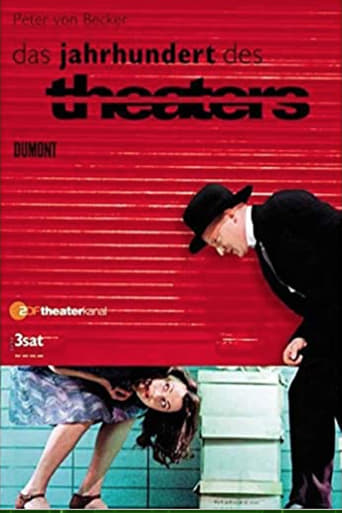
9.0"The Century of the Theater" - From the "birth of the director" to the "heroes of modernity" - an overview of the world of theater - illuminates the interaction with the history of the past hundred years is also shown.
Das Jahrhundert des Theaters
2002
No synopsis available yet.
Germany, Your Artists
2008
 7.5
7.5In 2014, Germany television network ZDF commissioned a comprehensive TV documentary on the history of the Red Army Faction (RAF). In six 45-minute parts, the series describes the origins, rise, and fall of the terrorist organization "Red Army Faction." Interviewees include Winfried Ridder, former head of department at the Federal Office for the Protection of the Constitution; Rainer Hofmeyer, former head of department at the Federal Criminal Police Office; and political scientist Dr. Wolfgang Kraushaar.
The History of the RAF
2015
No synopsis available yet.
Stilbruch
2008
Behind the camera
No synopsis available yet.
The Ignoramus and the Madman
1972
No synopsis available yet.
Meine Mutter macht Mist mit mir
1968
No synopsis available yet.
Ein Fest für Boris
1971
No synopsis available yet.
Minetti
1977
No synopsis available yet.
Sonntags am Meer
1970
 8.0
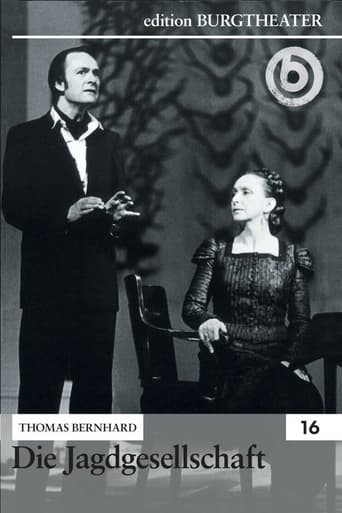
8.0The bark-beetle has invaded the big forest of the general, just as a fatal illness has into the body of its owner. The general is suffering from eye cataract, preventing him from seeing the symptoms of the trees' decline, just as he is unable to see his own rottening. His wife and the writer discuss these circumstances for two scenes, until the general discovers the fact himself in the third one. Now he is going to take appropriate action.
The Hunting Party
1974
A film based on the Battle of Teutoburg Forest in the year 9 AD between the Romans and a coalition of Germanic tribes.
The Battle of Hermann
1984
 10.0
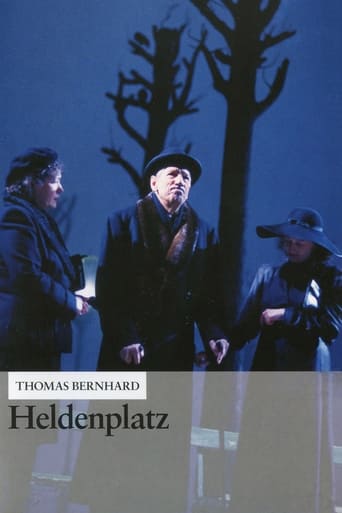
10.0Heldenplatz centers on a Jewish family in the Vienna of 1988. The main character, Professor Josef Schuster, a mathematician, who can no longer stand the anti-Semitism he still finds in Austria 50 years after the Anschluss – commits suicide by jumping out of his apartment window onto the historic Heldenplatz before the play begins.
Heldenplatz
1989
No synopsis available yet.
Kaspar
1969
Four actors analyze the nature of theatre for an hour and then alternately insult the audience and praise its “performance.” TV recording of the premiere at the "Theater am Turm" in Frankfurt/Main.
Offending the Audience
1966
Claus Peymann's production of Schiller's play about oppression, rebellion and human rights is less a flaming political appeal than a subtle exploration of human behavior in a social conflict.
Wilhelm Tell
1990
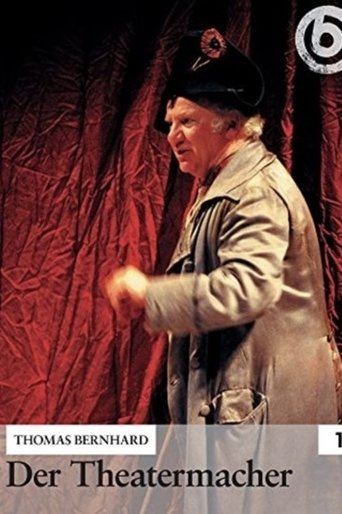 NR
NRDer Theatermacher ("The Theatre Maker") is a play by austrian writer Thomas Bernhard. It was released in 1984 and had its world-premiere the following year at the Salzburger Festspiele under Claus Peymann. Centered around main protagonist Bruscon, it is full with allusions to the famous festival in Salzburg. During a break in his latest tour the actor Bruscon tries to stage his play „Das Rad der Geschichte“ ("The wheel of history") in the small village Utzbach. He involves his whole family in the production as actors - wife, daughter and son. The production becomes increasingly difficult with Bruscons heavy mood swings. He turns out as a tyrant, dissatisfied with every detail - from stage to room temperature - and declares that the village is too small for his outstanding piece anyway. During rehearsals he constantly knocks the others down, highlighting himself as the important actor and theatre man.
Histrionics
1990
Three short plays, reflecting the megalomania and the insecurity, the arrogance and the pusillanimousness, the moralic standards and the real feeling of powerlesness, not only of Peymann but all theater directors, put on stage in a brilliantly satirical way. Produced by the Akademietheater Vienna.
Claus Peymann Buys Himself a Pair of Trousers and Dines with Me
2006
Ritter, Dene, Voss is a stage play by Thomas Bernhard from 1986. After the Premiere the same year at the Salzburger Festspiele under the direction of Claus Peymann, the play was taken into the repertoire of the Burgtheater in Vienna. It was named after the three actors that were to play the roles in the world-premiere: Ilse Ritter, Kirsten Dene and Gert Voss. Thomas Bernhard started off writing it with a note saying "Ritter, Dene, Voss. intelligent actors". The play was inspired by the family of Ludwig Wittgenstein and his (Wittgensteins) nephew Paul, who was a friend of Bernhard and protagonist of his novel "Wittgensteins Nephew" from 1982. This DVD is a 1987 recording from the Akademietheater Vienna with Ilse Ritter, Kirsten Dene and Gert Voss.
Ritter, Dene, Voss
1987