
Acting
Omenosuke Ichikawa
Born — Died
1912-02-17 — 1992-05-06
Known for
Acting
Credits
60 titles
Known for
 8.0
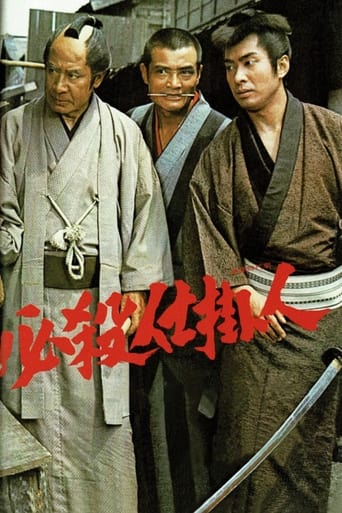
A shikakenin was an under-the-cover trade that undertook killing in Edo. Hanemon of Otowa, an agency that introduced laborers and maids, was also one of these. Katsugoro Iseya was a timber dealer who had come in as a client. His target was the constructions magistrate Hanno, and the Tatsumiya who sipped on the benefits. Hanemon who had a stong code towards killing, where he would only kill those who do no good to be in the world, accepts this request. Baian Fujieda, a needle doctor would carry out the killing. However, the professional killer Baian fails to bring down Tatsumiya. Hanemon then looks to another shikakenin, the ronin Sanai Nishimura for the role. Although Sanai's ability with the sword is good, he lives poorly in a tenement, and accepts this commission on the condition that it is kept a secret from his wife and child. Here, they close in on Hanno and Tatsumiya again...
Professional Killers
1972
 NR
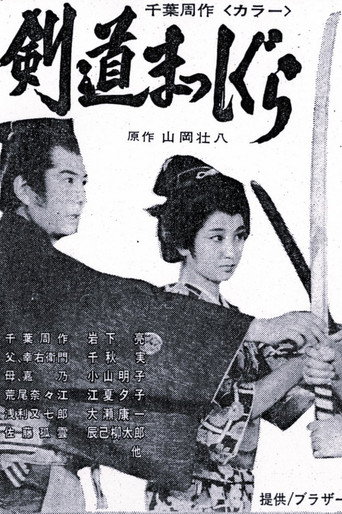
Chiba Shusaku: Kendo Masshigura is a Japanese period drama that aired on the TBS network from November 2, 1970 to August 30, 1971 in the "Brother Gekijo" slot. It ran for 44 colour episodes of 30 minutes each. Based on Sohachi Yamaoka's novel "Chiba Shusaku", it depicts the youth of Chiba Shusaku, founder of the Hokushin Itto-ryu school of swordsmanship. A hot-blooded young man who calls himself Shusaku enters the dojo of Asari Matashichiro and, through encounters with all kinds of people, grows rapidly both in swordsmanship and in character. Produced by TBS and Shochiku. Rerun on the Japanese CS channel Jidaigeki Senmon Channel from March 17, 2025.
Chiba Shusaku: Kendo Masshigura
1970
 7.1
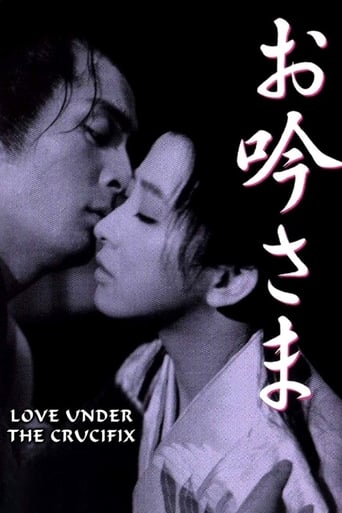
A tea master and his daughter Ogin are both Christians in feudal Japan. Ogin falls in love with a married feudal prince who shares her faith. When the Shogun bans Christianity, the situation worsens.
Love Under the Crucifix
1962
 7.1
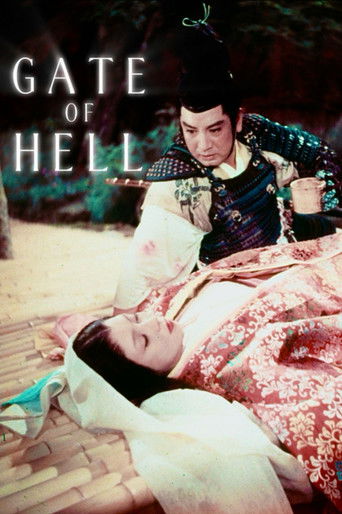
Japan, 1159. Moritō, a brave samurai, performs a heroic act by rescuing the lovely Kesa during a violent uprising. Moritō falls in love with her, but becomes distraught when he finds out that she is married.
Gate of Hell
1953
 7.1
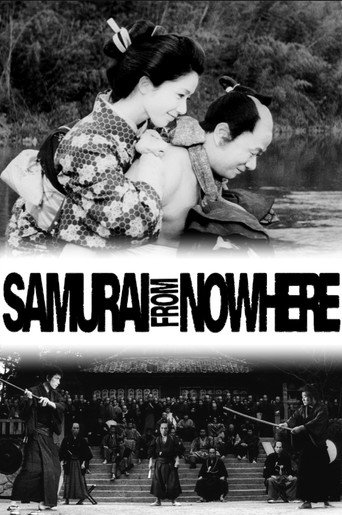
Misawa Ihei (Nagato) is traveling with his wife Tae (Iwashita Shima) who abhors the practice of sword fighting for prize money. Tae is the daughter of the clan's chief counselor who married the low-ranking Ihei to avoid becoming the clan lord's mistress. Into the mix comes Oba Gunjuro (Tetsurō Tamba), a mysterious ronin who will do anything for money. This leads to a fitting climax as the forces of hate and love converge while the couple attempt to break through the border!
Samurai from Nowhere
1964
 5.0
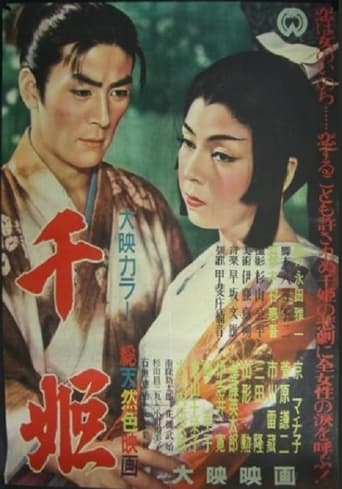
During the Warring States era of early 17th century Japan, teenage princess Sen is besieged with other members of her family in Osaka Castle, by a rival force led by her grandfather.
The Princess Sen
1954
Film credits
1980s · 3 titles
 6.0
Kodaira Mochizuki has come from Edo to keep Horisoto secure.
Magistrate of the Floating World
1981
 NR
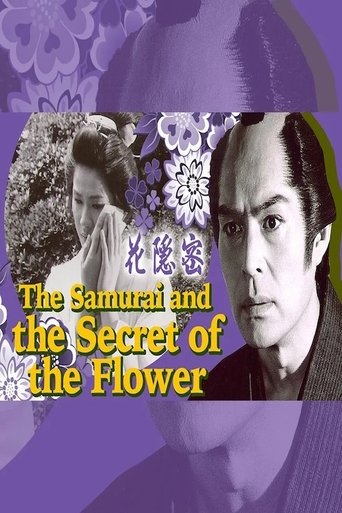
During Ienari Tokugawa's period. Hanakurabe (a playful competition of poetry with flowers in this period) was held to please Shogun (General), and Shiroshobu of the Date family and Higoshobu of the Hosokawa family competed with each other. As a result, the Hosokawa family won and Yahei Tabuki of the Date family killed himself. At the funeral, a beautiful woman (Hibiko Maya) appeared in front of Yahei's son, Yazyuro (Tsuyoshi Kato). The woman said, "I am a woman of the Hosokawa family, and the person who killed your father" and left. To revenge father, he became "Hanaonmitsu" to make a better flower than Higoshobu.
The Samurai and the Secret of the Flower
1983
 NR
Kayo (Kimie Shingyoji), who married Jingoro (Jun Eto) of the small-time goods dealer Kagamishimaya, is unable to even hug each other seven days after the wedding. Kayo (Kimie Shingyoji), who married Jingoro (Jun Eto), a merchant in a small house in Kagamiya, is unable to even hug Kayo even seven days after the wedding ceremony. One day, Jingoro suddenly dies, but a monk (Ichiro Arishima) appears to the grieving family and tells them that his soul has simply slipped away, and the next morning Jingoro wakes up as if nothing had happened. A few days later, Kayo follows the spirit that escaped from Jingoro again and arrives at the grave of Araji, where she sees Jingoro meeting with the spirit of a young girl. In fact, three years earlier, Jingoro had been torn apart by the daughter (Keiko Suzuka) of Miuraya, a kimono wholesaler, and they had tied each other's fingers together with string, slit their wrists, and thrown themselves off a boat.
Grudge: Blood-sucking higanbana calls the spirits of the dead
1982
1970s · 1 titles

1960s · 12 titles
7.1A tea master and his daughter Ogin are both Christians in feudal Japan. Ogin falls in love with a married feudal prince who shares her faith. When the Shogun bans Christianity, the situation worsens.
Love Under the Crucifix
1962
7.1Misawa Ihei (Nagato) is traveling with his wife Tae (Iwashita Shima) who abhors the practice of sword fighting for prize money. Tae is the daughter of the clan's chief counselor who married the low-ranking Ihei to avoid becoming the clan lord's mistress. Into the mix comes Oba Gunjuro (Tetsurō Tamba), a mysterious ronin who will do anything for money. This leads to a fitting climax as the forces of hate and love converge while the couple attempt to break through the border!
Samurai from Nowhere
1964
 6.5
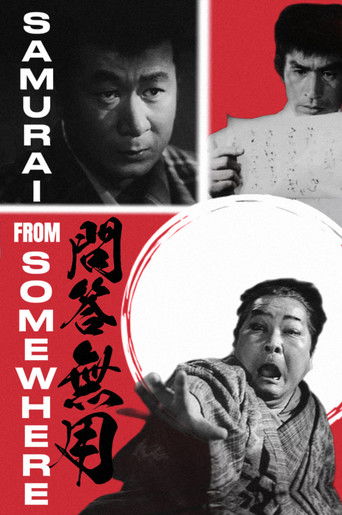
Young Lord Takenaka stands to succeed his father until a series of violent actions lead his retainers to think that he has gone mad with blood-lust. Never offering any explanation, he continues his seemingly unprovoked attacks until he is sent away from his domain.
Samurai from Somewhere
1964
 7.1
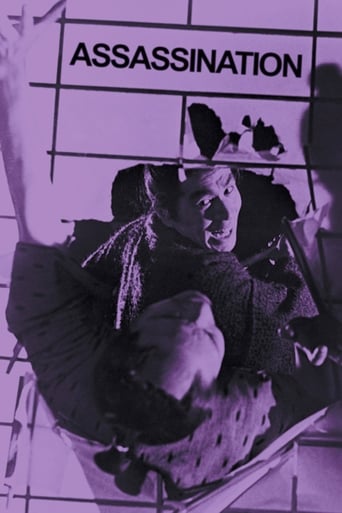
In 1863, when American warships approach Japan, an enigmatic ronin becomes an important figure in a complex game of power between the Shogunate and the empire.
Assassination
1964
 6.5
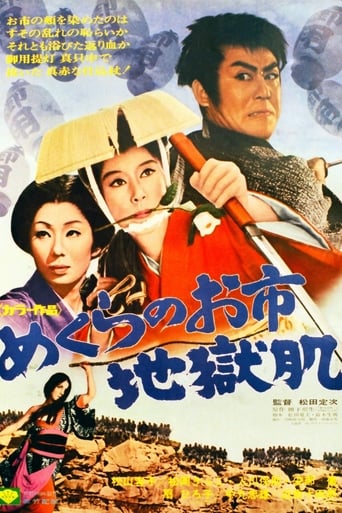
Oichi may have met her match as she vies against the evil beauty that has set her sights on destroying her. She must face numerous other challenges before confronting her greatest rival. While longing to live and love like other women, she realizes that she can never have a normal life, her sword which she holds on to like a security blanket will always come between her and such a life...
Trapped, the Crimson Bat
1969
 NR
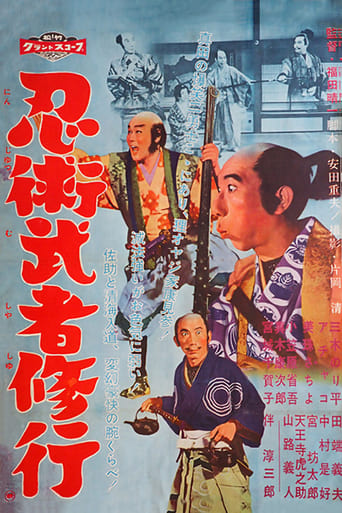
No synopsis available yet.
The Three Magicians
1960
 NR
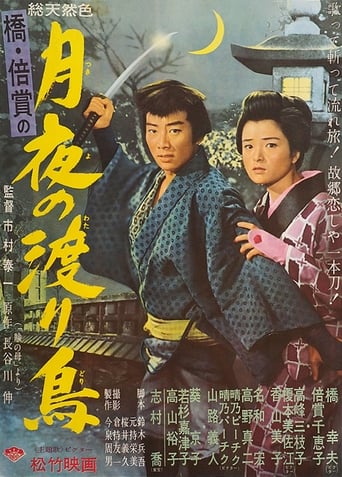
A resolute young man searching for his mother, whom he was separated from as a child, defies a family who mistreat the poor and homeless.
The Image of Mother
1963
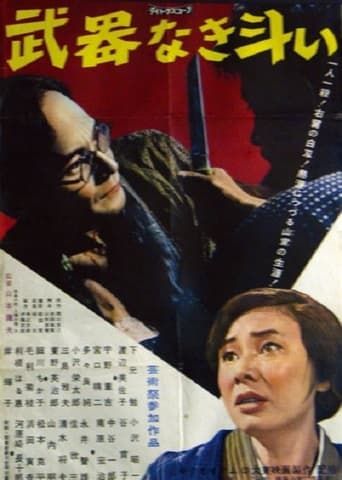 NR
It's a story of the life of a man who advocated the necessity of sex education to children, which was unusual at the time, solely opposed to the amendment of the Peace Preservation Law, and was assassinated by a rightist prior to his opposition speech.
The War Without Weapons
1960
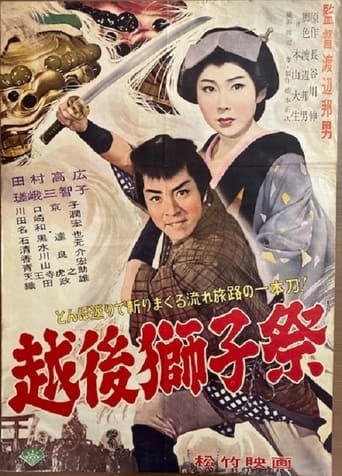 NR
1960 version of Lion Festival of Echigo
Echigo jishi-sai
1960
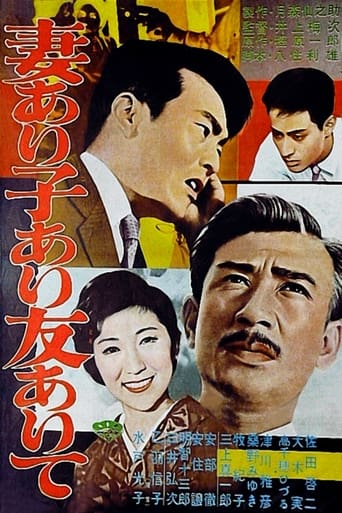 NR
Japanese life during the past thirty-five turbulent years is depicted in this film through the eyes of two police detectives. One is Henmi, who comes to Tokyo in 1926 from faraway Kagoshima to join the Tokyo police force. His closest friend is Nihei, a farmer's son from Tohoku who becomes the steadying influence on headstrong Henmi.
With Wife, Children, and Friends
1961
 NR
No synopsis available yet.
Yamihōshi
1960
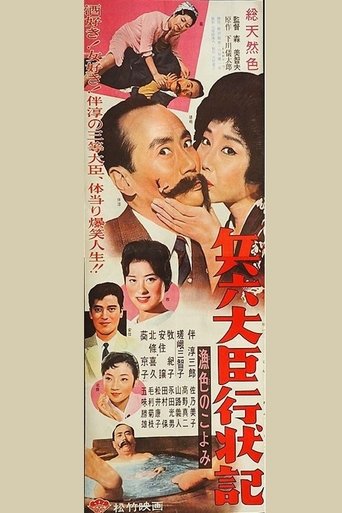 NR
1961 Japanese movie
兵六大臣行状記 漁色のこよみ
1961
1950s · 32 titles
7.1Japan, 1159. Moritō, a brave samurai, performs a heroic act by rescuing the lovely Kesa during a violent uprising. Moritō falls in love with her, but becomes distraught when he finds out that she is married.
Gate of Hell
1953
5.0During the Warring States era of early 17th century Japan, teenage princess Sen is besieged with other members of her family in Osaka Castle, by a rival force led by her grandfather.
The Princess Sen
1954
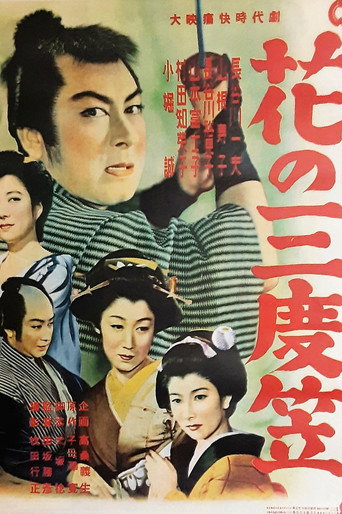 NR
No synopsis available yet.
Hana no sando gasa
1954
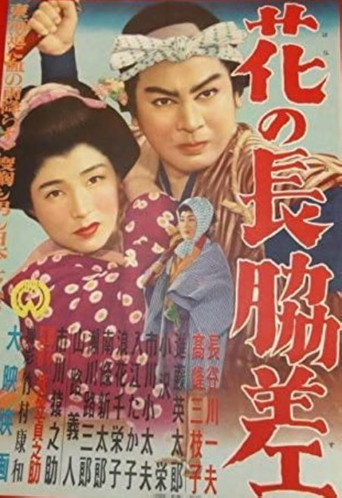 NR
No synopsis available yet.
Hana no nagadosu
1954
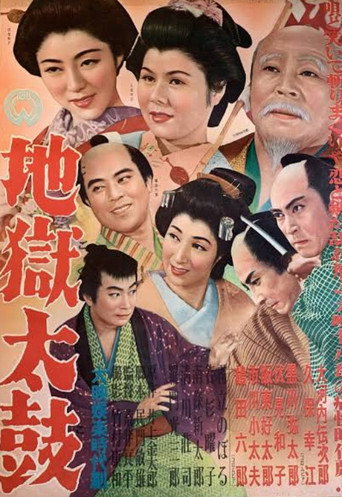 NR
A girl from a tenement house was abducted in broad daylight, right in the heart of Edo.
Jigoku taiko
1953
No synopsis available yet.
Suna-e jubaku
1953
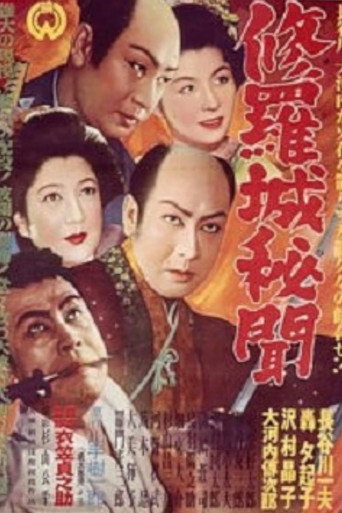 NR
No synopsis available yet.
Castle of Carnage
1952
 NR
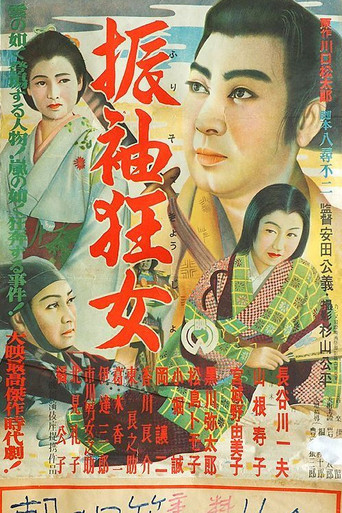
A handsome man and a beautiful woman who seek to restore the Toyotomi clan by taking in the orphaned Princess Tsuru.
Furisode kyōjo
1952
 9.0
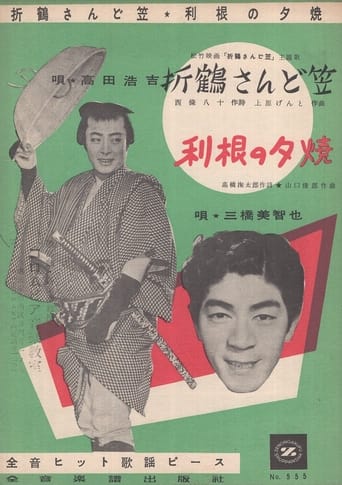
Akitaro Orizuru, who set out on a journey to avenge his father's death in the darkness, returned to Itako, his hometown, where the Ayame Festival was approaching, for the first time in five years. His late father's brother, Sutezo, who took off his waraji, runs a small prostitute with only one child, Sutematsu. In addition, only Shigezaburo, who left a mark in the middle wind, was ill-mannered by Inomatsu. Akitaro was accompanied by a daughter named Omitsu on the way to here, but she was Ura's younger sister who works at Fujikura's house, and the villagers worked on the fifty cars to meet her critically ill father.
The Young Avenger
1957
No synopsis available yet.
Zenigata Heiji
1951
 NR
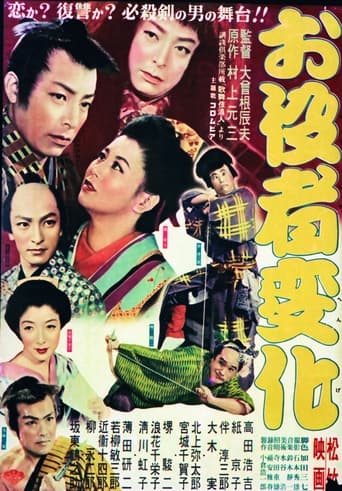
During the Genroku era, Azusa Gennosuke, renowned in Nara as a top swordsman and a scholar, crossed swords with the Magistrate Kurobane Yatayu, who tried to force himself on Gennosuke's beloved foster-sister, Kikuno. As a result, Gennosuke's younger brother, Shichisaburo, was killed. Separated from his mother, Gennosuke found himself on the run from the officials.
お役者変化
1954
 NR
Early jidaigeki by Tai Kato.
Shimizu Harbor Is More Frightening Than the Devil
1952
 NR
Period film about the legendary detective Umon
Casebooks of Detective Umon: The Incident of the Fawn-Pattern Cloth
1952
 NR
No synopsis available yet.
The Mysterious House
1954
 10.0
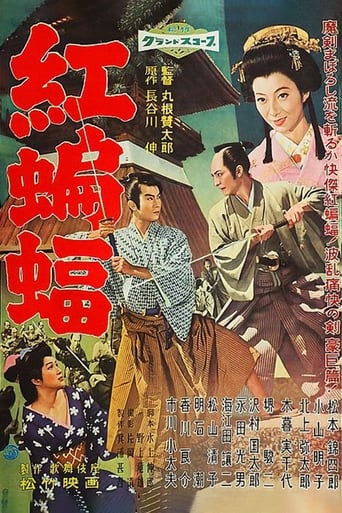
No synopsis available yet.
The Red Bat
1958
 NR
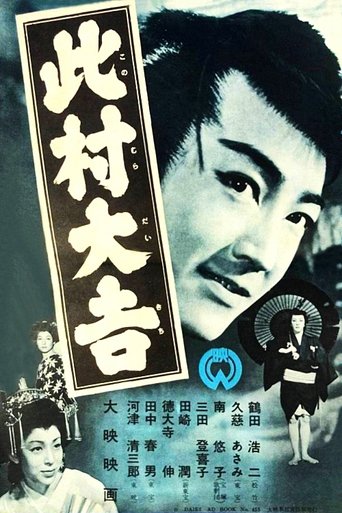
A samurai is struggling to make ends meet at the end of the Edo period. He has students and, among other things, teaches them about the evils of the government. A member of the yakuza thugs has fallen in love with the samurai's daughter and conspires to report the father to the authorities in order to snatch the girl. The samurai's daughter has a boyfriend who hides the father and daughter from the thug.
Daikichi Konomura
1954
 NR
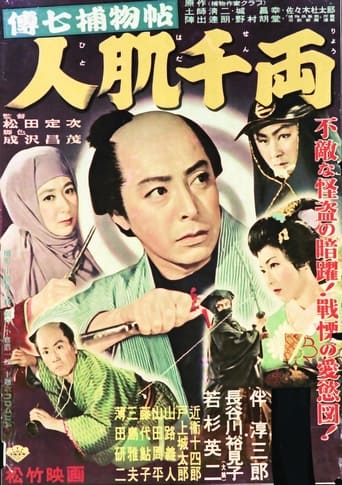
In the era of the twelfth Shogun, Tokugawa Ieyoshi, a notorious bandit known as "Shippu" (or "Swift Wind") emerged in Edo. Shippu would send a warning message called the "Thief's Summons" before striking, yet despite the magistrate's desperate search efforts, they couldn't find any leads. One day, a summons was shot into the residence of Ono Ryusai, who was leading a peaceful retirement life with his two concubines, O-Ran and O-Koshi. With the summons, various individuals including O-Ran's brother Itami Shigoshiro, the master of the Muso-ryu dojo, vigilante Mankichiro, rope expert Gohei, and Den'ichi from Kuromon Town were assigned to monitor the situation. However, while they were distracted by a neighboring fire, a chest containing a thousand ryo was stolen, and O-Koshi was killed.
Denshichi Torimonocho: Senryo Human Skin
1954
 10.0
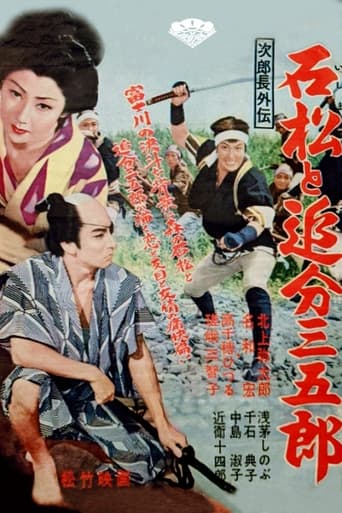
Ishimatsu is strong in fights, but weak in relationships with women and enjoys great popularity among them, and we see how an exciting historical drama about love, enmity and friendship is played out.
Stories about Jirocho: Ishimatsu and Oiwake Sangoro
1957
 NR
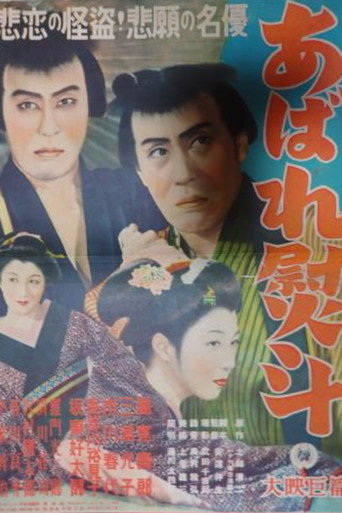
No synopsis available yet.
Abare noshi
1952
1956 Japanese film, originally released in three parts.
Kobushidake denki
1956
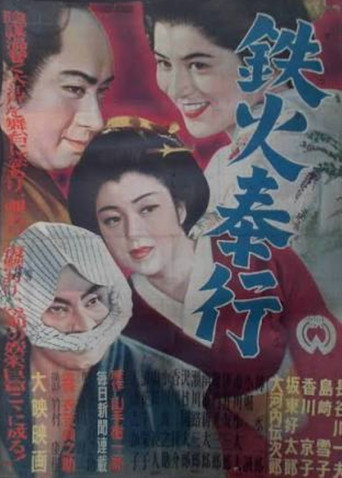 NR
No synopsis available yet.
Tekka bugyō
1954
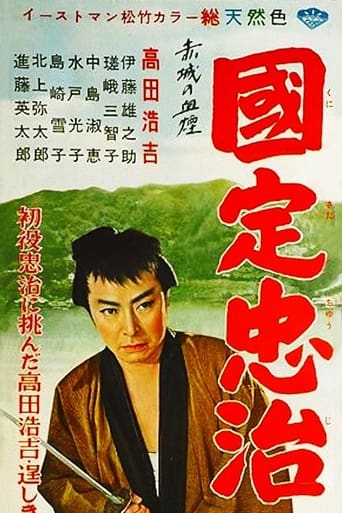 10.0
Chuji Kunisada runs into strange adventures which tests his skill as a samurai as he untangles intrigue and murder against the backdrop of the majestic Mount Akagi.
The Adventures of Chuji
1957
 5.0
A group of five law enforcers search Edo for a missing sword.
A Gang of Five
1955
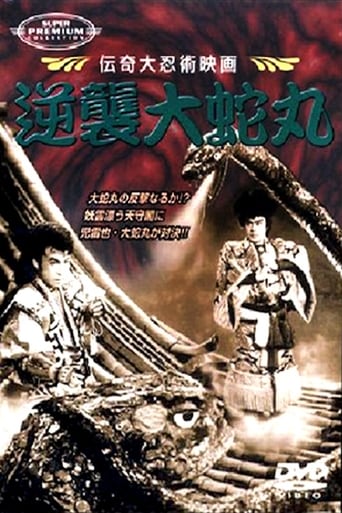 6.0
An early fantasy film starring Tomisaburô Wakayama.
Gyakushû Orochimaru
1955
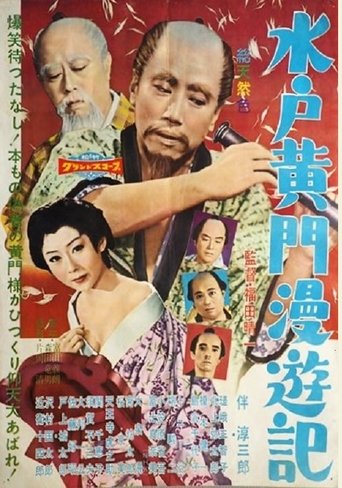 NR
1958 Mito Kōmon film.
The Beloved Imposters
1958
 NR
Japanese film.
Jūrokumon karasudō: Sennin higan
1951
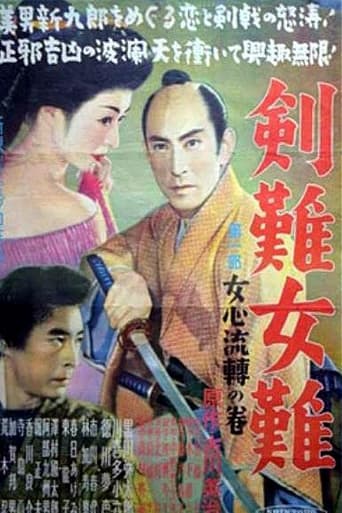 NR
No synopsis available yet.
Trouble Over Swords and Women: A Woman's Mind
1951
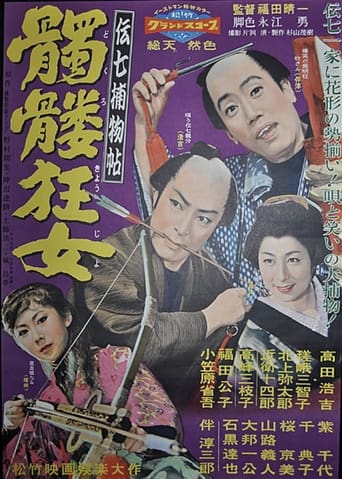 NR
Detective Denshichi is called to investigate the mysterious disappearance of the Kishu family's daughter Teruhime and the activities of a dangerous group dressed as skulls and their female leader.
Denshichi Torimonocho: Mad Skullwoman
1958
 NR
Second in the Nage Utasamon series
Nage Utasamon niban tegara: Tsuri tenjô no semushi otoko
1954
 NR
No synopsis available yet.
Fūryū ajiro gasa
1954
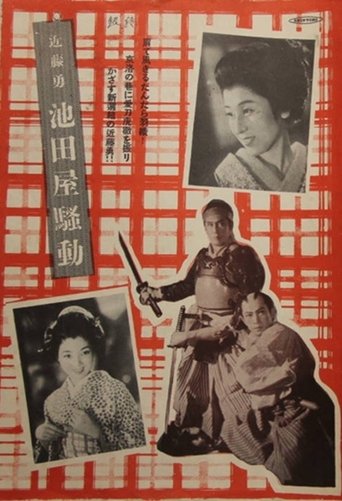 NR
Kyoto in the third year of Bunkyu. --Serizawa Kamo, the head of the Shinsengumi, and the group around him spend their days and nights having fun in Gion and Shimabara, squandering precious military funds, and even robbing townspeople of money and valuables under the pretense of military funds. As a result, the citizens' voices of resentment towards the Shinsengumi grow louder. Kondo Isami, the deputy head, is concerned about this, but he wishes for peace within the group and suppresses the cries of spirited Okita Soji and others who call for them to be killed.
近藤勇 池田屋騒動
1953
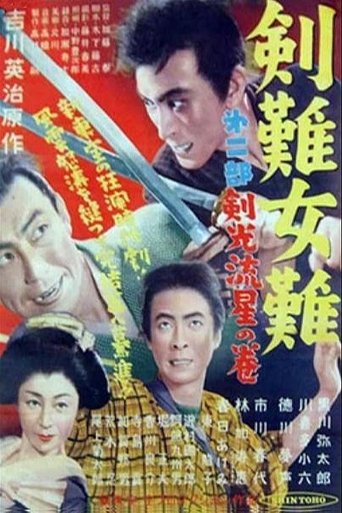 NR
film directed by Tai Katô
Trouble Over Swords and Women: Sword Light and Shooting Star
1951
1940s · 5 titles
No synopsis available yet.
Nerawareta onna
1948
No synopsis available yet.
Sen-hime goten
1948
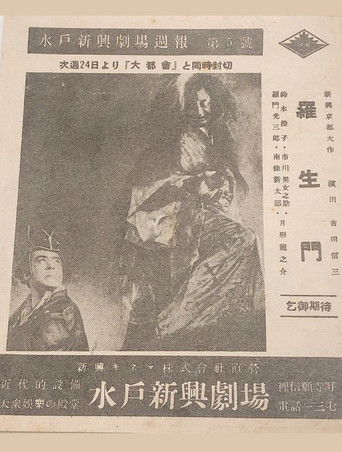 NR
A 1941 Japanese film directed by Shinzo Yoshida.
Rashōmon
1941
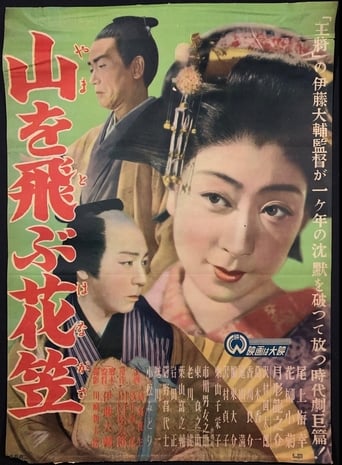 NR
No synopsis available yet.
The Flower That Crossed the Mountain
1949
Second Generation Married Couple
Second Generation Married Couple
1940

Series credits
8.0A shikakenin was an under-the-cover trade that undertook killing in Edo. Hanemon of Otowa, an agency that introduced laborers and maids, was also one of these. Katsugoro Iseya was a timber dealer who had come in as a client. His target was the constructions magistrate Hanno, and the Tatsumiya who sipped on the benefits. Hanemon who had a stong code towards killing, where he would only kill those who do no good to be in the world, accepts this request. Baian Fujieda, a needle doctor would carry out the killing. However, the professional killer Baian fails to bring down Tatsumiya. Hanemon then looks to another shikakenin, the ronin Sanai Nishimura for the role. Although Sanai's ability with the sword is good, he lives poorly in a tenement, and accepts this commission on the condition that it is kept a secret from his wife and child. Here, they close in on Hanno and Tatsumiya again...
Professional Killers
1972
NRChiba Shusaku: Kendo Masshigura is a Japanese period drama that aired on the TBS network from November 2, 1970 to August 30, 1971 in the "Brother Gekijo" slot. It ran for 44 colour episodes of 30 minutes each. Based on Sohachi Yamaoka's novel "Chiba Shusaku", it depicts the youth of Chiba Shusaku, founder of the Hokushin Itto-ryu school of swordsmanship. A hot-blooded young man who calls himself Shusaku enters the dojo of Asari Matashichiro and, through encounters with all kinds of people, grows rapidly both in swordsmanship and in character. Produced by TBS and Shochiku. Rerun on the Japanese CS channel Jidaigeki Senmon Channel from March 17, 2025.
Chiba Shusaku: Kendo Masshigura
1970