
Writing
Stefan Markus
Place of birth
Zurich, Switzerland
Known for
Writing
Credits
12 titles
A well-read man, which is how some define Stefan Markus. Not wrong but a bit thin for a man of so many talents. Born in Zurich in 1884, young Stefan soon proved a fertile mind as well as a consummate reader. It comes as no surprise to find him studying literature... and history... and political economy. In 1909, with his Ph. D. in his pocket, he left Berlin where he had been a student and came back to Switzerland. That same year, he founded the Hertenstein Open Air Theater in Weggis and started writing plays and novels. In addition to these activities, he wrote articles for Swiss, German and Austrian newspapers. In the early 1920s, Markus tried his luck in yet another venture, namely film pr…
Known for
 NR
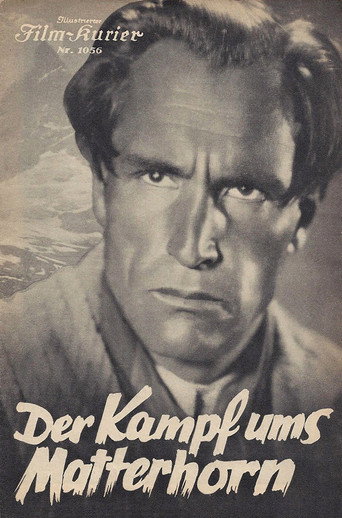
Sounded version of the 1928 film 'Der Kampf ums Matterhorn'. The added sound track included music composed by Schmidt-Boelckeb and dubbed dialogs by different actors. This version is slightly shorter than the silent film due to the disappearance of the movie titles. The story, based on the novel by Carl Haensel recreates the struggle between Edward Whymper and Jean-Antoine Carrel for the first successful ascent of the Matterhorn in 1865. In 1938 two new versions of the movie were filmed under the direction of Luis Trenker, who acted again in the role of Carrel. One version was shot in German (Der Berg ruft) and the other in English (The Challenge).
The Fight for the Matterhorn
1934
 8.0
17-year-old Edith is celebrating at her friend's house in Zurich when she is dragged to a nightclub by the unscrupulous seducer Jean, who gets her drunk and abuses her. When she becomes pregnant, she asks her father, who is a gynecologist, to perform an abortion. He initially refuses, but eventually agrees to perform the procedure—with fatal consequences.
Dilemma
1940
 8.2
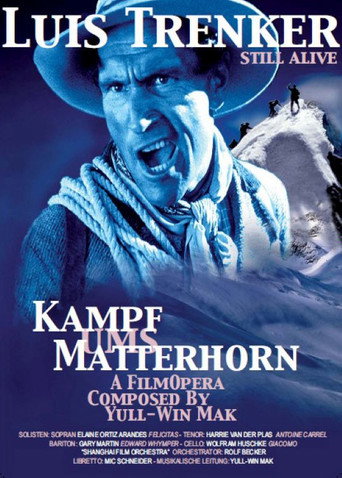
Struggle for the Matterhorn (German: Der Kampf ums Matterhorn) is a 1928 German-Swiss silent drama film co-directed by Mario Bonnard and Nunzio Malasomma and starring Luis Trenker, Marcella Albani, and Alexandra Schmitt. The film is part of the popular cycle of mountain films of the 1920s and 1930s. Art direction was by Heinrich Richter. Based on a novel by Carl Haensel, the film depicts the battle between British and Italian climbers to be the first to climb the Matterhorn. Trenker later remade the film as The Challenge in 1938.
The Fight for the Matterhorn
1928
 7.0
A young intellectual, J. Powers, loses his faith in God after the untimely death of his wife. He devotes his great talents to writing a shockingly blasphemous book, debunking all religion, and then embarks on a trip to Jerusalem. Far from reconciling him to God, the sight of all the different sects worshipping in that ancient city only serves to embitter him and deepen his unbelief. One day, wandering in the country, he loses his way and stops to ask directions at a small house. The inhabitants are a poor but devout family whose daughter, Ruth, revives his broken heart. At the risk of losing her, he confesses to her his loss of faith, and she gently declares that meditation on the Gospels will heal him. He sorrowfully tells her that he wishes he could believe as she does, but it is impossible.
The Cradle of God
1926
No synopsis available yet.
Sables
1928
 9.0
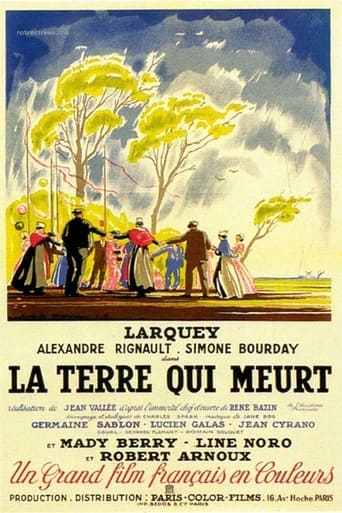
In Vendée, an old farmer is gradually abandoned by his family who do not see their future in the fields. Only a cripple in love and abandoned remain at his side.
The Land That Dies
1936
Behind the camera
NRSounded version of the 1928 film 'Der Kampf ums Matterhorn'. The added sound track included music composed by Schmidt-Boelckeb and dubbed dialogs by different actors. This version is slightly shorter than the silent film due to the disappearance of the movie titles. The story, based on the novel by Carl Haensel recreates the struggle between Edward Whymper and Jean-Antoine Carrel for the first successful ascent of the Matterhorn in 1865. In 1938 two new versions of the movie were filmed under the direction of Luis Trenker, who acted again in the role of Carrel. One version was shot in German (Der Berg ruft) and the other in English (The Challenge).
The Fight for the Matterhorn
1934
8.017-year-old Edith is celebrating at her friend's house in Zurich when she is dragged to a nightclub by the unscrupulous seducer Jean, who gets her drunk and abuses her. When she becomes pregnant, she asks her father, who is a gynecologist, to perform an abortion. He initially refuses, but eventually agrees to perform the procedure—with fatal consequences.
Dilemma
1940
8.2Struggle for the Matterhorn (German: Der Kampf ums Matterhorn) is a 1928 German-Swiss silent drama film co-directed by Mario Bonnard and Nunzio Malasomma and starring Luis Trenker, Marcella Albani, and Alexandra Schmitt. The film is part of the popular cycle of mountain films of the 1920s and 1930s. Art direction was by Heinrich Richter. Based on a novel by Carl Haensel, the film depicts the battle between British and Italian climbers to be the first to climb the Matterhorn. Trenker later remade the film as The Challenge in 1938.
The Fight for the Matterhorn
1928
7.0A young intellectual, J. Powers, loses his faith in God after the untimely death of his wife. He devotes his great talents to writing a shockingly blasphemous book, debunking all religion, and then embarks on a trip to Jerusalem. Far from reconciling him to God, the sight of all the different sects worshipping in that ancient city only serves to embitter him and deepen his unbelief. One day, wandering in the country, he loses his way and stops to ask directions at a small house. The inhabitants are a poor but devout family whose daughter, Ruth, revives his broken heart. At the risk of losing her, he confesses to her his loss of faith, and she gently declares that meditation on the Gospels will heal him. He sorrowfully tells her that he wishes he could believe as she does, but it is impossible.
The Cradle of God
1926
No synopsis available yet.
Sables
1928
No synopsis available yet.
Sables
1928
9.0In Vendée, an old farmer is gradually abandoned by his family who do not see their future in the fields. Only a cripple in love and abandoned remain at his side.
The Land That Dies
1936
 7.1
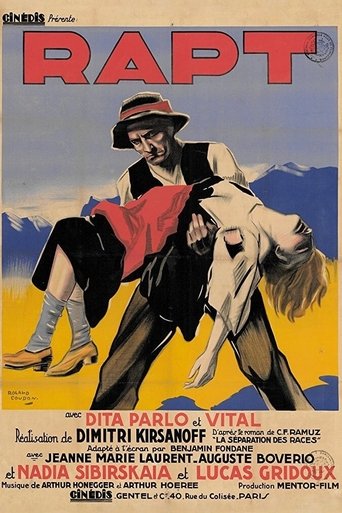
Hans has killed the dog of Firmin, a shepherd. Wild with rage, Firmin kidnaps Elsi, Hans' fiancée and locks her up at his home. Hans, a peddler, vows to find the missing girl. This is what he does and he manages, with the help of Mânu, the village idiot, to give Elsi a letter. On seeing her, the changeling falls in love at first sight with the young woman. Elsi soon realizes that Mânu can become her instrument of vengeance.
The Kidnapping
1934
7.1Hans has killed the dog of Firmin, a shepherd. Wild with rage, Firmin kidnaps Elsi, Hans' fiancée and locks her up at his home. Hans, a peddler, vows to find the missing girl. This is what he does and he manages, with the help of Mânu, the village idiot, to give Elsi a letter. On seeing her, the changeling falls in love at first sight with the young woman. Elsi soon realizes that Mânu can become her instrument of vengeance.
The Kidnapping
1934
 7.5
Matthias is the illegitimate son of a factory worker. He lives as an indentured child labourer at his dictatorial aunt’s remote guesthouse. The only thing he knows in life are hard work and hard punches. After a sudden death, the unhappy boy finds the opportunity to make his way to his mother. In collaboration with SRF, Cinémathèque suisse, Memoriav and Praesens Film, ZFF once again presents a freshly restored version of a Swiss cinema classic. This 1941 literary adaptation is an almost forgotten jewel of Swiss film history that offers an impressive insight into Eastern Switzerland’s embroidery industry. Born in 1930, a later chapter of the main actor Röbi Rapp’s life was portrayed in the multi-award winning docufiction DER KREIS.
Das Menschlein Matthias
1941
7.5Matthias is the illegitimate son of a factory worker. He lives as an indentured child labourer at his dictatorial aunt’s remote guesthouse. The only thing he knows in life are hard work and hard punches. After a sudden death, the unhappy boy finds the opportunity to make his way to his mother. In collaboration with SRF, Cinémathèque suisse, Memoriav and Praesens Film, ZFF once again presents a freshly restored version of a Swiss cinema classic. This 1941 literary adaptation is an almost forgotten jewel of Swiss film history that offers an impressive insight into Eastern Switzerland’s embroidery industry. Born in 1930, a later chapter of the main actor Röbi Rapp’s life was portrayed in the multi-award winning docufiction DER KREIS.
Das Menschlein Matthias
1941
In Davos, Switzerland. The crook, the Count of Milesco, is looking for his next victim, Marie Zente, the daughter of the rich industrialist Fred Zente.
Der Rächer von Davos
1925