
Directing
Anton Vidokle
Known for
Directing
Credits
16 titles
Known for
 NR
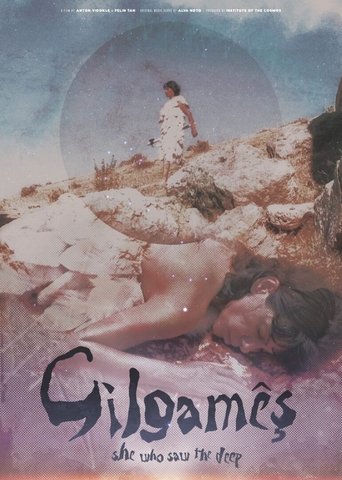
NRInspired by the legendary hero Gilgamesh, She Who Saw the Deep reflects on the ancient pursuit of immortality and explores the power of art, landscape and social organisation to transcend the limitations of circumstance.
Gilgamesh: She Who Saw the Deep
2022
 6.0
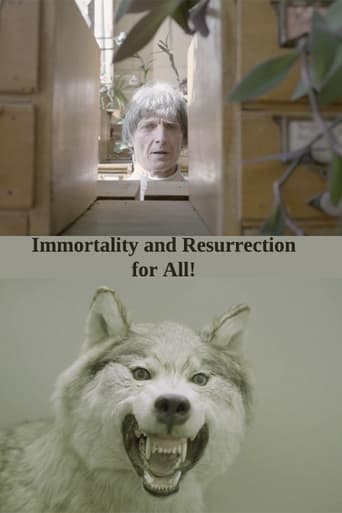
6.0The last film in Vidokle's trilogy on Cosmism is a meditation on the museum as the site of resurrection-a central idea for many Cosmist thinkers, scientists and avant-garde artists. Filmed at the State Tretyakov Gallery, the Moscow Zoological Museum, The Lenin Library, and the Museum of Revolution, the film looks at museological and archival techniques of collection, restoration and conservation as a means of the material restoration of life, following an essay penned by Nikolai Federov on this subject in the 1880s. The film follows a cast comprised of present-day followers of Federov, several actors, artists and a Pharaoh Hound that playfully enact a resurrection of a mummy, a close examination of Malevich's Black Square, Rodchenko's spatial constructions, taxidermied animals, artifacts of the Russian Revolution, skeletons, and mannequins in tableau vivant-like scenes, in order to create a contemporary visualization of the poetry implicit in Federov's writings.
Immortality and Resurrection For All!
2017
 NR
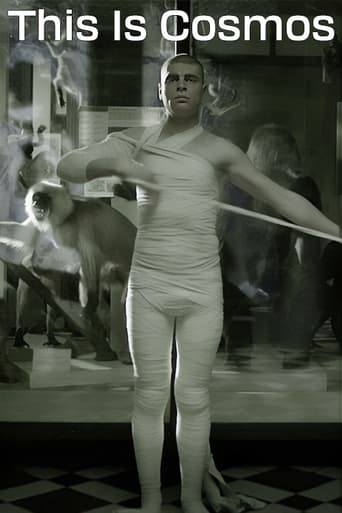
NRBased on the ideas of Russian philosopher, Nikolai Fedorov, Anton Vidokle’s film was shot in Siberia, Crimea, and Kazakhstan. Fedorov, like others, believed that death was a mistake, “because the energy of cosmos is indestructible, because true religion is a cult of ancestors, because true social equality is immortality for all.” Fedorov was one of the Cosmo-Immortalists, a surge of thinkers that emerged in Russia in the late 19th and early 20th centuries. They linked Western Enlightenment with Russian Orthodoxy and Eastern philosophical traditions, as well as Marxism, to create an idiosyncratically concrete metaphysics. For the Russian cosmists, cosmos did not mean outer space: rather, they wanted to create “cosmos” on earth. “To construct a new reality, free of hunger, disease, violence, death, need, inequality – like communism.”
This Is Cosmos
2014
 NR
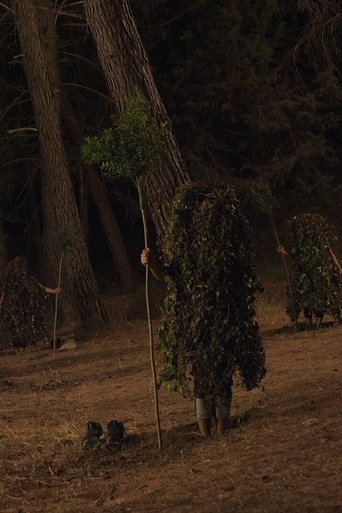
NRShot in the village of Oliveto Lucano in the south of Italy, Autotrofia is simultaneously a documentation of a very ancient pagan fertility ritual that is still practiced in this region, and scripted fiction, based on writings by the painter Vassily Chekrygin and the scientist Vladimir Vernadsky.
Autotrofia
2020
 5.0
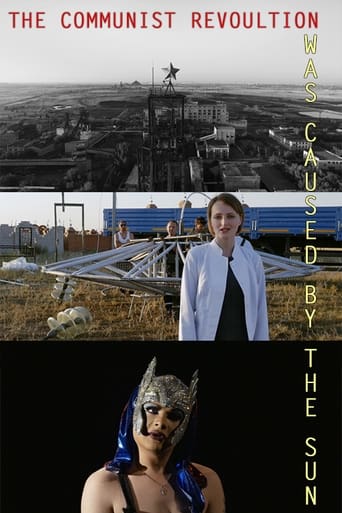
5.0The second installment of Anton Vidokle’s trilogy on Russian cosmism, The Communist Revolution Was Caused By The Sun, looks at the poetic dimension of the solar cosmology of Soviet biophysicist Alexander Chizhevsky. Shot in Kazakhstan, where Chizhevsky was imprisoned and later exiled, the film introduces Сhizhevsky’s research into the impact of solar emissions on human sociology, psychology, politics, and economics in the form of wars, revolutions, epidemics, and other upheavals. It aligns the life of post-Soviet rural residents and the futurological projects of Russian cosmism to emphasize that the goal of the early Soviet breakthroughs aimed at the conquest of outer space was not so much technical acceleration, but the common cause of humankind in their struggle against the limitations of earthly life.
The Communist Revolution Was Caused By The Sun
2015
 NR
NRNo synopsis available yet.
Notes for a film about Gilgamesh
—
Film credits
Behind the camera
NRInspired by the legendary hero Gilgamesh, She Who Saw the Deep reflects on the ancient pursuit of immortality and explores the power of art, landscape and social organisation to transcend the limitations of circumstance.
Gilgamesh: She Who Saw the Deep
2022
NRInspired by the legendary hero Gilgamesh, She Who Saw the Deep reflects on the ancient pursuit of immortality and explores the power of art, landscape and social organisation to transcend the limitations of circumstance.
Gilgamesh: She Who Saw the Deep
2022
6.0The last film in Vidokle's trilogy on Cosmism is a meditation on the museum as the site of resurrection-a central idea for many Cosmist thinkers, scientists and avant-garde artists. Filmed at the State Tretyakov Gallery, the Moscow Zoological Museum, The Lenin Library, and the Museum of Revolution, the film looks at museological and archival techniques of collection, restoration and conservation as a means of the material restoration of life, following an essay penned by Nikolai Federov on this subject in the 1880s. The film follows a cast comprised of present-day followers of Federov, several actors, artists and a Pharaoh Hound that playfully enact a resurrection of a mummy, a close examination of Malevich's Black Square, Rodchenko's spatial constructions, taxidermied animals, artifacts of the Russian Revolution, skeletons, and mannequins in tableau vivant-like scenes, in order to create a contemporary visualization of the poetry implicit in Federov's writings.
Immortality and Resurrection For All!
2017
6.0The last film in Vidokle's trilogy on Cosmism is a meditation on the museum as the site of resurrection-a central idea for many Cosmist thinkers, scientists and avant-garde artists. Filmed at the State Tretyakov Gallery, the Moscow Zoological Museum, The Lenin Library, and the Museum of Revolution, the film looks at museological and archival techniques of collection, restoration and conservation as a means of the material restoration of life, following an essay penned by Nikolai Federov on this subject in the 1880s. The film follows a cast comprised of present-day followers of Federov, several actors, artists and a Pharaoh Hound that playfully enact a resurrection of a mummy, a close examination of Malevich's Black Square, Rodchenko's spatial constructions, taxidermied animals, artifacts of the Russian Revolution, skeletons, and mannequins in tableau vivant-like scenes, in order to create a contemporary visualization of the poetry implicit in Federov's writings.
Immortality and Resurrection For All!
2017
NRBased on the ideas of Russian philosopher, Nikolai Fedorov, Anton Vidokle’s film was shot in Siberia, Crimea, and Kazakhstan. Fedorov, like others, believed that death was a mistake, “because the energy of cosmos is indestructible, because true religion is a cult of ancestors, because true social equality is immortality for all.” Fedorov was one of the Cosmo-Immortalists, a surge of thinkers that emerged in Russia in the late 19th and early 20th centuries. They linked Western Enlightenment with Russian Orthodoxy and Eastern philosophical traditions, as well as Marxism, to create an idiosyncratically concrete metaphysics. For the Russian cosmists, cosmos did not mean outer space: rather, they wanted to create “cosmos” on earth. “To construct a new reality, free of hunger, disease, violence, death, need, inequality – like communism.”
This Is Cosmos
2014
NRBased on the ideas of Russian philosopher, Nikolai Fedorov, Anton Vidokle’s film was shot in Siberia, Crimea, and Kazakhstan. Fedorov, like others, believed that death was a mistake, “because the energy of cosmos is indestructible, because true religion is a cult of ancestors, because true social equality is immortality for all.” Fedorov was one of the Cosmo-Immortalists, a surge of thinkers that emerged in Russia in the late 19th and early 20th centuries. They linked Western Enlightenment with Russian Orthodoxy and Eastern philosophical traditions, as well as Marxism, to create an idiosyncratically concrete metaphysics. For the Russian cosmists, cosmos did not mean outer space: rather, they wanted to create “cosmos” on earth. “To construct a new reality, free of hunger, disease, violence, death, need, inequality – like communism.”
This Is Cosmos
2014
NRShot in the village of Oliveto Lucano in the south of Italy, Autotrofia is simultaneously a documentation of a very ancient pagan fertility ritual that is still practiced in this region, and scripted fiction, based on writings by the painter Vassily Chekrygin and the scientist Vladimir Vernadsky.
Autotrofia
2020
5.0The second installment of Anton Vidokle’s trilogy on Russian cosmism, The Communist Revolution Was Caused By The Sun, looks at the poetic dimension of the solar cosmology of Soviet biophysicist Alexander Chizhevsky. Shot in Kazakhstan, where Chizhevsky was imprisoned and later exiled, the film introduces Сhizhevsky’s research into the impact of solar emissions on human sociology, psychology, politics, and economics in the form of wars, revolutions, epidemics, and other upheavals. It aligns the life of post-Soviet rural residents and the futurological projects of Russian cosmism to emphasize that the goal of the early Soviet breakthroughs aimed at the conquest of outer space was not so much technical acceleration, but the common cause of humankind in their struggle against the limitations of earthly life.
The Communist Revolution Was Caused By The Sun
2015
5.0The second installment of Anton Vidokle’s trilogy on Russian cosmism, The Communist Revolution Was Caused By The Sun, looks at the poetic dimension of the solar cosmology of Soviet biophysicist Alexander Chizhevsky. Shot in Kazakhstan, where Chizhevsky was imprisoned and later exiled, the film introduces Сhizhevsky’s research into the impact of solar emissions on human sociology, psychology, politics, and economics in the form of wars, revolutions, epidemics, and other upheavals. It aligns the life of post-Soviet rural residents and the futurological projects of Russian cosmism to emphasize that the goal of the early Soviet breakthroughs aimed at the conquest of outer space was not so much technical acceleration, but the common cause of humankind in their struggle against the limitations of earthly life.
The Communist Revolution Was Caused By The Sun
2015
5.0The second installment of Anton Vidokle’s trilogy on Russian cosmism, The Communist Revolution Was Caused By The Sun, looks at the poetic dimension of the solar cosmology of Soviet biophysicist Alexander Chizhevsky. Shot in Kazakhstan, where Chizhevsky was imprisoned and later exiled, the film introduces Сhizhevsky’s research into the impact of solar emissions on human sociology, psychology, politics, and economics in the form of wars, revolutions, epidemics, and other upheavals. It aligns the life of post-Soviet rural residents and the futurological projects of Russian cosmism to emphasize that the goal of the early Soviet breakthroughs aimed at the conquest of outer space was not so much technical acceleration, but the common cause of humankind in their struggle against the limitations of earthly life.
The Communist Revolution Was Caused By The Sun
2015
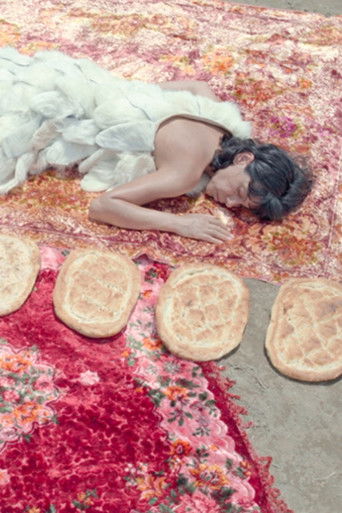
NRNo synopsis available yet.
Notes for a film about Gilgamesh
—
The distant future. An orbital facility of unknown origin. Here, the debt of taking a life will finally be repaid... through resurrection. The victims of military violence across time are systematically brought back to life and guided through the all-too-familiar facility. As a staff of identical ushers draws back layers of confusion and pain, the freshly resurrected gradually become aware of the reality of their corporeal reinsertion: perhaps the world of the living is not a world at all; to be alive in this place may merely be an exhibit. We, the resurrected, overwhelmed by a literal second life, will of course discover our one inevitable destination: a place to sit, have a drink, and talk it out.
A I O U
2020
 NR
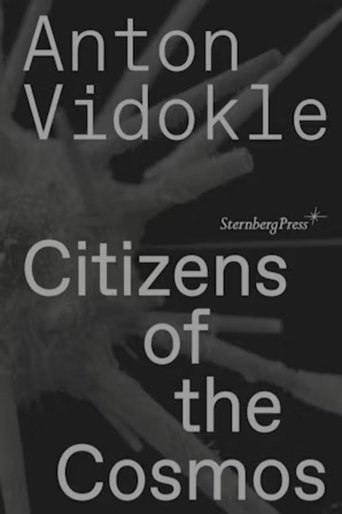
NRBased on a 1922 manifesto by Ukrainian anarchist Alexander Svyatogor, the latest from artist Anton Vidokle transposes Russian cosmism to present-day Japan. Through a combination of song, speech, and interpretive dance, Svyatogor’s notions of mysticism and immortality find intriguing new resonances.
Citizens of the Cosmos
2019
 NR
NRNotes for a Time/Bank articulates a series of reflections about the political, historical and anthropological necessities for the existence of alternative economies and initiatives, such as time banking. Divided in ten chapters, the film combines researches on historical attempts to implement alternative economies with various commentaries on the nature and value of money.
Notes for a Time/Bank
2012
 NR
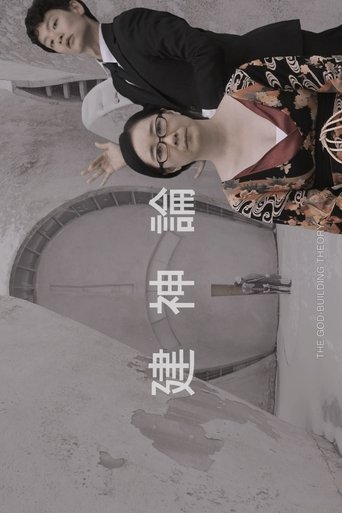
NRInspired by the tranquility of public television programs in Japan (NHK TV) and accompanied by the meditative music of Brian Eno, The God-Building Theory is an educational video about the aesthetics of Russian Cosmism: a philosophy of technological immortality and resurrection that emerged in Russia at the end of the 19th century, which is the main subject of Anton Vidokle’s films.
The God-Building Theory
2020