
Known for
 7.6
7.6Filip buys an 8mm movie camera when his first child is born. Because it's the first camera in town, he's named official photographer by the local Party boss. His horizons widen when he is sent to regional film festivals with his first works but his focus on movie making also leads to domestic strife and philosophical dilemmas.
Camera Buff
1979
 8.5
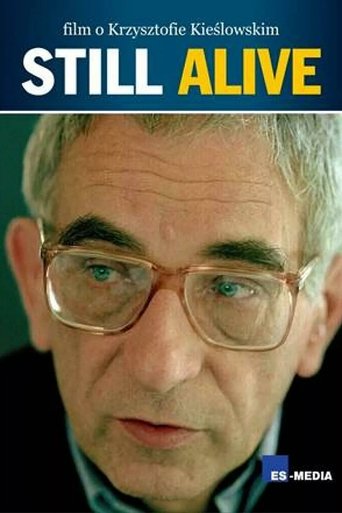
8.5Maria Zmarz-Koczanowicz directed this insightful TV documentary (2005) tracing the Polish filmmaker's career. Former classmates reminisce about Kieslowski's happy beginnings at the Lodz film school and how his dissatisfaction with some of his early documentaries prompted the dramatic work and stylistic experimentation that led to his monumental series of films The Decalogue (1989). Wim Wenders, Agnieszka Holland, and Juliette Binoche are among the many admirers weighing in on his hard-driving work methods and preoccupation with the ephemeral. In Polish, French, and German with subtitles.
Still Alive: A Film About Krzysztof Kieslowski
2006
 7.8
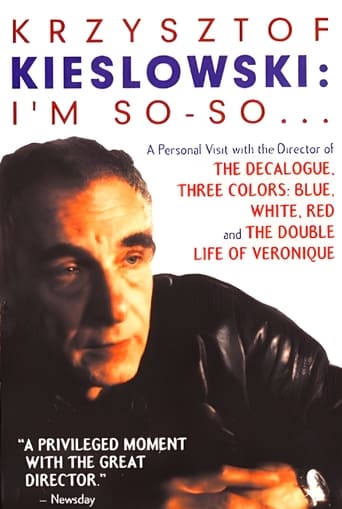
7.8Director and writer Krzysztof Kieslowski shares his views on life, people, politics, and comments a little about some of his films in a very casual conversation.
Krzysztof Kieslowski: I'm So-So...
1995
 NR
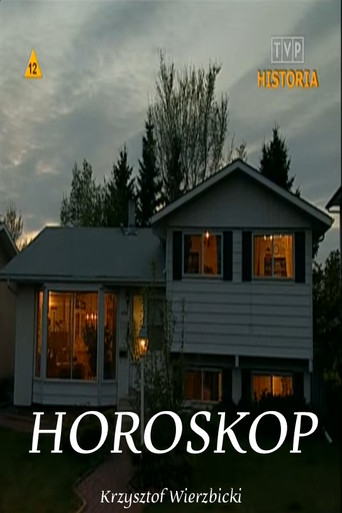
NRKrzysztof Wierzbicki, the director’s assistant on ‘First Love,’ found the film’s protagonists decades later and went with a camera to Canada, where they lived. He shot ‘Horoscope’ (2000), which confirms Kieślowski’s initial prediction from 1974. Ewa — the girl we saw being born in ‘First Love’ — did have a daughter when she was 20 years old. Once again, the reality lent the dramaturgy to the film.
Horoscope
2000
No synopsis available yet.
Kieślowski i jego Amator
—
The unity of past and present time is shown in a symbolic way. The basic material of the film is archival footage taken by cameramen during the Warsaw Uprising (from the WFD archives) and shots of today's Warsaw, especially the Powązki Cemetery on All Saints' Day.
Powstanie warszawskie 1944
1994
Film credits
Behind the camera
7.8Director and writer Krzysztof Kieslowski shares his views on life, people, politics, and comments a little about some of his films in a very casual conversation.
Krzysztof Kieslowski: I'm So-So...
1995
NRKrzysztof Wierzbicki, the director’s assistant on ‘First Love,’ found the film’s protagonists decades later and went with a camera to Canada, where they lived. He shot ‘Horoscope’ (2000), which confirms Kieślowski’s initial prediction from 1974. Ewa — the girl we saw being born in ‘First Love’ — did have a daughter when she was 20 years old. Once again, the reality lent the dramaturgy to the film.
Horoscope
2000
NRKrzysztof Wierzbicki, the director’s assistant on ‘First Love,’ found the film’s protagonists decades later and went with a camera to Canada, where they lived. He shot ‘Horoscope’ (2000), which confirms Kieślowski’s initial prediction from 1974. Ewa — the girl we saw being born in ‘First Love’ — did have a daughter when she was 20 years old. Once again, the reality lent the dramaturgy to the film.
Horoscope
2000
No synopsis available yet.
Kieślowski i jego Amator
—
No synopsis available yet.
Kieślowski i jego Amator
—
The unity of past and present time is shown in a symbolic way. The basic material of the film is archival footage taken by cameramen during the Warsaw Uprising (from the WFD archives) and shots of today's Warsaw, especially the Powązki Cemetery on All Saints' Day.
Powstanie warszawskie 1944
1994
The burner bursts with flame, hot air fills the shell, the aerostat soars. In the gondola of the balloon - Norman Davies. He is not looking for strong impressions, inspiration or beautiful views, but for the right perspective. For a historian, according to the film's protagonist, "should distance himself from his object of research. One must not be too close, too emotionally involved. That's why I will look at Wroclaw from a certain height..." Such a perception of Breslau has been sorely lacking in the distant and near past, especially in the past, the twentieth century - the century in which unleashed nationalisms resulted in the bloodiest spasms in the history of mankind.
Wrocław. Imiona miasta
2002
The burner bursts with flame, hot air fills the shell, the aerostat soars. In the gondola of the balloon - Norman Davies. He is not looking for strong impressions, inspiration or beautiful views, but for the right perspective. For a historian, according to the film's protagonist, "should distance himself from his object of research. One must not be too close, too emotionally involved. That's why I will look at Wroclaw from a certain height..." Such a perception of Breslau has been sorely lacking in the distant and near past, especially in the past, the twentieth century - the century in which unleashed nationalisms resulted in the bloodiest spasms in the history of mankind.
Wrocław. Imiona miasta
2002
In 1980, Krzysztof Kieslowski asked hundreds of people the same three questions: what year were you born? who are you? what would you like/what is important to you? From the recorded statements, he eventually selected 44 people and ranked them chronologically, guided by the age of the interviewees: from the youngest to the oldest so that there was one person's statement for each vintage. A gallery of talking heads: from kindergarten children, through schoolchildren, students, engineers, electricians, nurses, priests, writers, sociologists, cab drivers, to pensioners even a hundred years old, made up a collective portrait of a Pole - a keen observer of reality, aware of his identity and the place where he lives, eager for change. A quarter of a century later, Krzysztof Wierzbicki repeated that idea here.
Gadające głowy II
2004
In 1980, Krzysztof Kieslowski asked hundreds of people the same three questions: what year were you born? who are you? what would you like/what is important to you? From the recorded statements, he eventually selected 44 people and ranked them chronologically, guided by the age of the interviewees: from the youngest to the oldest so that there was one person's statement for each vintage. A gallery of talking heads: from kindergarten children, through schoolchildren, students, engineers, electricians, nurses, priests, writers, sociologists, cab drivers, to pensioners even a hundred years old, made up a collective portrait of a Pole - a keen observer of reality, aware of his identity and the place where he lives, eager for change. A quarter of a century later, Krzysztof Wierzbicki repeated that idea here.
Gadające głowy II
2004