
Directing
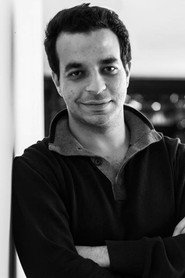
Hassen Ferhani
Born
1986-01-01 (40)
Place of birth
Alger, Algeria
Known for
Directing
Credits
15 titles
Known for
 NR
In the streets of Algiers, jacaranda trees bloom like shards of memory. Following in the footsteps of his father, Ameziane, a writer haunted by these purple trees, Hassen Ferhani explores the city, legacy and love. A rich and intimate quest in which writing, filming or choosing beauty become acts of resistance.
Alea Jacarandas
2026
 6.2
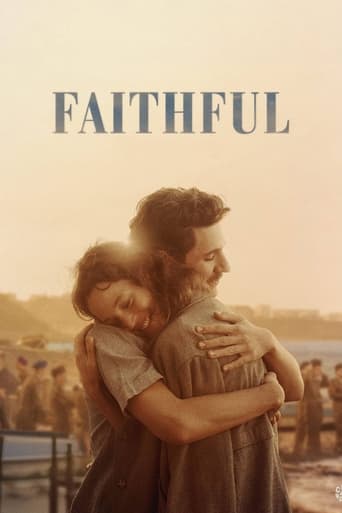
1956. Algeria is a French colony. Fernand and Helene are madly in love. Fernand is an activist, fighting for independence alongside the Algerians. Helene is fighting for Fernand’s life. History will irrevocably change the course of their destiny.
Faithful
2022
 7.0
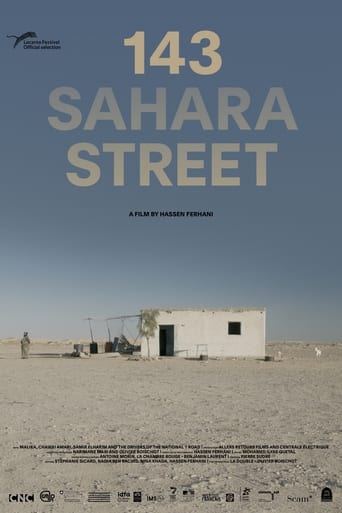
Alone in a small white house on the edge of national road 1, the Trans-Saharan road, which connects Algiers to Tamanrasset crossing the immensity of the desert, Malika, 74, one day opened her door to the director Hassen Ferhani, who came there to scout with his friend Chawki Amari, journalist at El Watan and author of the story Nationale 1 which relates his journey on this north-south axis of more than 2000 km. The Malika of Amari's novel, which Ferhani admits to having first perceived as a "literary fantasy", suddenly takes on an unsuspected human depth in this environment naturally hostile to man. She lends herself to the film project as she welcomes her clients, with an economy of gestures and words, an impression reinforced by the mystery that surrounds her and the rare elements of her biography which suggest that she is not from the region, that she left the fertile north of Algeria to settle in the desert where she lives with a dog and a cat.
143 Sahara Street
2021
 10.0
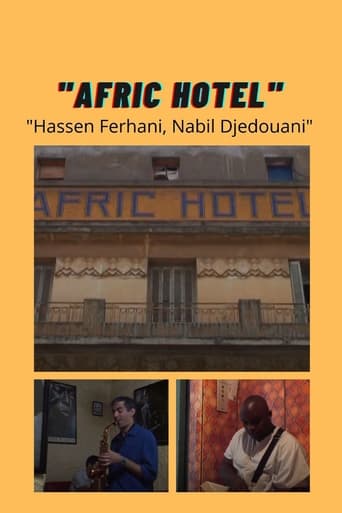
In the furnace of Algiers, the camera follows and accompanies Ibrahim, Adam, and Ismael, originally from sub-Saharan Africa, in an irregular situation who live in this hotel with the predestined name. They live from odd jobs. One is an elevator operator in a building, the second is a shoemaker and the third works in the construction sector. The other side of immigration from sub-Saharan Africa. Behind the statistics hide people, bodies waiting to be able to start another life elsewhere. A hotel thus becomes a transit point in which stories and hopes mingle, a place which seems suspended in time and space. A static journey waiting for another to begin.
Afric Hotel
2011
 6.1
In the largest slaughterhouse in Algiers, men live and work in closed to the throbbing rhythms of their tasks and their dreams. Hope, bitterness, love, paradise and hell, the football stories as of the Chaabi and Rai melodies that set their lives and their world.
A Roundabout in My Head
2015
 NR
Based on a simple idea: transforming the enclosed space of the Image and Movement Studio at the Baumettes prison into a photo studio, the director and a group of seven male inmates experience the power of images and encounters when they summon up the past, intimate and shared histories...
Studio Baumettes
2026
Film credits
Behind the camera
NRIn the streets of Algiers, jacaranda trees bloom like shards of memory. Following in the footsteps of his father, Ameziane, a writer haunted by these purple trees, Hassen Ferhani explores the city, legacy and love. A rich and intimate quest in which writing, filming or choosing beauty become acts of resistance.
Alea Jacarandas
2026
7.0Alone in a small white house on the edge of national road 1, the Trans-Saharan road, which connects Algiers to Tamanrasset crossing the immensity of the desert, Malika, 74, one day opened her door to the director Hassen Ferhani, who came there to scout with his friend Chawki Amari, journalist at El Watan and author of the story Nationale 1 which relates his journey on this north-south axis of more than 2000 km. The Malika of Amari's novel, which Ferhani admits to having first perceived as a "literary fantasy", suddenly takes on an unsuspected human depth in this environment naturally hostile to man. She lends herself to the film project as she welcomes her clients, with an economy of gestures and words, an impression reinforced by the mystery that surrounds her and the rare elements of her biography which suggest that she is not from the region, that she left the fertile north of Algeria to settle in the desert where she lives with a dog and a cat.
143 Sahara Street
2021
10.0In the furnace of Algiers, the camera follows and accompanies Ibrahim, Adam, and Ismael, originally from sub-Saharan Africa, in an irregular situation who live in this hotel with the predestined name. They live from odd jobs. One is an elevator operator in a building, the second is a shoemaker and the third works in the construction sector. The other side of immigration from sub-Saharan Africa. Behind the statistics hide people, bodies waiting to be able to start another life elsewhere. A hotel thus becomes a transit point in which stories and hopes mingle, a place which seems suspended in time and space. A static journey waiting for another to begin.
Afric Hotel
2011
6.1In the largest slaughterhouse in Algiers, men live and work in closed to the throbbing rhythms of their tasks and their dreams. Hope, bitterness, love, paradise and hell, the football stories as of the Chaabi and Rai melodies that set their lives and their world.
A Roundabout in My Head
2015
NRBased on a simple idea: transforming the enclosed space of the Image and Movement Studio at the Baumettes prison into a photo studio, the director and a group of seven male inmates experience the power of images and encounters when they summon up the past, intimate and shared histories...
Studio Baumettes
2026
 10.0
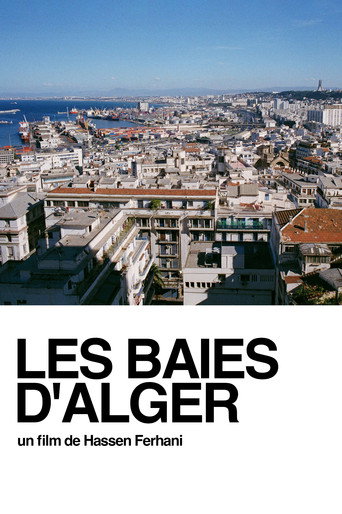
In an extended panoramic view—an "audioscopy" of Algiers—the camera’s eye scrutinizes various buildings and city-center neighborhoods with an intimate approach. "I want to show Algerian society’s openness to the world and to modern means... as well as its contradictions regarding tradition." One might think that filming is merely about capturing images; yet for Hassen Ferhani, filming is first and foremost about welcoming presences—allowing the world to emerge with all its density, fragility, and silences. He does not frame to confine, but to liberate; he frames to offer a space where people, gestures, and voices can find their true rhythm. This kind of cinema dictates nothing: it stands back—attentive and open—allowing itself to be surprised by the most unpredictable aspects of reality, and it is in this act of letting go that beauty is born.
Les Baies d'Alger
2006
10.0In an extended panoramic view—an "audioscopy" of Algiers—the camera’s eye scrutinizes various buildings and city-center neighborhoods with an intimate approach. "I want to show Algerian society’s openness to the world and to modern means... as well as its contradictions regarding tradition." One might think that filming is merely about capturing images; yet for Hassen Ferhani, filming is first and foremost about welcoming presences—allowing the world to emerge with all its density, fragility, and silences. He does not frame to confine, but to liberate; he frames to offer a space where people, gestures, and voices can find their true rhythm. This kind of cinema dictates nothing: it stands back—attentive and open—allowing itself to be surprised by the most unpredictable aspects of reality, and it is in this act of letting go that beauty is born.
Les Baies d'Alger
2006
 NR
A walk through the Cervantes district of Algiers in search of characters and stories rooted in this city, from Tarzan & Jane to Don Quixote. Reality and fantasy merge as the collective memory of a district and film history come together.
Tarzan, Don Quixote and Us
2013
NRA walk through the Cervantes district of Algiers in search of characters and stories rooted in this city, from Tarzan & Jane to Don Quixote. Reality and fantasy merge as the collective memory of a district and film history come together.
Tarzan, Don Quixote and Us
2013
To the west of Seriana, the world stops turning for an instant under the heat of the sun, due to a flat tyre... This film is part of the Minutes 2016 collection initiated by the GREC (Groupe de Recherches et d’Essais Cinématographiques) created in 1969 by Jean Rouch, Pierre Braunberger and Anatole Dauman to support the creation of first short films.
À l'ouest de Seriana
2016
A teenager describes the painting he sees off-screen. He highlights the thoughtful nature of the person facing him. Two other young persons then engage in the same exercise. Projections and fantasies, social and cultural issues. We are in the Museum of Fine Arts of Algiers where Hassen Ferhani casts his simultaneously tender and lucid gaze.
La Tête dans les toiles
2012