
Acting
Norman Scace
Born — Died
1916-10-05 — 1993-12-24
Place of birth
Chelmsford, Essex, England, UK
Known for
Acting
Credits
41 titles
Norman Scace was born on 5 October 1916 in Chelmsford, Essex, England, UK. He was an actor, known for Melissa (1964), Judge Dee (1969) and Web (1957). He died on 24 December 1993 in Kings Lynn, Norfolk, England, UK.
Known for
 5.2
An anthology series of television plays which aired on BBC1 from October 1964 to May 1970. The plays were usually written for television, although adaptations from other sources also featured.
The Wednesday Play
1964
 5.2
A BBC television anthology series featuring productions of classic and contemporary stage plays usually broadcast on BBC1. Each production featured a different work, often using prominent British stage actors in the leading roles. The series was transmitted from October 1965 to September 1983.
BBC Play of the Month
1965
 7.2
Theatre 625 is a British television drama anthology series, produced by the BBC and transmitted on BBC2 from 1964 to 1968. It was one of the first regular programmes in the line-up of the channel, and the title referred to its production and transmission being in the higher-definition 625-line format, which only BBC2 used at the time.
Theatre 625
1964
 7.7
After resigning, a secret agent is abducted and taken to what looks like an idyllic village, but is really a bizarre Kafkaesque prison. His warders demand information. He gives them nothing, but only tries to escape.
The Prisoner
1967
 9.0
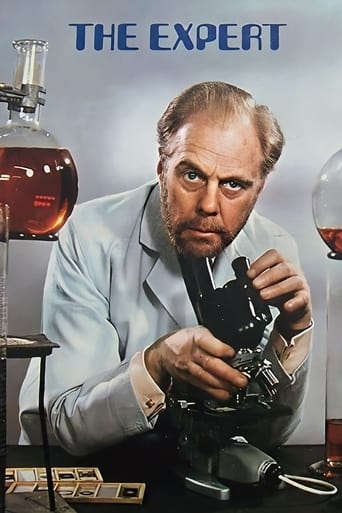
The Expert is a British television series produced by the BBC between 1968 and 1976. The series starred Marius Goring as Dr. John Hardy, a pathologist working for the Home Office and was essentially a police procedural drama, with Hardy bringing his forensic knowledge to solve various cases. The Expert was created and produced by Gerard Glaister. The series was also one of the first BBC dramas to be made in colour, and throughout its four series had numerous high quality guest appearances by actors such as John Carson, Peter Copley, Rachel Kempson, Peter Vaughan, Clive Swift, Geoffrey Palmer, Peter Barkworth, Jean Marsh, Ray Brooks, George Sewell, Anthony Valentine, Bernard Lee, Lee Montague, Geoffrey Bayldon, Mike Pratt, Edward Fox, André Morell, Brian Blessed, Nigel Stock, Philip Madoc and Warren Clarke.
The Expert
1968
 6.2
Van der Valk is a British television series that was produced by Thames Television for the ITV network. It starred Barry Foster in the title role as Dutch detective Commissaris "Piet" van der Valk. Based on the characters and atmosphere of the novels of Nicolas Freeling, the first series was shown in 1972.
Van der Valk
1972
Film credits
1980s · 3 titles
 10.0
Play by Robert Holman, about two brothers at a rural comprehensive in Teeside. The older brother, Gordon, joins the army and is killed by the IRA in Northern Ireland. The younger blames his father for letting Gordon join the army.
Chance of a Lifetime
1980
 8.0
In his further adventures Frank finds success and unhappiness.
The Adventures of Frank: Seeds of Ice
1980
 7.0
In the future England is ruled by a fascist government, and one day the leaders begin the construction of a heavily guarded, mysterious airport. BBC adaptation of Rex Warner's 1941 novel of the same name. A stereotypical village in a somewhat alternative England is taken over wholesale by 'The Air Force.' Living in the village is young Roy, who has just learned he is not who he thought he was. Attempting to forge a new sense of identity, he joins the dashing Air Force, seduced by its dynamism and direct and brutal ways.
The Aerodrome
1983
1970s · 2 titles
 5.4
A marriage crisis between a writer and his wife leads her to flee to Germany and eventually return with another man, through whom the writer is going to overcome his writer's block.
The Romantic Englishwoman
1975
 NR
After the death of novelist Robert Kelvin, his mistress Emma tries to adjust and reflects upon their relationship.
Emma's Time
1970
1960s · 3 titles
 6.5
In this look at Charles Lutwidge Dodgson (1832-1898), aka Lewis Carroll, Dennis Potter mixed biographical drama with a psychological profile to explore the roots of Dodgson's creativity. Dodgson tells stories to ten-year-old Alice Liddell, leading to recreations of scenes adapted from ALICE'S ADVENTURES IN WONDERLAND (1865), designed to resemble the original Sir John Tenniel illustrations.
Alice
1965
 6.0
A dangerous psychological game plays out between a man and the husband of the lover who spurned him.
Act of Murder
1964
 6.0
A tax avoidance scheme by a film producer leads to murder and the theft of £300,000.
The Partner
1963
Series credits
5.2An anthology series of television plays which aired on BBC1 from October 1964 to May 1970. The plays were usually written for television, although adaptations from other sources also featured.
The Wednesday Play
1964
5.2A BBC television anthology series featuring productions of classic and contemporary stage plays usually broadcast on BBC1. Each production featured a different work, often using prominent British stage actors in the leading roles. The series was transmitted from October 1965 to September 1983.
BBC Play of the Month
1965
7.2Theatre 625 is a British television drama anthology series, produced by the BBC and transmitted on BBC2 from 1964 to 1968. It was one of the first regular programmes in the line-up of the channel, and the title referred to its production and transmission being in the higher-definition 625-line format, which only BBC2 used at the time.
Theatre 625
1964
7.7After resigning, a secret agent is abducted and taken to what looks like an idyllic village, but is really a bizarre Kafkaesque prison. His warders demand information. He gives them nothing, but only tries to escape.
The Prisoner
1967
9.0The Expert is a British television series produced by the BBC between 1968 and 1976. The series starred Marius Goring as Dr. John Hardy, a pathologist working for the Home Office and was essentially a police procedural drama, with Hardy bringing his forensic knowledge to solve various cases. The Expert was created and produced by Gerard Glaister. The series was also one of the first BBC dramas to be made in colour, and throughout its four series had numerous high quality guest appearances by actors such as John Carson, Peter Copley, Rachel Kempson, Peter Vaughan, Clive Swift, Geoffrey Palmer, Peter Barkworth, Jean Marsh, Ray Brooks, George Sewell, Anthony Valentine, Bernard Lee, Lee Montague, Geoffrey Bayldon, Mike Pratt, Edward Fox, André Morell, Brian Blessed, Nigel Stock, Philip Madoc and Warren Clarke.
The Expert
1968
6.2Van der Valk is a British television series that was produced by Thames Television for the ITV network. It starred Barry Foster in the title role as Dutch detective Commissaris "Piet" van der Valk. Based on the characters and atmosphere of the novels of Nicolas Freeling, the first series was shown in 1972.
Van der Valk
1972
 5.0
Churchill's People is a British anthology series based on A History of the English-Speaking Peoples, Winston Churchill's four-volume history of Britain and its former colonies. 26 episodes were produced by the BBC and initially broadcast from 30 December 1974 to 23 June 1975.
Churchill's People
1974
 6.4
Doomwatch is a British science fiction television programme produced by the BBC, which ran on BBC 1 between 1970 and 1972. The series was set in the then present-day, and dealt with a scientific government agency led by Doctor Spencer Quist, responsible for investigating and combating various ecological and technological dangers. The series was followed by a film adaptation produced by Tigon British Film Productions and released in 1972, and a revival TV film was broadcast on Channel 5 in 1999.
Doomwatch
1970
Story Parade specialized in adaptations of modern novels. It was broadcast on June 5, 1964 and repeated on August 28, 1964. The teleplay was by Terry Nation (who invented "Blake's 7" and the Daleks in Dr. Who), and Elijah Baley was played by the late Peter Cushing. It also starred John Carson John Carson as R. Daneel Olivaw and Kenneth J. Warren. The master tapes of the program were erased, however a few clips from the production have turned up in various documentaries about Isaac Asimov's work.
Story Parade
1964
 7.2
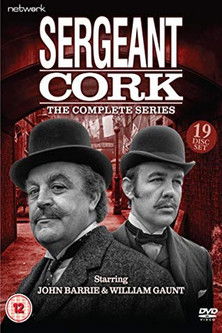
Sergeant Cork is a British detective television series which first aired between 1963 and 1968 on ITV. It was a police procedural show that followed the efforts of two police officers and their battle against crime in Victorian London. In all 66 hour-long episodes were aired during the five-year run, although the last episode was not broadcast until January 1968, 16 months after the others. Journalist Tom Sutcliffe has credited it as a first example of the use of the Victorian-era policeman in a television crime series. A 1969 review in The Age opined that rather than suspense, the strengths of the series were its "excellent period settings and wonderfully thick pea-soupers" which "add up to splendid evocative stuff", as well as the performance of star John Barrie. At no time during the whole series is Sergeant Cork's first name given.
Sergeant Cork
1963
 7.0
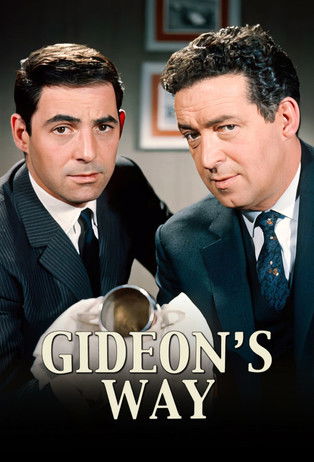
Gideon's Way is a British television crime series made by ITC Entertainment in 1964/65, based on the novels by John Creasey. The series was made at Elstree in twin production with The Saint TV series. It starred Liverpudlian John Gregson in the title role as Commander George Gideon of Scotland Yard, with Alexander Davion as his assistant, Detective Chief Inspector David Keen, Reginald Jessup as Det. Superintendent LeMaitre, Ian Rossiter as Detective Chief Superintendent Joe Bell and Basil Dignam as Commissioner Scott-Marle. The show did not acknowledge any help from Scotland Yard, any other police force or advisor. Daphne Anderson starred as his wife, Kate with Giles Watling as young son, Malcolm, Richard James as older son, Matthew who seemed to have a lot of new girlfriends and Andrea Allan as daughter, Pru. Unusually for police stories, Gideon was shown as a family man at home though urgent phone calls from his bosses tend to disrupt family plans too often. However, he did admit in "State Visit" that his wife had walked out on him for a while years ago when he put the job first and her second. They live in an expensive detached house in Chelsea.
Gideon's Way
1965
 5.1
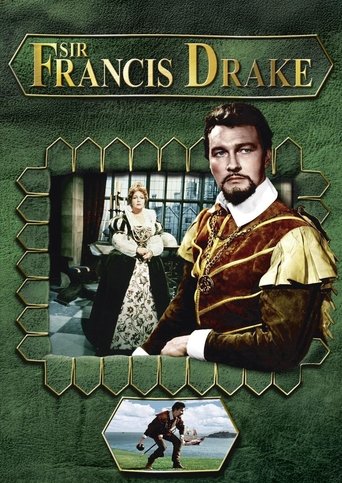
Sir Francis Drake was a British adventure television series starring Terence Morgan as Sir Francis Drake, commander of the sailing ship the Golden Hind. As well as battles at sea, sword fights, the series also deals with intrigue at Elizabeth's court, often caused by Spaniard, Mendoza.
Sir Francis Drake
1961
 8.2
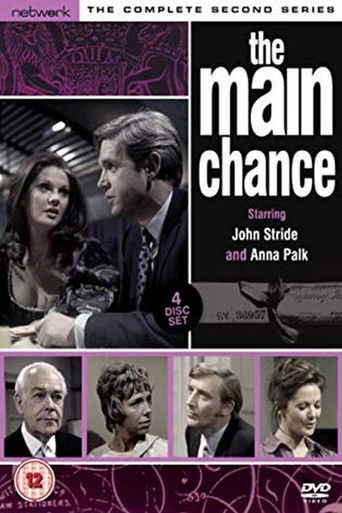
The Main Chance was a British television series which first aired on ITV between 1969,1970,1972 and 1975. A drama, it depicts the sudden transformation in the life of solicitor David Main who relocates from London to Leeds.
The Main Chance
1969
8.2The Main Chance was a British television series which first aired on ITV between 1969,1970,1972 and 1975. A drama, it depicts the sudden transformation in the life of solicitor David Main who relocates from London to Leeds.
The Main Chance
1969
 5.8
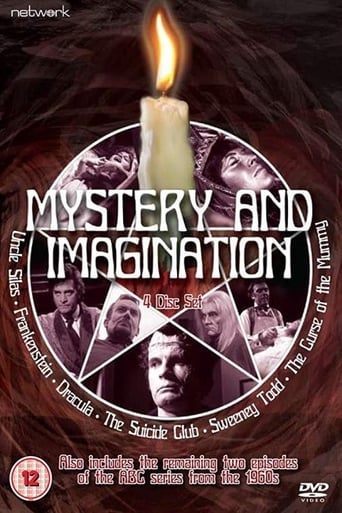
Mystery and Imagination is a British television anthology of classic horror and supernatural dramas. Five series were broadcast from 1966 to 1970 on ITV and produced by ABC and Thames Television.
Mystery and Imagination
1966
 7.0
Bootsie and Snudge is a British television situation comedy series written, in the early days, by Barry Took and Marty Feldman; later writers were John Antrobus, Jack Rosenthal, ventriloquist Ray Alan and Harry Driver. The plot follows Former Sergeant Major Claude Snudge meets up with Corporal Bootsie when they both start work at an exclusive Gentlemen's Club. Of the 104 produced episodes, 100 of these survive.
Bootsie and Snudge
1960
Studio 4 is an anthology drama series utilising BBC Television Centre's Studio Four, and running for two series in 1962 on BBC One. It was envisaged as a sequel to Storyboard, a similar anthology series which had been transmitted the previous year.
Studio 4
1962
 7.1
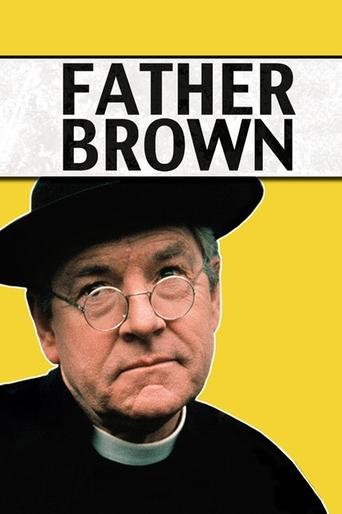
Based on the short stories by G. K. Chesterton, Father Brown is a Roman Catholic priest and amateur detective.
Father Brown
1974
 6.7
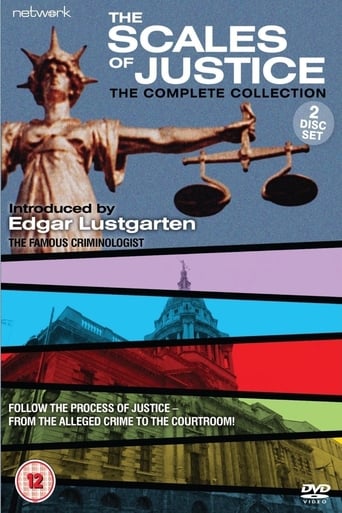
The Scales of Justice is a series of thirteen British cinema featurettes produced from 1962 to 1967 for Anglo-Amalgamated at Merton Park Studios in London. The first nine were made in black and white, and the last four in colour. The finale, Payment in Kind, was Merton Park's final production. Episodes were based on criminal cases, and each film was introduced by criminologist Edgar Lustgarten. The series derives its title from the symbolic scales held by the statue of Justice, situated above the dome of London's Central Criminal Court, The Old Bailey. The opening narration describes her as having "in her right hand, the Sword of Power and Retribution, and in her left – The Scales of Justice".
The Scales of Justice
1962
6.7The Scales of Justice is a series of thirteen British cinema featurettes produced from 1962 to 1967 for Anglo-Amalgamated at Merton Park Studios in London. The first nine were made in black and white, and the last four in colour. The finale, Payment in Kind, was Merton Park's final production. Episodes were based on criminal cases, and each film was introduced by criminologist Edgar Lustgarten. The series derives its title from the symbolic scales held by the statue of Justice, situated above the dome of London's Central Criminal Court, The Old Bailey. The opening narration describes her as having "in her right hand, the Sword of Power and Retribution, and in her left – The Scales of Justice".
The Scales of Justice
1962
 6.2
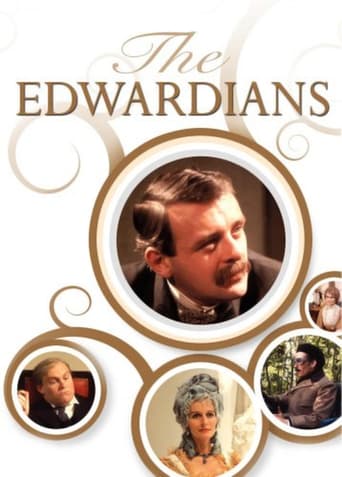
The Edwardians is an eight-part miniseries broadcast in 1972–73. An anthology, each 90-minute episode explores influential figure(s) of the Edwardian era: Charles Rolls and Henry Royce; Horatio Bottomley; E. Nesbit; Sir Arthur Conan Doyle; Robert Baden-Powell; Marie Lloyd; Daisy Greville, Countess of Warwick; and David Lloyd George.
The Edwardians
1972
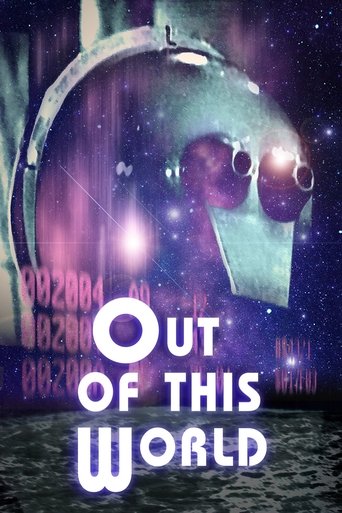 5.8
Out of This World is a British science fiction anthology television series made by ABC Television and broadcast in 1962. A spin-off from the popular anthology series Armchair Theatre, each episode is introduced by actor Boris Karloff. Many episodes are adaptations of stories by sci-fi writers including Isaac Asimov, Philip K. Dick and Clifford D. Simak. The series is generally seen as a precursor to the BBC science fiction anthology Out of the Unknown.
Out of This World
1962
Eddie likes to see himself as a mastermind of the criminal world but one thing holds him back - his family.
Mr Big
1977
 6.0
In the aftermath of Upstairs Downstairs, chauffeur Thomas Watkins and housemaid Sarah Moffat have gone their separate ways. But when a near fatal auto accident reunites them, the duo team up to hatch get-rich-quick schemes, pose as wealthy investors, or take on various odd jobs—often at the expense of others.
Thomas & Sarah
1979
In the fictional European country of Amalia, the political interests of the British, American and Communist espionage communities are explored. Eschewing the action formula of its ITV contemporaries, the series dealt more politically oriented plots such as defections to the west, awakening "sleeper" agents and the leaking of official secrets.
The Mask of Janus
1965
 8.0
Orphan Pip discovers through lawyer Mr. Jaggers that a mysterious benefactor wishes to ensure that he becomes a gentleman. Reunited with his childhood patron, Miss Havisham, and his first love, the beautiful but emotionally cold Estella, he discovers that the elderly spinster has gone mad from having been left at the altar as a young woman, and has made her charge into a warped, unfeeling heartbreaker.
Great Expectations
1967
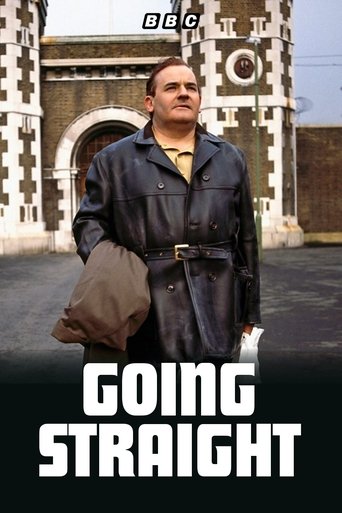 7.7
Going Straight is a BBC sitcom which was a direct spin-off from Porridge, starring Ronnie Barker as Norman Stanley Fletcher, newly released from the fictional Slade Prison where the earlier series had been set. It sees Fletcher trying to become an honest member of society, having vowed to stay away from crime on his release. The title refers to his attempt, 'straight' being a slang term meaning being honest, in contrast to 'bent', i.e., dishonest. Also re-appearing was Richard Beckinsale as Lennie Godber, who was Fletcher's naïve young cellmate and was now in a relationship with his daughter Ingrid. Her brother Raymond was played by a teenage Nicholas Lyndhurst. Only one series, of six episodes, was made in 1978. It attracted an audience of over 15 million viewers and won a BAFTA award in March 1979, but hopes of a further series had already been dashed by Beckinsale's premature death earlier in the same month.
Going Straight
1978
 6.5
Kidnapped by Intel representative Kaufman, John Fleming—along with Professor Madeleine Dawnay and Andromeda, the artificially constructed female humanoid—are brought to Azaran, a small Middle Eastern country. Upon arrival, the group discover a duplicate of Fleming's machine has been built by Intel. After many dangers, Fleming finds both the reason for the original message having been sent and the means to bring the machine under human control.
The Andromeda Breakthrough
1962
 7.9
In 1830s England, Tom Brown attends a rugby boys' school, where his moral and personal growth is formed through friendship, bullying–particularly from the cruel Flashman–and the influence of headmaster Dr Thomas Arnold.
Tom Brown's Schooldays
1971
 5.0
In Tang dynasty China, criminal cases are solved by the upright and shrewd Judge Dee, who, as county magistrate in the Chinese imperial legal system, was both the investigating magistrate and judge.
Judge Dee
1969
A young British girl, whose family have emigrated to Morocco, finds an ornamental horse that may provide the key to a lost treasure.
The Terracotta Horse
1973
 7.2
Bat Out of Hell is a British thriller television serial created by Francis Durbridge and originally aired on BBC Two from 26 November to 24 December 1966. The series followed two lovers, Diana Stewart and Mark Paxton, who are haunted by the voice of Diana's husband over the telephone after he is murdered by the couple. Inspector Clay, played by Dudley Foster, was the detective inspector who headed the police investigation.
Bat Out of Hell
1966